文章内容
文章内容
家乡春节必做的十项传统风俗
春节是中国最重要的传统节日,每到这时,我的家乡都会呈现出浓厚的节日氛围。家乡的春节习俗丰富多彩,代代相传,下面就为大家介绍家乡春节必做的十项传统风俗。
第一项,贴春联。家家户户都会在门口贴上红红的春联,上面书写吉祥话语,寓意来年平安顺利。这一习俗源自古代的“桃符”,用以驱邪避灾。
第二项,挂灯笼。春节期间,家家户户的门口和街道上都会挂起红灯笼,象征喜庆和团圆。夜晚灯火通明,整个村庄显得格外温暖。
第三项,吃年夜饭。年夜饭是春节最重要的一餐,全家人团聚在一起,共享丰盛的晚餐。菜肴中鱼表示年年有余,饺子象征财富,寓意新的一年吉祥如意。
第四项,守岁。除夕夜,全家人不眠守岁,寓意辞旧迎新,祈求来年健康平安。在守岁的过程中,老人会讲述过去一年的故事,孩子们则围坐一旁,感受浓浓的家庭温情。
第五项,放鞭炮。放鞭炮是为了驱邪迎祥,古人认为响声可以吓跑恶鬼,保佑新年平安。现在,虽然城市中部分地方限制燃放,但家乡仍保留了燃放鞭炮的热闹习俗。
第六项,拜年。春节期间,亲友间互相拜年,祝福健康、平安和好运。传统的拜年形式包括磕头、鞠躬和握手,现在更多以互相问候和发送祝福为主。
第七项,送红包。长辈会给晚辈派发红包,里面装有压岁钱,象征驱邪保平安。孩子们收到红包时,都会笑得合不拢嘴,成为春节中最期待的环节之一。
第八项,祭祖。春节期间,人们会在家中或祖坟前祭拜祖先,以表达对先人的怀念和感恩。这一习俗体现了中华文化重视家族和传承的精神。
第九项,舞龙舞狮。舞龙舞狮是春节中常见的表演活动,寓意驱邪纳福、迎祥纳瑞。舞动的龙狮伴随锣鼓声,给节日增添了热烈的气氛。
第十项,赏花灯。元宵节期间,人们会制作精美的花灯,并在夜晚点亮观赏。花灯不仅美化节日,也象征团圆与希望。
总的来说,家乡的春节习俗丰富多样,每一项都有深厚的文化内涵。这些传统风俗不仅让节日更有趣,也让我们更深刻地理解了中华民族的历史与文化。
Ten Traditional Customs You Must Follow During Chinese New Year in My Hometown
Chinese New Year is the most important traditional festival in China. During this time, my hometown is filled with a strong festive atmosphere. The customs are rich and colorful, passed down from generation to generation. Here are ten traditional customs you must follow during Chinese New Year in my hometown.
First, putting up Spring Festival couplets. Every household posts red couplets on the door, with auspicious phrases wishing peace and prosperity for the coming year. This tradition originated from ancient "peach wood charms" to ward off evil spirits.
Second, hanging lanterns. During the festival, red lanterns are hung outside homes and on streets, symbolizing happiness and reunion. At night, the glowing lanterns make the entire village feel warm and festive.
Third, having the New Year's Eve dinner. This is the most important meal of the year, where families gather to enjoy a sumptuous feast. Fish symbolizes abundance, and dumplings represent wealth, wishing for good fortune in the new year.
Fourth, staying up on New Year's Eve. Families stay awake throughout the night to bid farewell to the old year and welcome the new one, praying for health and peace. Elders share stories of the past year, while children sit around, feeling the warmth of family togetherness.
Fifth, setting off firecrackers. Firecrackers are used to drive away evil spirits and bring good luck. Although some cities restrict their use, in my hometown, this lively tradition is still preserved.
Sixth, paying New Year visits. During the festival, people visit relatives and friends to exchange blessings for health, safety, and fortune. Traditional forms include bowing, kowtowing, and handshakes, though now it’s more about greetings and sending wishes.
Seventh, giving red envelopes. Elders give red envelopes filled with money to children, symbolizing protection and good luck. Receiving a red envelope is one of the most exciting moments for kids during the festival.
Eighth, ancestor worship. People honor their ancestors at home or at gravesites to express remembrance and gratitude, reflecting the Chinese value of family and heritage.
Ninth, dragon and lion dances. These performances symbolize driving away evil spirits and welcoming good fortune. Accompanied by drums and gongs, the dragon and lion dances add a lively atmosphere to the festival.
Tenth, enjoying lantern displays. During the Lantern Festival, people create exquisite lanterns and light them at night. Lanterns not only beautify the festival but also symbolize reunion and hope.
In summary, the customs in my hometown are diverse, each with deep cultural significance. These traditions make the festival more enjoyable and allow us to understand Chinese history and culture more profoundly.
家乡春节的十个传统习俗全解
春节不仅是团圆的节日,也是文化传承的重要时刻。在我的家乡,每到农历新年,家家户户都会按照传统习俗来庆祝节日,这些风俗让春节充满温情与欢乐。
第一,贴春联。春联通常由红纸写成,上书祝福语句,寓意驱邪迎福。我的家乡讲究左右对仗、上下呼应,每年写春联时,长辈都会教我们书写的技巧和讲究。
第二,挂灯笼。大红灯笼高高挂起,象征吉祥和喜庆。尤其是年夜饭时,灯笼的光照亮家门,寓意全家团圆幸福。
第三,吃年夜饭。年夜饭菜品丰富,鱼肉、饺子、长寿面不可缺少。不同地区还有特色菜,如家乡的腊味拼盘,味道浓郁,象征生活富足。
第四,守岁。守岁不仅是陪伴家人,也是迎接新年的仪式。老人讲故事、孩子玩游戏,家里充满欢声笑语。
第五,放鞭炮。鞭炮声声响彻夜空,据说可以赶走年兽和不祥,保佑新年平安。每家每户都会准备几串鞭炮,燃放时热闹非凡。
第六,拜年。拜年是表达祝福的方式,长辈祝晚辈学业进步,朋友之间互道吉祥如意。随着时代发展,短信和视频拜年也逐渐流行。
第七,送红包。红包里的压岁钱象征吉祥如意,孩子们收到红包会满心欢喜。红色也寓意驱邪避灾。
第八,祭祖。祭祖是中华民族重要的传统,提醒我们不忘根源。家乡的祭祖仪式简朴而庄重,通常在除夕或初一进行。
第九,舞龙舞狮。舞龙舞狮表演热闹非凡,鼓声、锣声、舞动的龙狮让人感受到节日的激情,寄托人们对来年的美好期望。
第十,赏花灯。元宵节时,各式花灯点亮街道,人们漫步欣赏,欢声笑语不断。花灯造型多样,有动物、人物或传统故事的形象,充满创意与美感。
家乡的春节习俗不仅丰富了节日生活,也让文化传承得以延续。每一项活动都有其象征意义,让人们在欢乐中感受历史与传统的魅力。
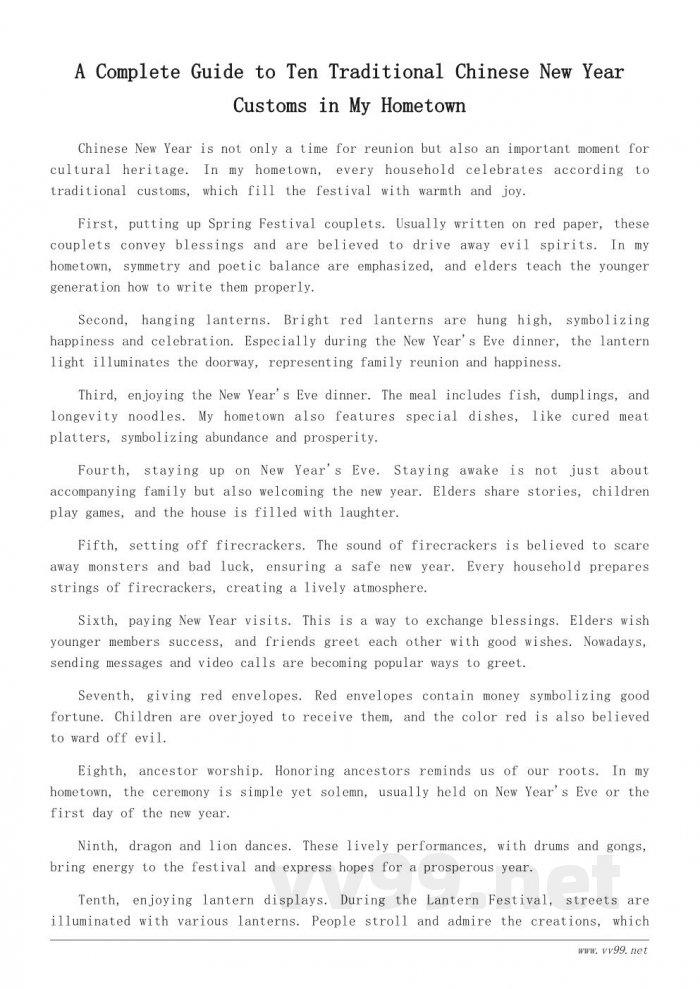
A Complete Guide to Ten Traditional Chinese New Year Customs in My Hometown
Chinese New Year is not only a time for reunion but also an important moment for cultural heritage. In my hometown, every household celebrates according to traditional customs, which fill the festival with warmth and joy.
First, putting up Spring Festival couplets. Usually written on red paper, these couplets convey blessings and are believed to drive away evil spirits. In my hometown, symmetry and poetic balance are emphasized, and elders teach the younger generation how to write them properly.
Second, hanging lanterns. Bright red lanterns are hung high, symbolizing happiness and celebration. Especially during the New Year's Eve dinner, the lantern light illuminates the doorway, representing family reunion and happiness.
Third, enjoying the New Year's Eve dinner. The meal includes fish, dumplings, and longevity noodles. My hometown also features special dishes, like cured meat platters, symbolizing abundance and prosperity.
Fourth, staying up on New Year's Eve. Staying awake is not just about accompanying family but also welcoming the new year. Elders share stories, children play games, and the house is filled with laughter.
Fifth, setting off firecrackers. The sound of firecrackers is believed to scare away monsters and bad luck, ensuring a safe new year. Every household prepares strings of firecrackers, creating a lively atmosphere.
Sixth, paying New Year visits. This is a way to exchange blessings. Elders wish younger members success, and friends greet each other with good wishes. Nowadays, sending messages and video calls are becoming popular ways to greet.
Seventh, giving red envelopes. Red envelopes contain money symbolizing good fortune. Children are overjoyed to receive them, and the color red is also believed to ward off evil.
Eighth, ancestor worship. Honoring ancestors reminds us of our roots. In my hometown, the ceremony is simple yet solemn, usually held on New Year's Eve or the first day of the new year.
Ninth, dragon and lion dances. These lively performances, with drums and gongs, bring energy to the festival and express hopes for a prosperous year.
Tenth, enjoying lantern displays. During the Lantern Festival, streets are illuminated with various lanterns. People stroll and admire the creations, which include animals, characters, and traditional stories, combining creativity and beauty.
The customs in my hometown enrich the festive life and help preserve cultural heritage. Each activity carries symbolic meaning, allowing people to experience history and tradition while enjoying the celebration.
小提示:上面此文档内容仅展示完整文档里的部分内容, 若需要下载完整文档请 点击免费下载完整文档 。