文章内容
文章内容
在角色的目光里看见自己
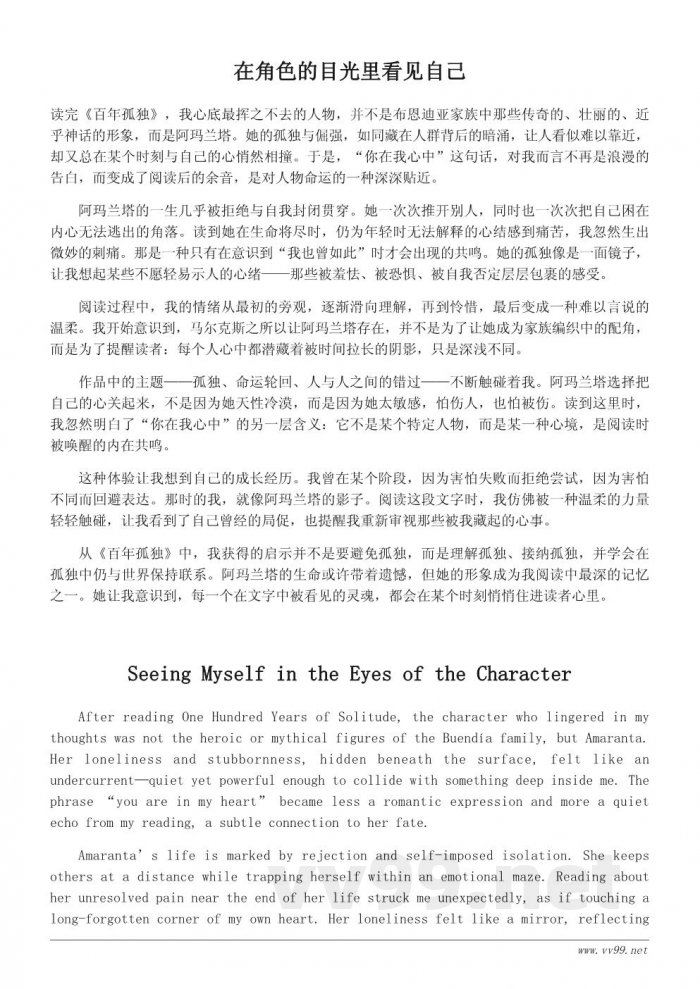
读完《百年孤独》,我心底最挥之不去的人物,并不是布恩迪亚家族中那些传奇的、壮丽的、近乎神话的形象,而是阿玛兰塔。她的孤独与倔强,如同藏在人群背后的暗涌,让人看似难以靠近,却又总在某个时刻与自己的心悄然相撞。于是,“你在我心中”这句话,对我而言不再是浪漫的告白,而变成了阅读后的余音,是对人物命运的一种深深贴近。
阿玛兰塔的一生几乎被拒绝与自我封闭贯穿。她一次次推开别人,同时也一次次把自己困在内心无法逃出的角落。读到她在生命将尽时,仍为年轻时无法解释的心结感到痛苦,我忽然生出微妙的刺痛。那是一种只有在意识到“我也曾如此”时才会出现的共鸣。她的孤独像是一面镜子,让我想起某些不愿轻易示人的心绪——那些被羞怯、被恐惧、被自我否定层层包裹的感受。
阅读过程中,我的情绪从最初的旁观,逐渐滑向理解,再到怜惜,最后变成一种难以言说的温柔。我开始意识到,马尔克斯之所以让阿玛兰塔存在,并不是为了让她成为家族编织中的配角,而是为了提醒读者:每个人心中都潜藏着被时间拉长的阴影,只是深浅不同。
作品中的主题——孤独、命运轮回、人与人之间的错过——不断触碰着我。阿玛兰塔选择把自己的心关起来,不是因为她天性冷漠,而是因为她太敏感,怕伤人,也怕被伤。读到这里时,我忽然明白了“你在我心中”的另一层含义:它不是某个特定人物,而是某一种心境,是阅读时被唤醒的内在共鸣。
这种体验让我想到自己的成长经历。我曾在某个阶段,因为害怕失败而拒绝尝试,因为害怕不同而回避表达。那时的我,就像阿玛兰塔的影子。阅读这段文字时,我仿佛被一种温柔的力量轻轻触碰,让我看到了自己曾经的局促,也提醒我重新审视那些被我藏起的心事。
从《百年孤独》中,我获得的启示并不是要避免孤独,而是理解孤独、接纳孤独,并学会在孤独中仍与世界保持联系。阿玛兰塔的生命或许带着遗憾,但她的形象成为我阅读中最深的记忆之一。她让我意识到,每一个在文字中被看见的灵魂,都会在某个时刻悄悄住进读者心里。
Seeing Myself in the Eyes of the Character
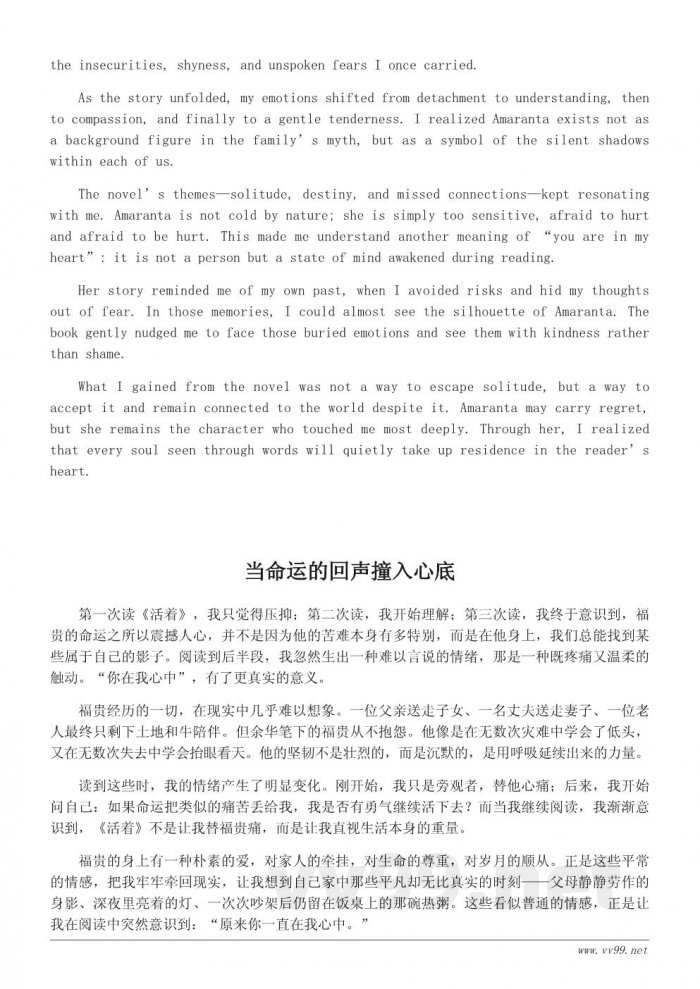
After reading One Hundred Years of Solitude, the character who lingered in my thoughts was not the heroic or mythical figures of the Buendía family, but Amaranta. Her loneliness and stubbornness, hidden beneath the surface, felt like an undercurrent—quiet yet powerful enough to collide with something deep inside me. The phrase “you are in my heart” became less a romantic expression and more a quiet echo from my reading, a subtle connection to her fate.
Amaranta’s life is marked by rejection and self-imposed isolation. She keeps others at a distance while trapping herself within an emotional maze. Reading about her unresolved pain near the end of her life struck me unexpectedly, as if touching a long-forgotten corner of my own heart. Her loneliness felt like a mirror, reflecting the insecurities, shyness, and unspoken fears I once carried.
As the story unfolded, my emotions shifted from detachment to understanding, then to compassion, and finally to a gentle tenderness. I realized Amaranta exists not as a background figure in the family’s myth, but as a symbol of the silent shadows within each of us.
The novel’s themes—solitude, destiny, and missed connections—kept resonating with me. Amaranta is not cold by nature; she is simply too sensitive, afraid to hurt and afraid to be hurt. This made me understand another meaning of “you are in my heart”: it is not a person but a state of mind awakened during reading.
Her story reminded me of my own past, when I avoided risks and hid my thoughts out of fear. In those memories, I could almost see the silhouette of Amaranta. The book gently nudged me to face those buried emotions and see them with kindness rather than shame.
What I gained from the novel was not a way to escape solitude, but a way to accept it and remain connected to the world despite it. Amaranta may carry regret, but she remains the character who touched me most deeply. Through her, I realized that every soul seen through words will quietly take up residence in the reader’s heart.
当命运的回声撞入心底
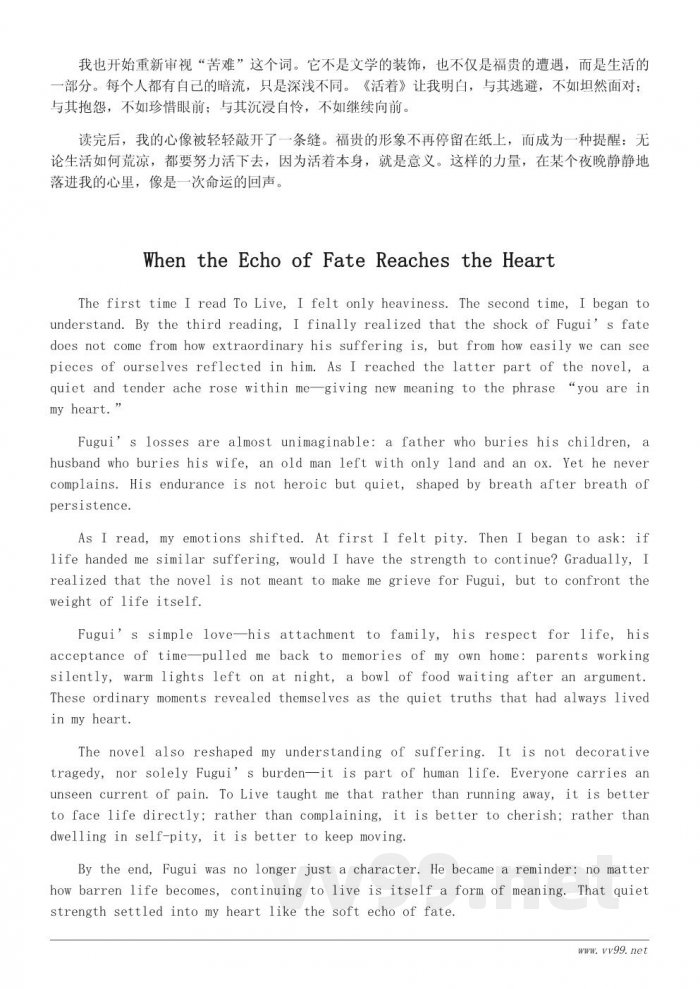
第一次读《活着》,我只觉得压抑;第二次读,我开始理解;第三次读,我终于意识到,福贵的命运之所以震撼人心,并不是因为他的苦难本身有多特别,而是在他身上,我们总能找到某些属于自己的影子。阅读到后半段,我忽然生出一种难以言说的情绪,那是一种既疼痛又温柔的触动。“你在我心中”,有了更真实的意义。
福贵经历的一切,在现实中几乎难以想象。一位父亲送走子女、一名丈夫送走妻子、一位老人最终只剩下土地和牛陪伴。但余华笔下的福贵从不抱怨。他像是在无数次灾难中学会了低头,又在无数次失去中学会抬眼看天。他的坚韧不是壮烈的,而是沉默的,是用呼吸延续出来的力量。
读到这些时,我的情绪产生了明显变化。刚开始,我只是旁观者,替他心痛;后来,我开始问自己:如果命运把类似的痛苦丢给我,我是否有勇气继续活下去?而当我继续阅读,我渐渐意识到,《活着》不是让我替福贵痛,而是让我直视生活本身的重量。
福贵的身上有一种朴素的爱,对家人的牵挂,对生命的尊重,对岁月的顺从。正是这些平常的情感,把我牢牢牵回现实,让我想到自己家中那些平凡却无比真实的时刻——父母静静劳作的身影、深夜里亮着的灯、一次次吵架后仍留在饭桌上的那碗热粥。这些看似普通的情感,正是让我在阅读中突然意识到:“原来你一直在我心中。”
我也开始重新审视“苦难”这个词。它不是文学的装饰,也不仅是福贵的遭遇,而是生活的一部分。每个人都有自己的暗流,只是深浅不同。《活着》让我明白,与其逃避,不如坦然面对;与其抱怨,不如珍惜眼前;与其沉浸自怜,不如继续向前。
读完后,我的心像被轻轻敲开了一条缝。福贵的形象不再停留在纸上,而成为一种提醒:无论生活如何荒凉,都要努力活下去,因为活着本身,就是意义。这样的力量,在某个夜晚静静地落进我的心里,像是一次命运的回声。
When the Echo of Fate Reaches the Heart
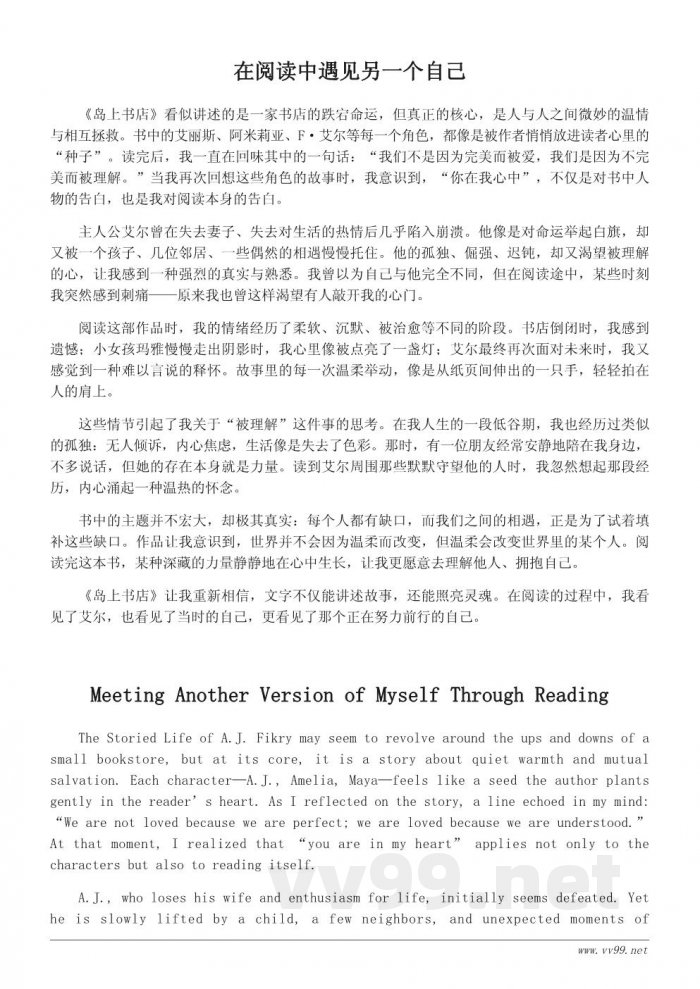
The first time I read To Live, I felt only heaviness. The second time, I began to understand. By the third reading, I finally realized that the shock of Fugui’s fate does not come from how extraordinary his suffering is, but from how easily we can see pieces of ourselves reflected in him. As I reached the latter part of the novel, a quiet and tender ache rose within me—giving new meaning to the phrase “you are in my heart.”
Fugui’s losses are almost unimaginable: a father who buries his children, a husband who buries his wife, an old man left with only land and an ox. Yet he never complains. His endurance is not heroic but quiet, shaped by breath after breath of persistence.
As I read, my emotions shifted. At first I felt pity. Then I began to ask: if life handed me similar suffering, would I have the strength to continue? Gradually, I realized that the novel is not meant to make me grieve for Fugui, but to confront the weight of life itself.
Fugui’s simple love—his attachment to family, his respect for life, his acceptance of time—pulled me back to memories of my own home: parents working silently, warm lights left on at night, a bowl of food waiting after an argument. These ordinary moments revealed themselves as the quiet truths that had always lived in my heart.
The novel also reshaped my understanding of suffering. It is not decorative tragedy, nor solely Fugui’s burden—it is part of human life. Everyone carries an unseen current of pain. To Live taught me that rather than running away, it is better to face life directly; rather than complaining, it is better to cherish; rather than dwelling in self-pity, it is better to keep moving.
By the end, Fugui was no longer just a character. He became a reminder: no matter how barren life becomes, continuing to live is itself a form of meaning. That quiet strength settled into my heart like the soft echo of fate.
小提示:上面此文档内容仅展示完整文档里的部分内容, 若需要下载完整文档请 点击免费下载完整文档 。