文章内容
文章内容
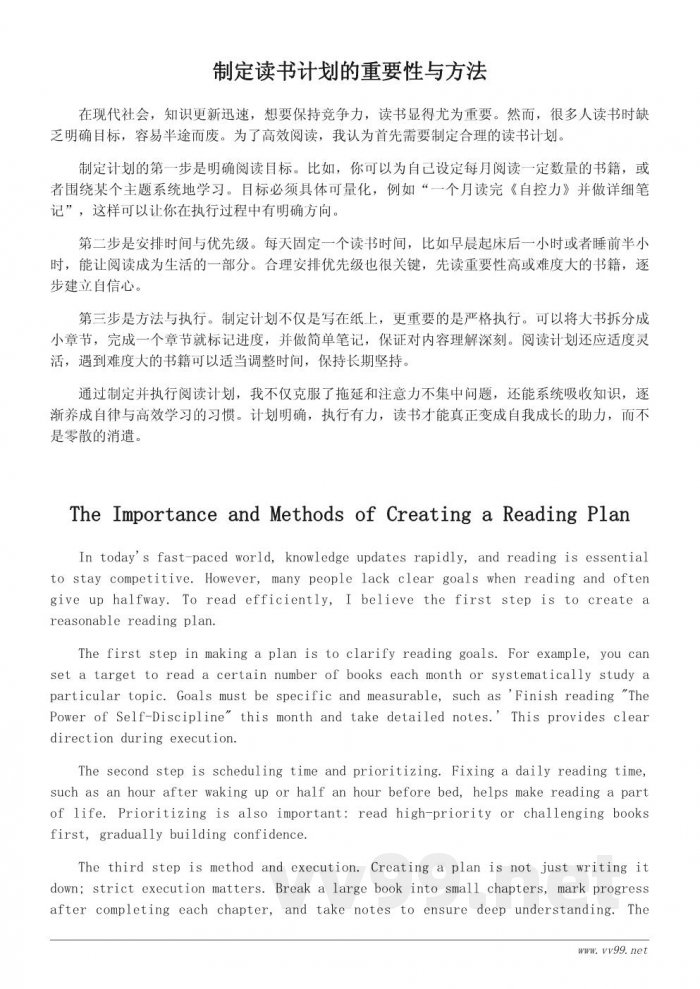
制定读书计划的重要性与方法
在现代社会,知识更新迅速,想要保持竞争力,读书显得尤为重要。然而,很多人读书时缺乏明确目标,容易半途而废。为了高效阅读,我认为首先需要制定合理的读书计划。
制定计划的第一步是明确阅读目标。比如,你可以为自己设定每月阅读一定数量的书籍,或者围绕某个主题系统地学习。目标必须具体可量化,例如“一个月读完《自控力》并做详细笔记”,这样可以让你在执行过程中有明确方向。
第二步是安排时间与优先级。每天固定一个读书时间,比如早晨起床后一小时或者睡前半小时,能让阅读成为生活的一部分。合理安排优先级也很关键,先读重要性高或难度大的书籍,逐步建立自信心。
第三步是方法与执行。制定计划不仅是写在纸上,更重要的是严格执行。可以将大书拆分成小章节,完成一个章节就标记进度,并做简单笔记,保证对内容理解深刻。阅读计划还应适度灵活,遇到难度大的书籍可以适当调整时间,保持长期坚持。
通过制定并执行阅读计划,我不仅克服了拖延和注意力不集中问题,还能系统吸收知识,逐渐养成自律与高效学习的习惯。计划明确,执行有力,读书才能真正变成自我成长的助力,而不是零散的消遣。
The Importance and Methods of Creating a Reading Plan
In today's fast-paced world, knowledge updates rapidly, and reading is essential to stay competitive. However, many people lack clear goals when reading and often give up halfway. To read efficiently, I believe the first step is to create a reasonable reading plan.
The first step in making a plan is to clarify reading goals. For example, you can set a target to read a certain number of books each month or systematically study a particular topic. Goals must be specific and measurable, such as 'Finish reading "The Power of Self-Discipline" this month and take detailed notes.' This provides clear direction during execution.
The second step is scheduling time and prioritizing. Fixing a daily reading time, such as an hour after waking up or half an hour before bed, helps make reading a part of life. Prioritizing is also important: read high-priority or challenging books first, gradually building confidence.
The third step is method and execution. Creating a plan is not just writing it down; strict execution matters. Break a large book into small chapters, mark progress after completing each chapter, and take notes to ensure deep understanding. The reading plan should also be flexible; for difficult books, adjust the time as needed to maintain long-term persistence.
By creating and following a reading plan, I have overcome procrastination and lack of focus, systematically absorbed knowledge, and gradually developed discipline and efficient learning habits. With a clear plan and consistent execution, reading becomes a powerful tool for personal growth rather than just scattered leisure.
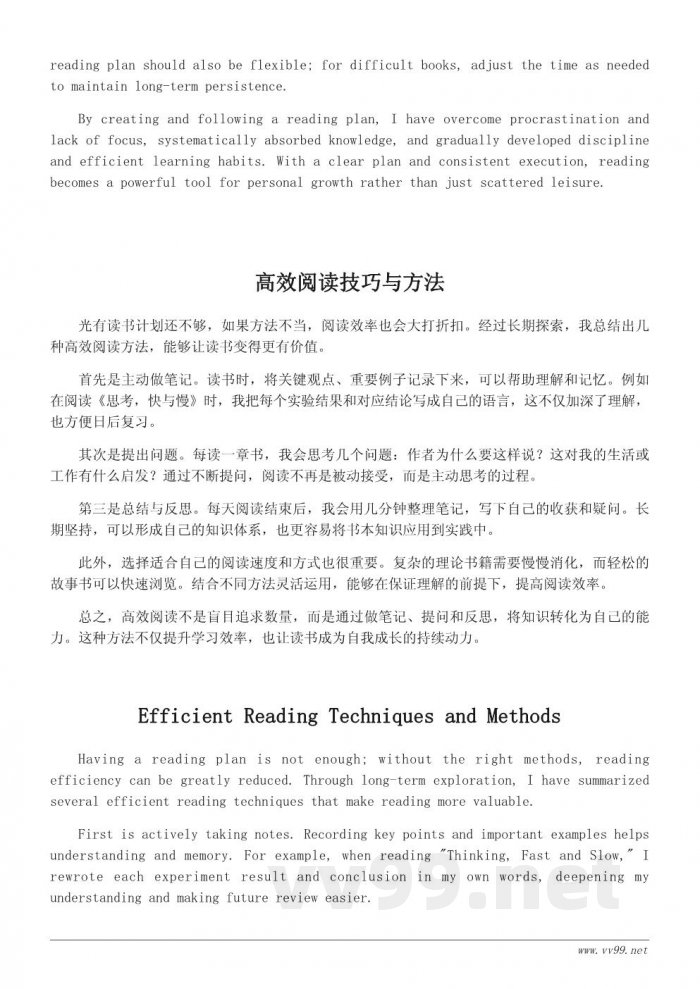
高效阅读技巧与方法
光有读书计划还不够,如果方法不当,阅读效率也会大打折扣。经过长期探索,我总结出几种高效阅读方法,能够让读书变得更有价值。
首先是主动做笔记。读书时,将关键观点、重要例子记录下来,可以帮助理解和记忆。例如在阅读《思考,快与慢》时,我把每个实验结果和对应结论写成自己的语言,这不仅加深了理解,也方便日后复习。
其次是提出问题。每读一章书,我会思考几个问题:作者为什么要这样说?这对我的生活或工作有什么启发?通过不断提问,阅读不再是被动接受,而是主动思考的过程。
第三是总结与反思。每天阅读结束后,我会用几分钟整理笔记,写下自己的收获和疑问。长期坚持,可以形成自己的知识体系,也更容易将书本知识应用到实践中。
此外,选择适合自己的阅读速度和方式也很重要。复杂的理论书籍需要慢慢消化,而轻松的故事书可以快速浏览。结合不同方法灵活运用,能够在保证理解的前提下,提高阅读效率。
总之,高效阅读不是盲目追求数量,而是通过做笔记、提问和反思,将知识转化为自己的能力。这种方法不仅提升学习效率,也让读书成为自我成长的持续动力。
Efficient Reading Techniques and Methods
Having a reading plan is not enough; without the right methods, reading efficiency can be greatly reduced. Through long-term exploration, I have summarized several efficient reading techniques that make reading more valuable.
First is actively taking notes. Recording key points and important examples helps understanding and memory. For example, when reading "Thinking, Fast and Slow," I rewrote each experiment result and conclusion in my own words, deepening my understanding and making future review easier.
Second is asking questions. After reading each chapter, I consider questions like: Why does the author say this? How does this apply to my life or work? Asking questions transforms reading from passive acceptance into active thinking.
Third is summarizing and reflecting. After daily reading, I spend a few minutes organizing notes and recording insights and doubts. Over time, this forms a personal knowledge system and facilitates practical application of what is learned.
Moreover, choosing the right reading speed and style is crucial. Complex theoretical books require slow digestion, while lighter narrative books can be read quickly. Flexibly combining methods improves reading efficiency while ensuring understanding.
In short, efficient reading is not about quantity but converting knowledge into personal capability through note-taking, questioning, and reflection. This approach not only boosts learning efficiency but also makes reading a continuous driver of personal growth.
小提示:上面此文档内容仅展示完整文档里的部分内容, 若需要下载完整文档请 点击免费下载完整文档 。