文章内容
文章内容
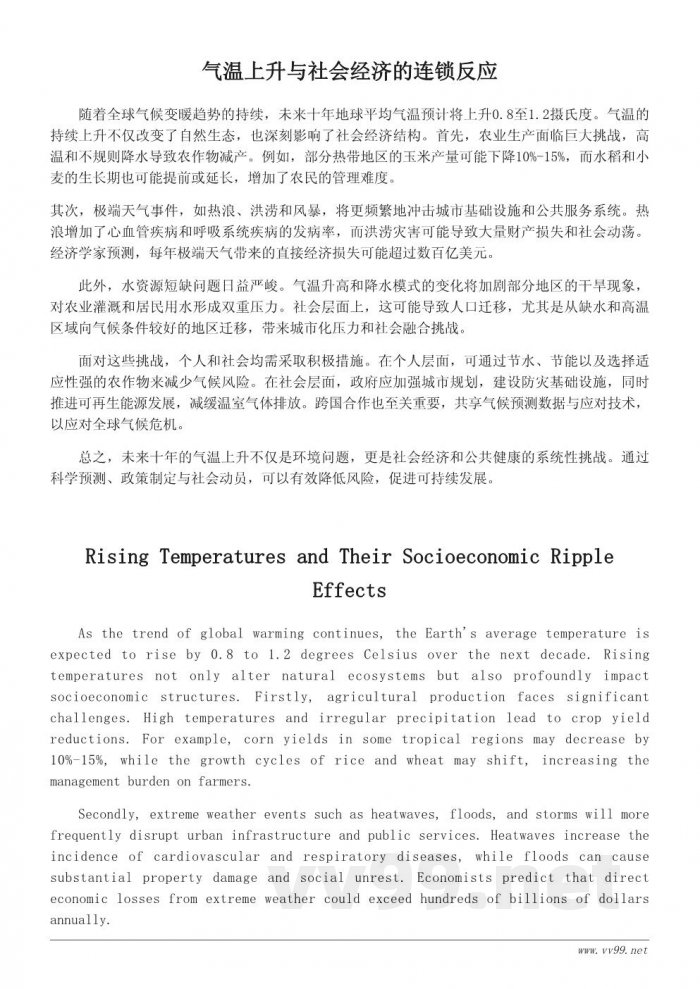
气温上升与社会经济的连锁反应
随着全球气候变暖趋势的持续,未来十年地球平均气温预计将上升0.8至1.2摄氏度。气温的持续上升不仅改变了自然生态,也深刻影响了社会经济结构。首先,农业生产面临巨大挑战,高温和不规则降水导致农作物减产。例如,部分热带地区的玉米产量可能下降10%-15%,而水稻和小麦的生长期也可能提前或延长,增加了农民的管理难度。
其次,极端天气事件,如热浪、洪涝和风暴,将更频繁地冲击城市基础设施和公共服务系统。热浪增加了心血管疾病和呼吸系统疾病的发病率,而洪涝灾害可能导致大量财产损失和社会动荡。经济学家预测,每年极端天气带来的直接经济损失可能超过数百亿美元。
此外,水资源短缺问题日益严峻。气温升高和降水模式的变化将加剧部分地区的干旱现象,对农业灌溉和居民用水形成双重压力。社会层面上,这可能导致人口迁移,尤其是从缺水和高温区域向气候条件较好的地区迁移,带来城市化压力和社会融合挑战。
面对这些挑战,个人和社会均需采取积极措施。在个人层面,可通过节水、节能以及选择适应性强的农作物来减少气候风险。在社会层面,政府应加强城市规划,建设防灾基础设施,同时推进可再生能源发展,减缓温室气体排放。跨国合作也至关重要,共享气候预测数据与应对技术,以应对全球气候危机。
总之,未来十年的气温上升不仅是环境问题,更是社会经济和公共健康的系统性挑战。通过科学预测、政策制定与社会动员,可以有效降低风险,促进可持续发展。
Rising Temperatures and Their Socioeconomic Ripple Effects
As the trend of global warming continues, the Earth's average temperature is expected to rise by 0.8 to 1.2 degrees Celsius over the next decade. Rising temperatures not only alter natural ecosystems but also profoundly impact socioeconomic structures. Firstly, agricultural production faces significant challenges. High temperatures and irregular precipitation lead to crop yield reductions. For example, corn yields in some tropical regions may decrease by 10%-15%, while the growth cycles of rice and wheat may shift, increasing the management burden on farmers.
Secondly, extreme weather events such as heatwaves, floods, and storms will more frequently disrupt urban infrastructure and public services. Heatwaves increase the incidence of cardiovascular and respiratory diseases, while floods can cause substantial property damage and social unrest. Economists predict that direct economic losses from extreme weather could exceed hundreds of billions of dollars annually.
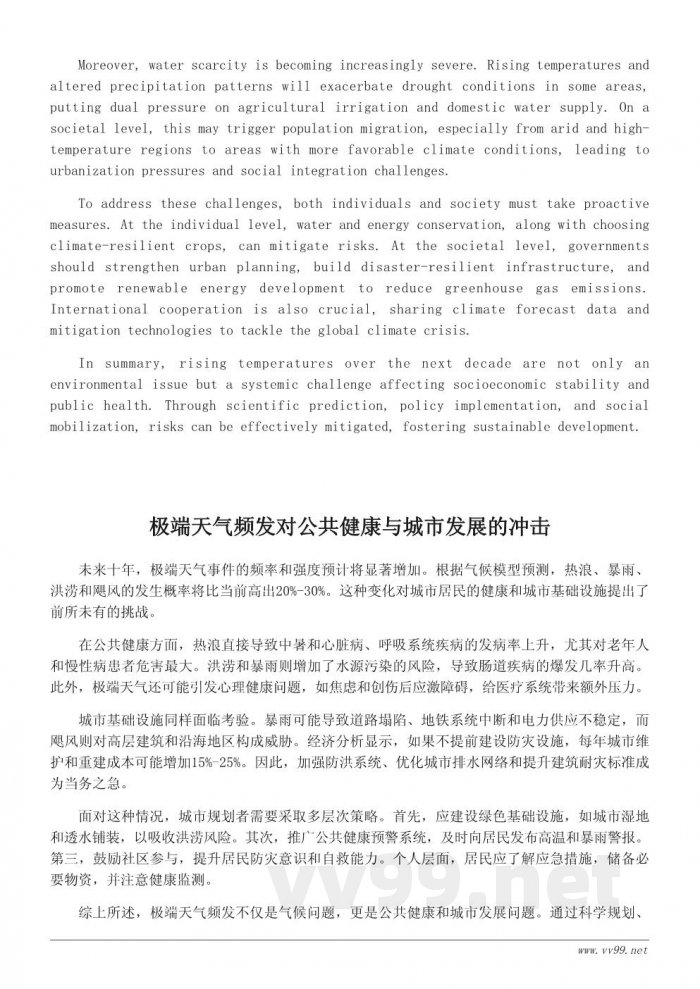
Moreover, water scarcity is becoming increasingly severe. Rising temperatures and altered precipitation patterns will exacerbate drought conditions in some areas, putting dual pressure on agricultural irrigation and domestic water supply. On a societal level, this may trigger population migration, especially from arid and high-temperature regions to areas with more favorable climate conditions, leading to urbanization pressures and social integration challenges.
To address these challenges, both individuals and society must take proactive measures. At the individual level, water and energy conservation, along with choosing climate-resilient crops, can mitigate risks. At the societal level, governments should strengthen urban planning, build disaster-resilient infrastructure, and promote renewable energy development to reduce greenhouse gas emissions. International cooperation is also crucial, sharing climate forecast data and mitigation technologies to tackle the global climate crisis.
In summary, rising temperatures over the next decade are not only an environmental issue but a systemic challenge affecting socioeconomic stability and public health. Through scientific prediction, policy implementation, and social mobilization, risks can be effectively mitigated, fostering sustainable development.
极端天气频发对公共健康与城市发展的冲击
未来十年,极端天气事件的频率和强度预计将显著增加。根据气候模型预测,热浪、暴雨、洪涝和飓风的发生概率将比当前高出20%-30%。这种变化对城市居民的健康和城市基础设施提出了前所未有的挑战。
在公共健康方面,热浪直接导致中暑和心脏病、呼吸系统疾病的发病率上升,尤其对老年人和慢性病患者危害最大。洪涝和暴雨则增加了水源污染的风险,导致肠道疾病的爆发几率升高。此外,极端天气还可能引发心理健康问题,如焦虑和创伤后应激障碍,给医疗系统带来额外压力。
城市基础设施同样面临考验。暴雨可能导致道路塌陷、地铁系统中断和电力供应不稳定,而飓风则对高层建筑和沿海地区构成威胁。经济分析显示,如果不提前建设防灾设施,每年城市维护和重建成本可能增加15%-25%。因此,加强防洪系统、优化城市排水网络和提升建筑耐灾标准成为当务之急。
面对这种情况,城市规划者需要采取多层次策略。首先,应建设绿色基础设施,如城市湿地和透水铺装,以吸收洪涝风险。其次,推广公共健康预警系统,及时向居民发布高温和暴雨警报。第三,鼓励社区参与,提升居民防灾意识和自救能力。个人层面,居民应了解应急措施,储备必要物资,并注意健康监测。
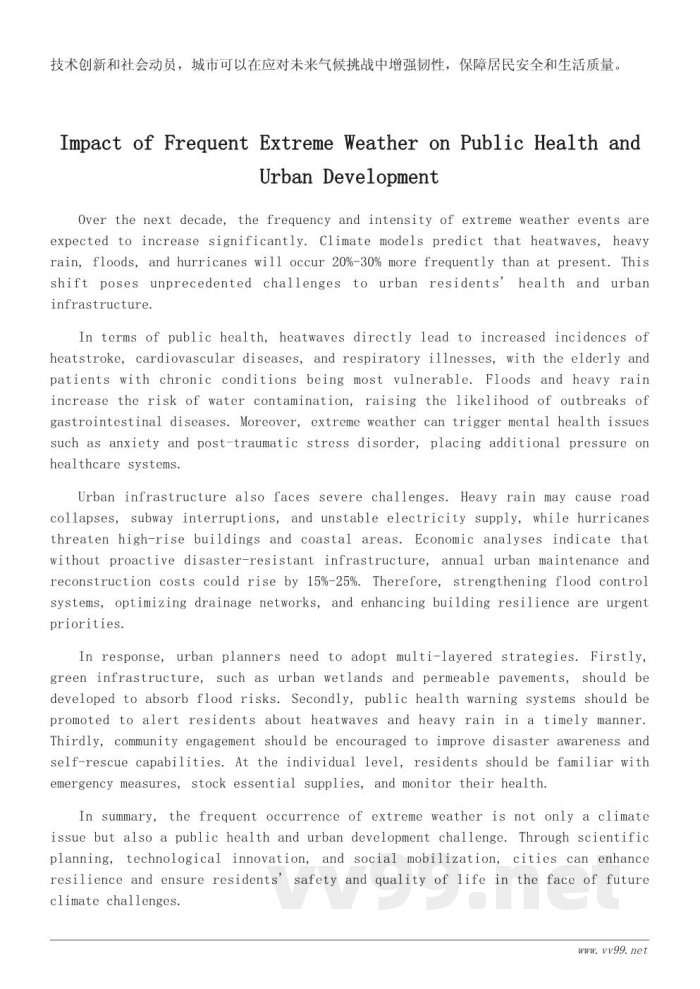
综上所述,极端天气频发不仅是气候问题,更是公共健康和城市发展问题。通过科学规划、技术创新和社会动员,城市可以在应对未来气候挑战中增强韧性,保障居民安全和生活质量。
Impact of Frequent Extreme Weather on Public Health and Urban Development
Over the next decade, the frequency and intensity of extreme weather events are expected to increase significantly. Climate models predict that heatwaves, heavy rain, floods, and hurricanes will occur 20%-30% more frequently than at present. This shift poses unprecedented challenges to urban residents' health and urban infrastructure.
In terms of public health, heatwaves directly lead to increased incidences of heatstroke, cardiovascular diseases, and respiratory illnesses, with the elderly and patients with chronic conditions being most vulnerable. Floods and heavy rain increase the risk of water contamination, raising the likelihood of outbreaks of gastrointestinal diseases. Moreover, extreme weather can trigger mental health issues such as anxiety and post-traumatic stress disorder, placing additional pressure on healthcare systems.
Urban infrastructure also faces severe challenges. Heavy rain may cause road collapses, subway interruptions, and unstable electricity supply, while hurricanes threaten high-rise buildings and coastal areas. Economic analyses indicate that without proactive disaster-resistant infrastructure, annual urban maintenance and reconstruction costs could rise by 15%-25%. Therefore, strengthening flood control systems, optimizing drainage networks, and enhancing building resilience are urgent priorities.
In response, urban planners need to adopt multi-layered strategies. Firstly, green infrastructure, such as urban wetlands and permeable pavements, should be developed to absorb flood risks. Secondly, public health warning systems should be promoted to alert residents about heatwaves and heavy rain in a timely manner. Thirdly, community engagement should be encouraged to improve disaster awareness and self-rescue capabilities. At the individual level, residents should be familiar with emergency measures, stock essential supplies, and monitor their health.
In summary, the frequent occurrence of extreme weather is not only a climate issue but also a public health and urban development challenge. Through scientific planning, technological innovation, and social mobilization, cities can enhance resilience and ensure residents' safety and quality of life in the face of future climate challenges.
小提示:上面此文档内容仅展示完整文档里的部分内容, 若需要下载完整文档请 点击免费下载完整文档 。