文章内容
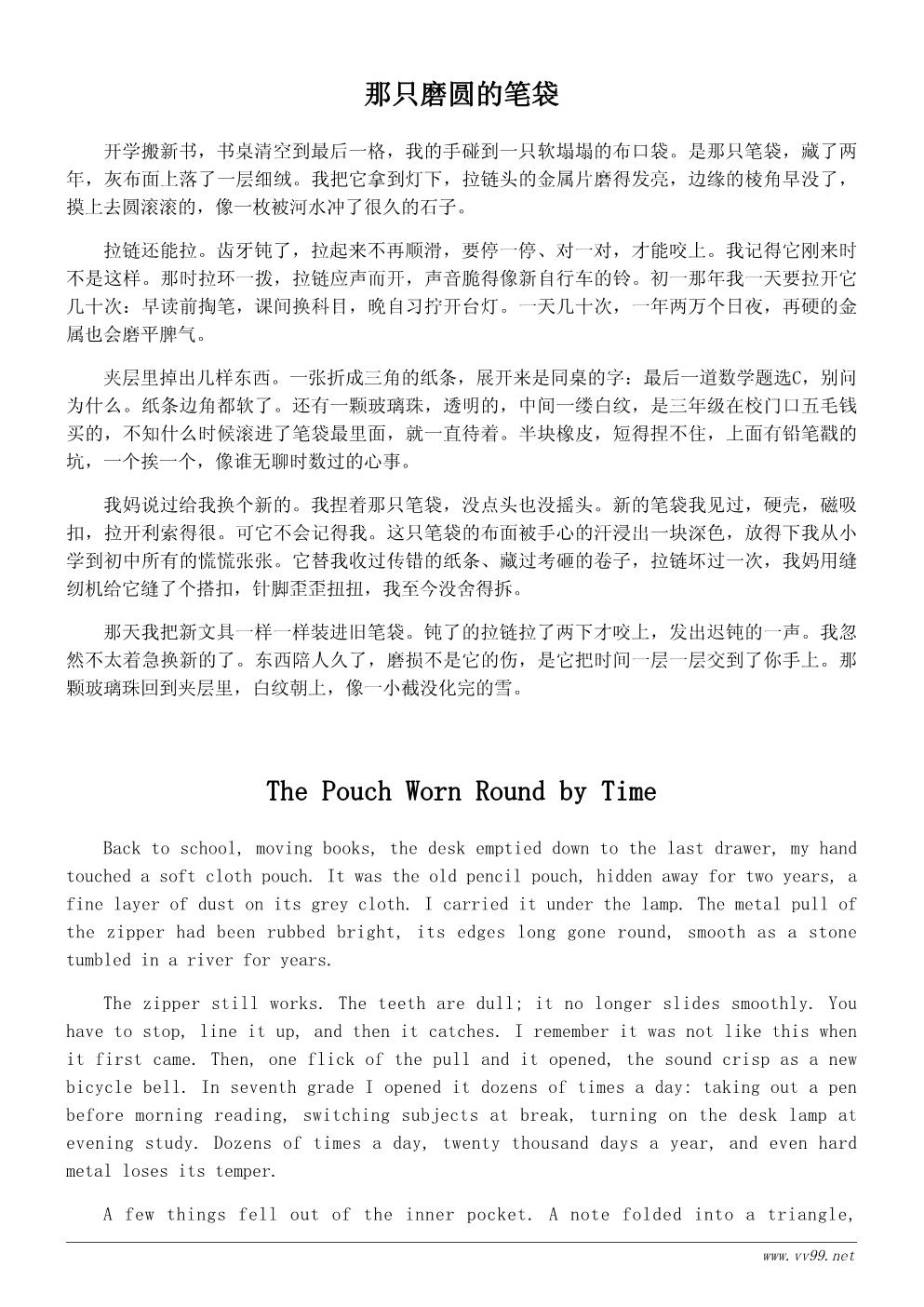
那只磨圆的笔袋
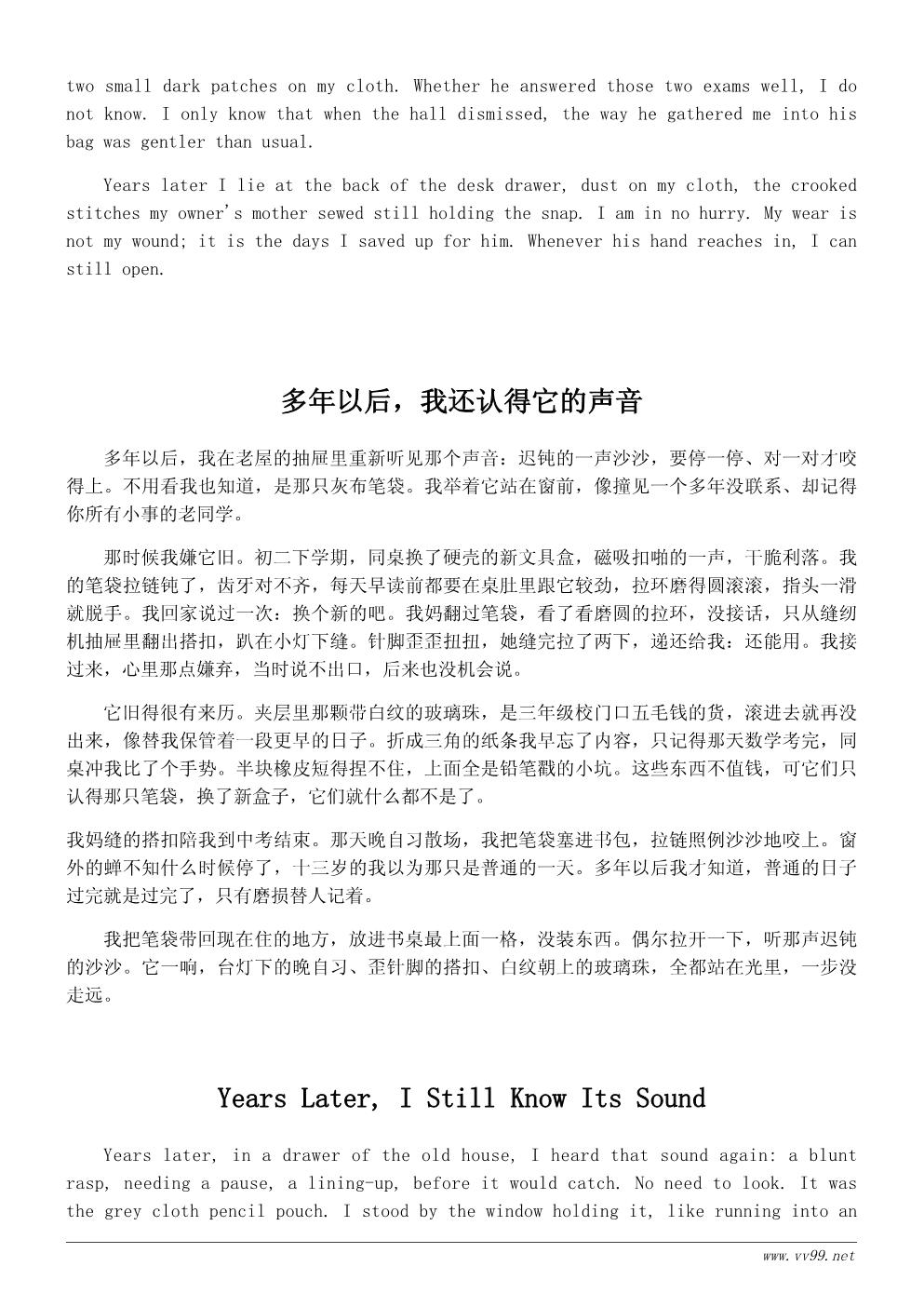
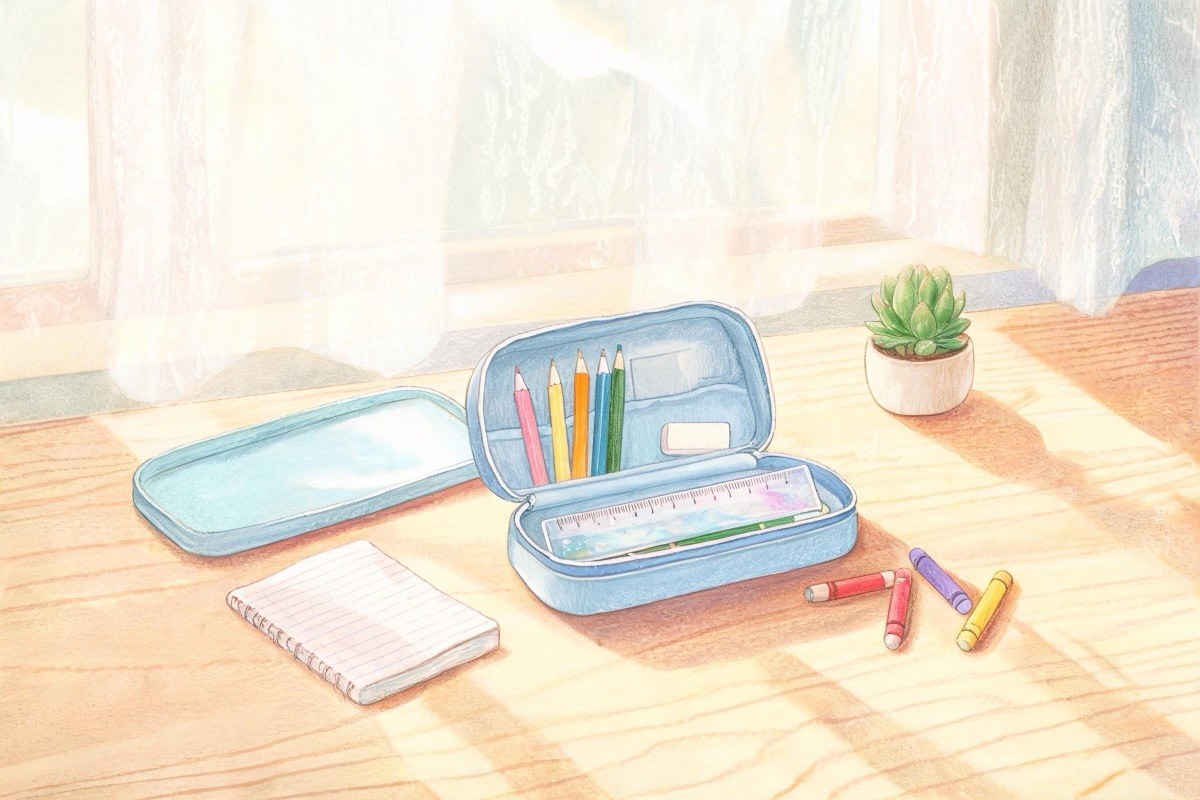
开学搬新书,书桌清空到最后一格,我的手碰到一只软塌塌的布口袋。是那只笔袋,藏了两年,灰布面上落了一层细绒。我把它拿到灯下,拉链头的金属片磨得发亮,边缘的棱角早没了,摸上去圆滚滚的,像一枚被河水冲了很久的石子。
拉链还能拉。齿牙钝了,拉起来不再顺滑,要停一停、对一对,才能咬上。我记得它刚来时不是这样。那时拉环一拨,拉链应声而开,声音脆得像新自行车的铃。初一那年我一天要拉开它几十次:早读前掏笔,课间换科目,晚自习拧开台灯。一天几十次,一年两万个日夜,再硬的金属也会磨平脾气。
夹层里掉出几样东西。一张折成三角的纸条,展开来是同桌的字:最后一道数学题选C,别问为什么。纸条边角都软了。还有一颗玻璃珠,透明的,中间一缕白纹,是三年级在校门口五毛钱买的,不知什么时候滚进了笔袋最里面,就一直待着。半块橡皮,短得捏不住,上面有铅笔戳的坑,一个挨一个,像谁无聊时数过的心事。
我妈说过给我换个新的。我捏着那只笔袋,没点头也没摇头。新的笔袋我见过,硬壳,磁吸扣,拉开利索得很。可它不会记得我。这只笔袋的布面被手心的汗浸出一块深色,放得下我从小学到初中所有的慌慌张张。它替我收过传错的纸条、藏过考砸的卷子,拉链坏过一次,我妈用缝纫机给它缝了个搭扣,针脚歪歪扭扭,我至今没舍得拆。
那天我把新文具一样一样装进旧笔袋。钝了的拉链拉了两下才咬上,发出迟钝的一声。我忽然不太着急换新的了。东西陪人久了,磨损不是它的伤,是它把时间一层一层交到了你手上。那颗玻璃珠回到夹层里,白纹朝上,像一小截没化完的雪。
The Pouch Worn Round by Time
Back to school, moving books, the desk emptied down to the last drawer, my hand touched a soft cloth pouch. It was the old pencil pouch, hidden away for two years, a fine layer of dust on its grey cloth. I carried it under the lamp. The metal pull of the zipper had been rubbed bright, its edges long gone round, smooth as a stone tumbled in a river for years.
The zipper still works. The teeth are dull; it no longer slides smoothly. You have to stop, line it up, and then it catches. I remember it was not like this when it first came. Then, one flick of the pull and it opened, the sound crisp as a new bicycle bell. In seventh grade I opened it dozens of times a day: taking out a pen before morning reading, switching subjects at break, turning on the desk lamp at evening study. Dozens of times a day, twenty thousand days a year, and even hard metal loses its temper.
A few things fell out of the inner pocket. A note folded into a triangle, unfolded in my deskmate's handwriting: the last math problem is C, do not ask why. The corners had gone soft. There was also a glass marble, clear, with a thread of white inside, bought for five cents at the school gate in third grade, which had rolled into the deepest seam of the pouch at some point and stayed there ever since. Half an eraser, too short to grip, covered with pencil dents, one beside another, like worries someone counted out of boredom.
My mother said she would buy me a new one. I held the old pouch and neither nodded nor shook my head. I had seen new pouches, hard shell, magnetic clasp, opening slick and quick. But it would not remember me. The cloth of this one had been darkened by the sweat of my palm; it had held all my flustered years from primary school through junior high. It kept misdelivered notes, hid failed test papers. Its zipper broke once, and my mother sewed a snap button onto it with her machine, the stitches crooked, and I have never had the heart to remove it.
That day I put my new stationery into the old pouch, one by one. The dull zipper took two tries to close, with a blunt sound. I suddenly was not in a hurry for a new one. When a thing has stayed with a person long, its wear is not its wound; it is the time it has handed to you, layer by layer. The glass marble is back in its pocket, white thread facing up, like a small piece of snow that has not finished melting.
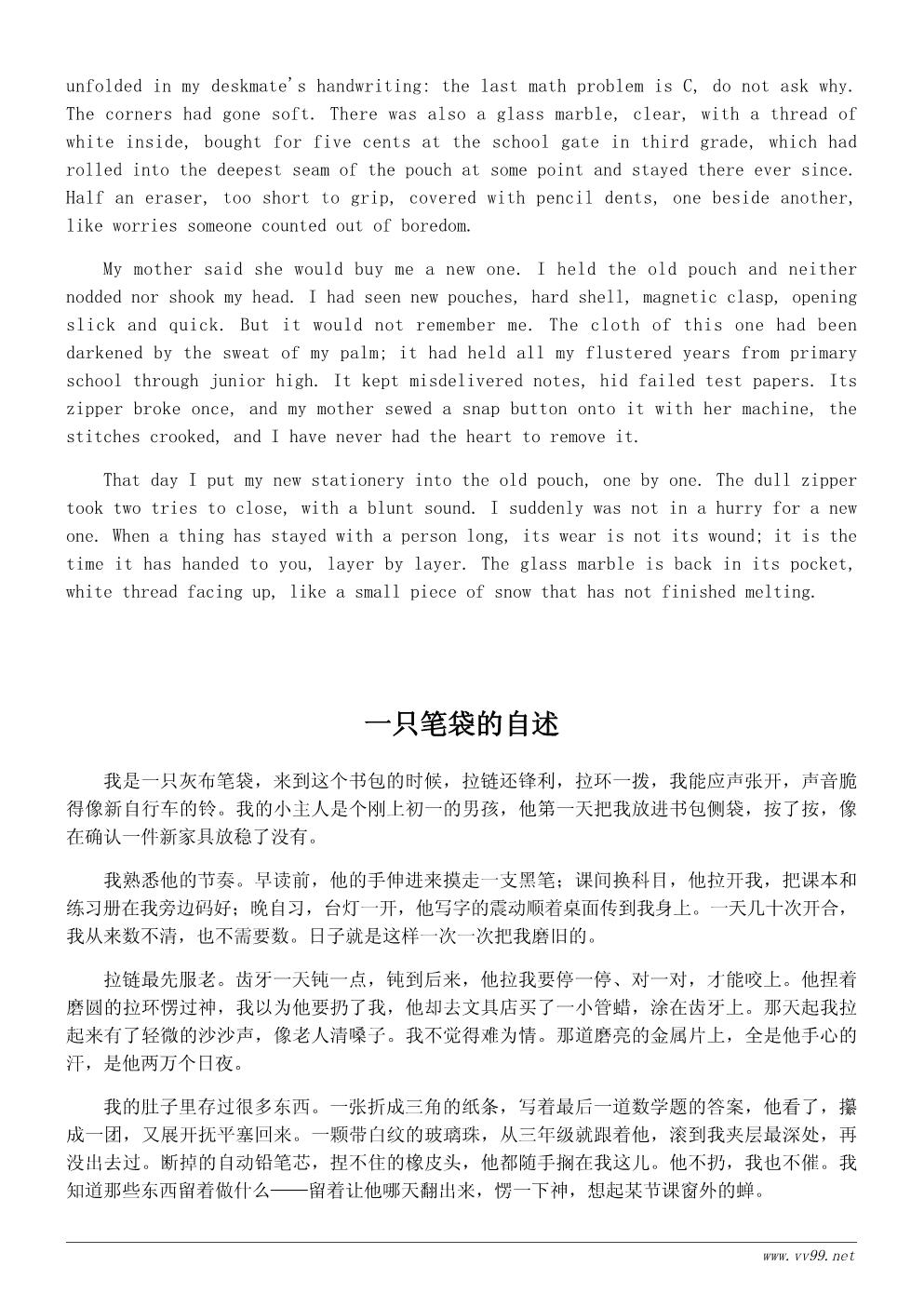
一只笔袋的自述
我是一只灰布笔袋,来到这个书包的时候,拉链还锋利,拉环一拨,我能应声张开,声音脆得像新自行车的铃。我的小主人是个刚上初一的男孩,他第一天把我放进书包侧袋,按了按,像在确认一件新家具放稳了没有。
我熟悉他的节奏。早读前,他的手伸进来摸走一支黑笔;课间换科目,他拉开我,把课本和练习册在我旁边码好;晚自习,台灯一开,他写字的震动顺着桌面传到我身上。一天几十次开合,我从来数不清,也不需要数。日子就是这样一次一次把我磨旧的。
拉链最先服老。齿牙一天钝一点,钝到后来,他拉我要停一停、对一对,才能咬上。他捏着磨圆的拉环愣过神,我以为他要扔了我,他却去文具店买了一小管蜡,涂在齿牙上。那天起我拉起来有了轻微的沙沙声,像老人清嗓子。我不觉得难为情。那道磨亮的金属片上,全是他手心的汗,是他两万个日夜。
我的肚子里存过很多东西。一张折成三角的纸条,写着最后一道数学题的答案,他看了,攥成一团,又展开抚平塞回来。一颗带白纹的玻璃珠,从三年级就跟着他,滚到我夹层最深处,再没出去过。断掉的自动铅笔芯,捏不住的橡皮头,他都随手搁在我这儿。他不扔,我也不催。我知道那些东西留着做什么——留着让他哪天翻出来,愣一下神,想起某节课窗外的蝉。
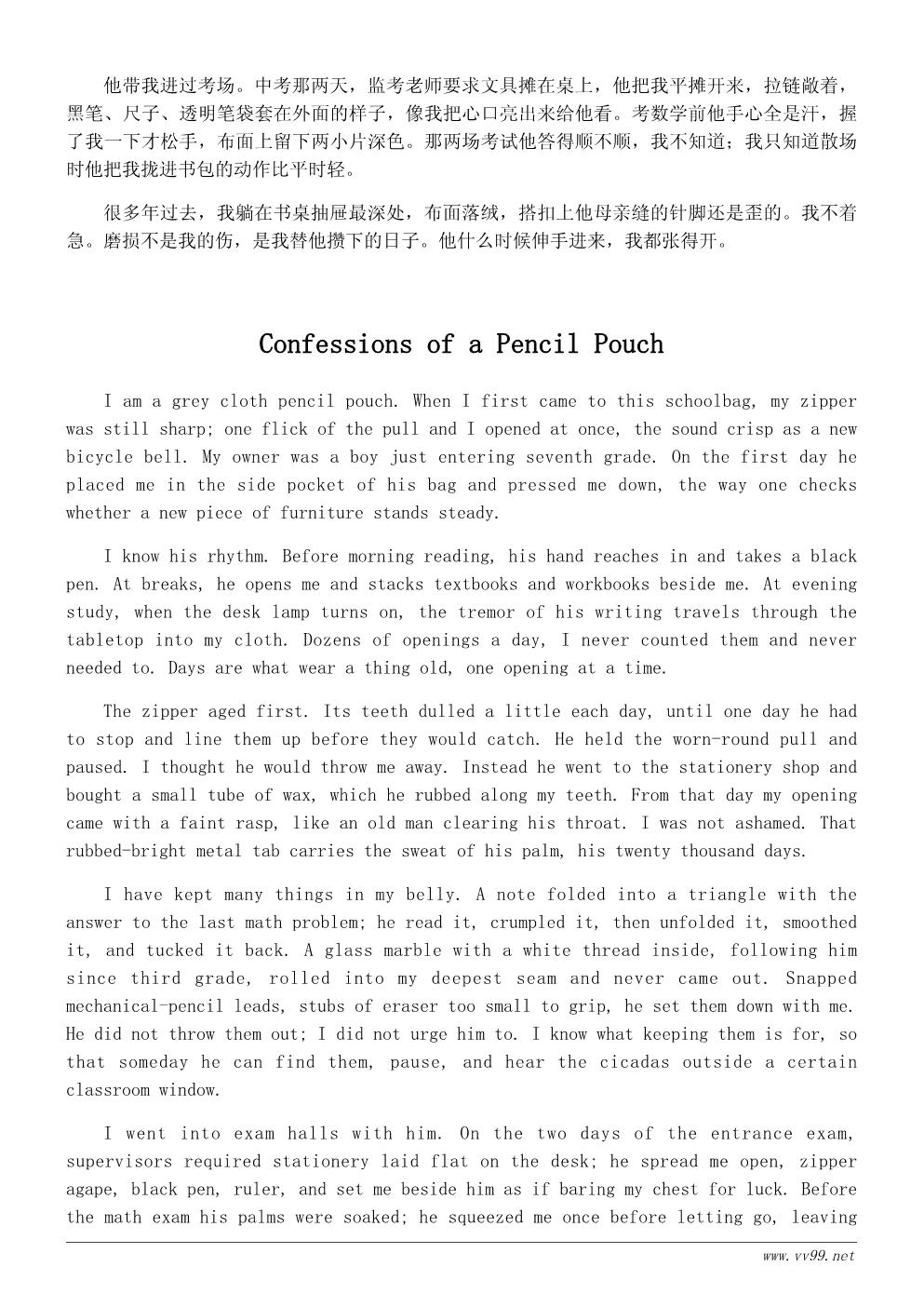
他带我进过考场。中考那两天,监考老师要求文具摊在桌上,他把我平摊开来,拉链敞着,黑笔、尺子、透明笔袋套在外面的样子,像我把心口亮出来给他看。考数学前他手心全是汗,握了我一下才松手,布面上留下两小片深色。那两场考试他答得顺不顺,我不知道;我只知道散场时他把我拢进书包的动作比平时轻。
很多年过去,我躺在书桌抽屉最深处,布面落绒,搭扣上他母亲缝的针脚还是歪的。我不着急。磨损不是我的伤,是我替他攒下的日子。他什么时候伸手进来,我都张得开。
Confessions of a Pencil Pouch
I am a grey cloth pencil pouch. When I first came to this schoolbag, my zipper was still sharp; one flick of the pull and I opened at once, the sound crisp as a new bicycle bell. My owner was a boy just entering seventh grade. On the first day he placed me in the side pocket of his bag and pressed me down, the way one checks whether a new piece of furniture stands steady.
I know his rhythm. Before morning reading, his hand reaches in and takes a black pen. At breaks, he opens me and stacks textbooks and workbooks beside me. At evening study, when the desk lamp turns on, the tremor of his writing travels through the tabletop into my cloth. Dozens of openings a day, I never counted them and never needed to. Days are what wear a thing old, one opening at a time.
The zipper aged first. Its teeth dulled a little each day, until one day he had to stop and line them up before they would catch. He held the worn-round pull and paused. I thought he would throw me away. Instead he went to the stationery shop and bought a small tube of wax, which he rubbed along my teeth. From that day my opening came with a faint rasp, like an old man clearing his throat. I was not ashamed. That rubbed-bright metal tab carries the sweat of his palm, his twenty thousand days.
I have kept many things in my belly. A note folded into a triangle with the answer to the last math problem; he read it, crumpled it, then unfolded it, smoothed it, and tucked it back. A glass marble with a white thread inside, following him since third grade, rolled into my deepest seam and never came out. Snapped mechanical-pencil leads, stubs of eraser too small to grip, he set them down with me. He did not throw them out; I did not urge him to. I know what keeping them is for, so that someday he can find them, pause, and hear the cicadas outside a certain classroom window.
I went into exam halls with him. On the two days of the entrance exam, supervisors required stationery laid flat on the desk; he spread me open, zipper agape, black pen, ruler, and set me beside him as if baring my chest for luck. Before the math exam his palms were soaked; he squeezed me once before letting go, leaving two small dark patches on my cloth. Whether he answered those two exams well, I do not know. I only know that when the hall dismissed, the way he gathered me into his bag was gentler than usual.
Years later I lie at the back of the desk drawer, dust on my cloth, the crooked stitches my owner's mother sewed still holding the snap. I am in no hurry. My wear is not my wound; it is the days I saved up for him. Whenever his hand reaches in, I can still open.
小提示:上面此文档内容仅展示完整文档里的部分内容, 若需要下载完整文档请 点击免费下载完整文档 。