文章内容
我把作息表按季节调了四次
初一下学期期中考试,我考砸了。不是不努力,是每天下午第二节课后就犯困,晚上写作业到十一点,早上六点二十起床,一天到晚脑子像蒙着一层布。我妈说我作息有问题,我没当回事,直到有天晚自习打瞌睡被老师叫醒,我才坐下来认真看自己的时间表。
那张表是初一开学时定的,一年没动过:早上六点半起,晚上十点半睡,傍晚跑步四十分钟。可夏天天黑得晚,晚上十点我根本睡不着,翻来覆去半小时,第二天早上自然起不来。冬天天不亮,六点半的闹钟响时屋里还是黑的,我带着没睡醒的脑子去上学,上午的课全在硬撑。我这才明白,作息表是死的,季节是活的,天黑的早晚、温度的高低,都在改我的身体状态。
我开始按季节调表。入夏,我把背诵全挪到早上五点半到六点,那会儿天已经亮了,凉快,背得快;傍晚跑步改到七点以后,太阳落了再跑;晚上十点半上床改成十点四十,允许自己多躺二十分钟,反正夏天觉少。入秋,我把最难的数学大题练习挪到晚饭后第一段精神最好的时间。入冬,跑步换成屋里的跳绳和拉伸,早上闹钟推迟到六点五十,起床难就不硬起,把晨读改成站着读,站着不容易困。每一季换表,我都先在日历上圈出换季那一周,提前把下一季的安排写好。
执行下来,收获是一点点显出来的。夏天早晨背英语,一个假期我把初一的课文全过了一遍;冬天不再带着困意上第一节课,上午的听课效率肉眼可见地回来了。期末考试我的名次前进了二十多名,但我知道真正的变化不是名次,是我第一次觉得计划是自己定的、合身的,不是抄来的枷锁。
这一年我最大的思考是:规划不是把一天排满,而是认清自己一天里什么时候清醒、什么时候发沉,再把要紧的事放进清醒的时段。季节会替我们改变身体,聪明的人跟着季节调,而不是跟自己的身体硬扛。换季先换作息,这是我用一次考砸换来的经验。现在每次换季前一周,我都会重新排一次表,像给学习换季添衣。这个动作不大,但它让我一整年都站在自己状态最好的那一格里。
I Adjusted My Daily Schedule Four Times, One for Each Season
I failed the midterm exam in the second term of seventh grade. It was not for lack of effort. After the second period in the afternoon I got sleepy every day, I did homework until eleven at night, and got up at six twenty in the morning, so my brain felt covered with a cloth all day. My mother said my daily routine was off. I did not take it seriously, until one evening I was woken up by the teacher for dozing off in study hall. Only then did I sit down and really look at my schedule.
That schedule had been made at the start of seventh grade and had not changed in a year: up at six thirty, bed at ten thirty, forty minutes of running in the evening. But in summer it gets dark late, and at ten I simply could not fall asleep, tossing for half an hour, so of course I could not get up the next morning. In winter it was still dark at six thirty when the alarm rang. I went to school with an unwoken brain and dragged through the morning classes. Only then did I understand: the schedule is dead, but the seasons are alive. How early it gets dark, how high or low the temperature is, all of it changes the state of my body.
I began adjusting the schedule by season. When summer came, I moved all recitation to the morning, from five thirty to six, when it was already light and cool and I memorized fast. I moved evening running to after seven, once the sun was down. Bedtime shifted from ten thirty to ten forty, allowing myself twenty more minutes in bed, since summer sleep is short anyway. In autumn I moved the hardest math problem practice to the first block of prime time after dinner. In winter, running became jump rope and stretching indoors, the alarm moved back to six fifty, and if getting up was hard I did not force myself upright; I changed morning reading to reading while standing, because standing makes it harder to doze off. Each season, I circle the changeover week on my calendar in advance and write out the plan for the next season ahead of time.
The gains showed up little by little. Reciting English on summer mornings, I went through the whole seventh-grade textbook over one vacation. In winter I no longer dragged into first period sleepy, and my focus in morning classes came back visibly. My rank in the final exam moved up more than twenty places, but I know the real change is not the rank. For the first time I felt the plan was mine, tailored to me, not a borrowed set of shackles.
My deepest thought after this year: planning is not packing a day full. It is knowing when in the day you are clear-headed and when you drag, then putting the important things into the clear hours. The seasons change our bodies for us. Smart people adjust along with the seasons instead of wrestling with their own bodies. When the season changes, change your routine first. That is the lesson I bought with one failed exam. Now, one week before each change of season, I rebuild my schedule, like dressing my studies for the new weather. The gesture is small, but it has kept me standing in my best hour all year long.
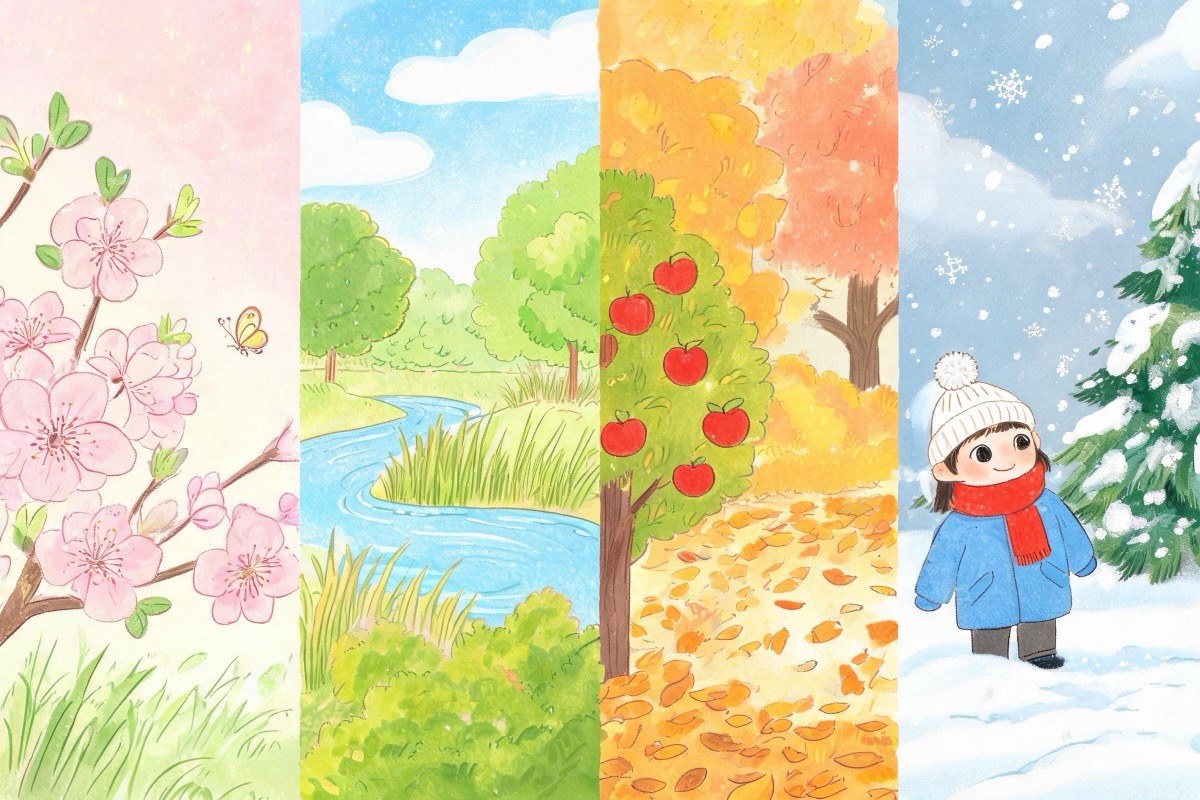
一张贴在墙上的四季学习地图
初二开学那天,我在墙上贴了一张大白纸,画了四个格子,分别写春夏秋冬。我要把这一年像地图一样走一遍。这个想法来自地理课,老师说气候决定农事,什么季节种什么。我一想,学习也一样,什么季节就该干什么季节的事。
我在四个格子里写不同的事。春天格子:把数学的几何基础补牢,每天晚饭后四十分钟,只啃这一件事;顺便每周去公园一次,观察物候,当放松。夏天格子:英语是弱科,暑假整块时间全给它,上午听课,下午做题,傍晚游泳,游完冲个澡回来背单词,脑子凉快的时候记东西快。秋天格子:物理新开的课,跟上就行,不许熬夜补;十月有运动会,那几天书放一放,跑完步回来睡觉比什么都重要。冬天格子:不学新东西,把一年的错题从头过一遍,过完在纸上打一个勾。
计划贴在墙上,执行才是难的地方。开春头两周我做得很好,第三周学校搞月考,几何断了四天。断了之后我差点放弃,觉得计划破了就没用了。后来我改了办法:断了就接上,不补欠的,只做当天的。这个改动救了我。整个春天,几何真正完整的晚自习其实只有三十多天,但三十多天足够把三角形全等的几种情形啃下来。
夏天最险。七月我有两天热得什么都不想干,躺在凉席上听风扇转。第三天早上四点半天还没全亮,凉快,我爬起来学了两个小时,发现热天的出路在早上。从那以后暑假的英语全挪到清晨,下午热就做题,做错的题抄下来,晚上凉快了再重做一遍。游泳一天没断,游完那半小时背单词,是我一年里效率最高的时段,这个时段是泳池给我的。
到冬天复盘时,墙上那张纸已经贴满了小纸条,勾画得乱七八糟。错题本过了两遍半,没到三遍,我在冬天格子里写:完成七成,及格。英语期末比期中高了二十二分。我盯着那个及格两个字看了很久,忽然明白,计划不是用来完美执行的,是用来在乱掉之后还能找回方向的。季节的好处是它自带节奏,春天适合打基础,夏天适合集中攻坚,秋天适合稳住,冬天适合回头。跟着这个节奏走,一年的长路就被切成四段,每段都不长,走完一段,下一段自己就来了。
A Four-Season Study Map Pinned on My Wall
On the first day of eighth grade, I pinned a big white sheet on my wall and drew four boxes, labeled spring, summer, autumn, and winter. I wanted to walk this school year the way you walk a map. The idea came from geography class. Our teacher said climate decides farm work: you plant what the season allows. I thought, studying is the same. Each season should hold the things that season is for.
I wrote different things in the four boxes. Spring box: shore up the geometry basics, forty minutes after dinner every night, only this one thing; plus one trip to the park each week to watch the signs of the season, as rest. Summer box: English is my weak subject, so the whole summer block belongs to it. Listen to lessons in the morning, do exercises in the afternoon, swim in the evening; after a shower post-swim, memorize vocabulary, because the brain absorbs fast when it is cool. Autumn box: physics is a new subject, just keep up, no staying up late to catch up; the sports meet is in October, and on those days put the books down, because sleeping after running matters more than anything. Winter box: learn nothing new; go through a year of wrong answers from the start, and tick the paper when done.
Pinning the plan on the wall was the easy part. Carrying it out is where it gets hard. The first two weeks of spring went well. In the third week the school held a monthly exam, and my geometry streak broke for four days. After the break I nearly gave up, thinking a broken plan was a useless plan. Then I changed my rule: when it breaks, restart; do not repay the debt; just do the share of today. That change saved me. In all of spring, geometry really had only thirty-something complete evenings, but thirty-something evenings were enough to chew through the cases of triangle congruence.
Summer was the riskiest. In July there were two days so hot I wanted to do nothing, lying on the cooling mat listening to the fan turn. On the third morning, half-light before dawn, cool air, I got up and studied for two hours, and found the way through a hot season is early morning. After that, all summer English moved to early morning. When afternoons were hot I did exercises, copied out the wrong ones, and redid them in the cool of evening. I did not miss a single swim, and the half hour after swimming for vocabulary became my most efficient stretch of the whole year. The pool gave me that stretch.
By the winter review, the white sheet was covered with little slips, ticks and scribbles everywhere. The wrong-answer book had gone through two and a half rounds, not three, so I wrote in the winter box: seventy percent done, passing. My final English score was twenty-two points higher than the midterm. I stared at the word passing for a long time, and suddenly understood: a plan is not meant to be executed perfectly. It is meant to help you find your direction again after things fall apart. The gift of the seasons is that they carry their own rhythm. Spring suits foundations, summer suits concentrated attack, autumn suits holding steady, winter suits looking back. Follow that rhythm, and the long road of a year is cut into four stretches, none of them long. Finish one, and the next arrives by itself.
小提示:上面此文档内容仅展示完整文档里的部分内容, 若需要下载完整文档请 点击免费下载完整文档 。