文章内容
文章内容
How was your school trip? Did you go to the zoo? 你去过动物园吗?
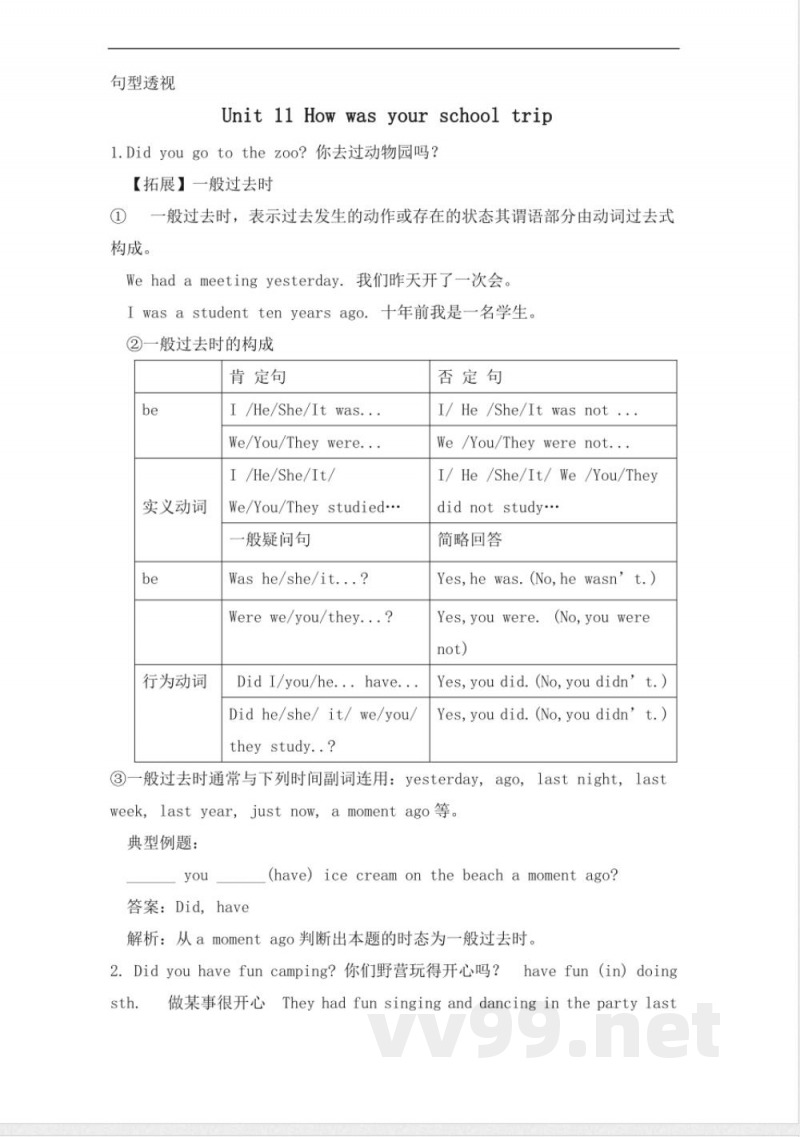
【拓展】 一般过去时
一般过去时表示过去发生的动作或存在的状态,其谓语部分由动词过去式构成。
We had a meeting yesterday. 我们昨天开了一次会。
I was a student ten years ago. 十年前我是一名学生。
② 一般过去时的构成
肯定句:
I/He/She/It was...
We/You/They were...
I/He/She/It/We/You/They studied...
一般疑问句:
Was he/she/it...? Were we/you/they...?
Did I/you/he... have...?
Did he/she/it/we/you/they study...?
否定句:
I/He/She/It was not...
We/You/They were not...
I/He/She/It/We/You/They did not study...
简略回答:
Yes, he was. (No, he wasn't.)
Yes, you were. (No, you weren't.)
Yes, you did. (No, you didn't.)
③ 一般过去时通常与下列时间副词连用:
yesterday, ago, last night, last week, last year, just now, a moment ago 等。
典型例题:
Did you have ice cream on the beach a moment ago? 你刚才在海滩上吃了冰激凌吗?
解析:从 a moment ago 判断出本题的时态为一般过去时。
have fun (in) doing 做某事很开心
They had fun singing and dancing at the party last night. 他们昨晚在派对上玩得很开心,唱歌跳舞。
2. Did you have fun camping? 你们野营玩得开心吗?
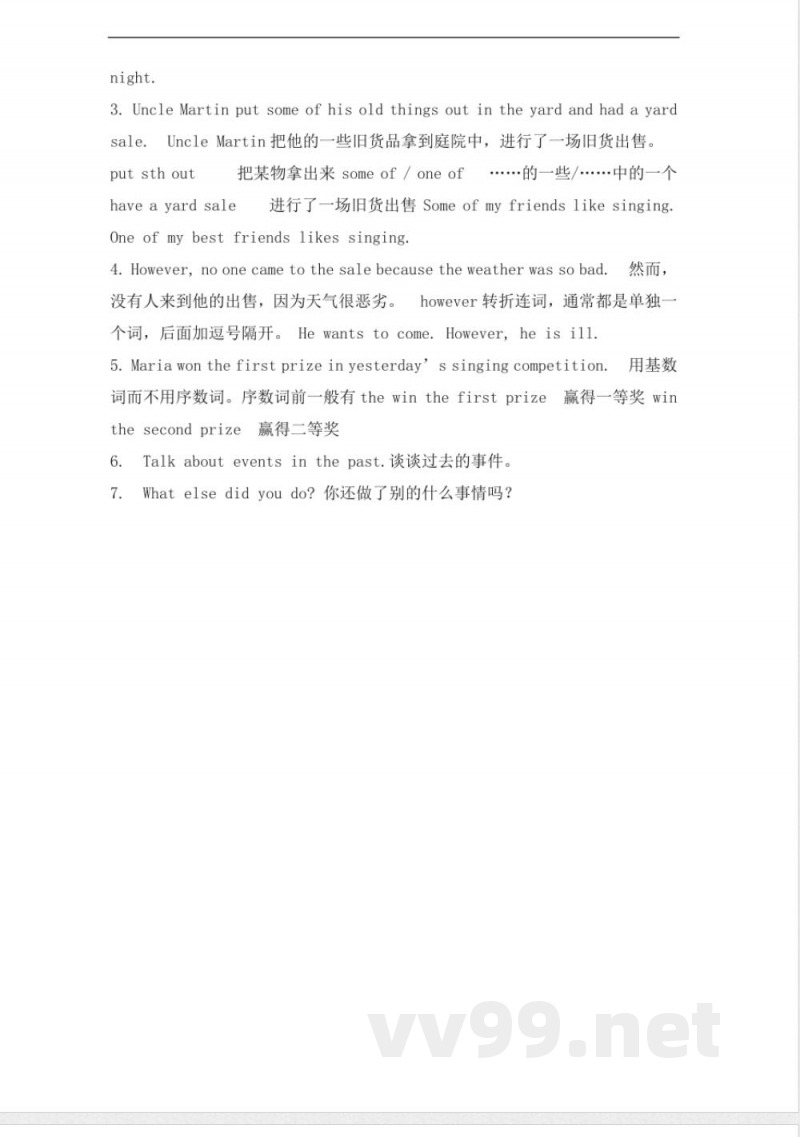
3. Uncle Martin put some of his old things out in the yard and had a yard sale. Uncle Martin 把他的一些旧货品拿到庭院中,进行了一场旧货出售。
put sth out 把某物拿出来
some of/one of... 一些/中的一个
have a yard sale 进行旧货出售
4. However, no one came to the sale because the weather was so bad. 然而,没有人来到他的出售,因为天气很恶劣。
however: 转折连词,通常单独使用,后面加逗号隔开。
He wants to come. However, he is ill. 他想来。然而,他生病了。
5. Maria won the first prize in yesterday's singing competition. 玛利亚在昨天的歌唱比赛中获得了一等奖。
用基数词而不用序数词。序数词前一般有 the。
win the first prize 赢得一等奖
win the second prize 赢得二等奖
6. Talk about events in the past. 谈谈过去的事件。
What else did you do? 你还做了别的什么事情吗?
说明:本文档为学习资料,仅供教学与自学使用,资源免费下载,不含任何诱导下载或捆绑程序。
小提示:上面此文档内容仅展示完整文档里的部分内容, 若需要下载完整文档请 点击免费下载完整文档。