文章内容
我的观察小本本
去年以前,我最怕星期的日记。每次拿起笔,脑子里就剩三句话:今天我很开心,妈妈做了红烧肉,我度过了愉快的一天。三句话写完,我还得拖上半个小时,因为要凑够老师说的行数。
转折是在三月一个星期六。妈妈塞给我一个巴掌大的蓝皮本,说:从今天起,你每天去院子里找一个新鲜东西,找到就记下来,找不到不许吃饭。我以为她在开玩笑,结果晚饭真的没做,她坐在桌边等我。我只好下楼。
那天我在墙角发现一溜蚂蚁,正往一块饼干渣搬家,领头的两只碰了碰触角就分开了。我蹲了二十分钟,回来一口气写了六行。妈妈看了一眼本子,什么也没说,第二顿红烧肉做得格外香。
从那以后,小本本成了我的宝贝。柳芽一天一个样,我给它画了三次像;燕子在屋檐下衔泥,我数过它们一天来回几趟,最多的一次是三十七趟;春雨落在铁皮雨棚上,声音和落在水泥地上不一样,我把两种声音都写了下来。
夏天我记录了一只蝉壳。它在老槐树腰上,空空的,背裂开一道缝,我守着它等了两个傍晚,蝉终于出来了,翅膀皱皱的,像被揉过又展开的糖纸。那篇日记我写了一整页,自己读了一遍,居然有点想笑又想哭。
秋天我捡过十七片不同的叶子,夹在本子里,每片下面写日期和它掉下来的地方。冬天第一场雪,我伸手接住一片,看它在掌心化成一个小小的湿圆点,赶紧记下来,怕忘了。
变化是什么时候发生的,我也说不清。只知道后来周记交上去,本子发回来,上面多了一行红字:你的句子会动,读得到画面。老师还在课堂上念了我写蝉壳的那一段,念完全班安静了两秒,然后鼓掌。
我忽然明白,从前我不是不会写,是日子里没有东西可倒。小本本逼着我去看,看够了,句子自己就排着队出来了,拦都拦不住。
现在那个蓝皮本已经写满了两本。第一本的字歪歪扭扭,第二本的字密一些,也稳一些。它们躺在我的书架上,像四个季节排着队躺在我家里。
要问我最大的体会是什么,我会说:四季是我最耐心的老师。它不催我,也不给我题目,它只是把柳芽、燕子、蝉壳和雪,一样一样摆在我每天放学经过的路上,等我自己弯腰去捡。
My Little Observation Notebook
Before last year, the thing I feared most was the weekly diary. Every time I picked up my pen, only three sentences were left in my head: today I was happy, mother made braised pork, I spent a pleasant day. After those three sentences I still had to drag on for half an hour to reach the number of lines the teacher asked for.
The turn came on a Saturday in March. Mother handed me a blue notebook the size of my palm and said: starting today, go find one new thing in the yard every day, write it down if you find it, and no dinner if you do not. I thought she was joking. She really did not cook, and sat at the table waiting for me. I had no choice but to go downstairs.
That day I found a line of ants in the corner of the wall, moving a crumb of biscuit home. The two at the front touched antennae and then split up. I squatted there for twenty minutes, came back and wrote six lines in one breath. Mother glanced at the notebook, said nothing, and the second pot of braised pork that evening smelled especially good.
After that the little notebook became my treasure. The willow buds changed a little every day, and I drew them three times. The swallows carried mud under the eaves, and I counted their trips in a day, thirty-seven at most. Spring rain on the tin awning sounded different from rain on concrete, and I wrote down both sounds.
In summer I recorded one cicada shell. It sat on the trunk of the old locust tree, empty, with a crack down its back. I watched it for two evenings, and at last the cicada came out, its wings wrinkled like candy paper that had been crumpled and then smoothed open. That diary entry filled a whole page. I read it once myself, and felt like laughing and crying at the same time.
In autumn I collected seventeen different leaves, pressed them in the notebook, and wrote under each one the date and the exact spot where it fell. At the first snow of winter I caught one flake in my hand and watched it melt into a small wet circle on my palm, then hurried to write it down, afraid I would forget.
I cannot say exactly when the change happened. I only know that later, when my weekly journals came back, one line of red ink had been added: your sentences move; I can see pictures in them. The teacher read my cicada-shell paragraph aloud in class, and after she finished the room stayed quiet for two seconds, then everyone clapped.
I suddenly understood that before, it was not that I could not write; my days simply had nothing in them to pour out. The notebook forced me to look, and once I had looked enough, the sentences lined up and came out on their own, impossible to hold back.
The blue notebook has now been filled through twice. The handwriting in the first is crooked; the handwriting in the second is denser and steadier. They lie on my bookshelf like four seasons lying in a queue inside my home.
If you ask me my biggest lesson, I will say this: the four seasons are the most patient teachers I have ever had. They never rush me and never set me a topic. They simply place willow buds, swallows, cicada shells and snow, one by one, along the road I pass after school every day, and wait for me to bend down and pick them up myself.
靠窗的座位,我的季节岗位
开学换座位,别人都抢中间的位子,我举手申请靠窗。同桌笑我:靠窗冬天灌风,你傻呀。我不争,心里说:窗户外面那棵银杏,归我了。
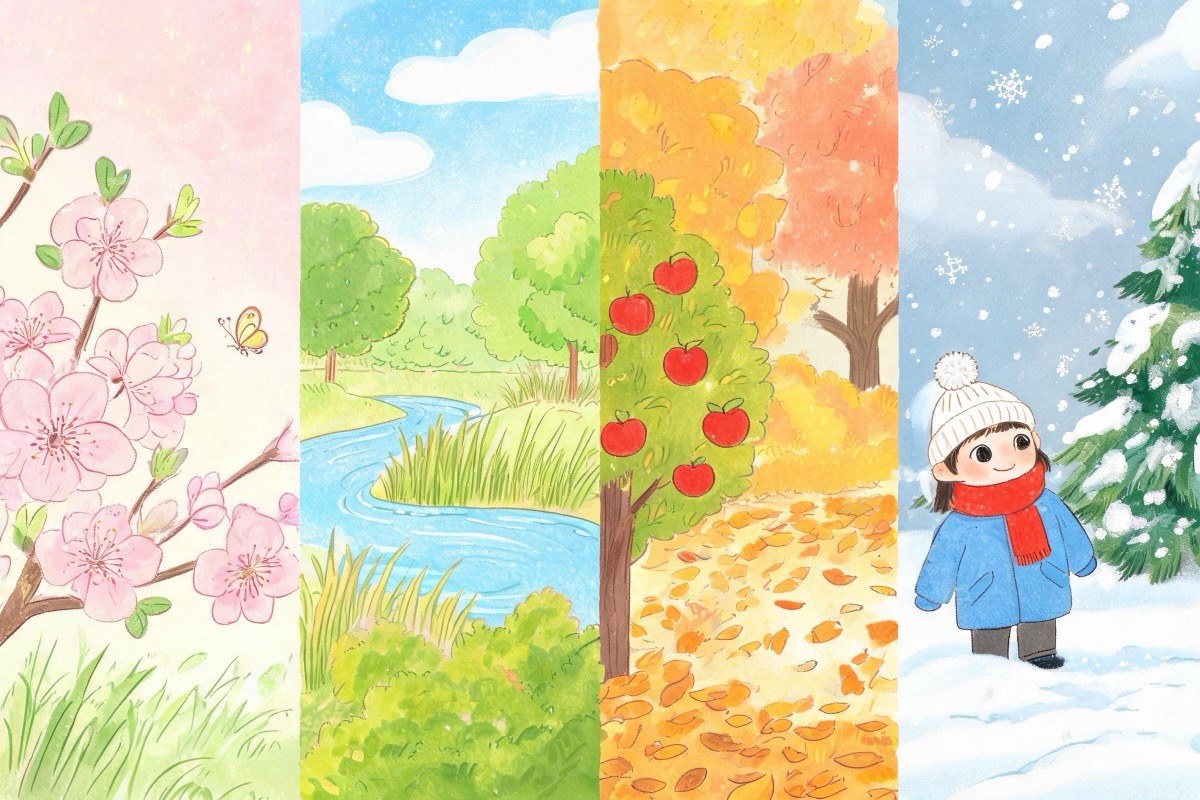
我是这么想的:教室四面墙,只有这扇窗会自己换画。春天它挂出嫩绿,夏天挂深绿,秋天挂金子,冬天挂一把光秃秃的枝。别人看一学期,我看一整年。
我给这棵银杏建了一张卡,钉在文具盒盖里:三月十二日,芽苞鼓起来,像扣了一树小纽扣;四月九日,叶子有我的指甲盖大,风一吹哗啦啦,声音比下课铃还好听;九月二十八日,第一片黄叶落地,我把它捡起来夹进数学书。
记录细节这件事,一开始是老师布置的观察作业,一周一次。后来我改成每天记一句,写在卡背面。一句就一句,多了不写。别小看这一句,为了找这一句,我课间都不趴桌子了,全站在窗边看。
变化出现在期中考试以后。那次作文写秋天,全班大半的人写秋天是金色的田野,我写银杏叶落在窗台上,像谁给我寄来一张书签,还写了值日生扫地时叶子跟着扫帚跑。作文发下来,老师在末尾画了三个圈,写了四个字:有自己的话。
十一月,班主任把我那几张观察卡复印了,贴上班级墙报,标题是:一个人的四季。有同学围着看,说原来这棵树有这么多事。那一刻我特别骄傲,不是因为我被贴上了墙,而是我发现,那棵树真的被我一天一天看熟了,像看熟了一个朋友的脸。
冬天叶子落光,我以为没得记了。结果发现树杈间藏着一个空鸟巢,还发现光枝丫上落麻雀的位置每天不一样。我这才知道,观察没有下班的时候,叶子谢了有叶子谢了看的东西。
现在我的作文本从三行流水账长到了两页,老师红笔的批注从空变成了一串。要问我学到了什么,我想说的是:不是我爱上了修辞,是我爱上了看。窗户是个老实的先生,不讲话,也不考我,它只把一棵树的一年摆在我眼前,让我自己数。
明年春天,那棵银杏还会发芽,我的卡已经留好了空页。这个季节岗位,我想一直干下去,干到我们毕业。
The Window Seat, My Season Post
At the start of term when seats changed, everyone fought for the middle rows, while I raised my hand to ask for the window seat. My deskmate laughed: the wind leaks in by the window in winter, are you silly? I did not argue. Inside I said: the ginkgo tree outside this window belongs to me.
Here was my thinking: the classroom has four walls, and only this window changes its own painting. In spring it hangs out pale green, in summer deep green, in autumn gold, in winter a bundle of bare branches. Others look at it for one term; I get to watch it for a whole year.
I made a card for the ginkgo and pinned it inside my pencil case lid: March 12, the buds swelled up, as if a tree full of small buttons had been fastened on; April 9, the leaves reached the size of my fingernails, and when the wind blew they rustled, a sound nicer than the recess bell; September 28, the first yellow leaf landed, and I picked it up and pressed it inside my math book.
Recording details began as the observation homework the teacher assigned, once a week. Later I changed it to one sentence a day, written on the back of the card. Just one sentence, never more. Do not underestimate that one sentence. To find it, I stopped resting my head on the desk at recess and stood at the window watching instead.
The change appeared after the midterm exam. In that essay about autumn, most of the class wrote that autumn is a golden field, while I wrote about a ginkgo leaf landing on the windowsill like a bookmark someone mailed me, and about the leaves running along with the broom as the class monitor swept. When the essay came back, the teacher had drawn three circles at the end and written four characters: words of your own.
In November, our homeroom teacher photocopied my observation cards and put them on the class bulletin board under the title: The Four Seasons of One Person. Classmates gathered to look, saying they never knew this tree had so many doings. I felt proud at that moment, not because my work went up on the wall, but because I realized I had truly grown familiar with that tree day by day, the way one grows familiar with the face of a friend.
In winter the leaves all fell, and I thought there was nothing left to record. Then I found an empty bird nest hidden in the fork of the branches, and noticed that the perching spots of the sparrows on the bare twigs changed every day. Only then did I learn that observation never clocks out; when the leaves are gone, there are things to see precisely because they are gone.
Now my composition notebook has grown from three lines of a dull account to two full pages, and the red-pen notes from the teacher have grown from blank to a string. If you ask what I have learned, I would say: it is not that I fell in love with rhetoric, but that I fell in love with looking. The window is an honest teacher. It does not talk and does not quiz me. It simply lays one year of one tree before my eyes and lets me count it myself.
Next spring that ginkgo will bud again, and my card already has blank pages saved. I want to keep this season post for a long time, until we graduate.
小提示:上面此文档内容仅展示完整文档里的部分内容, 若需要下载完整文档请 点击免费下载完整文档 。