文章内容
鸡蛋浮起来之前,我先学会了看
科学老师布置盐水浮鸡蛋实验的时候,我心里想,这有什么难的,鸡蛋、盐、水,谁不会看。我做实验一向快,材料摆上桌,水倒进杯,鸡蛋放进去,鸡蛋坐在水底,我拿起笔准备写实验完成。老师说过要记录,我翻开本子,笔尖落在纸上,卡住了。我写什么?我只知道鸡蛋沉在下面,可它是怎么沉的,躺着的还是立着的,杯底有没有没化开的盐,我一概说不上来。我这才发现,我从前所谓看,只是扫一眼。
我把杯子端起来凑近看。鸡蛋横躺在杯底,身上有一层特别小的泡,小得像撒了把碎芝麻。我从来不知道鸡蛋身上会冒泡。我把这一条记下来:鸡蛋沉底,横躺,蛋皮上有小泡。写完这一行,我忽然觉得这个本子有用,它逼我把眼睛停在杯子上,不许我扫一眼就走。
加盐以后我学乖了,每加一勺就停一下,等一等。第一勺下去,盐粒沉在杯底像一层白沙,我用筷子搅,搅到水发浑,盐不见了,鸡蛋一动不动。我把时间也记进去:四点零五分,一勺,无变化。第二勺,还是无变化。写到无变化三个字的时候我心里有点烦,可是转念一想,没变化也是变化的一种,本子上的空格也是证据。
变化出现在第四勺和第五勺之间。第四勺化开以后,鸡蛋的一端慢慢抬起来,像睡着的人翻了个身。我屏住气盯着它,它立起来了,可还站在杯底没走。我在本子上一行一行记:蛋立起,离底一点,又离底多一点。第五勺下去,它真的往上走了,走得很慢,慢得像怕人看见。它停在杯子中间,我数了三下,它又往上,顶上探出水面,鼓出一个小小的黄帽子。
我盯着那顶黄帽子看了很久,忽然明白这个实验真正给我的东西不是鸡蛋浮起来这五个字。鸡蛋浮起来谁都知道,可鸡蛋翻身的那半厘米,蛋皮上那层芝麻泡,第四勺和第五勺之间的那一下,如果我不记,它们就白白过去了,我这一辈子都不会知道鸡蛋还会翻身。观察记录不是给老师交差,是我给自己留证据,证明我真的看见过。
现在我看东西的习惯变了。以前看一眼就算看过,现在我会多停十秒,找找有没有第二样东西。看云我会看它挪没挪,看绿豆发芽我会量它高了几毫米。我妈说我最近话里全是数字,可我觉得,能说出数字才算真的看见。一次实验,一个本子,一层芝麻一样的小泡,把我这双只会扫一眼的眼睛教变了。这就是我做这个实验最大的心得。
Before the Egg Floated, I Learned to Look
When our science teacher assigned the floating-egg-in-salt-water experiment, I thought, how hard can it be: egg, salt, water — everybody knows how to look. I am always fast at experiments. Materials on the table, water in the cup, egg dropped in, egg sitting at the bottom. I picked up my pen ready to write experiment complete. But the teacher had said keep a record, and when I opened my notebook, my pen tip froze on the page. What would I write? All I knew was that the egg sank. How did it sink — lying flat or standing up? Was there undissolved salt on the bottom? I could not answer any of it. That was when I realized that what I called looking had only ever been one quick glance.
I lifted the cup and brought my face close. The egg lay on its side at the bottom, covered with a layer of tiny bubbles, tiny as scattered sesame seeds. I had never known an egg could bubble. I wrote it down: egg at bottom, lying flat, small bubbles on the shell. After that one line, I suddenly felt this notebook was useful. It forced my eyes to stay on the cup and would not let me glance and leave.
After that I learned my lesson. One spoonful of salt, then stop and wait. The first spoonful sank to the bottom like white sand. I stirred until the water went cloudy and the salt vanished — the egg did not move. I started recording the time too: 4:05, one spoonful, no change. Second spoonful, still no change. Writing the words no change made me a little impatient. But then I thought: no change is also a kind of change, and an empty line in the notebook is still evidence.
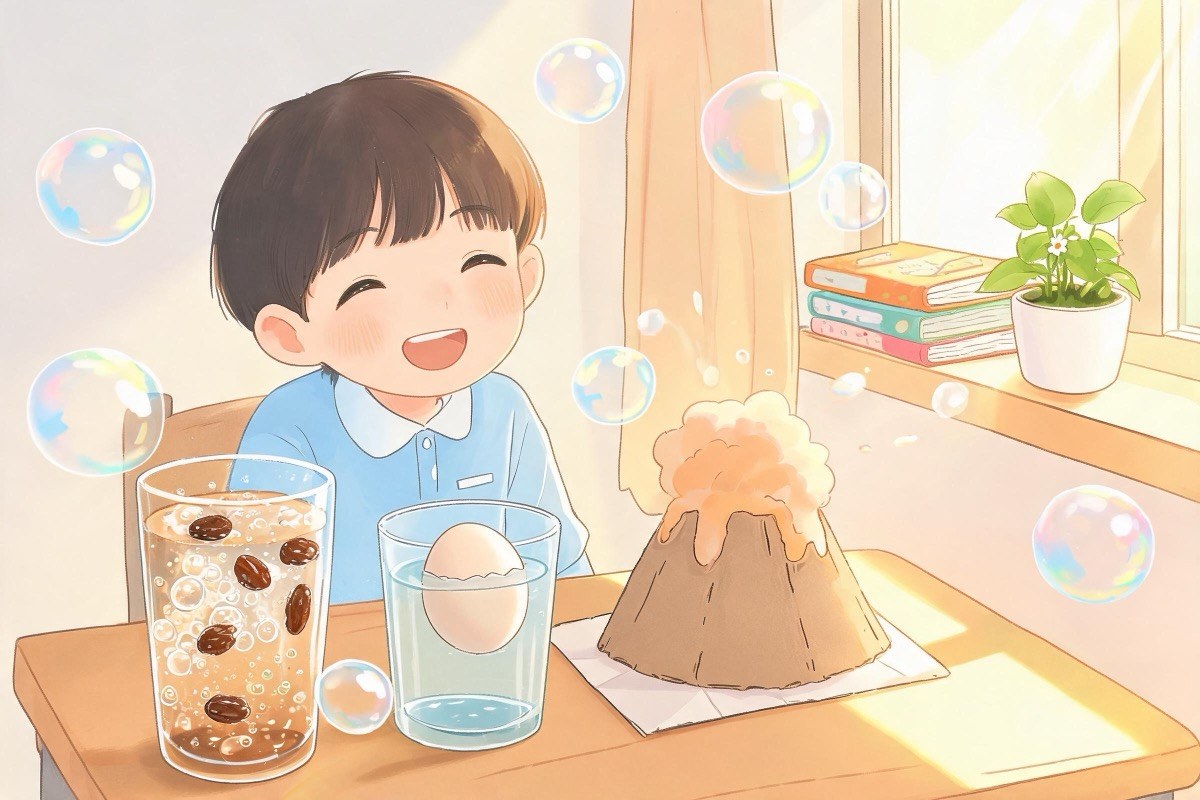
The change came between the fourth spoonful and the fifth. After the fourth dissolved, one end of the egg slowly lifted, like a sleeping person turning over. I held my breath and watched. It stood up, still on the bottom, not moving yet. Line by line I recorded: egg upright, off the bottom a little, now a little more. With the fifth spoonful it truly rose, moving so slowly it seemed afraid to be seen. It paused in the middle of the cup. I counted to three, and it climbed again, its top breaking the surface with a little yellow cap.
I stared at that yellow cap for a long time, and it hit me that what this experiment really gave me was not the five words the egg floats. Everybody knows an egg can float. But the half centimeter when it turned over, the sesame-seed bubbles on its shell, that moment between the fourth and fifth spoonfuls — if I had not written them down, they would have passed for nothing, and I would never in my life have known an egg can turn over. A record is not homework for the teacher. It is evidence I keep for myself that I truly saw.
My habit of looking has changed now. A glance used to count as seeing; now I stay ten seconds longer and hunt for the second thing. When I watch clouds I check whether they moved; when I watch a mung bean sprout I measure how many millimeters it grew. My mom says everything I say lately is numbers. But I think if you can say the number, only then have you really seen. One experiment, one notebook, a layer of sesame-seed bubbles: this experiment took my glance-only eyes and taught them something new. That is my biggest lesson from it.
绿豆盆教会我的十一天
科学老师发绿豆的时候,一人十粒,泡在一次性杯里,要求观察十四天,每天记一行。我心想这也太简单,豆芽嘛,天天看还不容易。第一天我在本子上写:泡了一天,没变化。第二天写:还是没变化。写到第三天,我把笔一扔,跟妈妈说这作业没意思,绿豆根本不动,我没什么可记的。妈妈说,它不动你也得记,不动记不动。
第四天早上我照例趴到杯口,忽然看见一粒绿豆的皮裂了一道小缝,白白的芽从缝里顶出来一点点,像衣服穿不下撑破了线。我激动得跑去喊妈妈,让她也来看。那天我的记录第一次有了内容:第三粒裂口,芽白,约两毫米。写完我盯着这一行看,忽然有点脸红——前三天我天天说没变化,可裂口这件事告诉我,没变化只是我没看够。
第六天,白芽长长了,还弯着,像一个小问号。我把杯子转了个方向,第二天发现弯芽又直回来,朝着窗那边长。这个发现让我记了满满三行。我开始量,用尺子贴着杯壁,每天记一个数:六毫米,九毫米,十四毫米。数字一天一个,本子上的格子开始不够用,我在旁边加小格。
第八天出现了我最想不到的事:脱壳。昨晚还穿着绿衣裳的豆芽,早上壳松了,挂在豆瓣边上,像脱到一半的外套。有两粒的壳整个掉进水里,我捞出来放在纸巾上,跟壳没掉的放在一起比。我在记录里写:壳不是被拔掉的,是自己松的,缝越裂越大,它就掉。写完这句我想了很久——原来变化不是某一天突然发生的,是我以为没变化的那几天里,它在皮底下偷偷准备的。
第十一天,最长的豆芽已经有六厘米,白根上长着细细的根毛,豆瓣中间冒出两片嫩叶,黄绿色,小得像没睡醒。我把它移栽进花盆,在记录本上写下最后几行,然后从头往回翻。翻到前三天的没变化,我笑了。那三行没变化不是废话,它们和后面的裂口、抽根、脱壳连在一起,才是一整条完整的线。少了前面那三行,后面的变化就都成了突然掉下来的。
这十一天给我的心得,不是说豆芽真有趣——说实话中间有几天我烦透了它。它教我的是一种看法:从前我看东西像拍照,咔嚓一下,拍完就走;现在我知道要看第二眼、第十一眼,要天天看。变化这个东西很害羞,它不表演给看一眼的人看,它只给天天来的人看。观察记录本上那些看似没用的没变化,其实是我自己学会观察的脚印。这就是我做这次实验最大的体会。
What the Bean Pot Taught Me in Eleven Days
When our science teacher handed out the mung beans — ten per person, soaked in disposable cups, with instructions to observe for fourteen days and write one line a day — I thought this was far too easy. Beans sprouting, surely anyone can watch that every day. Day one I wrote: soaked one day, no change. Day two: still no change. By day three I threw down my pen and told my mom this homework was pointless, the beans never moved, I had nothing to record. She said: if they do not move, you still record it. No change gets written as no change.
On the morning of day four I leaned over the cup as usual and suddenly saw one bean's skin split open in a tiny crack. A white shoot pushed out of the crack just a little, like a shirt bursting its seams because it got too tight. I ran to fetch my mom and made her come look. For the first time my entry had real content: third bean split, shoot white, about two millimeters. I stared at that line and felt my face go warm. For three days I had kept saying no change, yet this crack told me that no change only meant I had not looked long enough.
On day six the white shoots had grown and were still bent, like little question marks. I turned the cup the other way, and the next day the bent shoots had straightened back toward the window. That discovery filled three full lines. I started measuring, holding a ruler against the cup, writing one number a day: six millimeters, nine, fourteen. The numbers grew daily, the boxes in my notebook ran out, and I drew extra ones in the margin.
On day eight came the thing I least expected: the shells came off. The sprout that had worn its green coat last night woke up loose-skinned, the shell hanging at the edge of the cotyledon like a jacket half shrugged off. Two shells fell into the water entirely; I fished them out and laid them on a tissue beside the ones still on. My entry read: the shell is not pulled off, it loosens by itself — the crack widens until it simply drops. I sat with that sentence for a long time. So change does not happen suddenly on one day. During all the days I called no change, it had been secretly getting ready under the skin.
By day eleven the tallest sprout measured six centimeters. Fine root hairs lined its white roots, and two tender yellow-green leaves appeared between the cotyledons, small as if still asleep. I transplanted it into a flowerpot and wrote the last lines of my record. Then I flipped back to the beginning. At the three days of no change, I laughed. Those three lines were not empty. Joined with the cracking, the roots, and the falling shells, they made one complete line. Without them, all the later changes would look like things that simply fell out of the sky.
The lesson of these eleven days is not that bean sprouts are fascinating — honestly, some of those days I was fed up with them. What it taught me is a way of seeing. I used to look at things like taking photos: click, done, off I go. Now I know to look a second time and an eleventh time, to look every day. Change is a shy thing. It never performs for someone who glances once; it only shows itself to those who come back daily. Those useless-looking no-change lines in my notebook are actually the footprints of me learning to observe. That is my deepest takeaway from this experiment.
小提示:上面此文档内容仅展示完整文档里的部分内容, 若需要下载完整文档请 点击免费下载完整文档 。