文章内容
书里那杯没浮起来的鸡蛋,我也遇到过
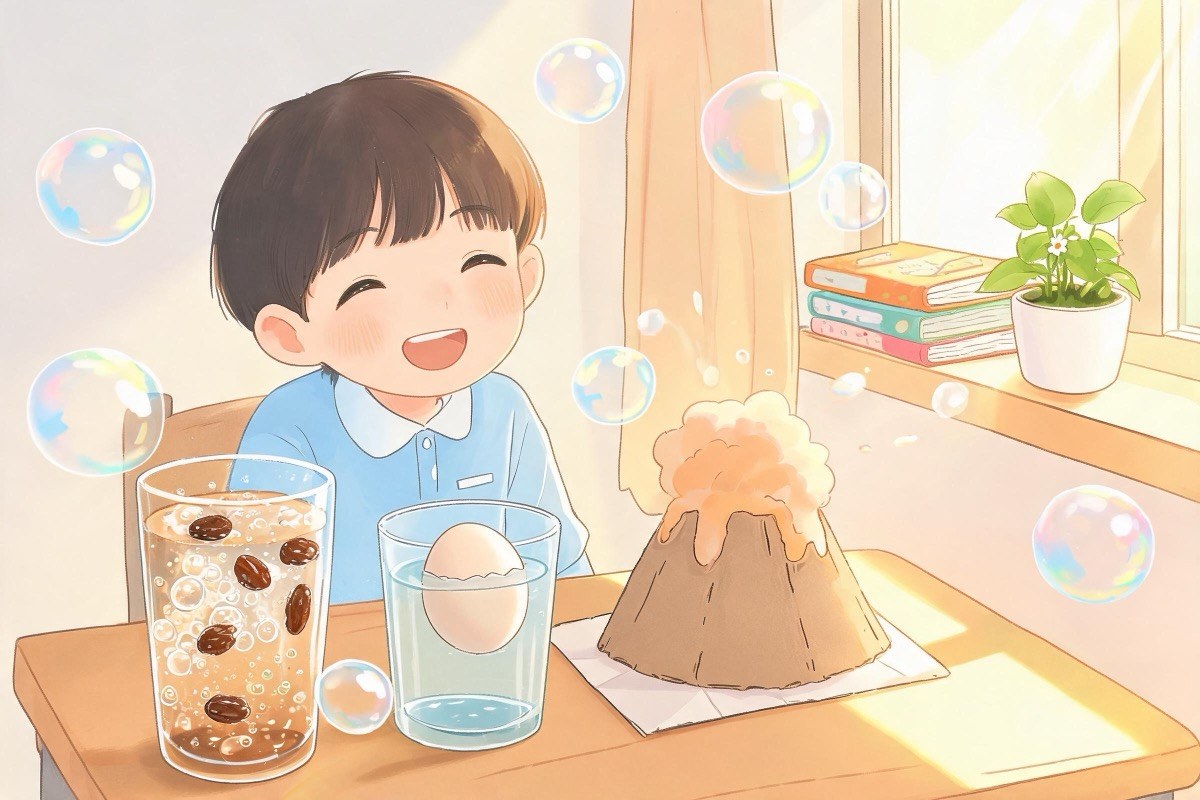
《一次有趣的实验》里最吸引我的,不是鸡蛋浮起来的那一段,而是鸡蛋没浮起来的那一段。书里那个人往杯子里加了两勺盐,搅了搅,鸡蛋还躺在杯底睡觉。换作是我,我肯定把杯子一推,说一句失败了,去玩别的了。可是书里的人没有。他停下来,看着杯底那颗蛋,又舀了一勺盐下去,再搅,鸡蛋还是不动。他第三勺、第四勺接着加,水慢慢变浑,最后那颗鸡蛋晃晃悠悠地站起来了,接着浮上来了。
读到这里我的脸有点热,因为我干过一模一样的事。上学期自然课老师布置浮鸡蛋的作业,我回家拿杯子加了两勺盐,鸡蛋不浮,我加了第三勺,还是不浮。我当时认定是鸡蛋的问题,挑三拣四换了两个鸡蛋,又怀疑是杯子不行,最后怪到盐头上,说家里的盐不咸。我把那杯盐水端到水池边倒掉了。倒的时候我还想,肯定是书上写错了。
书里那个人是怎么做的呢?他没有换鸡蛋,没有换杯子,也没有怀疑盐。他只做了一件事:继续加。他还在心里数着勺数,每一勺都搅够时间。书里写他数到第九勺的时候,鸡蛋先是在杯底翻了个身,像睡醒了伸了个懒腰,然后才慢慢浮上来。原来不是实验骗人,是我加得不够,就提前下了结论。
上周末我把那件事重新做了一遍。还是家里的盐,还是那个杯子,还是最大的那个鸡蛋。我一勺一勺加,每勺搅三十下,心里数着。第五勺,鸡蛋没动。第六勺,水开始发白。第七勺,鸡蛋从杯底滚了一下。第八勺,它站起来了。第九勺,它浮上来了,露出一个小圆顶,像从被窝里探出头。我妈进来看见了,说你这不也成功了嘛。我说,我这次只是没提前放弃。
合上书以后我明白的道理,其实书里早就写得很平常:实验不会一下子成功,盐要一勺一勺加。以前我读这种句子,眼睛滑过去就完了。现在它长在我身上了。数学题想不出来,我不再马上说我不会,我会再多想一步,就像多加一勺盐。那颗在书里浮起来的鸡蛋,把我心里一个爱说失败的人,也慢慢托起来了。
The Egg That Would Not Float, in the Book and in My Cup
What pulled me hardest in One Fun Experiment was not the part where the egg floats. It was the part where it does not. The person in the book adds two spoonfuls of salt, stirs, and the egg is still asleep on the bottom of the cup. If it were me, I would have pushed the cup away, said it failed, and gone off to do something else. But he did not stop. He sat there looking at the egg on the bottom and added a third spoonful, stirred, still nothing. He kept going, fourth spoon, fifth. The water grew cloudy, and at last the egg rocked upright, and then it floated.
My face got warm reading that, because I had done the exact opposite. Last term our science teacher assigned the floating egg as homework. I went home, put two spoonfuls of salt in a cup, and the egg would not float. I added a third. Still nothing. I decided it was the egg's fault. I swapped in two other eggs. Then I blamed the cup. Then I blamed the salt, saying our salt is not salty enough. I carried that cup of brine to the sink and poured it out. As I poured, I even thought the book must be wrong.
What did the man in the book do? He did not change the egg. He did not change the cup. He did not suspect the salt. He did one thing only: he kept adding. He counted his spoonfuls, and he stirred each one long enough. The book says that at the ninth spoonful, the egg first rolled over on the bottom, like someone stretching after sleep, and only then did it rise. The experiment never tricked me. I simply had not added enough before I gave my verdict.
Last weekend I did the whole thing over. Same salt, same cup, same biggest egg. I added spoon by spoon, stirring thirty turns each time, counting in my head. Fifth spoon: nothing. Sixth: the water began to turn white. Seventh: the egg rolled off the bottom. Eighth: it stood up. Ninth: it floated, a small round dome showing above the surface, like a head poking out of a quilt. My mother walked in and said, see, you made it too. I said, this time I just did not give up early.
The lesson I understood after closing the book is one the book wrote plainly: an experiment does not succeed all at once; the salt goes in spoon by spoon. Before, my eyes would slide right over such a sentence. Now it has grown onto me. When a math problem stumps me, I no longer say I cannot do it. I think one step further, like adding one more spoonful of salt. That egg which floated inside the book is slowly lifting up, too, the part of me that always said failure.
书里的人先问了一个为什么
《一次有趣的实验》里有一段,别人都觉得该跳起来欢呼,书里那个人却没有。实验成功了,他坐在那儿,盯着杯子,问了一句:为什么会这样?就是这一句让我把书翻得慢了下来。因为我做过的所有实验,成功的瞬间都是欢呼,然后就没有然后了。我把成功当成结束,书里的人把成功当成开始。
书里写他为了回答自己的为什么,翻书、查资料、又重做实验,把每一步都记下来。他写的那几页记录,比实验本身还好看。他写哪一次失败了,写他猜错了几次,写他有一次以为找到了答案,结果第二天重做又不对了。我读那些猜错的地方,越读越佩服。欢呼谁都会,坐下来承认自己猜错,不是谁都做得到。
我拿自己的吹泡泡试了一下。我以前吹泡泡,吹出来就吹出来,最多比谁吹得大。这次我故意停下来问:为什么有的泡泡是圆的,有的会歪成一条长虫?我蹲在楼下试了十几分钟。用圆铁圈吹,泡泡圆;把铁圈捏成方的,吹出来还是圆的;把铁圈捏成长条,慢慢拉,泡泡先变长,然后啪地断成几个小圆。我跑去问科学老师,老师想了半天说,大概是泡泡自己想把表面缩到最小,圆是最省事的形状。我不完全懂,但我把那十几分钟看到的都记在了本子上,包括我猜错的那两次:我猜过是铁圈的形状决定的,猜过是风吹的。
书里那个人让我明白,眼睛看到好玩,只是实验的一半。另一半在嘴巴上:要问为什么。还有一半在手上,就是像他那样把猜错也记下来。我现在有一个专门的本子,封面写着为什么,里面全是没答完的问题。它们不像考试那样有标准答案,可每一个都等着我自己去够。
合上书那天,我在书的最后一页夹了一张纸条,上面写:下次实验成功的时候,先别欢呼,先问为什么。这张纸条现在还夹在那里。它替我看着我自己,看我会不会一高兴,又把那个为什么漏掉了。
The Man in the Book Asked Why First
There is a part in One Fun Experiment where everyone would think it is time to cheer, but the man in the book does not. The experiment has succeeded. He sits there, stares at the cup, and asks: why did this happen? That single question made me slow down my reading. Every experiment I have ever done ended with a cheer at the moment of success, and then nothing. I treated success as the ending. The man in the book treated it as the beginning.
The book writes that to answer his own why, he went through books, looked things up, and ran the experiment again, recording every step. Those pages of his records are more enjoyable than the experiment itself. He wrote down which attempts failed, how many times he guessed wrong, and how one morning he thought he had the answer, only to redo it the next day and find he was wrong again. I read those wrong guesses over and over, more and more in awe. Anyone can cheer. Few can sit down and admit they guessed wrong.
I tried it on my own bubble blowing. Before, when a bubble came out, that was that; at most we competed for the biggest one. This time I deliberately stopped and asked: why are some bubbles round while others stretch into a long worm? I squatted downstairs and tested for over ten minutes. With a round wire loop, the bubbles came out round. I bent the loop into a square, and the bubbles were still round. I bent it into a long strip and pulled slowly: the bubble stretched long, then snapped into several small round ones. I ran to ask our science teacher. He thought for a long while and said, probably a bubble wants to shrink its surface to the smallest possible, and the circle is the laziest shape. I do not fully understand it, but I wrote down everything I saw in those ten minutes, including my two wrong guesses: that the shape of the loop decides it, and that the wind decides it.
The man in the book taught me that eyes seeing something fun is only half of an experiment. The other half sits in the mouth: ask why. And another half is in the hand, recording the wrong guesses the way he did. I now keep a special notebook with the word Why on its cover, filled with questions that have no answers yet. They do not come with standard answers like exams do, but each one is waiting for me to reach it.
The day I closed the book, I tucked a slip of paper into its last page. It says: next time an experiment succeeds, do not cheer first. Ask why first. That slip is still there. It watches me for the book, making sure that in my excitement I do not let the why slip away again.
小提示:上面此文档内容仅展示完整文档里的部分内容, 若需要下载完整文档请 点击免费下载完整文档 。