文章内容
不肯浮的鸡蛋
暑假科学作业是做一次实验并写记录。我选了盐水浮鸡蛋——鸡蛋、玻璃杯、盐,材料三分钟就凑齐了。鸡蛋从冰箱门里拿出来还凉凉的,杯子是我挑了最大的一只,盐罐打开,我数好勺子,准备开始。
先倒水。自来水倒进杯子大半杯,我用勺子把鸡蛋贴着杯壁放下去,它扑通一声坐到底,横躺着,一动不动。我在记录本上写第一行:下午四点零五分,鸡蛋在清水里下沉,躺底。
接着加盐。第一勺,平平一勺,用筷子搅到盐粒看不见,鸡蛋不动。第二勺,搅,还是不动。第三勺,第四勺,水开始发浑,杯底的盐堆成一层白的,化不掉了。我有点急,心想这鸡蛋是不是太胖。我妈看了一眼,说加点温水,化得快。我倒掉半杯凉水换成温水,又添两勺,搅了整整一分钟,盐终于不见了。
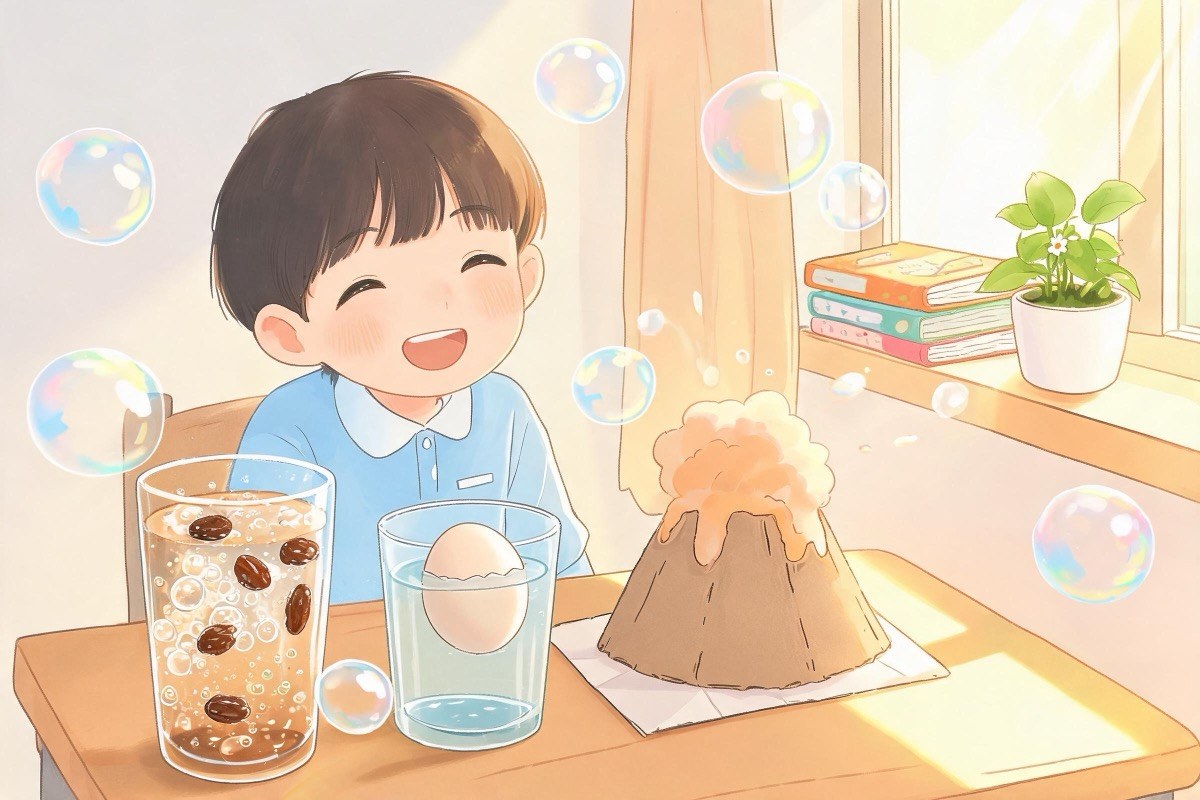
鸡蛋是在第五勺盐之后浮起来的。它不是一下子窜上来,先是慢慢立起来,大头离开杯底,接着整个蛋悬在水里,像一个忘了收脚蹼的潜水员。我屏着气看它一寸一寸往上走,最后顶上探出水面,鼓起一个小小的黄帽子。我写第二行:四点三十一分,加盐五勺,鸡蛋浮起,露出水面一点。
实验做完,我把原理抄在记录本上:鸡蛋比清水重,同样大小的一杯,鸡蛋那头沉,所以往下掉;盐化进水里,盐水比清水重,盐加得够多,盐水比鸡蛋还重,就把鸡蛋托起来了。这就是密度。我在旁边加了一句自己的话:不是鸡蛋变轻了,是水变强了。
后来我又倒着验了一遍:把浮着的鸡蛋捞出来放进清水,它又沉底;把那杯盐水倒进另一只有清水的杯子,鸡蛋慢慢升上来。鸡蛋从头到尾是同一只,变的都是水。这个实验前后只用了二十多分钟,我的记录写了三页。我妈说写这么多干什么,我说每一勺盐都算数,不能不算。
The Egg That Refused to Float
The summer science homework was to run one experiment and keep a record. I chose the salt-water floating egg — an egg, a glass, and salt: the kit came together in three minutes. The egg was still cool from the fridge door. I picked the biggest glass, opened the salt jar, counted out the spoonfuls, and got ready.
Water first. Tap water to three-quarters of the glass, then I slid the egg down the wall on a spoon. It plopped onto the bottom, lay on its side, motionless. I wrote the first line in my notebook: 4:05 PM, the egg sinks in plain water, lying at the bottom.
Then the salt. First spoonful, level, stirred with a chopstick until the grains vanished — the egg did not move. Second spoonful, stir, still nothing. Third, fourth: the water turned cloudy, and salt piled white on the bottom, refusing to dissolve. I got a little anxious, wondering if this egg was simply too fat. My mother glanced over: add some warm water, it dissolves faster. I poured out half the cold water, replaced it with warm, added two more spoonfuls, and stirred a full minute until the salt finally disappeared.
The egg rose after the fifth spoonful. It did not shoot up at once: first it stood up slowly, its blunt end lifting off the bottom, then the whole egg hung in the water like a diver who forgot to retract his fins. I held my breath and watched it climb inch by inch until its top poked through the surface, a little yellow cap. I wrote the second line: 4:31 PM, five spoonfuls of salt, the egg floats, breaking the surface.
When the experiment was done I copied the principle into the notebook: an egg is heavier than plain water — for the same volume the egg side wins, so it falls; salt dissolved in water makes the water heavier, and once enough salt is in, the salt water outweighs the egg and lifts it up. That is density. Beside it I added a line of my own: the egg did not get lighter — the water got stronger.
Afterward I ran it backward to check: the floating egg went back into plain water and sank again; pour that salt water into another glass holding a plain-water egg, and the egg slowly rises. The same egg the whole time — it was the water that kept changing. The experiment took barely twenty minutes; my record ran three pages. My mother asked what I was writing so much for. I said every spoonful of salt counts, and you cannot leave one out.
鸡蛋悬在杯子正中间
盐水浮鸡蛋的实验我做过一次就成功了,鸡蛋浮出水面,像戴了顶帽子。可我在网上看到一张照片,鸡蛋不沉底也不露头,悬在杯子正中间,四周都是水。我盯着那张照片看了半天:鸡蛋到底加了多少盐,才能停在半路?我决定调出这个悬在中间的状态。
方法说起来不复杂:先调一杯浓盐水,鸡蛋放进去会浮;再一点点兑清水,让盐水变淡,鸡蛋往下走;淡过头了就补盐,让它往上走。来回磨,直到鸡蛋不上不下。我拿了两只杯子,一只装浓盐水,一只装清水,还有一根长筷子。第一杯我盐加多了,鸡蛋顶在水面,我拿勺子一点点舀出盐水、换成清水,眼睛盯着鸡蛋,它慢慢往下走,走到一半我手一抖,清水兑多了,鸡蛋出溜一下坐回杯底。我懊悔得直拍桌子,我妈从厨房探头,问怎么了,我说我把鸡蛋弄沉了,像它犯了错。
第二杯我学乖了,兑清水的时候把杯子倾斜一点,让清水顺着杯壁滑下去,不直接砸在鸡蛋头上。补盐也用筷子尖,一次挑一小撮。鸡蛋从杯底升到杯子中间,我屏住呼吸,筷子停在半空不敢碰杯子。它停住了。就在正中间,离杯底三指,离水面三指,一动不动。我绕着杯子走了一圈,从各个角度看,它都钉在那儿。我拿手机拍的时候手抖,拍了五张才有一张清楚。
我在记录里写:鸡蛋悬浮时,它和这杯盐水一样重,谁也不比谁沉,所以谁也不压着谁。它不是被托在水面,是被整杯水抬在怀里。为了证明这杯水真的特殊,我把一根筷子插进去搅了搅,鸡蛋跟着转了两圈,又回到原来的位置附近停住。它待在那儿,像这杯水的重心长在了鸡蛋上。
这个悬浮状态我后来调了三次才稳定,最久的一次它悬了四十分钟才因为水慢慢混合、盐慢慢沉底而落下去。科学老师听说后在课上提了一句:潜水艇和鱼鳔就是这个道理,让自己变得跟周围的水一样重,就能停在任意深度。我坐在座位上心里一动——原来我调了一下午的,是潜水艇。
The Egg Hanging in the Middle of the Glass
I pulled off the floating-egg-in-salt-water experiment on the first try: the egg rose to the surface like it was wearing a cap. But online I saw a photo where the egg neither sank nor surfaced — it hung in the exact middle of the glass, water on every side. I stared at that photo for a long time: how much salt does an egg need to stop halfway? I decided to dial in that suspended state.
The method is simple to say: first mix a glass of strong salt water so the egg floats; then add plain water little by little to weaken it and push the egg down; overshoot, and add salt to bring it back up. Grind back and forth until the egg neither rises nor falls. I set out two glasses, one strong salt water, one plain water, plus a long chopstick. In the first glass I over-salted; the egg rode at the surface. I spooned salt water out and replaced it with plain, eyes locked on the egg as it drifted down. Halfway, my hand jerked, too much plain water went in, and the egg slid straight back to the bottom. I slapped the table in regret. My mother poked her head from the kitchen asking what happened. I said I made the egg sink, as if it had done something wrong.
On the second glass I got smart: I tilted the glass while adding plain water so it slid down the wall instead of crashing onto the egg's head. For salt I used the tip of the chopstick, a pinch at a time. The egg climbed from the bottom to the middle of the glass. I held my breath, my chopstick frozen in midair, afraid to touch the glass. It stopped. Dead center — three finger-widths from the bottom, three from the surface, motionless. I walked a circle around the glass, looked from every angle, and it stayed nailed in place. My hands shook taking photos; only one of five came out sharp.
In my record I wrote: when the egg is suspended, it weighs exactly the same as this salt water — neither outweighs the other, so neither presses the other down. It is not propped at the surface; it is carried in the arms of the whole glass of water. To prove the water was truly special, I stirred with a chopstick: the egg spun twice and settled back near where it had been. It stayed there as if the center of gravity of that water had grown onto the egg.
It took me three attempts to hold the suspension steady; the longest one lasted forty minutes before slow mixing and salt settling to the bottom let the egg drop. Our science teacher heard about it and mentioned in class: submarines and swim bladders work exactly this way — make yourself as heavy as the surrounding water and you can stop at any depth. Sitting at my desk my heart jumped: I had spent a whole afternoon tuning a submarine.
小提示:上面此文档内容仅展示完整文档里的部分内容, 若需要下载完整文档请 点击免费下载完整文档 。