文章内容
原以为儿童文学很幼稚
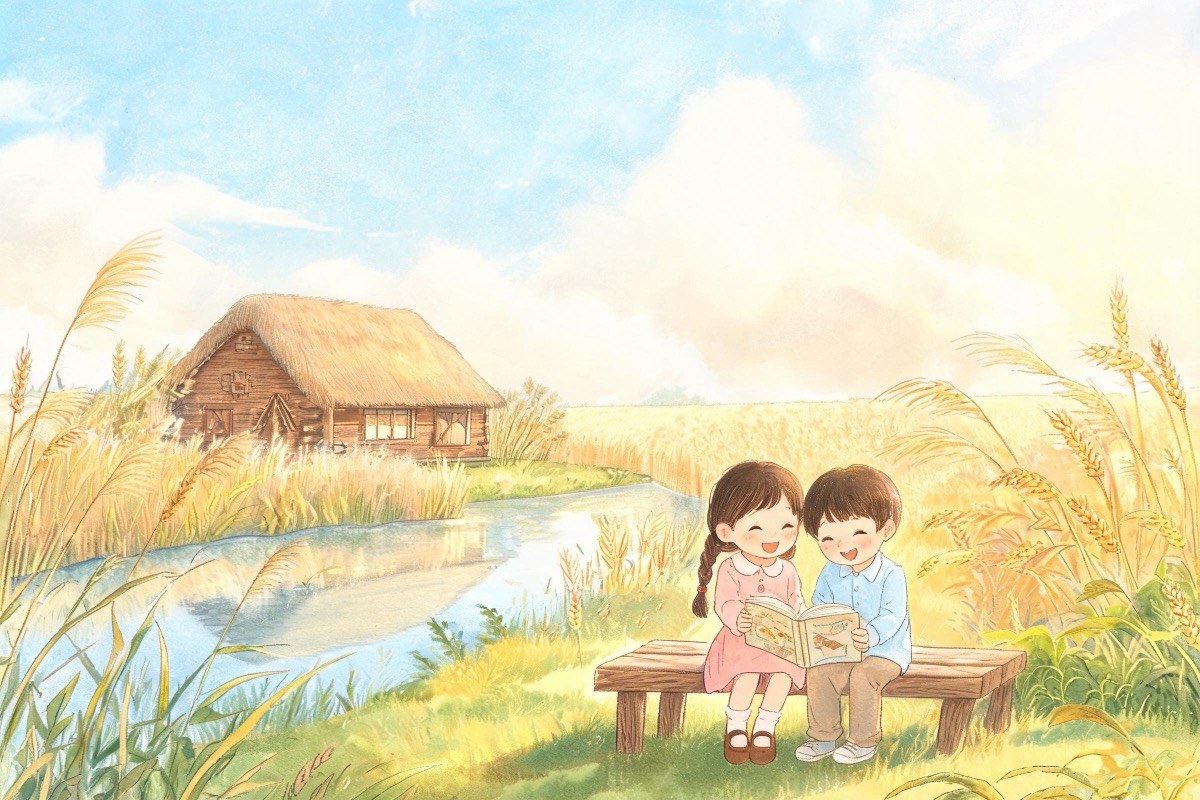
《草房子》是我妈硬塞给我的。她说你上了初中书读得太少,把这本书看完。我瞥了一眼封面,几个小孩站在草房前,心想这是小学生看的,我都能算半个大人了。第一周它躺在桌角,我碰都没碰。
第一个周末停电,手机没电了,我百无聊赖,翻开它打发时间。开头写油麻地的房子是茅草的,屋顶上长着一丛狗尾草,桑桑踩着梯子往屋顶上爬,他妈在下面骂。我笑出了声,接着往下读,读到桑桑把碗柜改成鸽子笼,把蚊帐改成渔网,我一口气读了四十页。停电那晚的蜡烛烧短了一截,我都没注意。我妈推门进来查房,看见我举着书笑,愣了一下,没打扰我,轻轻把门带上了。
真正让我坐直的是杜小康。他家是油麻地最阔的,红门,大衣柜,他冬天穿一条新棉裤都要换着样穿。后来船翻了,货全没了,他退学去摆小摊,手上还戴着白手套。我在那一页停了很久,想一个问题:他为什么非要戴白手套?我想了几个晚上,想到一个词,体面。这个词课本里没教过,我自己从书里捞出来的。
从那以后我睡前不再只刷手机,改成看二十分钟书。我妈以为我转性了,其实我只是想知道杜小康的摊子后来怎么样了,想知道桑桑的病最后好没好。读书这件事一旦自己想知道,就停不下来,跟别人催是完全两回事。
书读完那天是周三,我把封面抚平,忽然觉得它不幼稚。它写穷,写病,写一个人怎么扛事,哪样不是大人世界的事?只是它用孩子的眼睛写。我把书放回桌角,跟第一周的位置一样,但我的心境不一样了。它替我推开了一扇门,门后面原来有那么多书,那么多人在等着。
I Thought Children's Literature Was Childish
Grass House was forced on me by my mother. She said you are in middle school now and read too little — finish this book. I glanced at the cover: a few children standing in front of thatched houses. This is for elementary kids, I thought; I am practically a grown-up. For the first week it lay at the corner of my desk untouched.
On the first weekend the power went out and my phone was dead. Bored out of my mind, I opened the book to kill time. The opening describes the houses of Youma Di with thatched roofs, dogtail grass growing on top, and Sang Sang climbing a ladder to the roof while his mother scolds him from below. I laughed out loud. I kept reading — Sang Sang turned his family's cupboard into a pigeon coop and his mosquito net into a fishing net — and I got through forty pages in one sitting. The candle burned a good inch shorter that night, and I did not notice. My mother came in to check on me, saw me holding the book and laughing, froze for a second, did not disturb me, and quietly pulled the door shut.
What really made me sit up straight was Du Xiaokang. His family was the wealthiest in Youma Di: a red gate, a big wardrobe, and new padded trousers changed by style even in winter. Then the boat sank, the cargo was gone, he dropped out of school to run a street stall — and he still wore white gloves. I stared at that page for a long time, turning one question over: why insist on the white gloves? It took me several evenings to land on a word: dignity. The textbook never taught me that word; I fished it out of the book myself.
After that, before bed I stopped scrolling my phone and read for twenty minutes instead. My mother thought I had changed overnight. Really, I just wanted to know what became of Du Xiaokang's stall and whether Sang Sang's illness would end. Once reading becomes your own wanting-to-know, you cannot stop — and it is nothing like being pushed by someone else.
The day I finished was a Wednesday. I smoothed the cover flat and suddenly felt it was not childish at all. It writes about poverty, illness, and how a person carries a burden — which of those is not the adult world's business? It simply writes them through children's eyes. I put the book back at the corner of the desk, exactly where it sat in week one, but I was not the same. It pushed a door open for me, and behind that door are so many books, so many people waiting.
我的读书笔记里住着十几个人
读《草房子》之前,我的读书方式是翻页:读完就合上,问我都记得谁,一个名字也说不出。语文老师听说我在读这本书,说别白读,给每个人物做一页笔记,写他做过什么矛盾的事。我当时觉得麻烦,第二天还是买了个新本子。
第一页给了桑乔,就是桑桑的爸爸、油麻地的校长。我写:他开会时板着脸,把全校老师的出勤表贴墙上;儿子闯祸,他当众把儿子按在凳子上打;儿子生病,他背着一家一家医院跑,夜里蹲在门口不出声。写完我在页边写了一句:严厉和心疼可以同时装在一个人身上。这一句我想了三个晚上,因为我不确定桑乔打儿子的时候,是生气多还是害怕多。
第二页给了秦大奶奶。我写她跟学校争了一辈子地,骂孩子,被全村人当怪人;写她两次下水,第一次捞孩子,第二次为一只南瓜,第二次没上来。我在页边写:全村人最后都来送她,可她在的时候没人领她的情。写这句的时候我心里发堵,想起我们楼下那个总被背后议论的修车师傅,他修车不收小孩钱,也没人记得。
第三页给了杜小康,我写白手套,写他把碗摆整齐,写他在芦苇荡里追鸭子追到哭。页边写:穷不是最难的,最难的是穷了还要把自己当个人。
这个本子后来用到了别的课上。历史课讲人物,我照这个格式给李鸿章立了一页,写他签条约又办学校;物理课讲科学家,我给法拉第立了一页,写他当学徒时抄书。老师在我的历史笔记上批:会想问题。其实这个本事是《草房子》给的——它让我知道,一本书里的人值得停下来想,想透一个人,比翻过十本书有用。
现在那个本子写满了大半,扉页上我写了一行字:读书不停下来,就等于没读。新来的同学问我这写的什么,我把本子递给他,他翻到秦大奶奶那页,看了很久,没说话。
A Dozen People Live in My Reading Notebook
Before Grass House, my way of reading was turning pages: close the book when done, and if anyone asked who I remembered, I could not name a single character. Our Chinese teacher heard I was reading it and said do not read it for nothing — make one page of notes per character, writing the contradictory things they did. I thought it was a hassle, but the next day I still bought a new notebook.
The first page went to Sang Qiao, Sang Sang's father and the school principal. I wrote: he keeps a straight face at meetings and posts the teachers' attendance sheet on the wall; when his son misbehaves, he pins the boy over a bench and beats him in front of everyone; when his son falls ill, he carries him from hospital to hospital and squats by the door at night without a sound. In the margin I wrote: strictness and tenderness can live in one person at the same time. That line took me three evenings, because I could not decide whether, when Sang Qiao hit his son, anger or fear was bigger.
The second page went to Grandma Qin. I wrote that she fought the school over her land her whole life, scolded the children, and was treated as a oddity by the village; that she went into the water twice — the first time to save a child, the second time for a pumpkin, and the second time she did not come back. In the margin I wrote: in the end the whole village came to see her off, but while she was alive no one ever thanked her. Writing that line my chest tightened, and I thought of the bike repairman downstairs whom people gossip about behind his back — he never charges kids, and no one remembers it either.
The third page went to Du Xiaokang: the white gloves, the bowls lined up straight, chasing ducks in the reed marsh until he cried. In the margin I wrote: being poor is not the hardest part; the hardest part is still treating yourself as a person when you are poor.
The notebook later spread into other classes. In history, I made a page for Li Hongzhang in the same format — he signed treaties and founded schools. In physics, I made a page for Faraday, copying out books as an apprentice. My history teacher wrote on the page: you know how to think about questions. That skill actually came from Grass House — it taught me that the people in a book are worth stopping for, and thinking one person through beats skimming ten books.
The notebook is more than half full now. On the first page I wrote one line: reading without stopping is the same as not reading. A new classmate asked what was in it. I handed it over. He turned to Grandma Qin's page, looked for a long time, and said nothing.
小提示:上面此文档内容仅展示完整文档里的部分内容, 若需要下载完整文档请 点击免费下载完整文档 。