文章内容
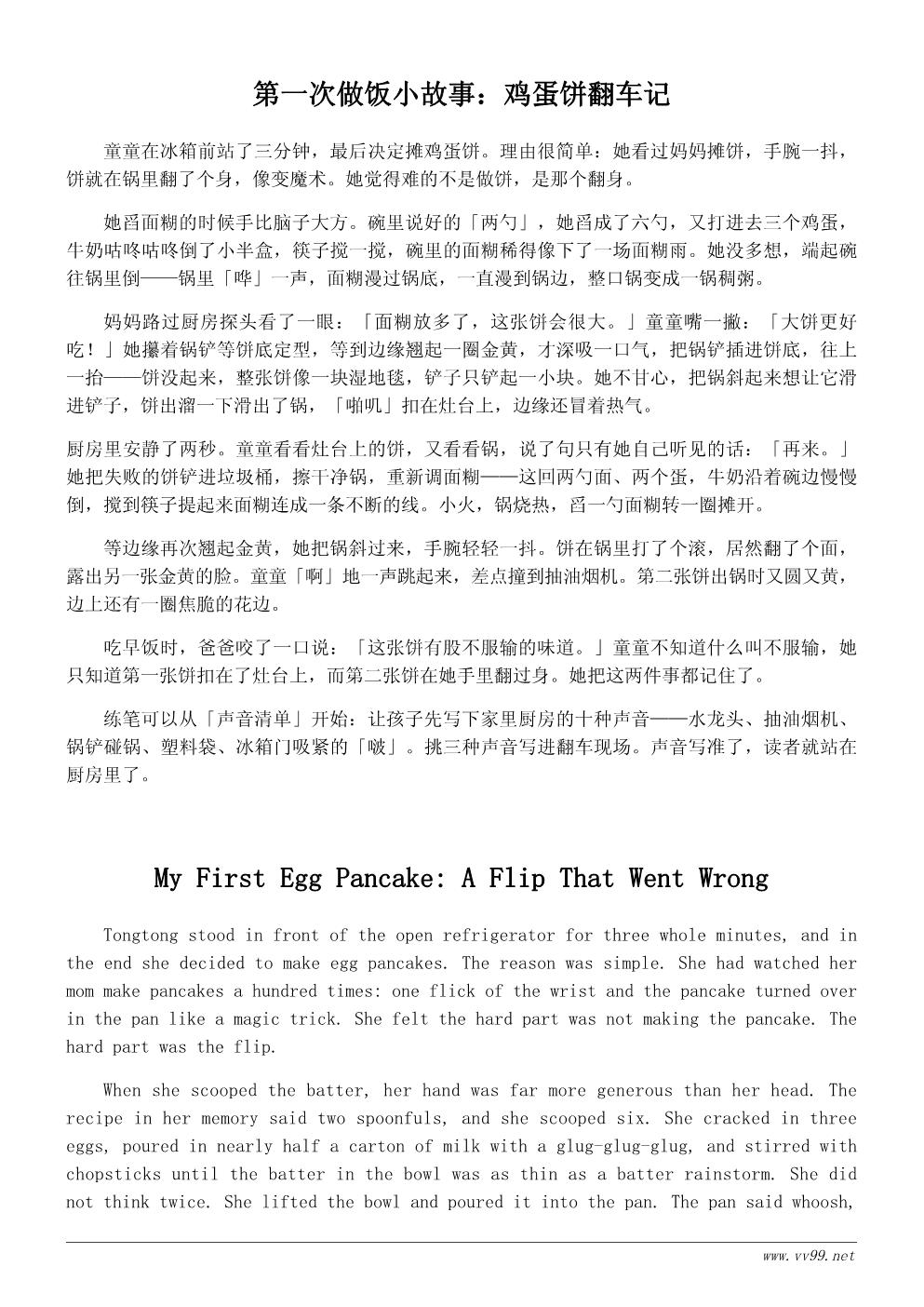
第一次做饭小故事:鸡蛋饼翻车记
童童在冰箱前站了三分钟,最后决定摊鸡蛋饼。理由很简单:她看过妈妈摊饼,手腕一抖,饼就在锅里翻了个身,像变魔术。她觉得难的不是做饼,是那个翻身。
她舀面糊的时候手比脑子大方。碗里说好的「两勺」,她舀成了六勺,又打进去三个鸡蛋,牛奶咕咚咕咚倒了小半盒,筷子搅一搅,碗里的面糊稀得像下了一场面糊雨。她没多想,端起碗往锅里倒——锅里「哗」一声,面糊漫过锅底,一直漫到锅边,整口锅变成一锅稠粥。
妈妈路过厨房探头看了一眼:「面糊放多了,这张饼会很大。」童童嘴一撇:「大饼更好吃!」她攥着锅铲等饼底定型,等到边缘翘起一圈金黄,才深吸一口气,把锅铲插进饼底,往上一抬——饼没起来,整张饼像一块湿地毯,铲子只铲起一小块。她不甘心,把锅斜起来想让它滑进铲子,饼出溜一下滑出了锅,「啪叽」扣在灶台上,边缘还冒着热气。
厨房里安静了两秒。童童看看灶台上的饼,又看看锅,说了句只有她自己听见的话:「再来。」她把失败的饼铲进垃圾桶,擦干净锅,重新调面糊——这回两勺面、两个蛋,牛奶沿着碗边慢慢倒,搅到筷子提起来面糊连成一条不断的线。小火,锅烧热,舀一勺面糊转一圈摊开。
等边缘再次翘起金黄,她把锅斜过来,手腕轻轻一抖。饼在锅里打了个滚,居然翻了个面,露出另一张金黄的脸。童童「啊」地一声跳起来,差点撞到抽油烟机。第二张饼出锅时又圆又黄,边上还有一圈焦脆的花边。
吃早饭时,爸爸咬了一口说:「这张饼有股不服输的味道。」童童不知道什么叫不服输,她只知道第一张饼扣在了灶台上,而第二张饼在她手里翻过身。她把这两件事都记住了。
练笔可以从「声音清单」开始:让孩子先写下家里厨房的十种声音——水龙头、抽油烟机、锅铲碰锅、塑料袋、冰箱门吸紧的「啵」。挑三种声音写进翻车现场。声音写准了,读者就站在厨房里了。
My First Egg Pancake: A Flip That Went Wrong
Tongtong stood in front of the open refrigerator for three whole minutes, and in the end she decided to make egg pancakes. The reason was simple. She had watched her mom make pancakes a hundred times: one flick of the wrist and the pancake turned over in the pan like a magic trick. She felt the hard part was not making the pancake. The hard part was the flip.
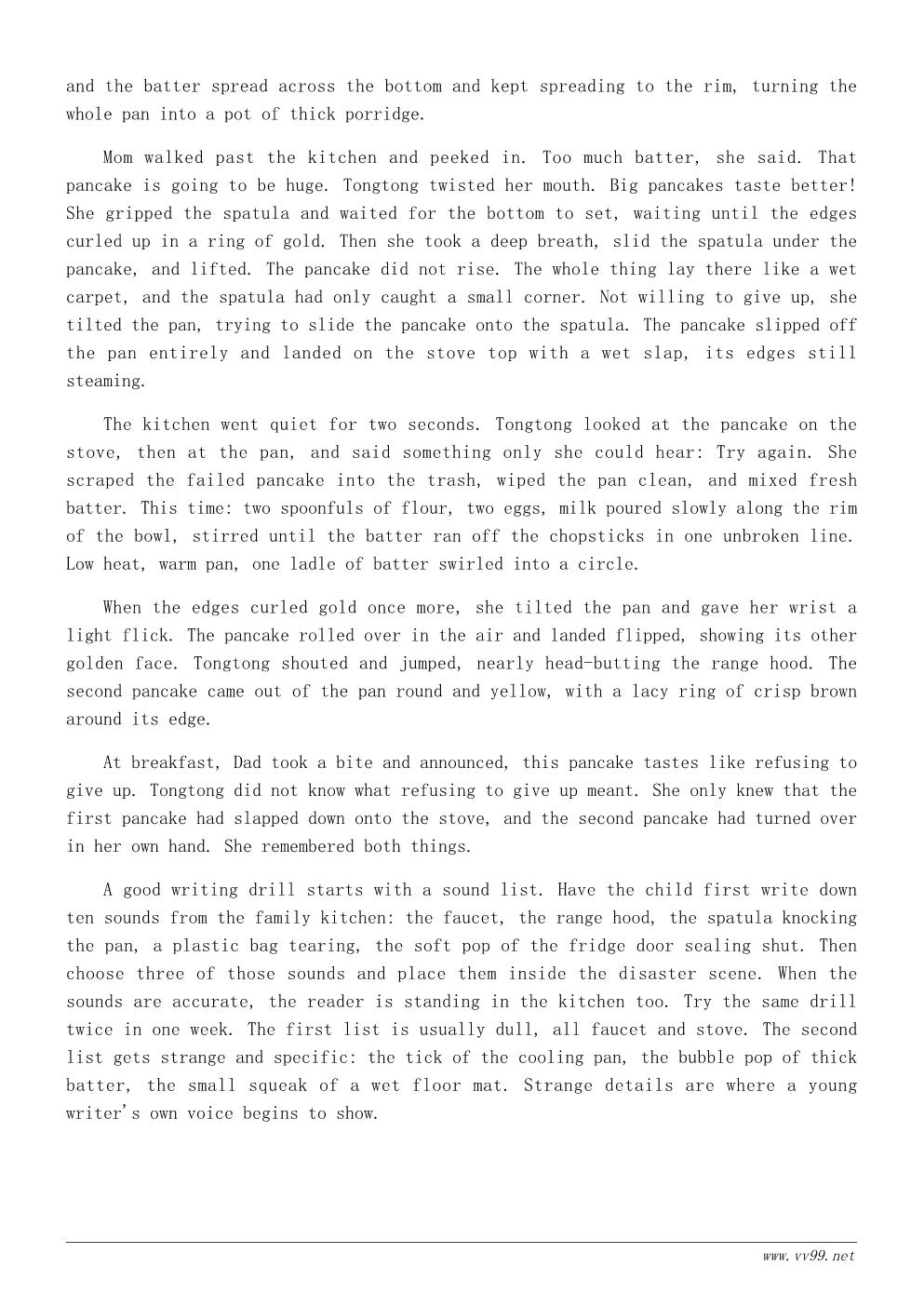
When she scooped the batter, her hand was far more generous than her head. The recipe in her memory said two spoonfuls, and she scooped six. She cracked in three eggs, poured in nearly half a carton of milk with a glug-glug-glug, and stirred with chopsticks until the batter in the bowl was as thin as a batter rainstorm. She did not think twice. She lifted the bowl and poured it into the pan. The pan said whoosh, and the batter spread across the bottom and kept spreading to the rim, turning the whole pan into a pot of thick porridge.
Mom walked past the kitchen and peeked in. Too much batter, she said. That pancake is going to be huge. Tongtong twisted her mouth. Big pancakes taste better! She gripped the spatula and waited for the bottom to set, waiting until the edges curled up in a ring of gold. Then she took a deep breath, slid the spatula under the pancake, and lifted. The pancake did not rise. The whole thing lay there like a wet carpet, and the spatula had only caught a small corner. Not willing to give up, she tilted the pan, trying to slide the pancake onto the spatula. The pancake slipped off the pan entirely and landed on the stove top with a wet slap, its edges still steaming.
The kitchen went quiet for two seconds. Tongtong looked at the pancake on the stove, then at the pan, and said something only she could hear: Try again. She scraped the failed pancake into the trash, wiped the pan clean, and mixed fresh batter. This time: two spoonfuls of flour, two eggs, milk poured slowly along the rim of the bowl, stirred until the batter ran off the chopsticks in one unbroken line. Low heat, warm pan, one ladle of batter swirled into a circle.
When the edges curled gold once more, she tilted the pan and gave her wrist a light flick. The pancake rolled over in the air and landed flipped, showing its other golden face. Tongtong shouted and jumped, nearly head-butting the range hood. The second pancake came out of the pan round and yellow, with a lacy ring of crisp brown around its edge.
At breakfast, Dad took a bite and announced, this pancake tastes like refusing to give up. Tongtong did not know what refusing to give up meant. She only knew that the first pancake had slapped down onto the stove, and the second pancake had turned over in her own hand. She remembered both things.
A good writing drill starts with a sound list. Have the child first write down ten sounds from the family kitchen: the faucet, the range hood, the spatula knocking the pan, a plastic bag tearing, the soft pop of the fridge door sealing shut. Then choose three of those sounds and place them inside the disaster scene. When the sounds are accurate, the reader is standing in the kitchen too. Try the same drill twice in one week. The first list is usually dull, all faucet and stove. The second list gets strange and specific: the tick of the cooling pan, the bubble pop of thick batter, the small squeak of a wet floor mat. Strange details are where a young writer's own voice begins to show.
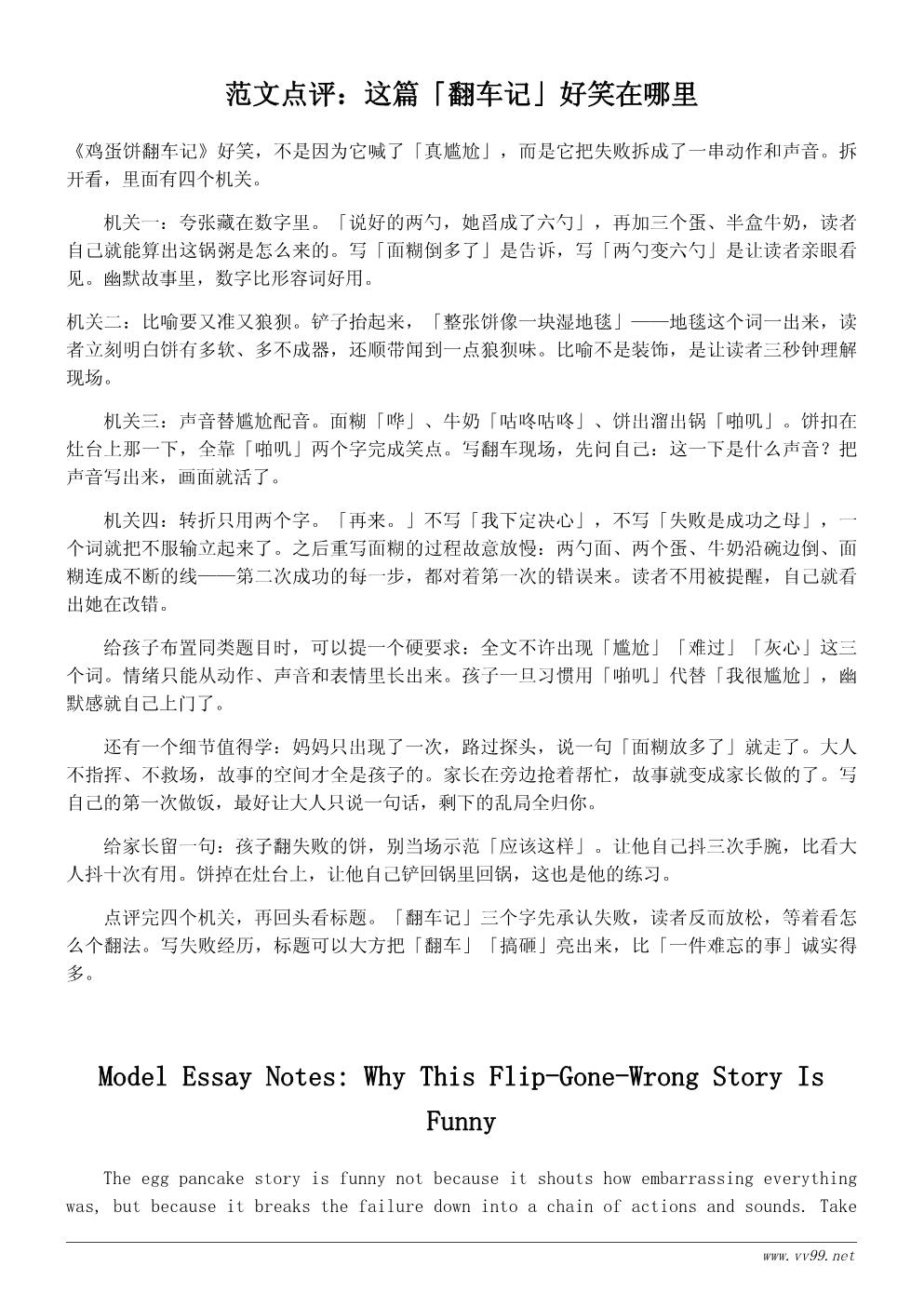
范文点评:这篇「翻车记」好笑在哪里
《鸡蛋饼翻车记》好笑,不是因为它喊了「真尴尬」,而是它把失败拆成了一串动作和声音。拆开看,里面有四个机关。
机关一:夸张藏在数字里。「说好的两勺,她舀成了六勺」,再加三个蛋、半盒牛奶,读者自己就能算出这锅粥是怎么来的。写「面糊倒多了」是告诉,写「两勺变六勺」是让读者亲眼看见。幽默故事里,数字比形容词好用。
机关二:比喻要又准又狼狈。铲子抬起来,「整张饼像一块湿地毯」——地毯这个词一出来,读者立刻明白饼有多软、多不成器,还顺带闻到一点狼狈味。比喻不是装饰,是让读者三秒钟理解现场。
机关三:声音替尴尬配音。面糊「哗」、牛奶「咕咚咕咚」、饼出溜出锅「啪叽」。饼扣在灶台上那一下,全靠「啪叽」两个字完成笑点。写翻车现场,先问自己:这一下是什么声音?把声音写出来,画面就活了。
机关四:转折只用两个字。「再来。」不写「我下定决心」,不写「失败是成功之母」,一个词就把不服输立起来了。之后重写面糊的过程故意放慢:两勺面、两个蛋、牛奶沿碗边倒、面糊连成不断的线——第二次成功的每一步,都对着第一次的错误来。读者不用被提醒,自己就看出她在改错。
给孩子布置同类题目时,可以提一个硬要求:全文不许出现「尴尬」「难过」「灰心」这三个词。情绪只能从动作、声音和表情里长出来。孩子一旦习惯用「啪叽」代替「我很尴尬」,幽默感就自己上门了。
还有一个细节值得学:妈妈只出现了一次,路过探头,说一句「面糊放多了」就走了。大人不指挥、不救场,故事的空间才全是孩子的。家长在旁边抢着帮忙,故事就变成家长做的了。写自己的第一次做饭,最好让大人只说一句话,剩下的乱局全归你。
给家长留一句:孩子翻失败的饼,别当场示范「应该这样」。让他自己抖三次手腕,比看大人抖十次有用。饼掉在灶台上,让他自己铲回锅里回锅,这也是他的练习。
点评完四个机关,再回头看标题。「翻车记」三个字先承认失败,读者反而放松,等着看怎么个翻法。写失败经历,标题可以大方把「翻车」「搞砸」亮出来,比「一件难忘的事」诚实得多。
Model Essay Notes: Why This Flip-Gone-Wrong Story Is Funny
The egg pancake story is funny not because it shouts how embarrassing everything was, but because it breaks the failure down into a chain of actions and sounds. Take it apart and you find four working parts.
Part one: the exaggeration hides inside numbers. The recipe said two spoonfuls, and she scooped six, then three eggs and half a carton of milk. Readers can work out on their own how that pot of porridge happened. Writing the batter was too much is telling. Writing two spoonfuls became six lets readers watch it happen. In a funny story, numbers beat adjectives every time.
Part two: the simile must be exact and a little messy. When the spatula lifts, the whole pancake lies there like a wet carpet. The word carpet makes readers instantly understand how soft and hopeless the pancake is, and they can almost smell the disaster. A simile is not decoration. It is a three-second tour of the scene.
Part three: sound dubs the embarrassment. The batter goes whoosh, the milk goes glug-glug-glug, and the pancake leaves the pan with a wet slap. The joke of that landing is carried entirely by the sound word slap. When you write a kitchen disaster, ask yourself first: what sound did that moment make? Put the sound on the page and the picture comes alive.
Part four: the turning point uses only two words. Try again. No speech about determination, no lecture about failure being the mother of success. Two words stand up the stubborn spirit. The retelling of the second attempt then deliberately slows down: two spoonfuls of flour, two eggs, milk poured along the bowl's rim, batter running off the chopsticks in one unbroken line. Every careful step of the second try answers one mistake of the first. Readers spot the corrections without being told.
When assigning this kind of topic to children, add one hard rule: the words embarrassed, sad, and discouraged are banned from the whole essay. Feelings may only grow out of actions, sounds, and expressions. Once a child gets used to writing a wet slap instead of I was so embarrassed, a sense of humor starts showing up on its own.
One more detail is worth stealing. Mom appears only once, peeking in as she passes, saying one line about too much batter, then walking away. The adult does not take charge and does not rescue the pan, so the whole story stays the child's. If a parent jumps in to help with every step, the story stops belonging to the young cook. When writing about your own first time cooking, let the grown-ups say exactly one sentence, and leave every mess in the kitchen to you.
One word for parents: when your child misses the flip, do not grab the pan and demonstrate the right way on the spot. Letting the child flick the wrist three times beats watching an adult flick it ten times. If the pancake lands on the stove, let the child scrape it back into the pan and rescue it. That rescue is practice too, and it belongs to the young cook.
After the four working parts, look back at the title itself. The words flip gone wrong admit the failure up front, and readers relax, settling in to watch exactly how wrong it goes. When writing about a failed attempt, the title can proudly show words like disaster or mess. That honesty works far better than a stiff label like an unforgettable event.
小提示:上面此文档内容仅展示完整文档里的部分内容, 若需要下载完整文档请 点击免费下载完整文档 。