文章内容
文章内容
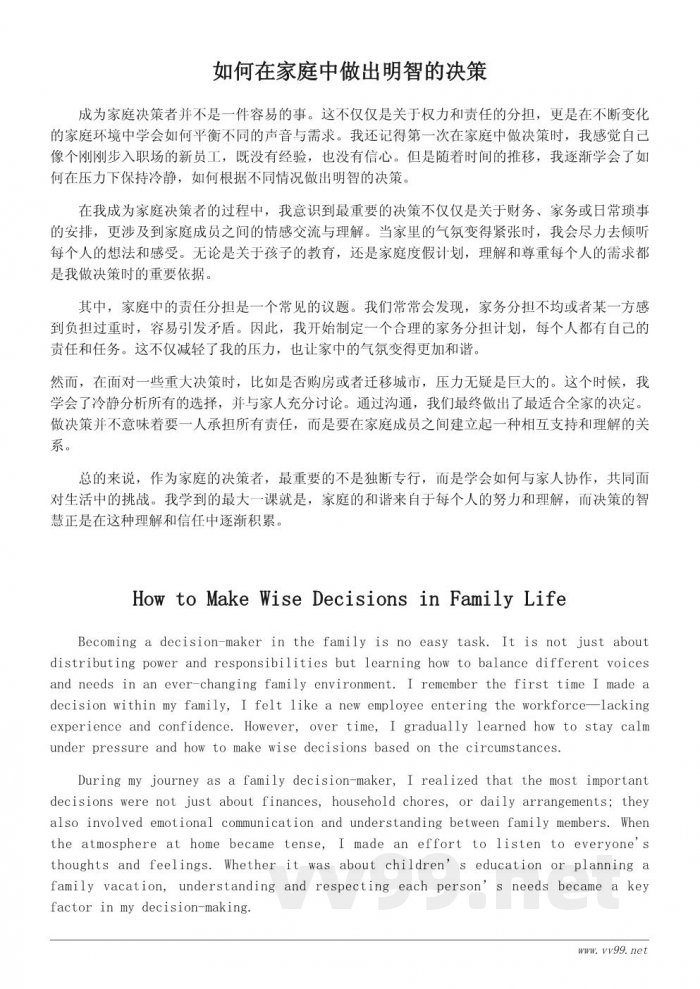
如何在家庭中做出明智的决策
成为家庭决策者并不是一件容易的事。这不仅仅是关于权力和责任的分担,更是在不断变化的家庭环境中学会如何平衡不同的声音与需求。我还记得第一次在家庭中做决策时,我感觉自己像个刚刚步入职场的新员工,既没有经验,也没有信心。但是随着时间的推移,我逐渐学会了如何在压力下保持冷静,如何根据不同情况做出明智的决策。
在我成为家庭决策者的过程中,我意识到最重要的决策不仅仅是关于财务、家务或日常琐事的安排,更涉及到家庭成员之间的情感交流与理解。当家里的气氛变得紧张时,我会尽力去倾听每个人的想法和感受。无论是关于孩子的教育,还是家庭度假计划,理解和尊重每个人的需求都是我做决策时的重要依据。
其中,家庭中的责任分担是一个常见的议题。我们常常会发现,家务分担不均或者某一方感到负担过重时,容易引发矛盾。因此,我开始制定一个合理的家务分担计划,每个人都有自己的责任和任务。这不仅减轻了我的压力,也让家中的气氛变得更加和谐。
然而,在面对一些重大决策时,比如是否购房或者迁移城市,压力无疑是巨大的。这个时候,我学会了冷静分析所有的选择,并与家人充分讨论。通过沟通,我们最终做出了最适合全家的决定。做决策并不意味着要一人承担所有责任,而是要在家庭成员之间建立起一种相互支持和理解的关系。
总的来说,作为家庭的决策者,最重要的不是独断专行,而是学会如何与家人协作,共同面对生活中的挑战。我学到的最大一课就是,家庭的和谐来自于每个人的努力和理解,而决策的智慧正是在这种理解和信任中逐渐积累。
How to Make Wise Decisions in Family Life
Becoming a decision-maker in the family is no easy task. It is not just about distributing power and responsibilities but learning how to balance different voices and needs in an ever-changing family environment. I remember the first time I made a decision within my family, I felt like a new employee entering the workforce—lacking experience and confidence. However, over time, I gradually learned how to stay calm under pressure and how to make wise decisions based on the circumstances.
During my journey as a family decision-maker, I realized that the most important decisions were not just about finances, household chores, or daily arrangements; they also involved emotional communication and understanding between family members. When the atmosphere at home became tense, I made an effort to listen to everyone's thoughts and feelings. Whether it was about children’s education or planning a family vacation, understanding and respecting each person’s needs became a key factor in my decision-making.
One common issue in families is the distribution of responsibilities. We often find that when household chores are unevenly divided or one person feels overwhelmed, conflicts arise. As a result, I began to create a fair household chores plan, where each person had their responsibilities and tasks. This not only alleviated my stress but also made the atmosphere at home more harmonious.
However, when facing major decisions, such as whether to buy a house or move to another city, the pressure is undeniably immense. During such moments, I learned to calmly analyze all options and discuss thoroughly with my family. Through communication, we ultimately made the decision that was best for the entire family. Making decisions doesn’t mean taking all the responsibility alone but rather building a relationship of mutual support and understanding among family members.
In conclusion, being a decision-maker in the family is not about being autocratic, but rather learning how to collaborate with family members to face life's challenges together. The most valuable lesson I've learned is that family harmony comes from everyone’s effort and understanding, and the wisdom of decision-making accumulates through this understanding and trust.
在压力下如何做出家庭决策
每个家庭都有自己的决策过程,但并不是每次决策都能顺利进行。尤其是在压力大的情况下,我们常常会感到困惑,不知道如何在复杂的情境中做出最合适的决定。事实上,压力并不可怕,关键是如何管理压力并从中做出理性的选择。
首先,在面对家庭决策时,我们要学会情感管理。家务分配、孩子的教育、经济安排等话题可能引发情绪上的波动。特别是当家庭成员的需求和期望不一致时,情绪容易升级,导致矛盾。作为家庭的决策者,我常常提醒自己在这种情况下要冷静,尽量从理性角度出发,而非凭情绪做决定。我们必须清楚认识到,情绪和决策是两个不同的层面,情绪的管理对于做出明智的决策至关重要。
其次,家庭中的责任分担是一个重要因素。当家务负担不均时,往往会产生怨言和不满,影响家庭的和谐。为了避免这种情况,我制定了一套家务分担的规则,每个成员都知道自己的责任。在做重大决策时,我也会考虑到每个家庭成员的感受,确保每个人都参与讨论,表达自己的看法。
在家庭中,有时会出现意见分歧,这也是压力的来源之一。当面对不同意见时,我会采取一种沟通和妥协的态度。沟通不仅仅是表达自己的想法,更重要的是倾听对方的需求和理由。通过深入的对话,我们可以避免一些不必要的冲突,达成共识。
最后,处理家庭冲突时,最重要的是要保持冷静和耐心。当家庭矛盾出现时,我们要避免过于急于解决问题,而是要给每个人足够的时间和空间来表达自己的想法。通过有效的沟通和理性的分析,家庭成员之间的冲突往往能够得到妥善解决。
总之,家庭决策并不容易,但通过情感管理、责任分担和有效的沟通,我们可以在压力下做出明智的选择,促进家庭和谐。我相信,只有通过不断的学习与实践,我们才能成为更好的家庭决策者。
How to Make Family Decisions Under Pressure
Every family has its own decision-making process, but not every decision goes smoothly. Especially under pressure, we often feel confused and unsure of how to make the most appropriate decision in a complex situation. In fact, pressure is not to be feared; the key is how to manage it and make rational choices from it.
Firstly, when facing family decisions, we must learn emotional management. Topics like household chores, children's education, and financial arrangements may trigger emotional fluctuations. Especially when family members' needs and expectations are inconsistent, emotions can escalate, leading to conflicts. As a family decision-maker, I often remind myself to stay calm in these situations and try to approach decisions from a rational perspective rather than reacting emotionally. We must clearly understand that emotions and decisions are two separate aspects, and managing emotions is crucial for making wise decisions.
Secondly, the division of responsibilities within the family is an important factor. When household chores are unevenly distributed, complaints and dissatisfaction often arise, affecting family harmony. To avoid this, I established a set of household chore rules, ensuring that each member knows their responsibilities. When making major decisions, I also consider each family member's feelings, ensuring that everyone is involved in the discussion and has a chance to express their opinions.
Within a family, disagreements sometimes arise, and this is one of the sources of pressure. When facing differing opinions, I adopt a communicative and compromising attitude. Communication is not just about expressing one's own ideas; it is equally important to listen to the other party's needs and reasons. Through in-depth conversations, we can avoid unnecessary conflicts and reach a consensus.
Finally, when handling family conflicts, the most important thing is to remain calm and patient. When family disputes occur, we should avoid rushing to solve the problem but instead give everyone enough time and space to express their thoughts. Through effective communication and rational analysis, conflicts between family members can often be properly resolved.
In conclusion, family decisions are not easy, but through emotional management, division of responsibilities, and effective communication, we can make wise choices under pressure and promote family harmony. I believe that only through continuous learning and practice can we become better family decision-makers.
小提示:上面此文档内容仅展示完整文档里的部分内容, 若需要下载完整文档请 点击免费下载完整文档 。