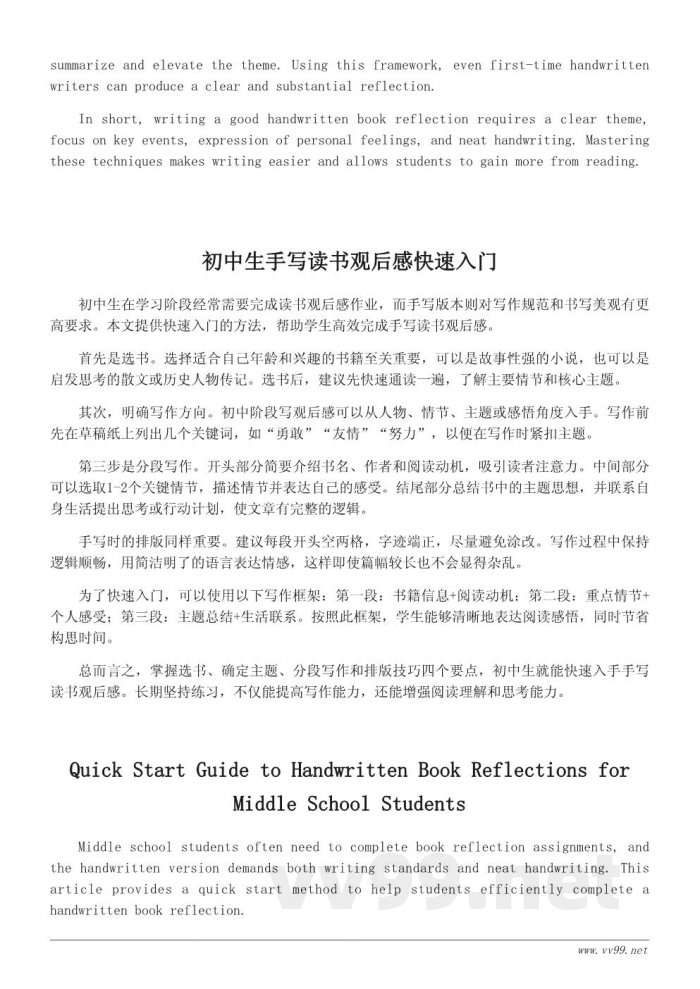
文章内容
文章内容
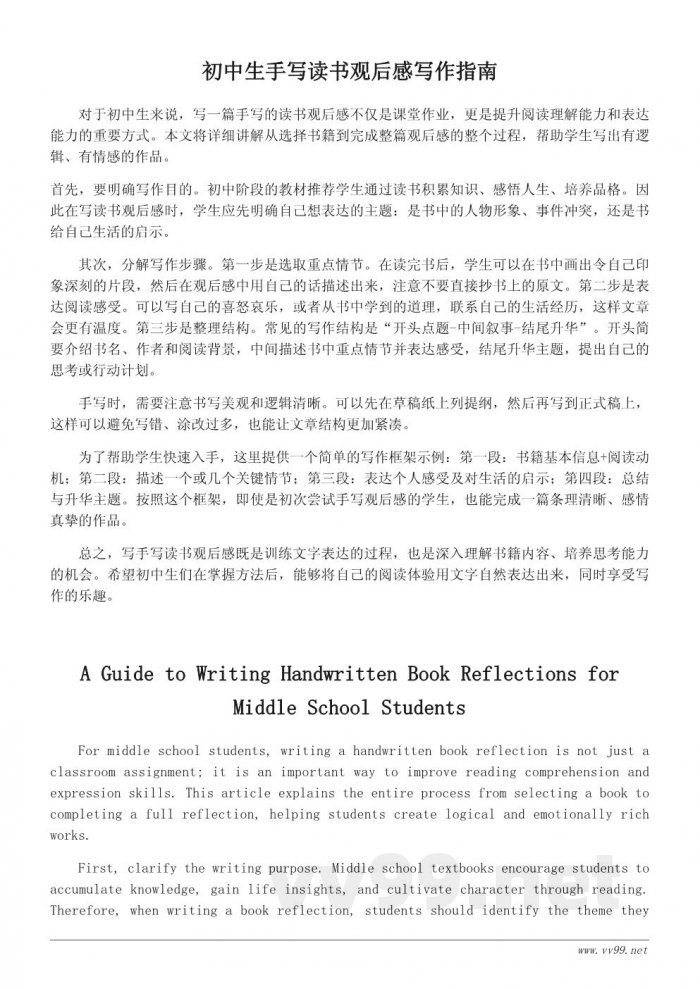
初中生手写读书观后感写作指南
对于初中生来说,写一篇手写的读书观后感不仅是课堂作业,更是提升阅读理解能力和表达能力的重要方式。本文将详细讲解从选择书籍到完成整篇观后感的整个过程,帮助学生写出有逻辑、有情感的作品。
首先,要明确写作目的。初中阶段的教材推荐学生通过读书积累知识、感悟人生、培养品格。因此在写读书观后感时,学生应先明确自己想表达的主题:是书中的人物形象、事件冲突,还是书给自己生活的启示。
其次,分解写作步骤。第一步是选取重点情节。在读完书后,学生可以在书中画出令自己印象深刻的片段,然后在观后感中用自己的话描述出来,注意不要直接抄书上的原文。第二步是表达阅读感受。可以写自己的喜怒哀乐,或者从书中学到的道理,联系自己的生活经历,这样文章会更有温度。第三步是整理结构。常见的写作结构是“开头点题-中间叙事-结尾升华”。开头简要介绍书名、作者和阅读背景,中间描述书中重点情节并表达感受,结尾升华主题,提出自己的思考或行动计划。
手写时,需要注意书写美观和逻辑清晰。可以先在草稿纸上列提纲,然后再写到正式稿上,这样可以避免写错、涂改过多,也能让文章结构更加紧凑。
为了帮助学生快速入手,这里提供一个简单的写作框架示例:第一段:书籍基本信息+阅读动机;第二段:描述一个或几个关键情节;第三段:表达个人感受及对生活的启示;第四段:总结与升华主题。按照这个框架,即使是初次尝试手写观后感的学生,也能完成一篇条理清晰、感情真挚的作品。
总之,写手写读书观后感既是训练文字表达的过程,也是深入理解书籍内容、培养思考能力的机会。希望初中生们在掌握方法后,能够将自己的阅读体验用文字自然表达出来,同时享受写作的乐趣。
A Guide to Writing Handwritten Book Reflections for Middle School Students
For middle school students, writing a handwritten book reflection is not just a classroom assignment; it is an important way to improve reading comprehension and expression skills. This article explains the entire process from selecting a book to completing a full reflection, helping students create logical and emotionally rich works.
First, clarify the writing purpose. Middle school textbooks encourage students to accumulate knowledge, gain life insights, and cultivate character through reading. Therefore, when writing a book reflection, students should identify the theme they want to express: the characters, the conflicts, or the life lessons they learned from the book.
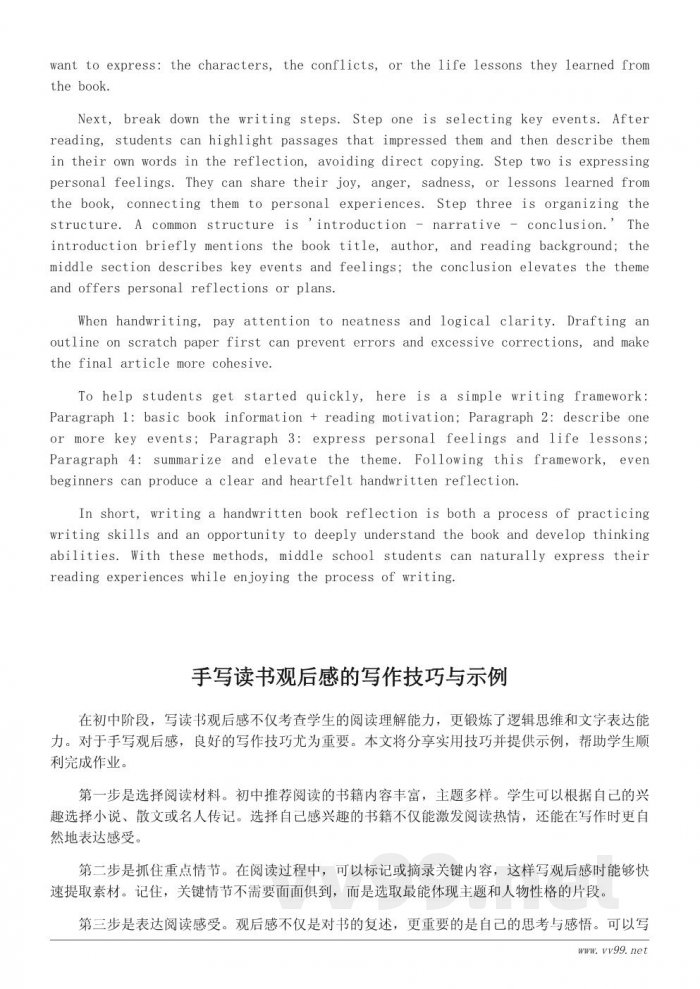
Next, break down the writing steps. Step one is selecting key events. After reading, students can highlight passages that impressed them and then describe them in their own words in the reflection, avoiding direct copying. Step two is expressing personal feelings. They can share their joy, anger, sadness, or lessons learned from the book, connecting them to personal experiences. Step three is organizing the structure. A common structure is 'introduction - narrative - conclusion.' The introduction briefly mentions the book title, author, and reading background; the middle section describes key events and feelings; the conclusion elevates the theme and offers personal reflections or plans.
When handwriting, pay attention to neatness and logical clarity. Drafting an outline on scratch paper first can prevent errors and excessive corrections, and make the final article more cohesive.
To help students get started quickly, here is a simple writing framework: Paragraph 1: basic book information + reading motivation; Paragraph 2: describe one or more key events; Paragraph 3: express personal feelings and life lessons; Paragraph 4: summarize and elevate the theme. Following this framework, even beginners can produce a clear and heartfelt handwritten reflection.
In short, writing a handwritten book reflection is both a process of practicing writing skills and an opportunity to deeply understand the book and develop thinking abilities. With these methods, middle school students can naturally express their reading experiences while enjoying the process of writing.
手写读书观后感的写作技巧与示例
在初中阶段,写读书观后感不仅考查学生的阅读理解能力,更锻炼了逻辑思维和文字表达能力。对于手写观后感,良好的写作技巧尤为重要。本文将分享实用技巧并提供示例,帮助学生顺利完成作业。
第一步是选择阅读材料。初中推荐阅读的书籍内容丰富,主题多样。学生可以根据自己的兴趣选择小说、散文或名人传记。选择自己感兴趣的书籍不仅能激发阅读热情,还能在写作时更自然地表达感受。
第二步是抓住重点情节。在阅读过程中,可以标记或摘录关键内容,这样写观后感时能够快速提取素材。记住,关键情节不需要面面俱到,而是选取最能体现主题和人物性格的片段。
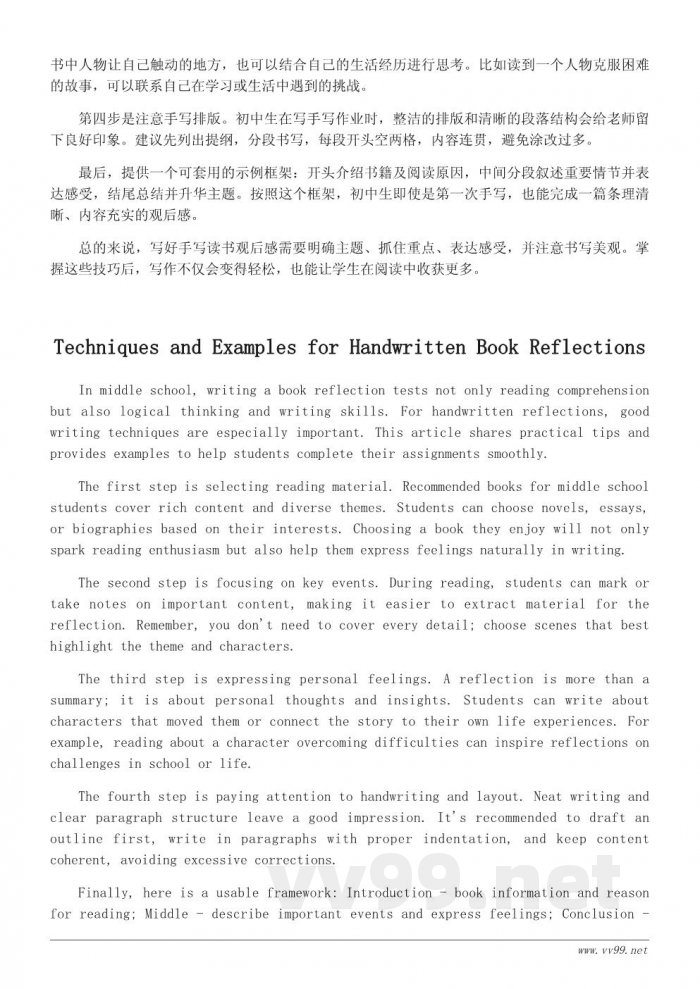
第三步是表达阅读感受。观后感不仅是对书的复述,更重要的是自己的思考与感悟。可以写书中人物让自己触动的地方,也可以结合自己的生活经历进行思考。比如读到一个人物克服困难的故事,可以联系自己在学习或生活中遇到的挑战。
第四步是注意手写排版。初中生在写手写作业时,整洁的排版和清晰的段落结构会给老师留下良好印象。建议先列出提纲,分段书写,每段开头空两格,内容连贯,避免涂改过多。
最后,提供一个可套用的示例框架:开头介绍书籍及阅读原因,中间分段叙述重要情节并表达感受,结尾总结并升华主题。按照这个框架,初中生即使是第一次手写,也能完成一篇条理清晰、内容充实的观后感。
总的来说,写好手写读书观后感需要明确主题、抓住重点、表达感受,并注意书写美观。掌握这些技巧后,写作不仅会变得轻松,也能让学生在阅读中收获更多。
Techniques and Examples for Handwritten Book Reflections
In middle school, writing a book reflection tests not only reading comprehension but also logical thinking and writing skills. For handwritten reflections, good writing techniques are especially important. This article shares practical tips and provides examples to help students complete their assignments smoothly.
The first step is selecting reading material. Recommended books for middle school students cover rich content and diverse themes. Students can choose novels, essays, or biographies based on their interests. Choosing a book they enjoy will not only spark reading enthusiasm but also help them express feelings naturally in writing.
The second step is focusing on key events. During reading, students can mark or take notes on important content, making it easier to extract material for the reflection. Remember, you don't need to cover every detail; choose scenes that best highlight the theme and characters.
The third step is expressing personal feelings. A reflection is more than a summary; it is about personal thoughts and insights. Students can write about characters that moved them or connect the story to their own life experiences. For example, reading about a character overcoming difficulties can inspire reflections on challenges in school or life.
The fourth step is paying attention to handwriting and layout. Neat writing and clear paragraph structure leave a good impression. It's recommended to draft an outline first, write in paragraphs with proper indentation, and keep content coherent, avoiding excessive corrections.
Finally, here is a usable framework: Introduction - book information and reason for reading; Middle - describe important events and express feelings; Conclusion - summarize and elevate the theme. Using this framework, even first-time handwritten writers can produce a clear and substantial reflection.
In short, writing a good handwritten book reflection requires a clear theme, focus on key events, expression of personal feelings, and neat handwriting. Mastering these techniques makes writing easier and allows students to gain more from reading.
小提示:上面此文档内容仅展示完整文档里的部分内容, 若需要下载完整文档请 点击免费下载完整文档 。