文章内容
游泳朗诵诗三步写法:意象分工与行数分配
给班级朗诵活动写一首十二到十六行的儿童诗,先定事件线,再分意象,最后排行数。事件线是贯穿全诗的那件事:第一次下水害怕、学会蹬腿、暑假结束时会游了。三个事件各占四到五行,诗的骨架就立住了,后面只是往里填句子。
第一步给意象分工。题目要求水花、泳池、阳光三个意象,各给一个角色:水花管声音和动作,放在学游泳的段落,比如水花拍打池壁、水花钻进耳朵;泳池管地方和光影,比如泳池装着一小片天空、池底晃动的亮斑;阳光管情绪,安排在开头和结尾各出现一次,首尾呼应。每个意象全诗出现两到三次就够,出现四次以上听众会腻。
第二步分配行数和字数。十六行以内拆成三段:下水四行、学游泳六行、结尾四行。每行控制在五到九个字,节奏自然整齐;哪一行超过十个字,朗诵时一口气读不完,就拆成两行。写的时候数着字数,比写完再改省力。
第三步处理押韵。儿童诗不要求严格押韵,做到大致相押就行:第一、二、四行的末字韵母接近即可,比如见、天、边。如果为了押韵句子变得别扭,放弃押韵保句子,浅显顺口比押韵优先。押韵的位置也可以放在段内,不必每段都押。
标题从意象里挑,比如水花里的夏天、泳池和阳光。不要把题目原样抄进标题,诗里已经用意象讲了学游泳这件事,标题再直说一遍就浪费了。
写完后自己出声读一遍,拿铅笔标出磕巴的地方:读不顺的位置多半是字数超标或顺序别扭,只改标出来的那几行,别整首重写。改完再读一遍,两遍都顺,这首诗就能交给班级排练了。排练时再请同学听一遍,别人指出的磕巴处往往是自己读顺了却难为别人的地方。
Three Steps to Writing a Swimming Recitation Poem: Image Roles and Line Budgets
To write a twelve-to-sixteen-line children poem for a class recitation, set the event line first, then assign the images, then arrange the lines. The event line is the thread running through the poem: fear on the first day in the water, learning to kick, and finally swimming as summer ends. Give each event four to five lines and the skeleton stands; the rest is just filling in sentences.
Step one: give each image a job. The topic asks for splashes, the pool and sunlight. Splashes carry sound and motion, placed in the learning section: splashes patting the pool wall, splashes getting into the ear. The pool carries place and light: the pool holding a slice of sky, bright patches wobbling on the bottom. Sunlight carries feeling, appearing once at the start and once at the end to echo each other. Two or three appearances per image is enough; four or more will bore the audience.
Step two: budget the lines and characters. Split sixteen lines into three stanzas: four for entering the water, six for learning, four for the ending. Keep each line to five to nine Chinese characters and the rhythm turns neat by itself; if a line passes ten characters, one breath cannot finish it, so split it into two. Counting while writing saves far more work than fixing afterward.
Step three: handle the rhyme. A children poem needs no strict rhyme; near-rhyme is fine. Make the last characters of lines one, two and four share similar finals, like see, sky and by in English. If forcing a rhyme twists the sentence, drop the rhyme and keep the sentence; plain and smooth comes before rhyming. Rhymes can also sit inside a stanza instead of at every line end.
Pick the title from an image, such as Summer in the Splashes or The Pool and the Sunlight. Do not copy the task title into the poem title; the images already tell the swimming story, so a plain title wastes the chance.
When it is done, read it aloud once and mark every stumble with a pencil. Rough spots usually mean a line is too long or the order is awkward; fix only the marked lines instead of rewriting the whole poem. Read it again. If both passes sound smooth, the poem is ready for the class to rehearse. During rehearsal ask a classmate to listen once more; the stumbles others point out are often spots you smoothed over but are hard on everyone else.
示例诗《水花里的夏天》逐行点评:朗诵时哪里该停
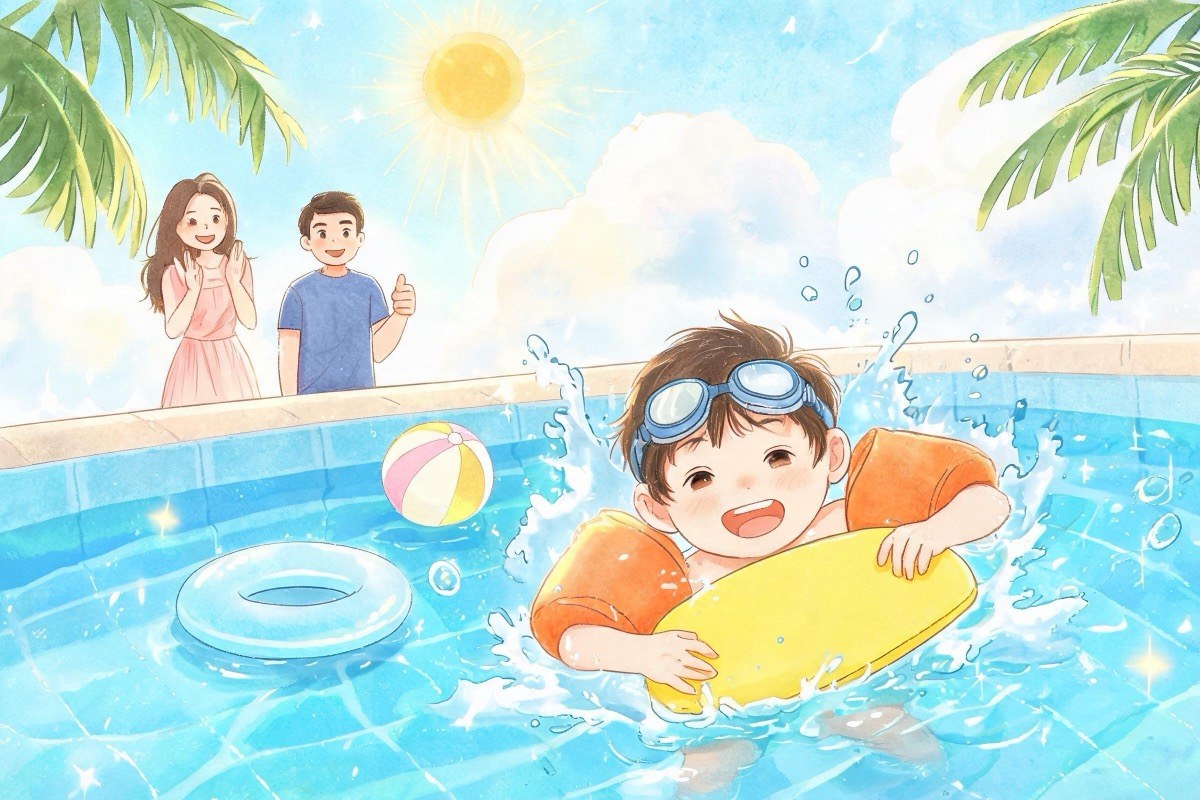
先看这首十四行示例诗,共三段:夏天我走进泳池,/水面晃着一小片天。/阳光先碰了碰我的肩,/我却站在岸边不肯下。/水花跑过来拉我,/它说别怕,它说慢慢来。/我把手指放进水里,/水花立刻爬上手腕。/后来我学会了蹬腿,/水花在我耳边鼓掌。/泳池装了一整个夏天,/阳光在池底画亮亮的圈。/暑假结束那天上岸,/我把水花留在了里面。
第一段四行交代地点和害怕。第一行平铺直叙,是好的起点;第二行晃着一小片天把泳池写大了,朗诵时泳池后稍停,听众才有时间想象画面。第三行阳光先碰了碰我的肩,碰字是这段的重音,读轻一点反而清楚。第四行不肯下放段末,语气要收住,为第二段的水花让路。
第二段六行写学游泳,是水花的主场。它说别怕,它说慢慢来用了重复,齐读这两行效果最好,排练时安排全班一起读。爬上手腕比进了水里具体,重音落在爬字。水花在我耳边鼓掌是全诗最容易记住的一行,单独让一个孩子领读,齐读接在后面,声音就有层次。
第三段四行收尾。泳池装了一整个夏天,装字要读满,这一行把时间收进泳池。阳光在池底画亮亮的圈呼应开头的阳光,亮亮叠词读慢半拍。最后一行我把水花留在了里面,意思是我学会了、不再需要害怕陪衬,读到这里声音放轻,不用加重,结束自然。
这首诗意象各干了什么一目了然:水花管动作和声音,出现四次;泳池管地方,出现三次;阳光管情绪,出现两次,首尾呼应。行数十四,每行七到九字,没有一行需要换气两次。给班级用的诗照这个密度写,排练两三次就能上台。
A Sample Poem Annotated Line by Line: Where to Pause When Reciting
First look at this fourteen-line sample poem, in three stanzas: In summer I walked into the pool, / the surface rocked a small slice of sky. / Sunlight tapped my shoulder first, / but I stood at the edge, refusing to go in. / A splash ran over and pulled me, / it said do not be afraid, it said take it slow. / I put my fingers into the water, / and the splash climbed right up my wrist. / Later I learned to kick, / and the splash applauded beside my ear. / The pool carried a whole summer, / sunlight drew bright circles on the bottom. / On the day summer ended I climbed out, / and I left the splashes inside.
The first stanza sets the place and the fear in four lines. Line one is plain, a good starting point. Line two makes the pool big with a slice of sky rocking on it; pause slightly after pool so the audience can picture it. In line three, sunlight tapped my shoulder first, the word tapped is the stress of this stanza; reading it softly actually makes it clearer. Line four ends on refusing, hold the tone back to make room for the splash in stanza two.
The six-line second stanza is about learning, the splash takes the stage here. It said do not be afraid, it said take it slow uses repetition, and these two lines sound best in unison, so assign the whole class to read them in rehearsal. Climbed up my wrist is more concrete than entered the water, with the stress on climbed. The splash applauded beside my ear is the most memorable line; let one child lead it alone and the class joins in after, and the voices gain layers.
The last stanza closes in four lines. The pool carried a whole summer needs the word carried read full and long; this line gathers the time into the pool. Sunlight drew bright circles echoes the opening sunlight; read the doubled bright half a beat slower. The final line, I left the splashes inside, means I have learned and no longer need fear as company; soften the voice here instead of pressing it, and the ending lands naturally.
What each image does is plain to see: splashes handle action and sound, appearing four times; the pool handles place, three times; sunlight handles feeling, twice, echoing at the start and end. Fourteen lines, seven to nine characters each, and no line needs two breaths. Write class poems at this density and two or three rehearsals are enough for the stage.
小提示:上面此文档内容仅展示完整文档里的部分内容, 若需要下载完整文档请 点击免费下载完整文档 。