文章内容
泳池里的夏天:光、水花与岸边的喘息
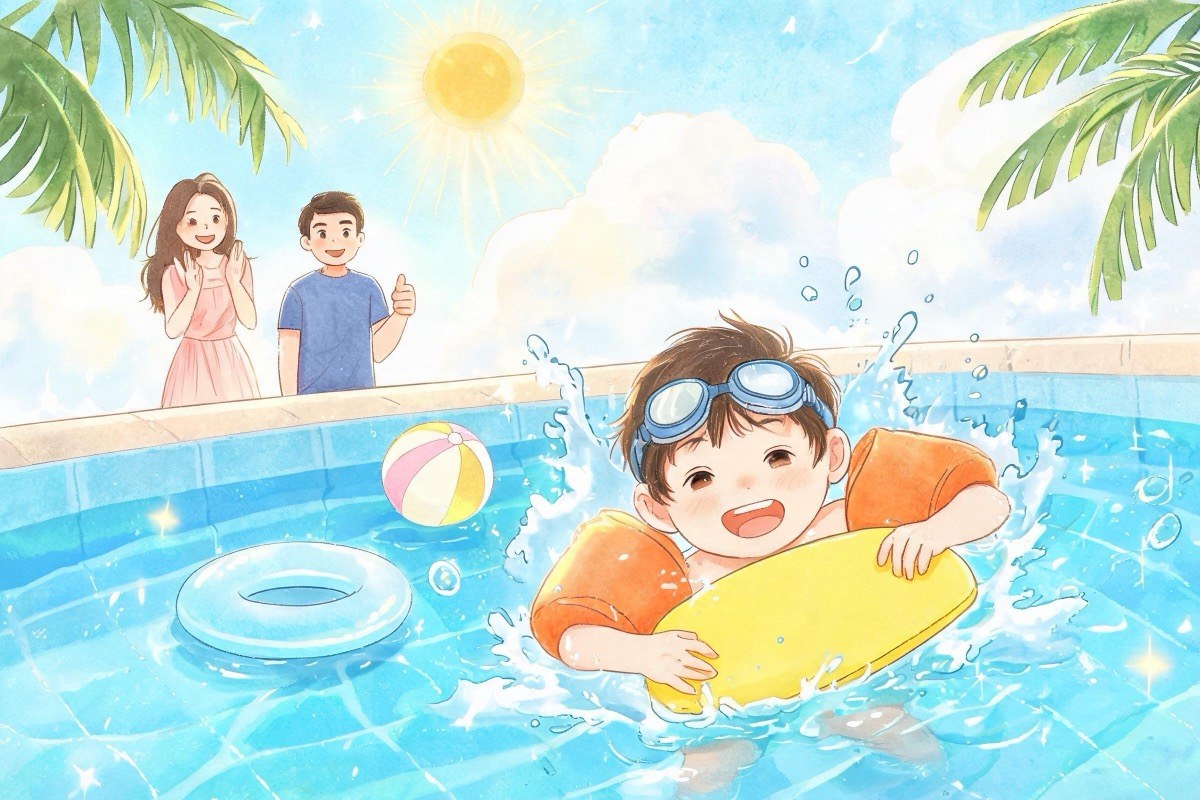
夏天的正午,泳池是一整块被阳光点燃的蓝。光从高处落下来,先在水面碎开,碎成一片晃动的金,再往水底沉,沉成几根缓慢摇摆的光柱。站在池边往下看,池底的光像水草一样活着,它们不生长,却一直在呼吸。整个夏天,我就泡在这样的光里,泡在一种又亮又凉的安静里。
水是有声音的,但那声音不在水面,在水下。潜下去,世界忽然被调低了音量,只剩下自己的心跳,咚,咚,咚,和池壁传来的隐隐的回声。再浮上来,水花炸开,阳光顺着水珠的弧线飞起来,每一颗水珠里都藏着一个小小的、倒过来的夏天。水花落回池面,池面就多了无数个圆,一个追着一个,推向池壁,又碎在池壁上。那些圆像夏天的心跳,看不见,却一直在那里。
游不动的时候,我趴在池边喘气。手臂搭着湿漉漉的池沿,下巴几乎贴到水面,每一次吸气都带着氯气和阳光混在一起的味道,有点刺,又有点干净。喘息未定的那几秒,耳朵里一半是水声,一半是自己的呼吸,忽然就能听清一件事:原来我怕了那么久的水,此刻正托着我。这句话不是谁告诉我的,是水面告诉我的,是每一次蹬腿之后身体自己往前滑的那一小段距离告诉我的。
午后四点,阳光斜过来,整池的水变成半杯蜜、半杯玻璃。孩子们的水花声远了,池面慢慢平下去,光柱重新站直。我坐在岸边,头发上的水一滴一滴落回池里,每一滴都替夏天数了一下时间。那个夏天我学会的其实不是游泳。我学会的是趴在水上,把呼吸交出去;是看见光在水底摇晃,仍然肯把眼睛睁开;是在岸边喘完那口气,然后再次松手,把自己放回那片又亮又深的蓝里去。
Summer in the Pool: Light, Spray and Breath at the Edge
At high summer noon, the pool is a single slab of blue set alight by the sun. Light falls from a height, shatters first on the surface into a trembling field of gold, then sinks toward the bottom into a few slow-swaying columns of brightness. Standing at the edge and looking down, the light on the pool floor lives like seaweed - it never grows, yet it breathes the whole time. All summer I soaked in that kind of light, soaked in a brightness that was also a coolness, a brightness that was also quiet.
Water has a sound, but the sound is not on the surface - it is under it. Slip beneath and the world is suddenly turned down: only my heartbeat remains, thud, thud, thud, and a faint echo travelling through the pool wall. Rise again and the spray bursts; sunlight rides the arcs of the droplets and flies upward, and inside every droplet hides a tiny, upside-down summer. When the spray falls back, the surface gains a thousand circles, each chasing the next toward the wall, each breaking against it. Those circles are the heartbeat of summer - invisible, but always there.
When my arms give out, I lie across the edge and gasp. Forearms on the wet coping, chin nearly touching the water, every breath carrying the sting of chlorine mixed with sunlight - sharp, and yet clean. In those seconds before my breathing settles, one ear holds the sound of water and the other holds my own breath, and suddenly one thing becomes clear: the water I feared for so long is holding me up right now. No one told me this. The surface told me. The small glide forward my body makes after each kick told me.
At four in the afternoon the sun slants in, and the whole pool turns into half a cup of honey and half a cup of glass. The children's splashing fades, the surface slowly flattens, the columns of light straighten again. I sit on the edge, water dripping from my hair back into the pool, each drop ticking off a moment of summer for me. What I learned that summer was not really swimming. I learned to lie on the water and hand over my breathing; to see light wobbling on the bottom and still be willing to open my eyes; to finish one gasp at the edge, then let go again and put myself back into that bright, deep blue.
散文怎么不写成记事:泳池散文里的三个意象与四个句法
同样写学游泳,记事作文写我第一节课做了什么、第二节课进步多少;散文却可以不讲过程,只留住三个场景:午后泳池的光、溅起的水花、岸边未定的喘息。这三个意象各干一件事——光负责氛围,水花负责生命的动静,喘息负责内心。把三件事分给三个场景,散文的骨架就立起来了,不需要故事情节来撑。
光是最好下笔的意象,因为它会变形。写光别只写明亮,写它落下来碎开、沉下去变柱、斜过来变成蜜色,光一变,时间就在走。正午的光碎成金,四点的光斜成半杯蜜半杯玻璃,读者不用看钟表就知道下午过去了。这就是意象的任务:替叙事干活,却不出现叙事。
水花这个意象承担动。写法是把大词换成小动作:不说水花四溅,说水珠里藏着倒过来的夏天;不说波纹一圈圈散开,说无数个圆追着推向池壁、碎在池壁上。小动作带出大感受,读者自己会想起心跳。这里藏着散文最常用的一个办法:通感。把视觉的水写成听觉的心跳,把氯气写成有点刺又有点干净,感官一互换,平常的东西就新鲜了。
喘息这个意象承担内心,也是最容易写空的一处。别写我感到了勇气,写喘息那几秒身体听到什么:耳朵一半是水声一半是呼吸,然后让一句话从身体里浮出来——我怕了那么久的水,此刻正托着我。感悟不喊出来,而是从一次具体的呼吸里长出来,这就是散文和口号的分界。
句法上有四个可以照着练的动作。第一,短句造节奏:咚,咚,咚,三个词单独成段,心跳就有了声音。第二,长短交替:一整句长句铺陈之后,跟一个七八字的短句收住,像水花落地。第三,动静互换:光柱站直、池面平下去,用静写动过的痕迹。第四,结尾收束:把全文的意象收拢成一个动作,比如喘完这口气,再次松手,把自己放回那片蓝里。练两个仿写句就能上手:把阳光照在水面上仿成光碎开、沉下去、变颜色;把累得喘气仿成耳朵里装着两种声音,然后一句话从呼吸里浮出来。散文的节奏不在辞藻里,在句子长短和意象分工里。
How to Keep Prose from Becoming a Diary: Three Images and Four Sentence Moves in Pool Prose
On the same subject - learning to swim - a diary composition lists what I did in lesson one and how much I improved in lesson two. Prose can skip the process entirely and keep only three scenes: afternoon light on the pool, spray rising and falling, breath not yet settled at the edge. Each image does one job: light carries atmosphere, spray carries the pulse of life, breath carries the inner self. Assign those three jobs to three scenes and the skeleton of the prose stands without any plot to prop it up.
Light is the easiest image to write because it changes shape. Do not just write that it is bright - write it falling and shattering, sinking into columns, slanting in and turning the color of honey. When light changes, time moves. Noon light shatters into gold; four o'clock light slants into half honey, half glass. Readers know the afternoon has passed without looking at a clock. That is an image's job: doing narrative work without any narrative appearing.
The spray image carries movement. The technique is trading big phrases for small actions: instead of spray flying everywhere, say each droplet hides an upside-down summer; instead of ripples spreading in rings, say a thousand circles chase the wall and break against it. Small actions release large feelings - the reader recalls a heartbeat unaided. Here hides prose's most-used device: synaesthesia. Write water seen as a heartbeat heard; write chlorine as sharp and yet clean. Swap the senses and ordinary things turn fresh.
The breath image carries the inner self, and is the easiest place to turn hollow. Do not write I felt courage - write what the body hears during those gasping seconds: one ear holding water, the other holding breath, then let one sentence float up out of the body: the water I feared so long is holding me up right now. The insight is not shouted but grown from one concrete breath. That is the boundary between prose and slogan.
Four sentence moves are worth practising. One: short sentences build rhythm - thud, thud, thud, three words standing alone, and the heartbeat gains a voice. Two: alternate long and short - after a long spreading sentence, close with seven or eight characters, like spray landing. Three: trade stillness and motion - columns of light straightening, the surface flattening, using stillness to show the trace of motion. Four: gather the ending - collect every image into one action, such as finishing this gasp, letting go again, and putting yourself back into that blue. Two imitation sentences are enough to start: turn sunlight on water into light shattering, sinking, changing color; turn exhausted gasping into ears holding two sounds, then one sentence floating up out of the breath. The rhythm of prose lives not in ornament but in sentence length and the division of labor among images.
小提示:上面此文档内容仅展示完整文档里的部分内容, 若需要下载完整文档请 点击免费下载完整文档 。