文章内容
我学会了游泳读后感400字范文:那只在背后悄悄松开的手
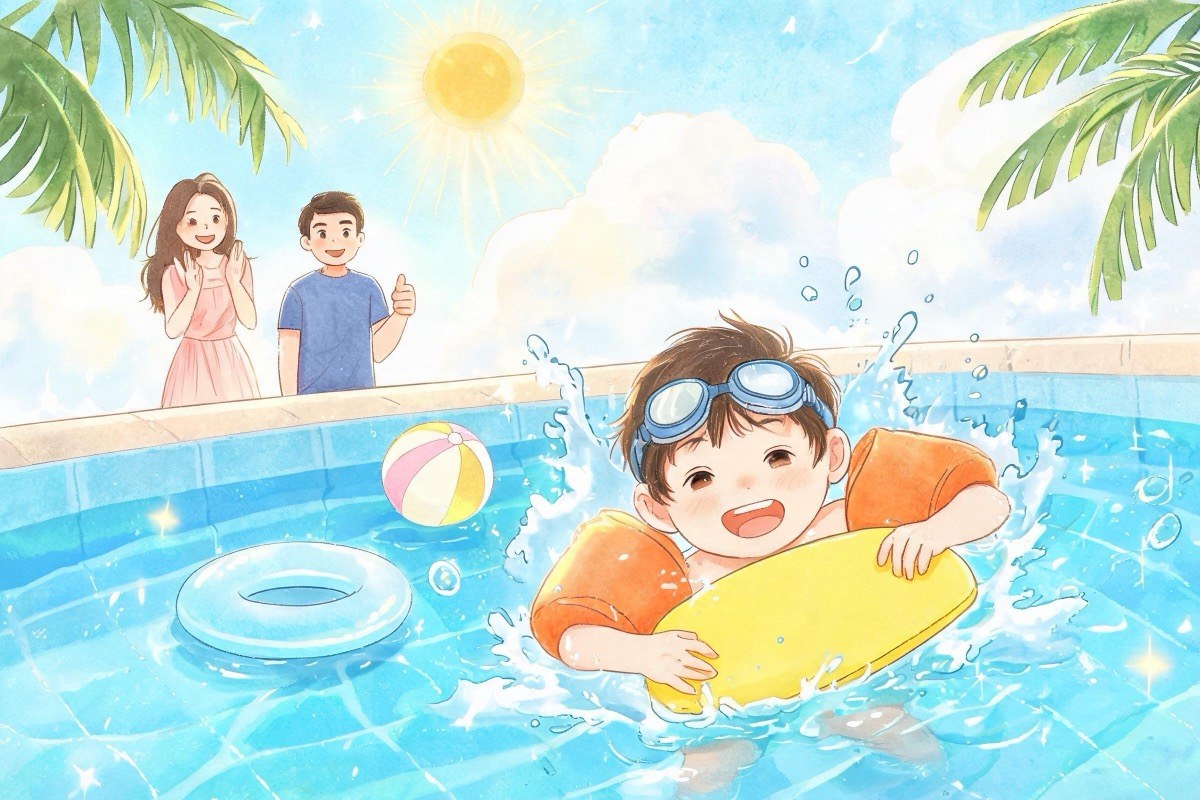
读《我学会了游泳》,最让我停下来的是文中父亲下水的那一幕。作者小时候怕水,抱着池边哭,怎么也不肯松手。父亲没有骂她,也没有讲道理,只是脱了鞋走进水池,用大手托住她的腰,说:别怕,我托着你。作者闭着眼睛在水里吐泡泡,泡泡吐了一串又一串,等她再睁开眼,发现自己已经自己往前游了三米。父亲的手不知道什么时候松开了,他站在池边,笑着给她鼓掌。
这一段我读了好几遍,最打动我的是悄悄松开那一下。父亲托了那么多天,一直托到作者真的能游了才松手,而且松得没有声音,作者一点都没被吓到。成长好像也是这样:托着你的那只手会在你不知不觉的时候松开,等你发现的时候,你已经游出去一段了。父亲之所以松得没有声音,是因为他等的不是胆量,是力气——作者自己能浮起来了,手才该走。
我想起自己学游泳的那个月。我也怕水,第一节课我抱着池边哭,教练没有催我,让我扶着池边练蹬腿,他的手一直垫在我腿下面。第一周,那只手始终在;第二周有一天,蹬着蹬着我觉得身子变轻了,像自己浮起来了。教练在旁边喊:自己游到对面去。我憋着气游了五米,抬头的时候,教练已经站在对面等我。原来他的手早就松开了,我自己一点都不知道。那天上岸,我的手指被水泡得发白,心里却特别高兴,回家路上跟妈妈说:我自己游到对面了。
文中的作者被父亲托着,我被教练托着。这篇读后感教会我的不是游泳的动作,而是一句让我安心的话:怕水不要紧,怕什么都不要紧。开头总有人托着你,他们会在刚刚好的时候悄悄松手。你要做的就是把腿接着蹬下去,总有一天你会发现,自己已经能游了。
A 400-Word Reading Response: The Hand That Let Go Without a Sound
Reading 'I Learned to Swim', the scene that made me stop is the moment the father steps into the pool. As a little girl the author clung to the pool edge, crying, refusing to let go. Her father neither scolded her nor lectured her. He simply took off his shoes, walked into the water, held her waist with his big hand and said: don't be afraid, I've got you. She shut her eyes and blew bubbles under water, one string after another, and when she opened them again she found she had swum three meters on her own. The father's hand had let go at some point without a sound, and he stood at the edge, smiling and clapping for her.
I read this part several times. What moves me most is the silent letting go. The father supported her for days, and only released when she could truly swim - and he released so quietly that she was never frightened. Growing up seems to work the same way: the hand holding you up lets go while you are not paying attention, and by the time you notice, you have already swum some distance. The father let go silently because what he was waiting for was not courage but strength - the hand should leave only once she could float by herself.
It reminds me of the month I learned to swim. I was afraid of water too. In the first lesson I hugged the pool edge and cried. The coach did not rush me. He had me practise kicking while holding the edge, and his hand stayed under my legs the whole time. Through the first week that hand was always there. One day in the second week, kick by kick, my body felt lighter, as if it were floating by itself. The coach called out: swim to the other side on your own. I held my breath and swam five meters, and when I lifted my head he was already waiting on the far side. His hand had let go long before, and I had not known it at all. That day after getting out, my fingers were pruned white from the water, yet my heart was light, and on the way home I told my mother: I swam to the other side all by myself.
The author in the article was held up by her father; I was held up by my coach. What this article taught me is not a swimming stroke but a reassuring sentence: being afraid of water is not a disaster, and being afraid of anything is not a disaster. Someone will hold you up at the start, and they will let go quietly at exactly the right moment. All you have to do is keep kicking, and one day you will find that you can already swim.
400字读后感怎么写:一个细节、一次经历、一句感悟的分配法
老师布置400字读后感,很多同学卡在两个地方:不知道每部分写多少,也不知道三个素材放哪。其实400字可以像分蛋糕一样分:开头一句话交代读了什么,约三十字;文中那个感人细节,约一百字;自己的那次经历,约一百五十字;自己的感悟,约八十字;最后一句话收束,约三十到五十字。加起来正好四百上下,谁也不挤占谁。
感人细节这一百字有个诀窍:只写一个瞬间,不写整个过程。比如写父亲托腰那一段,就写他走进水池、大手托住腰、说了哪句话,到此为止。不要从头讲作者怎么怕水、上了几节课,那是复述课文,老师最不喜欢。判断标准是:这一段里有没有一个具体的动作和一句原话。有动作有原话,细节就立住了。
自己的经历是一百五十字的大头,要按时间写,带上当时的感觉。可以套这个顺序:一开始我怎么样,中间哪一天发生了什么变化,结果我做到了什么。比如:第一节课我抱着池边不肯松手;教练让我扶边蹬腿,他的手垫在我腿下;第二周我忽然觉得身子变轻,自己游了五米。三句话各有分工,读的人能看到一条清楚的线。最容易犯的毛病是写成流水账:第一天学了什么、第二天学了什么、第三天又学了什么,全是日程没有感受。把日程砍掉,只留下变化发生的那一天,展开写那天的身体感觉,比如水灌进鼻子的辣、耳朵里的嗡嗡声、浮起来时胸口一空。
感悟八十字最容易喊口号。别写我明白了坚持就是胜利,写一件小事推出来的判断。前面写的是教练悄悄松手,感悟就可以写:原来会游泳不是某一天忽然会的,是有人托着你蹬了很多天腿,松手那天你只是不知道。这句话是从故事里长出来的,不是贴上去的。开头和结尾各留一句话:开头写我读了什么、最喜欢哪一段;结尾把感悟换成一句对自己说的话,比如下次怕什么,就先蹬几下腿试试。按这个分配法写,四百字写不满的情况基本不会出现,三个素材也一个都不会漏。
How to Write a 400-Word Reading Response: Sharing Space Between Detail, Experience and Insight
When teachers assign a 400-word reading response, most students get stuck in two places: how much to write in each part, and where the three required materials go. Think of 400 words as a cake to divide: one opening sentence saying what you read, about thirty words; the touching detail from the article, about one hundred; your own experience, about one hundred and fifty; your insight, about eighty; one closing sentence, thirty to fifty more. That adds up to roughly four hundred, and no part crowds out another.
For the hundred-word detail, the trick is to write one moment, not the whole story. Take the father supporting her waist: write him walking into the pool, his big hand holding her waist, and exactly what he said - then stop. Do not restart from how scared the author was or how many lessons she took; that is retelling the textbook, which teachers dislike most. The test: does the paragraph contain one concrete action and one line of direct speech? If it does, the detail stands up.
Your own experience is the biggest share at about one hundred and fifty words, and it should follow time and carry what it felt like. Use this order: how I started, which day something changed, what I finally managed. For example: in the first lesson I clung to the pool edge and would not let go; the coach had me kick while holding the edge, his hand cushioning under my legs; in the second week my body suddenly felt light and I swam five meters alone. Each sentence has its own job, and the reader sees a clear line. The common failure is a diary list: what I learned on day one, day two, day three - all schedule, no feeling. Cut the schedule, keep only the day the change happened, and expand that day's body sensations: the sting of water in the nose, the buzzing in the ears, the hollow feeling in the chest when you first float.
The eighty-word insight is where slogans creep in. Do not write I learned that persistence is victory; write a judgement pushed out of one small event. If the story is about the coach letting go quietly, the insight can be: learning to swim does not happen suddenly on one day - someone held you up while you kicked for many days, and on the day they let go you simply did not know it. That sentence grows out of the story instead of being pasted on. Save one sentence each for the opening and closing: the opening names the article and the part you liked best; the closing turns the insight into something you say to yourself, like next time I am afraid of something, I will try kicking a few times first. Write by this allocation and you will hardly fail to fill four hundred words, nor miss any of the three materials.
小提示:上面此文档内容仅展示完整文档里的部分内容, 若需要下载完整文档请 点击免费下载完整文档 。