文章内容
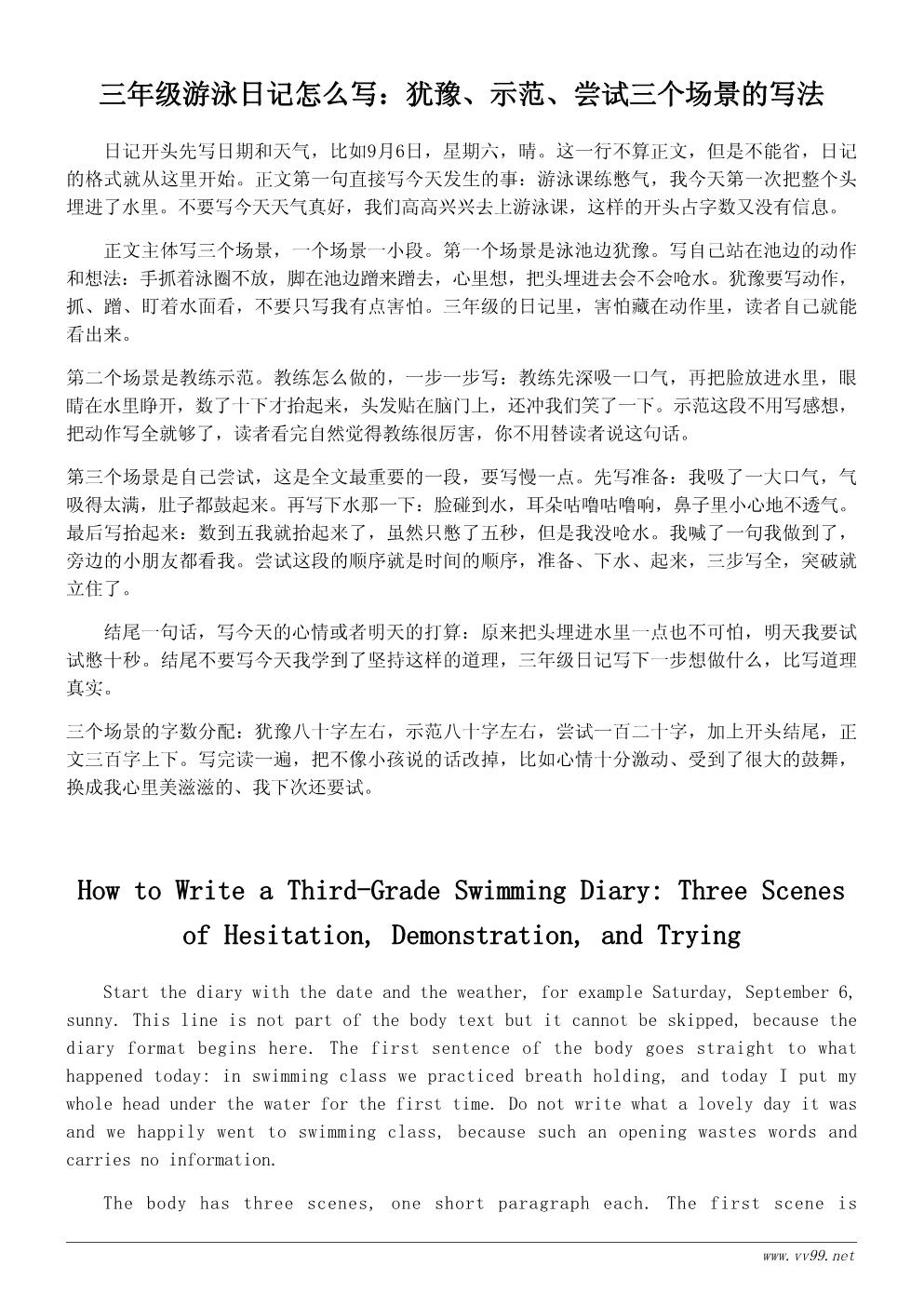
三年级游泳日记怎么写:犹豫、示范、尝试三个场景的写法
日记开头先写日期和天气,比如9月6日,星期六,晴。这一行不算正文,但是不能省,日记的格式就从这里开始。正文第一句直接写今天发生的事:游泳课练憋气,我今天第一次把整个头埋进了水里。不要写今天天气真好,我们高高兴兴去上游泳课,这样的开头占字数又没有信息。
正文主体写三个场景,一个场景一小段。第一个场景是泳池边犹豫。写自己站在池边的动作和想法:手抓着泳圈不放,脚在池边蹭来蹭去,心里想,把头埋进去会不会呛水。犹豫要写动作,抓、蹭、盯着水面看,不要只写我有点害怕。三年级的日记里,害怕藏在动作里,读者自己就能看出来。
第二个场景是教练示范。教练怎么做的,一步一步写:教练先深吸一口气,再把脸放进水里,眼睛在水里睁开,数了十下才抬起来,头发贴在脑门上,还冲我们笑了一下。示范这段不用写感想,把动作写全就够了,读者看完自然觉得教练很厉害,你不用替读者说这句话。
第三个场景是自己尝试,这是全文最重要的一段,要写慢一点。先写准备:我吸了一大口气,气吸得太满,肚子都鼓起来。再写下水那一下:脸碰到水,耳朵咕噜咕噜响,鼻子里小心地不透气。最后写抬起来:数到五我就抬起来了,虽然只憋了五秒,但是我没呛水。我喊了一句我做到了,旁边的小朋友都看我。尝试这段的顺序就是时间的顺序,准备、下水、起来,三步写全,突破就立住了。
结尾一句话,写今天的心情或者明天的打算:原来把头埋进水里一点也不可怕,明天我要试试憋十秒。结尾不要写今天我学到了坚持这样的道理,三年级日记写下一步想做什么,比写道理真实。
三个场景的字数分配:犹豫八十字左右,示范八十字左右,尝试一百二十字,加上开头结尾,正文三百字上下。写完读一遍,把不像小孩说的话改掉,比如心情十分激动、受到了很大的鼓舞,换成我心里美滋滋的、我下次还要试。
How to Write a Third-Grade Swimming Diary: Three Scenes of Hesitation, Demonstration, and Trying
Start the diary with the date and the weather, for example Saturday, September 6, sunny. This line is not part of the body text but it cannot be skipped, because the diary format begins here. The first sentence of the body goes straight to what happened today: in swimming class we practiced breath holding, and today I put my whole head under the water for the first time. Do not write what a lovely day it was and we happily went to swimming class, because such an opening wastes words and carries no information.
The body has three scenes, one short paragraph each. The first scene is hesitating at the poolside. Write your actions and thoughts there: hands gripping the swim ring, feet rubbing back and forth on the edge, thinking whether putting your head in will make water run into your nose. Hesitation should show through actions like gripping, rubbing, and staring at the water, not just I am a little scared. In a third grader's diary, fear hides inside the actions, and the reader can find it.
The second scene is the coach's demonstration. Write the moves step by step: the coach took a deep breath, put the face into the water, opened the eyes under water, counted to ten before coming up, hair stuck to the forehead, and even smiled at us. This paragraph needs no comments. Write the actions completely, and the reader will think the coach is impressive without being told.
The third scene is trying it yourself, the most important paragraph, so slow down. First the preparation: I took a big breath, so big that my belly puffed out. Then the moment of going in: the face touched the water, the ears gurgled, and the nose carefully let no air out. Finally coming up: I lifted my head when I counted to five, only five seconds, but I did not swallow any water. I shouted I did it, and the other kids all looked at me. This paragraph follows time itself: prepare, go in, come up. Write all three steps and the breakthrough stands.
End with one sentence about today's feeling or tomorrow's plan: turns out putting my head under water is not scary at all, and tomorrow I will try ten seconds. Do not end with a lesson like today I learned to persevere. A third grader's diary writes what to try next, which is more real than a moral.
Word distribution for the three scenes: about 80 words for hesitation, 80 for the demonstration, 120 for trying, plus the opening and ending, and the body lands near 300 words. After writing, read it once and replace anything a child would not say, such as I was deeply moved or greatly inspired, with kid words like my heart felt puffy with pride or I want to try again next time.
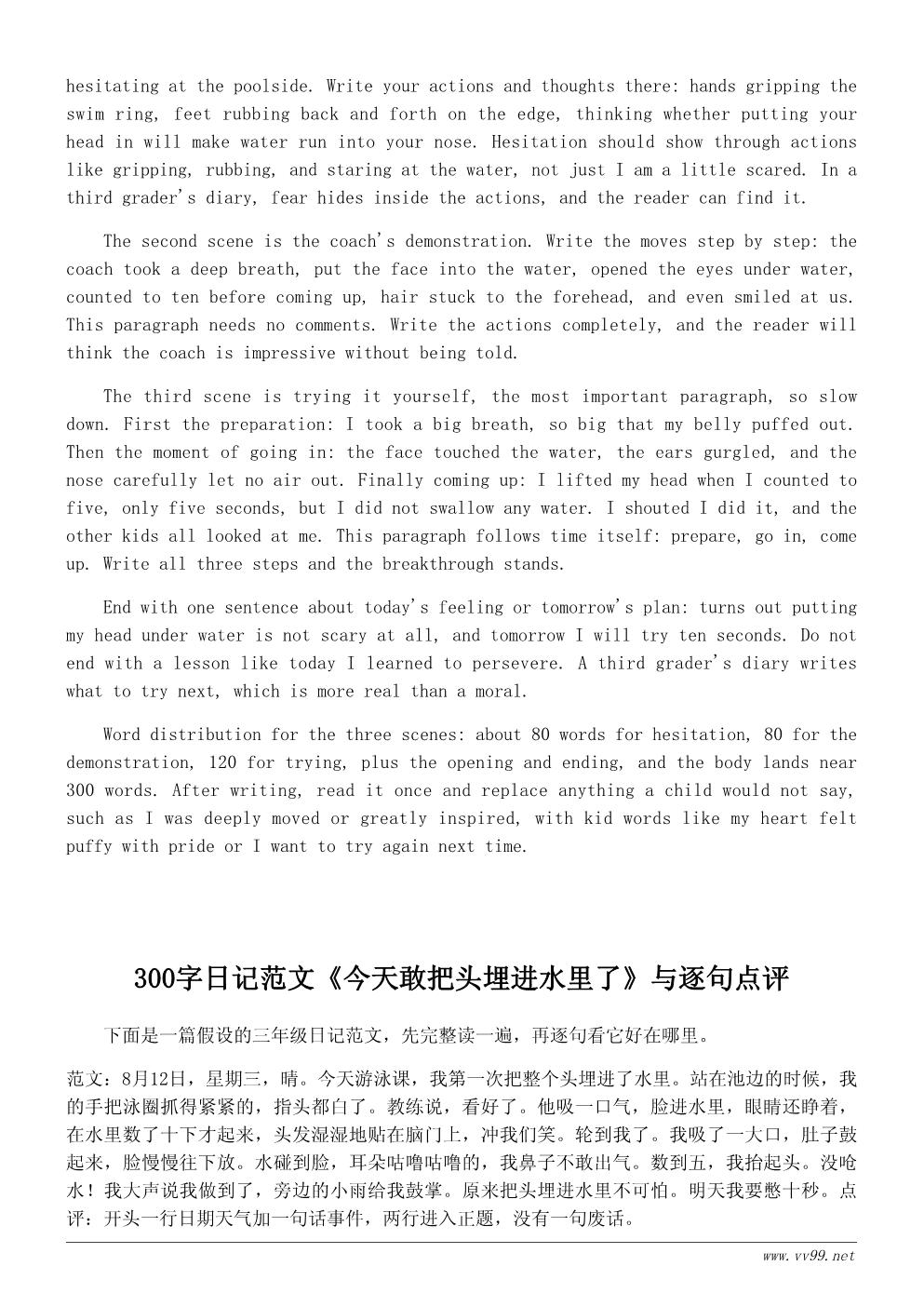
300字日记范文《今天敢把头埋进水里了》与逐句点评
下面是一篇假设的三年级日记范文,先完整读一遍,再逐句看它好在哪里。
范文:8月12日,星期三,晴。今天游泳课,我第一次把整个头埋进了水里。站在池边的时候,我的手把泳圈抓得紧紧的,指头都白了。教练说,看好了。他吸一口气,脸进水里,眼睛还睁着,在水里数了十下才起来,头发湿湿地贴在脑门上,冲我们笑。轮到我了。我吸了一大口,肚子鼓起来,脸慢慢往下放。水碰到脸,耳朵咕噜咕噜的,我鼻子不敢出气。数到五,我抬起头。没呛水!我大声说我做到了,旁边的小雨给我鼓掌。原来把头埋进水里不可怕。明天我要憋十秒。点评:开头一行日期天气加一句话事件,两行进入正题,没有一句废话。
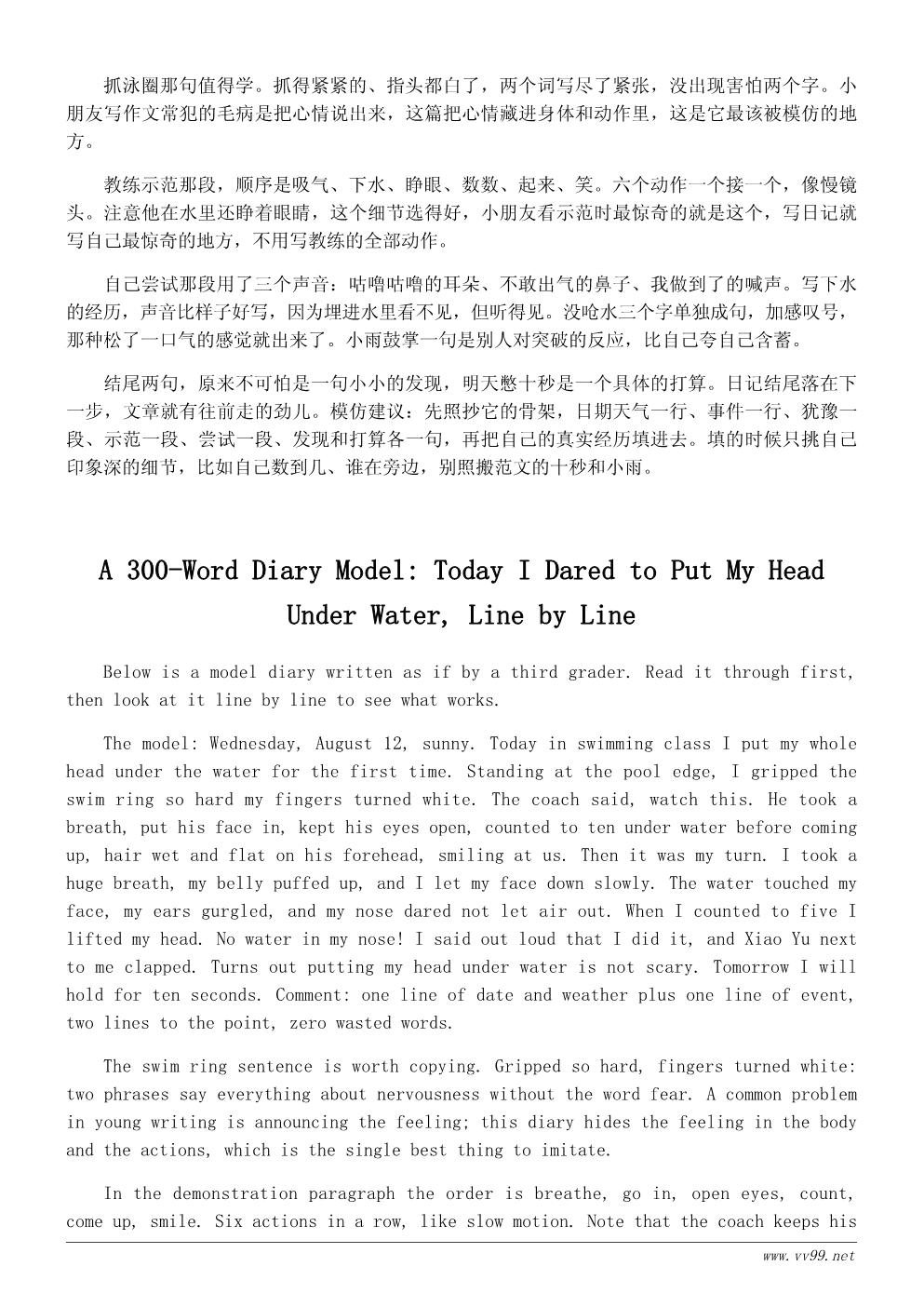
抓泳圈那句值得学。抓得紧紧的、指头都白了,两个词写尽了紧张,没出现害怕两个字。小朋友写作文常犯的毛病是把心情说出来,这篇把心情藏进身体和动作里,这是它最该被模仿的地方。
教练示范那段,顺序是吸气、下水、睁眼、数数、起来、笑。六个动作一个接一个,像慢镜头。注意他在水里还睁着眼睛,这个细节选得好,小朋友看示范时最惊奇的就是这个,写日记就写自己最惊奇的地方,不用写教练的全部动作。
自己尝试那段用了三个声音:咕噜咕噜的耳朵、不敢出气的鼻子、我做到了的喊声。写下水的经历,声音比样子好写,因为埋进水里看不见,但听得见。没呛水三个字单独成句,加感叹号,那种松了一口气的感觉就出来了。小雨鼓掌一句是别人对突破的反应,比自己夸自己含蓄。
结尾两句,原来不可怕是一句小小的发现,明天憋十秒是一个具体的打算。日记结尾落在下一步,文章就有往前走的劲儿。模仿建议:先照抄它的骨架,日期天气一行、事件一行、犹豫一段、示范一段、尝试一段、发现和打算各一句,再把自己的真实经历填进去。填的时候只挑自己印象深的细节,比如自己数到几、谁在旁边,别照搬范文的十秒和小雨。
A 300-Word Diary Model: Today I Dared to Put My Head Under Water, Line by Line
Below is a model diary written as if by a third grader. Read it through first, then look at it line by line to see what works.
The model: Wednesday, August 12, sunny. Today in swimming class I put my whole head under the water for the first time. Standing at the pool edge, I gripped the swim ring so hard my fingers turned white. The coach said, watch this. He took a breath, put his face in, kept his eyes open, counted to ten under water before coming up, hair wet and flat on his forehead, smiling at us. Then it was my turn. I took a huge breath, my belly puffed up, and I let my face down slowly. The water touched my face, my ears gurgled, and my nose dared not let air out. When I counted to five I lifted my head. No water in my nose! I said out loud that I did it, and Xiao Yu next to me clapped. Turns out putting my head under water is not scary. Tomorrow I will hold for ten seconds. Comment: one line of date and weather plus one line of event, two lines to the point, zero wasted words.
The swim ring sentence is worth copying. Gripped so hard, fingers turned white: two phrases say everything about nervousness without the word fear. A common problem in young writing is announcing the feeling; this diary hides the feeling in the body and the actions, which is the single best thing to imitate.
In the demonstration paragraph the order is breathe, go in, open eyes, count, come up, smile. Six actions in a row, like slow motion. Note that the coach keeps his eyes open under water. That detail is well chosen, because it is exactly what a child finds most amazing when watching a demo. A diary writes what amazed you most, not everything the coach did.
The trying paragraph uses three sounds: gurgling ears, a nose holding in air, and the shout of I did it. When writing about going under water, sounds are easier than looks, because under water you cannot see but you can hear. The three words for no water in my nose stand alone as a sentence with an exclamation mark, and the relief comes through. Xiao Yu clapping is someone else reacting to the breakthrough, which is humbler than praising yourself.
The ending has two sentences: turns out it is not scary is a small discovery, and tomorrow ten seconds is a concrete plan. Ending a diary on the next step gives the piece forward motion. How to imitate: copy the skeleton first, one line of date and weather, one line of event, one paragraph of hesitation, one of demonstration, one of trying, then one discovery and one plan. Then fill in your own real details, like what number you counted to and who was nearby, instead of copying the ten seconds and Xiao Yu from the model.
小提示:上面此文档内容仅展示完整文档里的部分内容, 若需要下载完整文档请 点击免费下载完整文档 。