文章内容
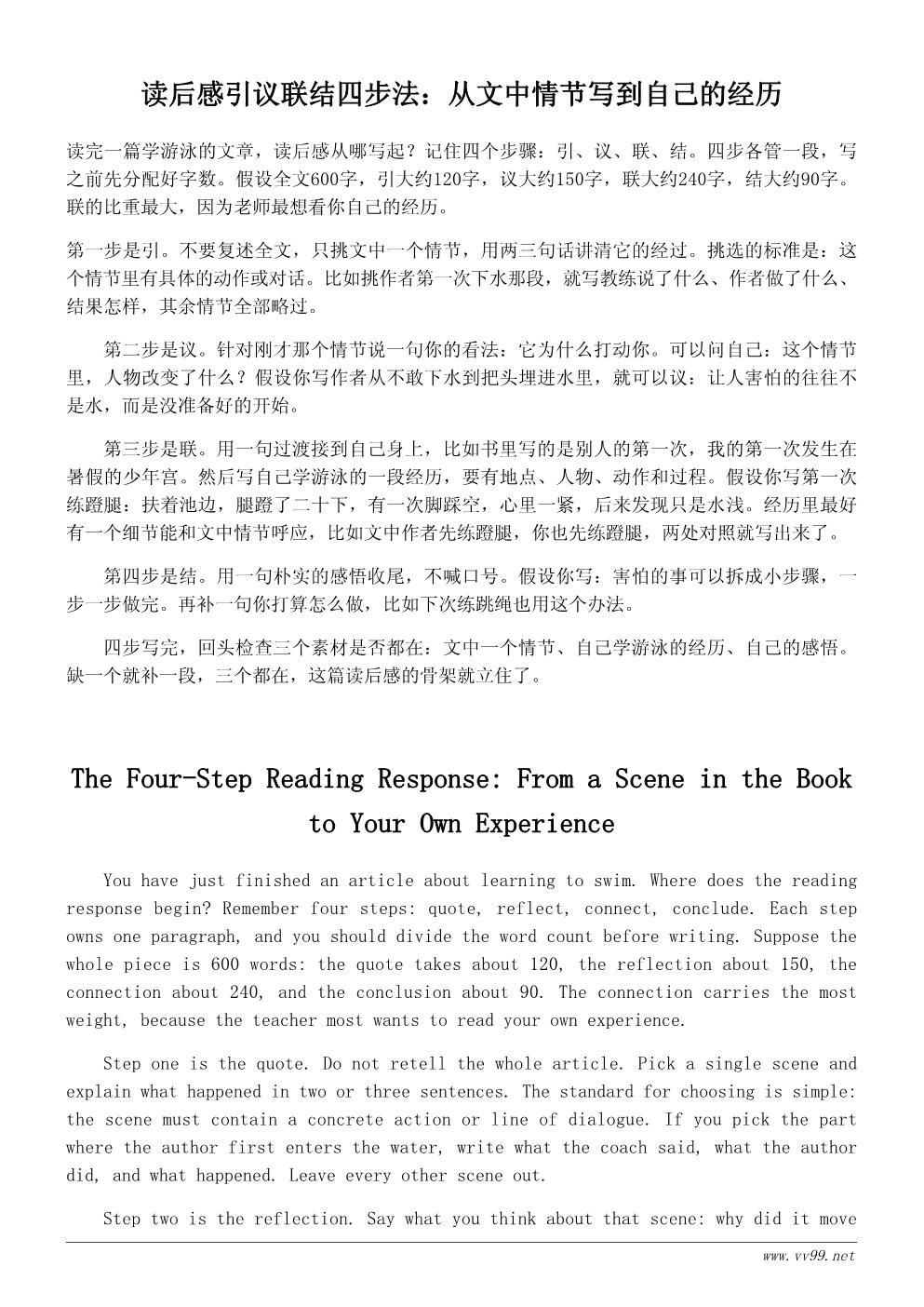
读后感引议联结四步法:从文中情节写到自己的经历
读完一篇学游泳的文章,读后感从哪写起?记住四个步骤:引、议、联、结。四步各管一段,写之前先分配好字数。假设全文600字,引大约120字,议大约150字,联大约240字,结大约90字。联的比重最大,因为老师最想看你自己的经历。
第一步是引。不要复述全文,只挑文中一个情节,用两三句话讲清它的经过。挑选的标准是:这个情节里有具体的动作或对话。比如挑作者第一次下水那段,就写教练说了什么、作者做了什么、结果怎样,其余情节全部略过。
第二步是议。针对刚才那个情节说一句你的看法:它为什么打动你。可以问自己:这个情节里,人物改变了什么?假设你写作者从不敢下水到把头埋进水里,就可以议:让人害怕的往往不是水,而是没准备好的开始。
第三步是联。用一句过渡接到自己身上,比如书里写的是别人的第一次,我的第一次发生在暑假的少年宫。然后写自己学游泳的一段经历,要有地点、人物、动作和过程。假设你写第一次练蹬腿:扶着池边,腿蹬了二十下,有一次脚踩空,心里一紧,后来发现只是水浅。经历里最好有一个细节能和文中情节呼应,比如文中作者先练蹬腿,你也先练蹬腿,两处对照就写出来了。
第四步是结。用一句朴实的感悟收尾,不喊口号。假设你写:害怕的事可以拆成小步骤,一步一步做完。再补一句你打算怎么做,比如下次练跳绳也用这个办法。
四步写完,回头检查三个素材是否都在:文中一个情节、自己学游泳的经历、自己的感悟。缺一个就补一段,三个都在,这篇读后感的骨架就立住了。
The Four-Step Reading Response: From a Scene in the Book to Your Own Experience
You have just finished an article about learning to swim. Where does the reading response begin? Remember four steps: quote, reflect, connect, conclude. Each step owns one paragraph, and you should divide the word count before writing. Suppose the whole piece is 600 words: the quote takes about 120, the reflection about 150, the connection about 240, and the conclusion about 90. The connection carries the most weight, because the teacher most wants to read your own experience.
Step one is the quote. Do not retell the whole article. Pick a single scene and explain what happened in two or three sentences. The standard for choosing is simple: the scene must contain a concrete action or line of dialogue. If you pick the part where the author first enters the water, write what the coach said, what the author did, and what happened. Leave every other scene out.
Step two is the reflection. Say what you think about that scene: why did it move you? Ask yourself: what changed in the character during this scene? If you write about the author going from refusing to enter the water to putting her head under, you might reflect that what scares people is often not the water itself but an unprepared beginning.
Step three is the connection. Bridge to yourself with one sentence, such as: the article describes someone else's first time, while my first time happened at the youth center during summer vacation. Then write one episode from your own swimming lessons, with a place, people, actions, and a process. Suppose you write about practicing the kick for the first time: holding the pool edge, kicking twenty times, your foot slipping once, your heart tightening, and then realizing the water was simply shallow. Try to echo a detail from the book inside your experience. If the author practiced the kick first, and you did too, the comparison writes itself.
Step four is the conclusion. End with one plain thought, without slogans. Suppose you write: a scary thing can be broken into small steps and finished one step at a time. Add one line about what you plan to do, such as using the same method for jump rope practice.
After the four steps, look back and check that all three materials are present: one scene from the article, your own swimming experience, and your own thought. If one is missing, add a paragraph. When all three are there, the skeleton of your reading response stands firm.
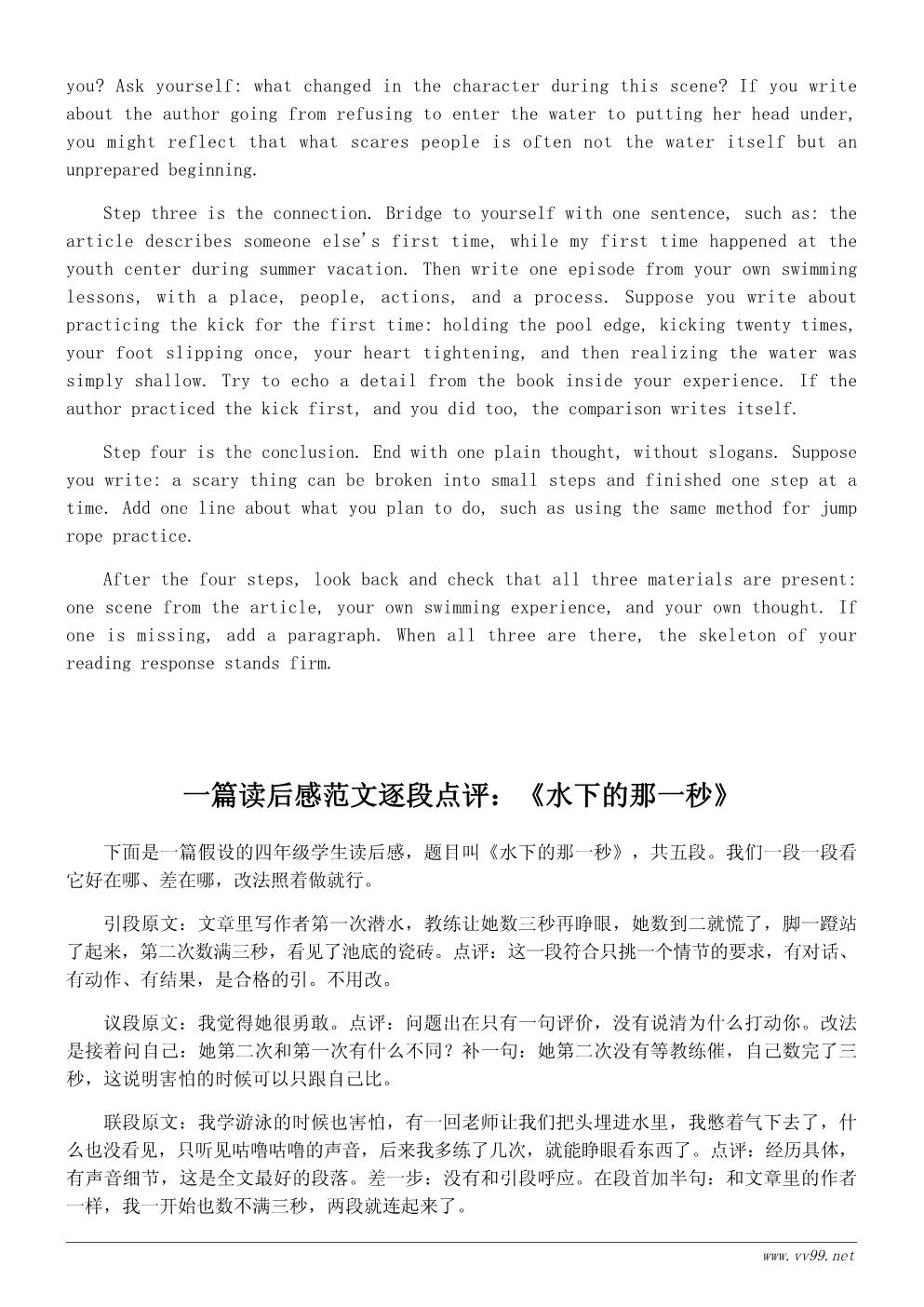
一篇读后感范文逐段点评:《水下的那一秒》
下面是一篇假设的四年级学生读后感,题目叫《水下的那一秒》,共五段。我们一段一段看它好在哪、差在哪,改法照着做就行。
引段原文:文章里写作者第一次潜水,教练让她数三秒再睁眼,她数到二就慌了,脚一蹬站了起来,第二次数满三秒,看见了池底的瓷砖。点评:这一段符合只挑一个情节的要求,有对话、有动作、有结果,是合格的引。不用改。
议段原文:我觉得她很勇敢。点评:问题出在只有一句评价,没有说清为什么打动你。改法是接着问自己:她第二次和第一次有什么不同?补一句:她第二次没有等教练催,自己数完了三秒,这说明害怕的时候可以只跟自己比。
联段原文:我学游泳的时候也害怕,有一回老师让我们把头埋进水里,我憋着气下去了,什么也没看见,只听见咕噜咕噜的声音,后来我多练了几次,就能睁眼看东西了。点评:经历具体,有声音细节,这是全文最好的段落。差一步:没有和引段呼应。在段首加半句:和文章里的作者一样,我一开始也数不满三秒,两段就连起来了。
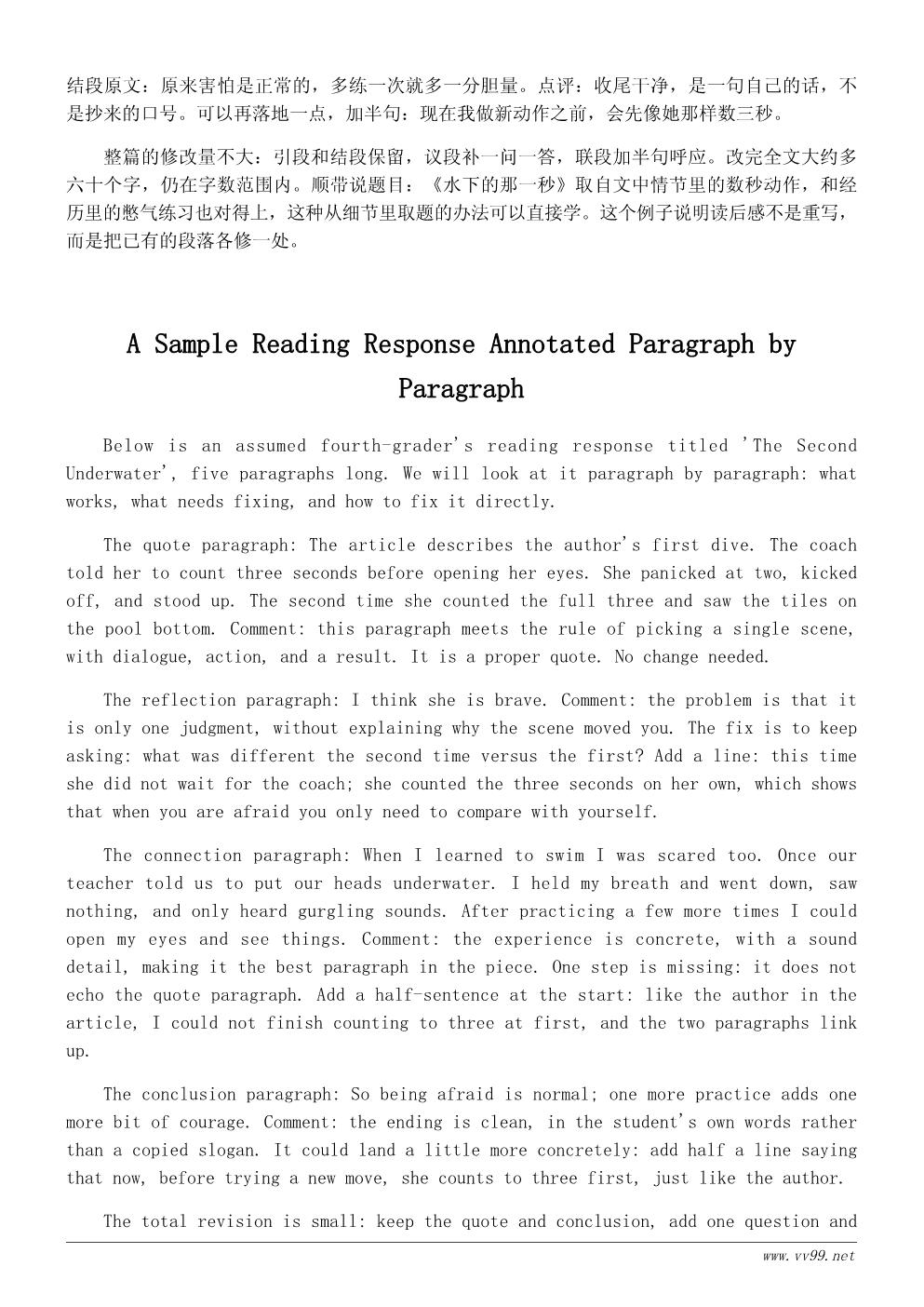
结段原文:原来害怕是正常的,多练一次就多一分胆量。点评:收尾干净,是一句自己的话,不是抄来的口号。可以再落地一点,加半句:现在我做新动作之前,会先像她那样数三秒。
整篇的修改量不大:引段和结段保留,议段补一问一答,联段加半句呼应。改完全文大约多六十个字,仍在字数范围内。顺带说题目:《水下的那一秒》取自文中情节里的数秒动作,和经历里的憋气练习也对得上,这种从细节里取题的办法可以直接学。这个例子说明读后感不是重写,而是把已有的段落各修一处。
A Sample Reading Response Annotated Paragraph by Paragraph
Below is an assumed fourth-grader's reading response titled 'The Second Underwater', five paragraphs long. We will look at it paragraph by paragraph: what works, what needs fixing, and how to fix it directly.
The quote paragraph: The article describes the author's first dive. The coach told her to count three seconds before opening her eyes. She panicked at two, kicked off, and stood up. The second time she counted the full three and saw the tiles on the pool bottom. Comment: this paragraph meets the rule of picking a single scene, with dialogue, action, and a result. It is a proper quote. No change needed.
The reflection paragraph: I think she is brave. Comment: the problem is that it is only one judgment, without explaining why the scene moved you. The fix is to keep asking: what was different the second time versus the first? Add a line: this time she did not wait for the coach; she counted the three seconds on her own, which shows that when you are afraid you only need to compare with yourself.
The connection paragraph: When I learned to swim I was scared too. Once our teacher told us to put our heads underwater. I held my breath and went down, saw nothing, and only heard gurgling sounds. After practicing a few more times I could open my eyes and see things. Comment: the experience is concrete, with a sound detail, making it the best paragraph in the piece. One step is missing: it does not echo the quote paragraph. Add a half-sentence at the start: like the author in the article, I could not finish counting to three at first, and the two paragraphs link up.
The conclusion paragraph: So being afraid is normal; one more practice adds one more bit of courage. Comment: the ending is clean, in the student's own words rather than a copied slogan. It could land a little more concretely: add half a line saying that now, before trying a new move, she counts to three first, just like the author.
The total revision is small: keep the quote and conclusion, add one question and answer to the reflection, add half a sentence of echo to the connection. The revised piece grows by about sixty words and stays within the limit. A note on the title: 'The Second Underwater' comes from the counting action in the quoted scene, and it also matches the breath-holding practice in the experience, so this way of taking a title from a detail can be copied directly. This example shows that a reading response is not rewritten from scratch; each existing paragraph gets one repair.
小提示:上面此文档内容仅展示完整文档里的部分内容, 若需要下载完整文档请 点击免费下载完整文档 。