文章内容
毕业暑假学游泳的日记怎么写:三个场景各占一段,成就感自己会出来
毕业暑假学会游泳,是很多人小学记忆里最亮的一件事。写这样一篇日记,不用从头交代暑假,只要写好三个场景:第一次独立下水、游完一个来回、上岸的那一刻。三个场景各占一段,日记就立起来了。
第一个场景,第一次独立下水,重点是松手那一瞬间。以前总有教练或爸爸扶着,这一天他们退开了。写松手,要写身体的反应:站在浅水区,水深到胸口,手在池边摸了一下才放开,放开之后先没敢动,站了几秒才往前迈步。这几秒的犹豫最真实,别省略。
第二个场景,游完一个来回,重点是数出来的距离。六年级的孩子会自己算数了,写距离就用数:划了多少下手,蹬了多少次腿,中间换了几口气,脚有没有碰到池底的斜坡。一个来回不短,中间一定有过慌,比如换气呛了一下、腿越来越沉。把慌写进去,游完才有分量。
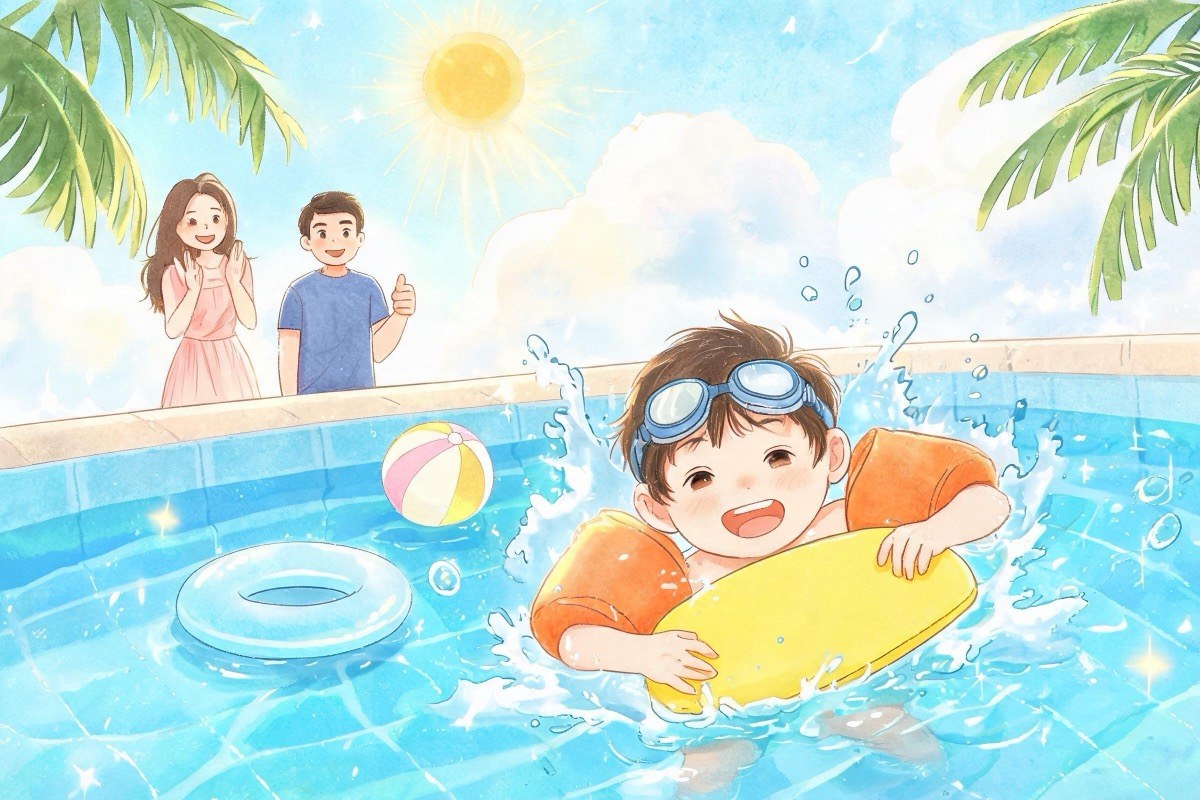
第三个场景,上岸时的喜悦,重点是没忍住的小动作。成就感不用喊出来,写身体自己做了什么:扒着池边笑出了声,甩着水珠跑向休息区,跟妈妈说了一句我游完了。也可以写回头看了一眼水面,那条泳道看起来比早上短了。看一眼这个动作,比一百句我真棒都管用。
三段之外,开头补一句时间,比如毕业后的第一个星期六;结尾补一句回忆感,比如后来每次想起那个暑假,先想起来的就是池子的味道。首尾各一句,日记就有了毕业暑假特有的回望味道。
语言上记住朴实两个字:少用形容词,多用动词。摸、放、站、蹬、扒、甩,这些动作词把三个场景串起来,成就感自己会从字里行间冒出来,根本不用喊。
还有一个常被忽略的点:三个场景之间要有过渡,但不能写成流水账。过渡一句就够,比如下水那段结尾写我站了几秒,才往前迈了一步;来回那段就可以直接从贴着浅水区游开始。场景和场景之间跳一下,日记反而更像日记,因为日记本来就不是把每一分钟都记下来。
How to Write a Graduation-Summer Swimming Diary: Three Scenes, One Paragraph Each
Learning to swim during the summer after graduation is one of the brightest memories of elementary school. A diary like this needs no long setup, only three scenes: entering the water alone for the first time, finishing one round trip, and the moment of climbing out. One paragraph per scene and the diary stands up.
Scene one, entering the water alone, centers on the instant you let go. Before, the coach or a parent always held you; today they stepped back. Write the letting go through the body: standing in the shallow end with water at your chest, touching the pool edge once before releasing your hands, then standing still for a few seconds before stepping forward. Do not skip those seconds of hesitation.
Scene two, the round trip, centers on counted distance. A sixth grader can count: how many pulls, how many kicks, how many breaths, whether your feet found the sloping bottom. A round trip is long, and somewhere in the middle there was panic, a swallowed breath, heavy legs. Put the panic in, and finishing gains weight.
Scene three, the joy on shore, centers on small involuntary actions. Achievement needs no shouting; write what the body did: laughing while hanging on the edge, running to the rest area dripping, telling your mother you finished. You can also write one look back at the water, the lane looking shorter than in the morning. That single glance beats a hundred lines of I am great.
Beyond the three scenes, add one time marker at the start, such as the first Saturday after graduation, and one line of remembrance at the end, such as whenever you recall that summer, the smell of the pool returns first. One line at each end gives the diary the backward glance of a graduation summer.
In language, remember plain: fewer adjectives, more verbs. Touch, release, stand, kick, grip, shake, these verbs string the scenes together, and the achievement rises from the lines by itself without any shouting.
One more often-overlooked point: the three scenes need transitions, but not a laundry list. One sentence is enough. If scene one ends with I stood for a few seconds before stepping forward, scene two can simply begin with swimming along the shallow side. A small jump between scenes makes the page feel more like a real diary, because a diary was never meant to record every minute.
500字日记范文:毕业暑假学会的那件事,附逐段点评
下面是一篇六年级日记范文,写毕业暑假学会游泳的那一天,每段后面附一段点评,看成就感是怎么不喊出来的。
第一段:七月九日,星期六,毕业后的第一个周末。今天下水,没有人扶。水深到胸口,我右手扣着池边,扣了很久,才一根手指一根手指地松开。松开以后我没敢走,就站着,听自己的心跳。站了大概五秒,我才往前迈了一步。点评:成就感日记最容易一开头就飘,这篇偏要写五秒的犹豫。一根手指一根手指地松,是全文最好的细节,害怕和勇气都在这个慢动作里。
第二段:我先贴着浅水区游,划一下手,蹬两下腿,头埋下去再抬起来换气。到池子中间的时候腿开始发沉,换气也呛了一口,我停在原地扶了一下水,没上岸,接着往前。后来我不数了,只记得最后脚踩到了斜坡,我站起来,发现我从这头游到了那头,一个来回。点评:停在原地扶了一下水,没上岸,接着往前,这三个短句是整篇的骨头。成就感的真实来源不是顺利,而是慌过之后没放弃。写学任何技能,都可以照这个路子留一个想停又没停的瞬间。
第三段:上岸的时候腿有点抖,我扒着池边笑了一声,自己都没听见。妈妈在岸上鼓掌,我甩着身上的水跑过去,说,我游了一个来回。回头再看那条泳道,它好像比早上短了。点评:笑了一声自己都没听见,这个细节写的是喜悦超出了自己的预料;泳道变短是错觉,但错觉恰恰是心情。结尾没有一句我真棒,可谁都看得见他有多高兴。
三段连起来,正好是下水、来回、上岸三个场景,每段一个重点,互不重复。自己写的时候照着这个骨架填,把五秒的犹豫、没上岸的停顿、自己没听见的笑,换成你自己的版本就行。
另外注意这篇范文的用词:全文没有一个成语,最长的一句话不过十几个字。六年级的日记不是作文比赛,不需要好词好句堆出来的漂亮。朴实不等于干巴,这篇里有听自己的心跳、泳道变短这样的句子,它们不华丽,但都是只有作者本人才写得出来的东西。写自己的日记时,也去抓这种只有你知道的瞬间。
A 500-Word Diary Sample: That Thing I Learned After Graduation, With Paragraph Notes
Here is a sixth-grade diary sample about the day I learned to swim after graduation, with notes after each paragraph showing how achievement gets written without being shouted.
Paragraph one: July 9, Saturday, the first weekend after graduation. In the water today with no one holding me. The water reached my chest. My right hand gripped the edge for a long time, then released finger by finger. After letting go I did not walk; I just stood there listening to my heartbeat. Maybe five seconds, then one step forward. Note: achievement diaries usually take off too fast; this one insists on five seconds of hesitation. Releasing finger by finger is the best detail in the piece, fear and courage both live in that slow motion.
Paragraph two: I swam along the shallow side, one pull, two kicks, head down then up for a breath. In the middle of the pool my legs grew heavy and I swallowed water; I stopped in place, pressed the water once, did not climb out, and kept going. Later I stopped counting; I only remember my feet finding the slope, me standing up, and realizing I had crossed from one end to the other, a full round trip. Note: stopped in place, pressed the water, did not climb out, kept going, these short clauses are the skeleton of the piece. The real source of achievement is not smoothness but continuing after panic. For any skill, keep one moment of almost stopping that did not happen.
Paragraph three: My legs were shaky getting out. I laughed once while hanging on the edge and did not even hear it myself. My mother clapped on the shore; I ran over dripping and said, I finished a round trip. Looking back, the lane seemed shorter than in the morning. Note: a laugh you do not hear yourself is joy beyond your own expectations; the shrinking lane is an illusion, but illusions are exactly what feelings do. Not one line of I am great, yet everyone can see how happy he was.
The three paragraphs are precisely the three scenes: entering, the round trip, getting out, each with its own focus and no repetition. Use this skeleton and replace the five seconds, the pause in the middle, and the unheard laugh with your own versions.
Also notice the diction: not a single idiom, and the longest sentence runs barely a dozen words. A sixth-grade diary is not an essay contest; it needs no pile of fancy phrases. Plain does not mean dry. This sample has lines like listening to my own heartbeat and the shrinking lane, none of them ornate, all of them writable only by the author himself. In your own diary, hunt for those moments only you know.
小提示:上面此文档内容仅展示完整文档里的部分内容, 若需要下载完整文档请 点击免费下载完整文档 。