文章内容
陪读三步:孩子从看热闹到主动追问
孩子早读名著,家长要做的不是讲,而是陪。陪读可以分成三步,每一步的目标不一样,用错了力气,孩子反而越读越累。
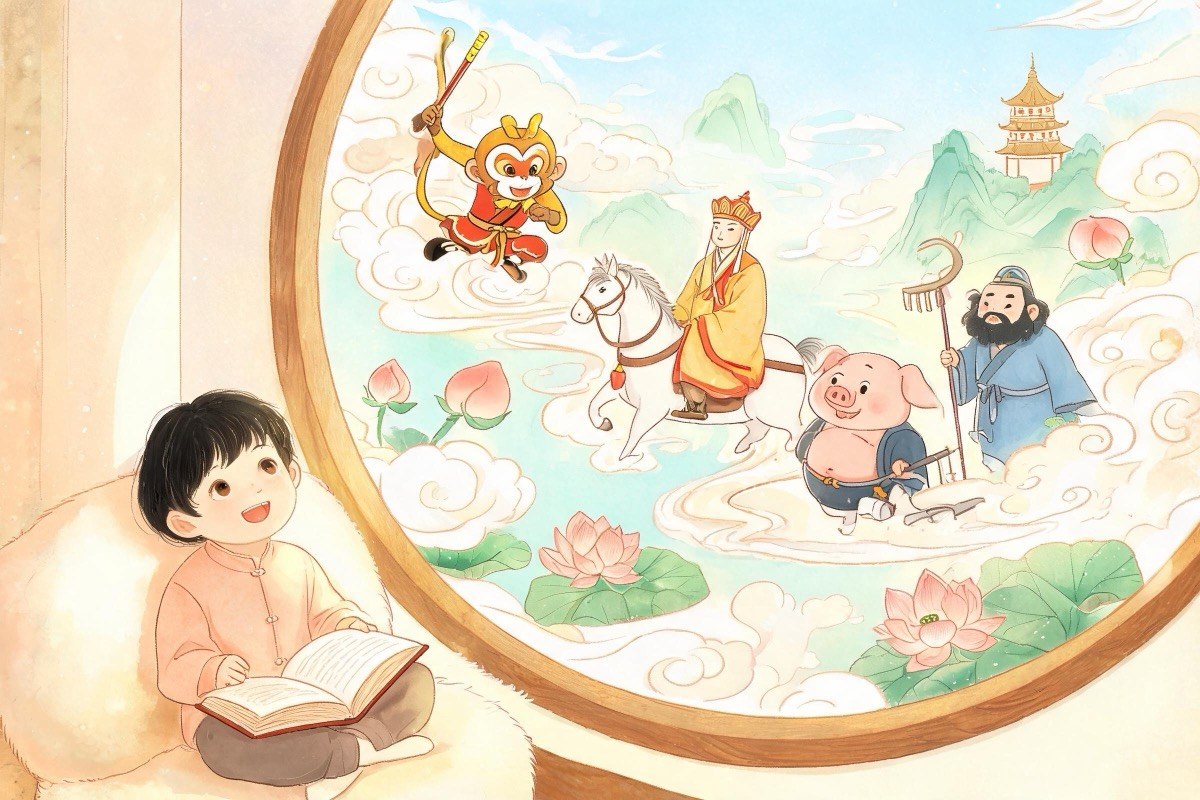
第一步是吸引,目标只有一个:让孩子喜欢上书里的某个角色。七八岁的孩子第一次翻《西游记》,多半是被孙悟空吸引的:一个石头里蹦出来的猴子,敢打上天宫,还被压了五百年又爬起来。这个阶段不要考字、不要问中心思想,孩子跳着读、只看打斗都没关系。家长能做的,是偶尔凑过去看一眼,说一句'这段我也喜欢'。喜欢先于理解,这是早读的第一原则。
第二步是讨论,目标是让孩子发现这本书值得聊。读到有意思的关口,可以停下来聊两句。比如三打白骨精,孙悟空明明打的是妖怪,师父却念紧箍咒赶他走,孩子往往会替悟空委屈。这时候别急着讲信任的大道理,先问一句:你觉得师父错在哪儿?孩子会说出'他肉眼凡胎看不出来''他宁愿相信妖怪也不信徒弟'——这些判断是孩子自己想出来的,比家长塞进去的道理结实得多。
第三步是等追问,目标是让孩子把书带进生活。陪读做熟了,孩子会主动问:白骨精后来还有没有来?孙悟空回花果山之后过的什么日子?孩子追问,说明书在他心里活了。这时候家长只需要如实回答,或者一起翻到后文去看,不需要额外布置读后感。追问本身就是最好的读后感。
三步的顺序不能倒:先吸引,再讨论,等追问。很多家庭是反过来的——先考问,再讲理,最后孩子把书合上了。早读名著的价值不在早,而在让孩子在还没有畏难情绪的时候,先跟最好的故事交上朋友。
实操上还有两个小细节值得注意。一是陪读的时间固定在睡前或饭后这类现成的空档,每次十五二十分钟就够,宁可短而天天有,不要周末突击两小时然后停一周。二是家长自己也别把书放下,孩子看到你也在翻同一本书,比任何口头鼓励都管用。三步方法说到底是低强度的日常陪伴,不需要备课,也不需要家长先重读一遍原著,随手翻到孩子正在读的那一回就能接得上话。
Three Steps of Reading Together: From Watching the Action to Asking What Happens Next
When a child starts reading the classics early, the parent's job is not to lecture but to keep company. Reading together falls into three steps, each with a different goal; put effort in the wrong place and the child only grows tired of the book.
Step one is attraction, with a single goal: let the child fall for one of the characters. A seven- or eight-year-old opening Journey to the West for the first time is usually taken by Sun Wukong: a monkey born from a stone who dared storm Heaven and got crushed for five hundred years yet got back up. In this stage, do not quiz vocabulary or ask for the main idea; it is fine if the child skips around and only reads the fights. What a parent can do is glance over now and then and say 'I like this part too'. Liking comes before understanding — that is the first principle of early reading.
Step two is discussion, with the goal of letting the child discover that this book is worth talking about. At an interesting turning point, stop for a minute. In the Three Strikes of the White Bone Demon, Wukong clearly beats a demon, yet the master chants the tightening spell and drives him away, and children often feel indignant for him. Do not rush in with a lesson about trust; first ask: where do you think the master went wrong? The child will say 'he has mortal eyes and cannot see through it' or 'he would rather believe the demon than his own disciple' — judgments the child made alone, far sturdier than any lesson pushed in from outside.
Step three is waiting for follow-up questions, with the goal of letting the book follow the child into daily life. Once reading together becomes a habit, the child starts asking: did the White Bone Demon ever come back? What kind of life did Wukong lead after returning to Flower Fruit Mountain? A follow-up question means the book is alive inside the child. The parent only needs to answer honestly, or turn to the later chapters together; no book report needed. The question itself is the best book report.
The order of the three steps cannot be reversed: attract first, then discuss, then wait for questions. Many families do the opposite — quiz first, lecture second, and in the end the child closes the book. The value of an early start is not earliness itself, but letting the child befriend the best stories before any fear of difficulty sets in.
Two small practical details are worth noting. First, fix the reading time in an existing slot such as before sleep or after dinner; fifteen or twenty minutes each time is enough — better short and daily than a two-hour weekend blitz followed by a week of silence. Second, do not let the parent's own copy gather dust: when the child sees you turning the same book, it works better than any verbal encouragement. The three-step method is low-intensity everyday company; it needs no lesson planning, and the parent does not have to reread the classic first — just open to the chapter the child is on and the conversation picks up.
一次陪读实录:饭桌上的三打白骨精
有一次晚饭后,孩子忽然问我:白骨精都死了三次,怎么唐僧还不信孙悟空?我索性放下手机,跟他把这段重新捋了一遍。这篇就记这次饭桌上的讨论,给陪读的家长做个参考。
孩子第一个疑问是为什么唐僧看不出。我说书里给过解释:唐僧是肉眼凡胎,白骨精使的是解尸法,打死的只是假尸。孩子马上抓住不放:那孙悟空为什么不早说清楚?我们翻回原文找,发现悟空每次都说'师父,他是个妖怪',但每次说完就被念咒,说得越急,唐僧越觉得他狡辩。孩子总结出一句让我意外的话:'他解释得太凶,凶得像撒谎。'
第二个疑问是猪八戒为什么总捣乱。孩子一开始认定八戒是坏人,后来自己改口:八戒每次挑拨,都不是编瞎话,而是把看见的事实说一半——悟空打死的确实是一家人模样的尸体。孩子由此明白,最麻烦的话不是假话,是只说一半的真话。这个结论我没有教,是他在复述里自己撞见的。
讨论到最后,孩子冒出一句:所以这本书最好玩的地方是,好人也会互相误会。饭桌讨论到此结束,前后不到二十分钟,没有总结、没有作业。第二天他自己去翻后面悟空回归的花果山章节,还问我电视剧里这一段和书里哪里不一样。一次讨论能换来主动往后读,这就是陪读想要的全部结果。它没有出现在任何一张卷子上,但孩子对这本书的记忆已经换了质地。
给家长的提醒只有一条:饭桌讨论别追求完整,孩子问到哪儿聊到哪儿,聊到他自己想去翻书,就可以收场。
这次讨论里还有个细节值得一提:全程我们没有翻任何解读本或赏析文章,手边只有原著和一部手机。孩子中途用手机搜了三打白骨精的电视剧片段,对比后发现电视剧让八戒挑拨得更露骨,书里八戒的话其实更含糊。他自己得出一个比较:电视剧怕观众看不懂,把话说明白了;书里不说明白,反而让人琢磨。这种媒介对比不是家长安排的,是孩子顺着问题自己走过去的。陪读要守住的边界就在这里:工具可以随便用,路径让孩子自己挑,家长只负责在他卡住时搭一把手。
A Real Kitchen-Table Session: The Three Strikes of the White Bone Demon
One evening after dinner my child suddenly asked: the White Bone Demon died three times, so why did Tang Monk still not believe Sun Wukong? I put down my phone and went through the episode with him again. This article records that kitchen-table discussion, as a reference for parents who read along.
The first question was why Tang Monk could not see through it. I said the book explains it: he has mortal eyes, and the demon uses an escape-by-substitute-corpse trick, so what Wukong killed were only fake bodies. The child seized on it at once: then why did Wukong not explain properly earlier? We went back to the text and found that each time Wukong says 'Master, that is a demon', he gets cut off by the spell — the more urgently he explains, the more the master thinks he is making excuses. The child summed it up with a line that surprised me: 'he explained so fiercely that it sounded like lying'.
The second question was why Zhu Bajie kept stirring trouble. At first the child insisted Bajie was a bad guy, then changed his own mind: every provocation was not a made-up lie but half of a seen fact — the bodies Wukong struck down really did look like a family. From this the child understood that the most troublesome words are not lies but half-true ones. I never taught that conclusion; he bumped into it while retelling.
At the end the child blurted out: so the best part of this book is that good people can still misunderstand each other. The discussion ended there, under twenty minutes in total, no summary, no homework. The next day he went to read the later chapter of Wukong's return to Flower Fruit Mountain on his own, and asked me how the TV version differs from the book. One discussion trading for voluntary reading ahead — that is the whole result reading together aims for. It appeared on no test paper, but the child's memory of the book has changed in texture.
One reminder for parents: never aim for completeness in a dinner talk. Follow the child's questions, and when the talk makes him want to open the book himself, that is the right moment to stop.
One detail of that session is worth noting: we never opened an annotated guide or appreciation essay — only the original text and one phone. Halfway through, the child searched the TV scenes of the Three Strikes on his phone and noticed the TV version made Bajie's provocation more blatant, while the book kept his words vaguer. He drew a comparison on his own: TV spells things out for fear the audience misses it; the book leaves things unsaid, which makes people think. That media comparison was not arranged by a parent; the child walked to it by following his own question. This is exactly the boundary reading together should keep: tools are free to use, the path is the child's to choose, and the parent only lends a hand when he gets stuck.
小提示:上面此文档内容仅展示完整文档里的部分内容, 若需要下载完整文档请 点击免费下载完整文档 。