文章内容
秋天的田野有多少种颜色
以前我以为秋天的田野就是一种黄。直到那年父亲带我去外婆家帮忙打谷,一路上他让我数颜色,我才知道自己错了多少。
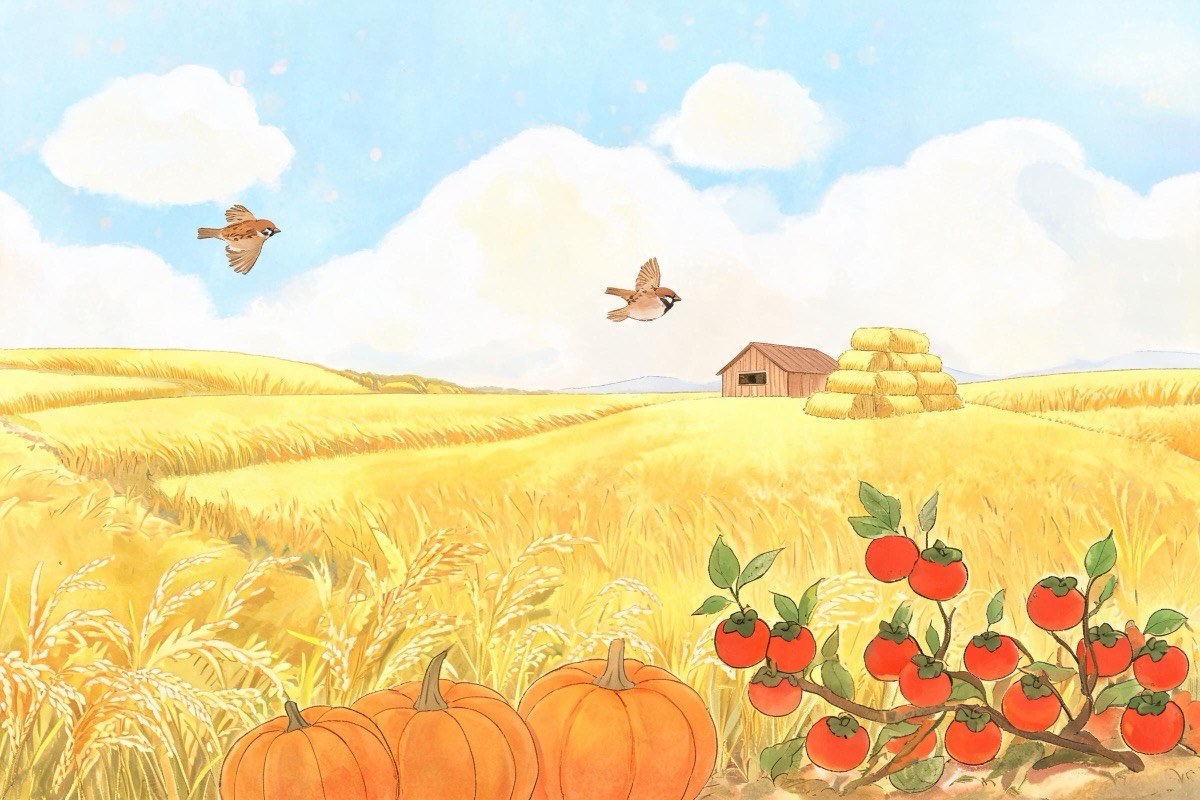
出村口往东,先是一整片稻浪的黄。那黄还不是一般的黄:向阳的坡上稻子熟得透,黄得发白,像镀了层日头;背阴的洼地里黄得沉,带点绿,像没睡醒。风一来,浪头翻过去,浅的一面亮,深的一面暗,整片田就一明一暗地呼吸。父亲说,这叫一层黄套一层黄。
割过的田是另一种颜色。稻茬齐齐立着,枯黄里透着白茬口,一行一行排过去,远看像谁用梳子梳过的头发。茬口间钻出几丛野草,倒还是绿的,绿得突兀,像旧衣裳上打的补丁。
再往远处看,颜色就重了。远山是黛青的,青得发蓝,蓝里又蒙着一层灰,山脚那一圈树是褐红的,叶子落了大半,枝条根根支棱着。天在高处是淡蓝,低处挨着山的地方泛白,白和青的边上,镶着一线橘红,那是云被日头烧的。
外婆家的打谷场是火红的。晒垫上铺满谷子,金红金红的,木耙推过去,推出一道一道浪纹。场边堆着稻草垛,垛是枯黄的,顶上扣着蓝塑料布,蓝和黄撞在一起,亮得晃眼。外婆在垛边翻晒,蓝布头巾一颤一颤,她整个人也陷在那堆颜色里。
场院东头有两棵柿子树,叶子快落光了,柿子还挂着,橘红橘红的,一盏一盏,把秋天点得格外亮。一只灰喜鹊落在枝头,啄了一口,嫌涩,扑棱一下飞走了,带落了两片叶子。
父亲问我数出多少种。我掰着指头数:稻浪的黄就有三四样,加上茬口的白、野草的绿、远山的青、天的蓝白、晒垫的金红、草垛的黄、塑料布的蓝、柿子的橘红……数到十几种,数乱了。父亲笑,说还少算了,你鞋帮上蹭的泥是灰褐的,这也是秋天的一种颜色。
回家路上我又回头看那片田。太阳落进山后头,所有颜色都暗下去,混成一片深深浅浅的黛。可我知道它们都在,一层一层,挤在秋天的田野里,等明天的日头把它们重新点亮。
How Many Colors an Autumn Field Holds
I used to think an autumn field held just one color: yellow. Not until the year father took me to Grandma’s to help with threshing, and made me count colors all the way there, did I see how wrong I had been.
Out of the village gate to the east lay the yellow of the whole rice-wave field. And that yellow was not one yellow: on the sunny slope the rice ripened through, yellow so pale it looked plated with sunlight; in the shaded hollow it sat heavy, still touched with green, like a sleeper not yet awake. When the wind came, the wave crests turned over, their bright faces shining, their dark faces dim, and the whole field breathed in light and shade. Father said this is one yellow nested inside another.
The cut field was another color. Stubble stood in even rows, withered yellow showing pale white where the blades had passed, combed flat like hair by some giant comb. A few clumps of weeds pushed up between the stubble, still green, startlingly green, like patches on an old coat.
Farther off the colors grew heavier. The distant mountains were dark indigo, so blue they grayed; the belt of trees at their feet was reddish-brown, most leaves gone, twigs bristling. The sky was pale blue up high, whitening near the mountains, and along the seam of white and indigo ran a thread of orange-red, clouds scorched by the sun.
Grandma’s threshing floor was fire-red. Drying mats lay paved with grain, gold-shot red, and the wooden rake pushed wave-patterns through them. Rice-straw stacks piled at the floor’s edge, dry yellow topped with blue plastic sheeting, blue crashing into yellow till it dazzled. Grandma turned the grain at the stacks’ foot, her blue headscarf bobbing, her whole self sunk in that heap of colors.
At the yard’s east end stood two persimmon trees, nearly bare, their fruit still hanging, orange-red, lantern after lantern, setting the autumn alight. A gray magpie landed on a branch, took one peck, found it astringent, whirred away, and shook down two leaves.
Father asked how many colors I had counted. I counted on my fingers: three or four yellows in the waves alone, plus the stubble’s white, the weeds’ green, the mountains’ indigo, the sky’s blue-white, the mats’ gold-red, the stacks’ yellow, the sheeting’s blue, the persimmons’ orange... I lost count past a dozen. Father laughed and said I had missed one: the mud smudged on your shoe tops is gray-brown, and that is an autumn color too.
On the way home I looked back at the field. The sun sank behind the mountains and every color darkened, blending into deep and shallow indigo. But I knew they were all there, layer upon layer, crowded into the autumn field, waiting for tomorrow’s sun to light them up again.
田野里的声音
那年秋收,我躺在田埂上闭着眼睛玩,发现田野里热闹得很,眼睛看不完的声音,耳朵一样不少地听见了。
最近的是镰刀声。唰,唰唰,一刀接一刀,快的时候像撕布,慢的时候像梳头。割到田那头,声音就钝了,隔了一层稻子。父亲割稻的唰声最有特点,又匀又稳,我闭着眼也能认出哪一刀是他割的。
稻捆落地是另一种声音。咚,闷闷的,像拳头捶在棉被上。一捆一捆码上田埂,咚、咚,间隔得整整齐齐。挑担起步时扁担吱呀一声,越走越远,吱呀声变成一条细线,最后断在村道口。
打谷机在晒场上轰隆隆地响,突突突,像一列不停站的火车。稻穗喂进去,谷粒喷出来,哗啦啦砸在围布上,那声音又密又脆,像下雹子。机器声传回田里,惊得镰刀声都显得安静了。偶尔机器卡住,突突声变成呜呜声,人喊一嗓子,全场都听见。
麻雀是田野里话最多的。叽、叽叽,落在刚割完的田里,蹦着找落谷。它们抢食时吵成一片,像教室下课。人一走近,哗一下全飞起来,叫声齐齐拔高,绕一圈又落下,声音又慢慢低回去。
风过稻浪的声音要轻得多。沙——沙——,从田那头滚过来,像有人隔着很远的地方抖一床大床单。浪头到跟前,稻穗互相磕碰,沙沙里带着细碎的咔哒,那是谷壳碰谷壳。
傍晚收工,声音一样样撤走。镰刀进了筐,打谷机熄了火,人声散进村子。田野一下子空了,静得能听见自己的呼吸。
夜里我又听见了另一种田野。蟋蟀在墙根叫,一声长一声短;田里的青蛙咕呱咕呱,隔着水田应和;远处村子传来两声狗吠,闷闷的,被夜压得很低。稻茬在露水底下轻轻响,那是田在睡觉时翻身的声音。
第二天父亲问我,昨天躺田埂上干什么去了。我说听声音。父亲想了想说,听出来什么了。我说,听出来秋天不是金色的,秋天是吵的,吵完了再安安静静睡一冬,等明年再吵醒。
The Sounds in the Field
That autumn harvest, I lay on the field ridge with my eyes shut playing, and found the field was busy indeed: sounds the eyes could not take in, the ears missed not one.
Closest were the sickles. Swish, swish-swish, blade after blade; fast, like tearing cloth, slow, like combing hair. Cutting at the far end of the field, the sound dulled, muffled by a layer of rice. Father’s swish was the most distinctive, even and steady, and with my eyes shut I could tell which strokes were his.
Bundles hitting the ground made another sound. Thud, muffled, like a fist punching a quilt. Bundle after bundle stacked onto the ridge, thud, thud, evenly spaced. When a load was shouldered, the pole creaked, and as the bearer walked off the creak thinned to a thread and finally snapped at the village crossroads.
On the threshing floor the thresher roared, chug-chug-chug, like a train that never stopped. Ears fed in, grain sprayed out, pattering dense and crisp against the canvas screens, like hail. The engine’s voice carried back to the fields and made even the sickles seem quiet. Once in a while the machine jammed, its chugging turned to a whine, someone shouted, and the whole field heard.
Sparrows were the chattiest creatures in the field. Cheep, cheep-cheep, they dropped into the freshly cut stubble, hopping for fallen grain. Fighting over food they bickered like a class let out. When a person came near, they all sprang up at once, their cries yanked sharp and high, circling once, settling, and slowly quieting again.
Wind crossing the rice waves was far softer. Sha — sha — it rolled from the far end of the field, like someone shaking out a huge bedsheet at a distance. When the crest reached me, ears knocked together, and the rustle carried a fine click-click, husk against husk.
At dusk the work ended and the sounds withdrew one by one. Sickles went into baskets, the thresher cut its engine, voices scattered into the village. The field emptied all at once, quiet enough to hear my own breathing.
At night I heard a different field. Crickets sang by the wall, one call long, one short; frogs across the paddy answered each other, gurgle-gurgle; from the far village came two dog barks, muffled, pressed low by the night. The stubble whispered under the dew — that was the field turning over in its sleep.
Next day father asked what I had been doing lying on the ridge. I said listening to sounds. He thought a moment and asked what I had heard. I said: I heard that autumn is not golden. Autumn is noisy; then it sleeps quietly through winter, to be woken up and noisy again next year.
小提示:上面此文档内容仅展示完整文档里的部分内容, 若需要下载完整文档请 点击免费下载完整文档 。