文章内容
《活着》片段里的田野:土地不哄人
上星期五,语文老师发给我们《活着》的一个片段。读完以后,我在座位上坐了很久,没有起来。老师说这本书是大孩子读的,我们读的是老师挑出来的干净片段,写的是土地、收成和劳作。
片段里的福贵,年轻时不懂事,把自家的田产输光了,他爹一气之下走了。后来他自己买回几亩田,决定一手一脚种。从那天起,他天不亮就牵牛下田,牛在前头拉,他在后头扶犁,犁过的土翻起来,一股潮湿的味道。老师把一句话写在黑板上:他弯腰插秧,直起身擦汗,再弯下去,秧苗已经插出去一整行。这是我记得最深的劳作场景。他不抱怨了,好像他不欠土地什么,是土地欠他的命,他还不完。
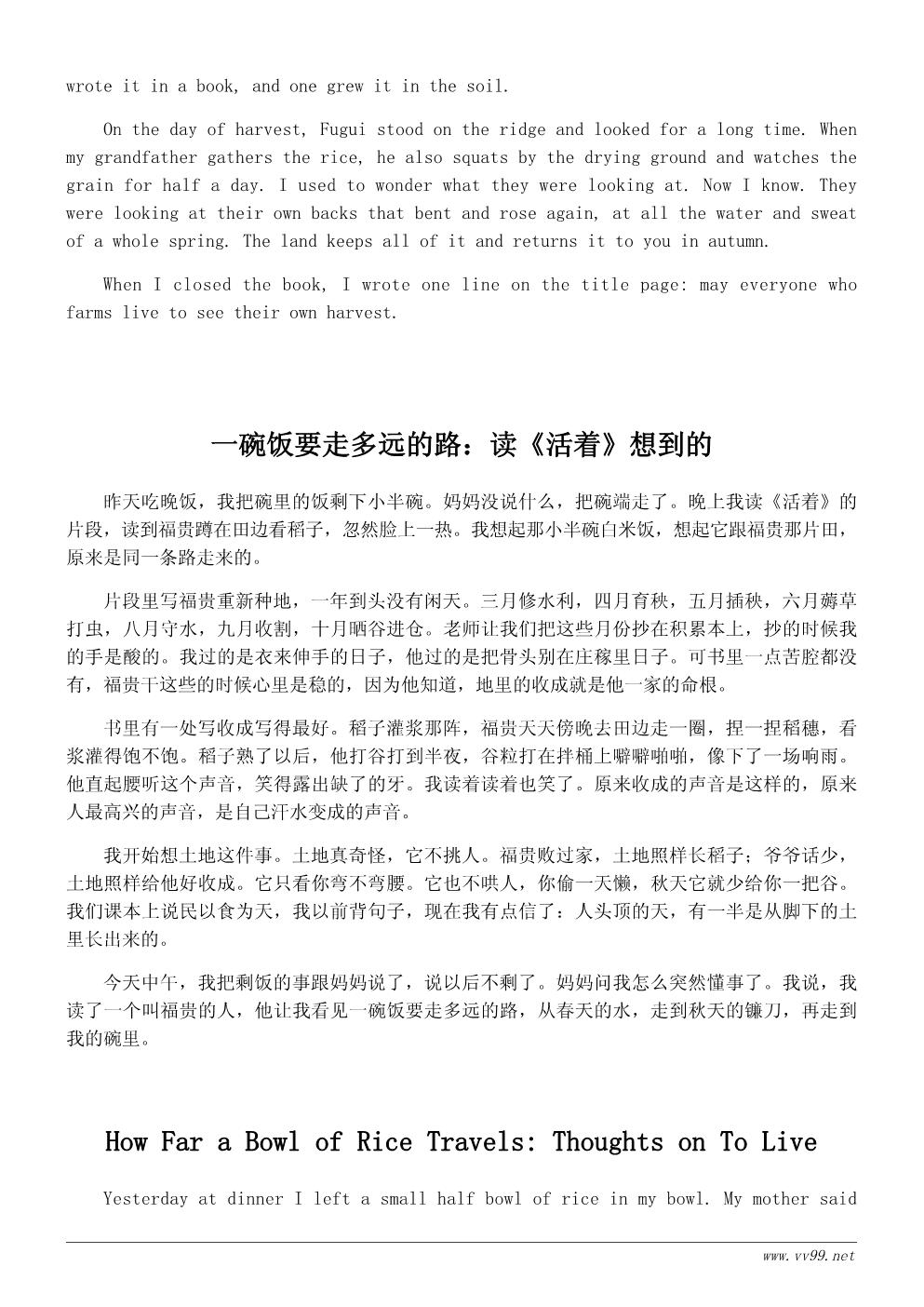
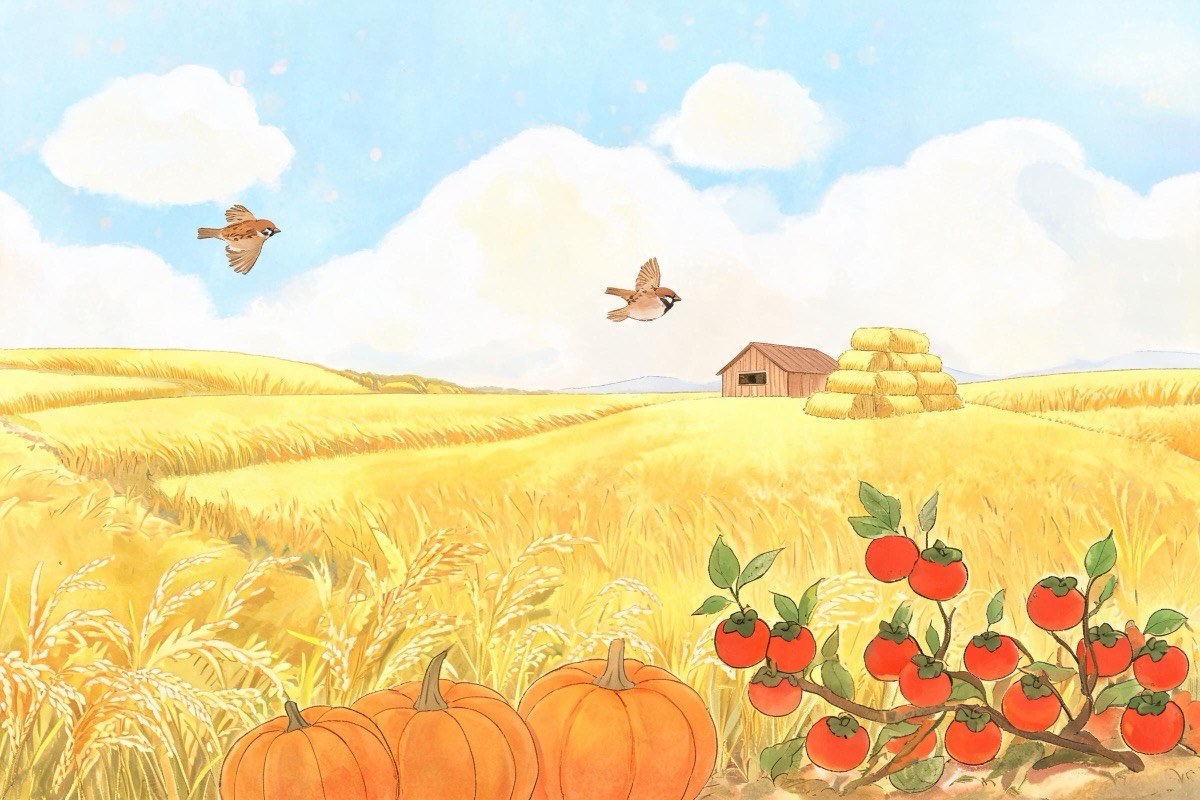
收成那一幕是书里最亮的。稻子熟了,整片田金黄金黄,福贵站在田埂上看了很久很久,像看不够。老师说她读到这里,几乎能闻到稻穗的香味。福贵说,土地不哄人,你把它侍候好,它就把你这一年的饭侍候好。
读到这里我想了很多。我们天天吃饭,可是没几个人想过米是从哪块土里长出来的。土地不会说话,它只是每年春天让种子发芽,秋天让穗子低头。福贵一辈子丢了那么多东西,最后陪着他的是那头老牛和那几亩田。田还在,他就还在。
我想起学校后面那块试验田,想起爷爷那几亩地。每年收割,爷爷蹲在田边,抓一把稻穗在掌心里搓,眯着眼看米粒,笑得很深。以前我只觉得好玩,现在我懂那个笑了。那是靠土地活了半辈子的人才有的笑。
《活着》这个片段教我一件事:人可以失去很多东西,但只要脚下有土地,手上有劳作,人就站得稳。这个秋天我记住了,福贵这个名字我也记住了。
The Field in the Excerpt of To Live: The Land Does Not Cheat
Last Friday our Chinese teacher handed out an excerpt from the book To Live. After reading it, I sat at my desk for a long time without standing up. The teacher said the whole book is for older readers, and what we read was a clean part chosen by her, about the land, the harvest, and labor.
In the excerpt, Fugui was reckless when he was young and lost the land and house of his family at the gambling table. His father left this world in anger. Later he bought back a few mu of land with his own hands and decided to farm it himself. From that day on he led the ox to the field before dawn. The ox pulled in front and he held the plough behind, and the turned soil gave off a wet smell. The teacher wrote one sentence on the blackboard: he bent down to plant rice seedlings, straightened up to wipe his sweat, bent down again, and a whole row of seedlings was already planted. This is the scene of labor I remember best. He stopped complaining, as if he owed the land nothing, and as if the land owed him a life he could never pay back.
The harvest scene is the brightest part of the book. The rice ripened, the whole field was gold upon gold, and Fugui stood on the ridge and looked for a long, long time, as if he could never look enough. The teacher said she could almost smell the rice ears when she read this. Fugui said: the land does not cheat people. If you take good care of it, it takes good care of the food of your year.
I thought a lot at this point. We eat every day, yet few of us have asked which piece of soil the rice grew from. The land cannot speak. It only lets seeds sprout in spring and lets the ears bow their heads in autumn. Fugui lost so many things in his life, and in the end what stayed with him were the old ox and a few mu of field. The field was still there, so he was still there.
I thought of the test field behind our school, and of the few mu of land my grandfather farms. Every harvest season he squats at the edge of the field, takes a handful of rice ears, rubs them in his palm, looks at the grains with narrowed eyes, and smiles a deep smile. Before, I only thought it was fun. Now I understand that smile. It belongs to a person who has lived half a life leaning on the land.
This excerpt from To Live taught me one thing: a person can lose many things, but as long as there is land under his feet and labor in his hands, he stands firm. I remember this autumn, and I remember the name Fugui.
两片田:福贵的田和爷爷的田
读《活着》片段那几天,我脑子里总是出现两片田。一片是书里福贵的田,一片是我爷爷的田。它们隔着几十年,却像一对双胞胎。
先说书里的田。福贵输光田产以后,挑着担子去城里,攒了钱买回几亩地。他重新下田那天,先把旧犁修好,犁头在磨石上蹭得雪亮。春天他扶犁,牛在前面走,他跟在后面,肩膀一高一低。夏天他薅草,裤腿卷到膝盖,脚在泥水里拔一下就是一个响。到了秋天,稻子弯下腰,他夜里睡不着,起来到田边转一圈,摸一摸穗子,才回去睡。书里写他做这些的时候没有一点委屈,好像种地是他这辈子最该做的事。
再说我爷爷的田。爷爷那几亩田在村东头,一块一块像补丁。爷爷种了一辈子,牛都换了两头。每年四月他育秧,夜里两点起来放水,怕倒春寒冻了秧苗。六月他打药,背着药桶在田里走,影子被太阳晒得贴在脚边。九月割稻,他镰刀磨了三遍才下田,割完直腰,用镰刀把儿敲敲腿。两片田,两个人,动作一模一样。
书里福贵说土地不哄人。我爷爷没读过书,说不出这句话,可他做了一辈子。爷爷常跟我说:你对田好,田就对你好;你糊弄田,田就糊弄你的饭碗。原来福贵和爷爷说的是同一句话,一个写在书里,一个长在土里。
收成那天,福贵站在田埂上看了很久。我爷爷收了稻子,也蹲在晒场边看谷子,一看就是半天。我以前不明白他们看什么。现在我知道,他们看的是自己弯下去又直起来的腰,是一整个春天的水和汗。土地把这一切都记着,秋天一并还给你。
合上书,我在扉页上写了一句话:愿天下种地的人,都能看见自己的收成。
Two Fields: The Field of Fugui and the Field of Grandfather
In the days I read the excerpt from To Live, two fields kept appearing in my head. One is the field of Fugui in the book, and the other is the field of my grandfather. They are decades apart, yet they look like twins.
First, the field in the book. After Fugui lost the land of his family, he carried a shoulder pole to the town and saved money to buy back a few mu of land. On the day he returned to farming, he first repaired the old plough and ground the ploughshare bright on a whetstone. In spring he held the plough, the ox walked ahead, and he followed with one shoulder higher than the other. In summer he pulled weeds, his trouser legs rolled to the knees, and every step he lifted from the mud made a sound. When autumn came and the rice bowed its head, he could not sleep at night, got up, walked a round by the field, touched the ears, and then went back to bed. The book shows him doing all this without a trace of grievance, as if farming were the one thing he was born to do.
Now the field of my grandfather. His few mu of land lie at the east end of the village, patch after patch. He has farmed them all his life and changed two oxen. Every April he raises seedlings and gets up at two in the morning to manage the water, afraid of the late cold snap. In June he sprays medicine, carrying the tank through the field, his shadow glued to his feet by the sun. In September he cuts the rice, sharpening his sickle three times before entering, and when he finishes he straightens his back and taps his legs with the handle. Two fields, two men, exactly the same movements.
In the book Fugui says the land does not cheat people. My grandfather never went to school and cannot say such a sentence, yet he lived it his whole life. He often told me: treat the field well and the field treats you well; fool the field and it fools your rice bowl. So Fugui and my grandfather were saying the same thing. One wrote it in a book, and one grew it in the soil.
On the day of harvest, Fugui stood on the ridge and looked for a long time. When my grandfather gathers the rice, he also squats by the drying ground and watches the grain for half a day. I used to wonder what they were looking at. Now I know. They were looking at their own backs that bent and rose again, at all the water and sweat of a whole spring. The land keeps all of it and returns it to you in autumn.
When I closed the book, I wrote one line on the title page: may everyone who farms live to see their own harvest.
小提示:上面此文档内容仅展示完整文档里的部分内容, 若需要下载完整文档请 点击免费下载完整文档 。