文章内容
天暗下来之前,蚂蚁已经出发
那天放学,我走到小区花坛边上的时候,天忽然暗了下来。不是傍晚那种慢慢暗,是像有人把一块灰布从楼顶那边拉过来,把太阳整个盖住了。风也变了味道,闷闷的,带着一点土腥气。我抬头看,西边的云压得很低,楼顶上那排电线被云衬着,像挂在灰墙上的黑绳子。
就在这种天底下,我看见花坛水泥沿上有一条宽宽的、流动的黑带子。不是平时那种细细的蚂蚁线,是宽的一指头的黑带子,密密麻麻全是蚂蚁,朝着花坛后面那个小土坡的方向走。
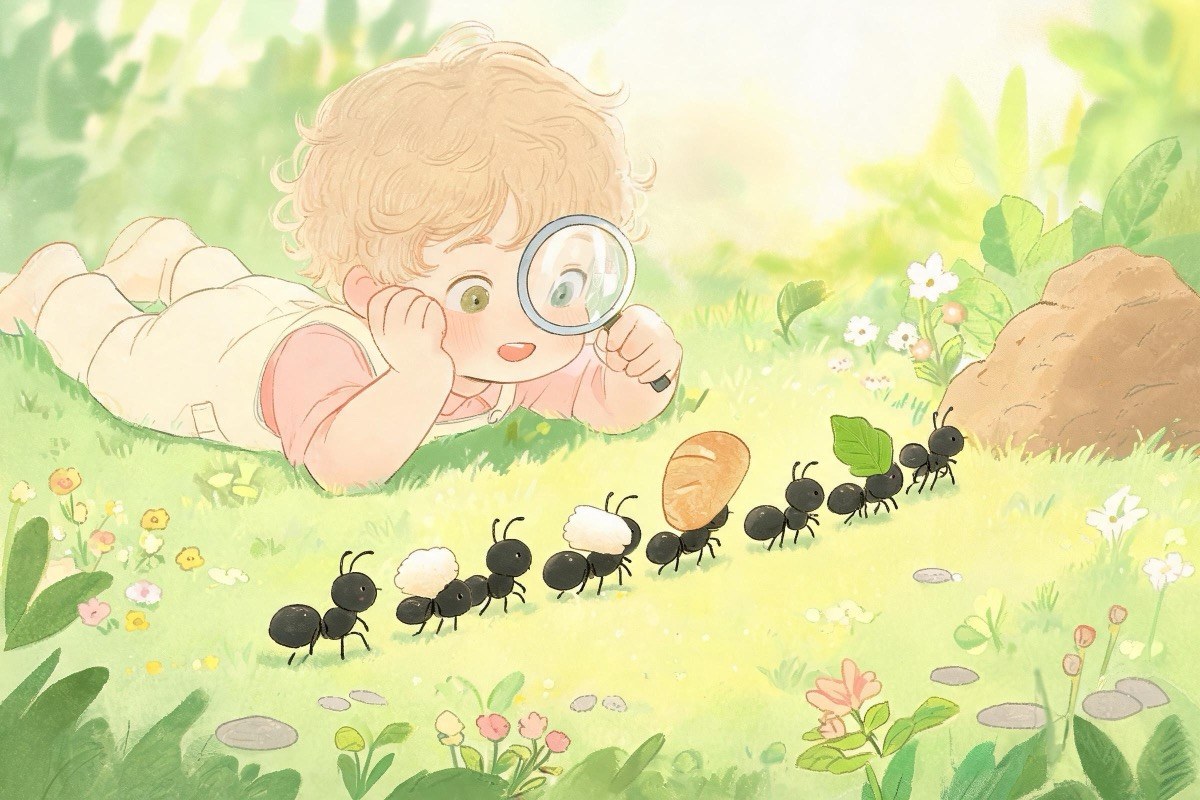
我蹲下去看,发现每只蚂蚁都不是空着身子的。有的嘴里叼着一个白白的小颗粒,圆圆的,像一粒泡大的米。我后来才知道那是蚁卵。有的叼着半片菜叶,有的叼着一粒饭,还有的两只蚂蚁合叼着一只死掉的小虫。它们走得急,谁也不停,黑带子像一条不肯断的河。
我顺着黑带子往回看,源头是水泥沿上一个旧洞。洞口堆的土比平时高,洞口呆着一排蚂蚁,触角朝着土坡的方向,像是在指挥。我再往土坡那边看,坡上草底下有一个新洞,洞口比旧洞小,但是洞口周围一圈新土,还有一小群蚂蚁在往里钻。
天越来越暗,风把梧桐叶吹得哗啦响。我有点想回家,可是腿不肯走。我从来没见过蚂蚁这样搬家。它们排的队伍有的地方挤成一团,可是挤成一团的地方也不乱,后面的蚂蚁会自己绕开,绕开以后又排回队里。
雨先落下来一滴,正好砸在我手背上,凉了一下。紧接着雨点密起来,砸在水泥沿上溅起小坑。我看见最后几只蚂蚁叼着蚁卵跑进新洞口,洞口那排蚂蚁这才闪身进去。几乎就在它们进洞的同时,雨大了起来。
我打着伞回家,路上一直在想,天是它自己暗的,云是它自己来的,蚂蚁怎么先知道要下雨的?晚上我去翻书,书上说,下雨前空气里的湿气重,蚂蚁的洞又低又闷,它们的身体能觉出湿气变大,所以提前把家搬到高处去。蚂蚁不是会法术,是它们的身体就是最灵敏的天气仪器。
等到雨停的那天,我去看那个土坡。新洞口安安静静的,旧洞被雨水灌成了一个亮亮的小水洼。我站在太阳底下想,天气预报要卫星要雷达,蚂蚁只要一身细小的触角,就把雨的消息提前告诉了自己。大自然里最小的东西,往往藏着最老的本领。
Before the Sky Grew Dark, the Ants Had Already Set Out
That day after school, when I walked to the edge of the flower bed in our neighborhood, the sky suddenly grew dark. It was not the slow darkening of evening. It was as if someone pulled a gray cloth over the whole sun from the direction of the rooftops. The wind changed its taste too, stuffy, with a smell of damp soil. I looked up. The clouds in the west hung very low, and the row of wires above the rooftop, set against the cloud, looked like black ropes hung on a gray wall.
Under that sky, I saw on the cement edge of the flower bed a wide, flowing black band. It was not the thin ant line of ordinary days. It was a black band as wide as a finger, packed with ants, all walking toward the small dirt mound behind the flower bed.
I crouched down and saw that not one ant carried an empty body. Some held in their mouths a small white pellet, round like a rice grain soaked big. Later I learned those were ant eggs. Some carried half a leaf of vegetable, some a grain of rice, and some two ants together carried a dead insect. They walked in a hurry, none stopping, and the black band was like a river refusing to break.
I followed the band back to its source, an old hole on the cement edge. The soil piled at that hole was higher than usual, and a row of ants stood at the mouth, their feelers pointing toward the dirt mound, as if directing. I looked toward the mound. Under the grass on the mound there was a new hole. Its mouth was smaller than the old one, but it was ringed with fresh soil, and a small group of ants were diving in.
The sky grew darker, and the wind made the plane tree leaves rustle loudly. I wanted to go home, but my legs would not move. I had never seen ants move house like this. In some places their column crowded into a knot, yet even the knot was not chaotic. Ants behind would circle around, and after circling they fell back into the line.
When the first raindrop fell, it landed right on the back of my hand and chilled it for a moment. Then the drops thickened, pitting the cement edge as they struck. I saw the last few ants carrying ant eggs run into the new hole, and the row of ants at its mouth slipped in after them. Almost at the same moment they entered, the rain grew heavy.
I went home under an umbrella, thinking the whole way. The sky darkened by itself, the clouds came by themselves. How did the ants know the rain was coming first? That evening I looked through books. The book said that before rain the air is heavy with moisture, and an ant hole is low and close, so their bodies can sense the moisture rising, and they move their home to higher ground in advance. Ants do not have magic. Their bodies are the most sensitive weather instruments.
The next day the rain stopped, and I went to look at the dirt mound. The mouth of the new hole was quiet, and the old hole had been filled by rainwater into a shiny little puddle. I stood in the sun thinking. Weather forecasts need satellites and radar. Ants need only a pair of small feelers, and they tell themselves the news of rain ahead of time. In nature, the smallest things often hide the oldest skills.
科学课上没学到的,蚂蚁给我上了一课
科学老师在课上问,除了手机里的天气软件,还有什么办法能知道要下雨。教室里安静了几秒,有人说是燕子低飞,有人说是蚯蚓出洞。我坐在座位上,想起了前天傍晚我在花坛边看到的那一幕。
那天傍晚,天暗得特别快。我在花坛边等我妈来接,抬头看见云从河那边漫过来,把半个天都染成灰的,风里全是潮气,吹在脸上黏黏的。花坛的水泥沿上,有一条黑压压的蚂蚁队伍,比平时见的任何一队都大。它们从花坛底下的旧洞出发,翻过水泥沿,往花坛另一头的高处去。
我蹲下来数,数到五十多只就乱了,因为队伍太密。我改看它们叼着什么。叼白卵的,叼饭粒的,叼虫子的,一只挨一只。队伍最前面的蚂蚁已经爬上了花坛边的高土堆,那里有一个小洞,洞口有蚂蚁在往里拖东西。我看明白了,它们是把整个家从低处搬到高处。
我正看着,天上传来一声闷响,雨点就落下来了,先是一滴一滴砸出小印子,然后连成一片。蚂蚁队伍里最后那几只加紧脚步,叼着卵钻进高处的洞口。雨大起来的时候,水泥沿上的旧洞口已经被雨水漫过去了。
我回家以后翻开观察日记,把这一幕写下来,写完加了一句自己的猜想:蚂蚁是不是知道要下雨,才赶在雨前搬家?我妈在旁边洗衣服,说她们老家也这么说,蚂蚁搬家要大雨,老话传了好几辈。
科学课上我把手举起来,把日记里的经过讲了一遍。老师让我把日记拿出来,她走上讲台,把那段话读给全班听。读到蚂蚁叼着蚁卵钻洞、雨点跟着落下来的地方,全班很安静,和那个傍晚我蹲在花坛边的心情一模一样。
老师在日记本上写了一行批语,说观察有顺序,有细节,还有自己的问题。她在课上解释,蚂蚁的洞又深又窄,空气里的湿气、地面的震动、气压的变化,它们都能觉出来。雨前湿气重,低洞会变闷变潮,它们就提前往高处搬。这不是迷信,是蚂蚁几千万年练出来的本事。
那天晚上我重新写了一篇观察日记,把书上的道理和那天傍晚的场面并排写在一起。左边是天暗、风起、蚂蚁成群、雨落,右边是湿气、气压、往高处搬家。写完我忽然觉得,大自然每天都上课,只是它不站在讲台上,它蹲在花坛的水泥沿上,排成一条黑压压的队伍,等谁肯蹲下来看它。
What Science Class Did Not Teach Me, the Ants Taught Me
Our science teacher asked in class whether there was any way to know rain was coming besides the weather app on a phone. The classroom went quiet for a few seconds. Someone said swallows flying low. Someone else said earthworms coming out of their holes. I sat at my desk and remembered the scene I had seen by the flower bed the evening before.
That evening the sky grew dark very fast. I was waiting by the flower bed for my mother to pick me up. I looked up and saw the clouds spreading over from the river, turning half the sky gray. The wind was full of dampness, and it felt sticky on the face. On the cement edge of the flower bed there was a dense column of ants, bigger than any column I had ever seen. They set out from the old hole under the flower bed, crossed the cement edge, and headed to the higher ground at the other end.
I crouched down and counted. I lost track past fifty, because the column was too dense. I switched to watching what they carried. Some carried white eggs, some grains of rice, some insects, one pressed against another. The ants at the very front had already climbed the high dirt mound at the edge of the flower bed, where there was a small hole, and ants at its mouth were dragging things in. I understood. They were moving their whole home from low ground to high ground.
While I watched, a muffled sound came from the sky, and raindrops fell. First one by one they stamped small marks, then they joined into a sheet. The last few ants in the column hurried and dived into the hole on the high ground with their eggs. By the time the rain grew heavy, rainwater had already spread over the mouth of the old hole on the cement edge.
After I got home I opened my observation diary and wrote down the scene. When I finished, I added a guess of my own. Did the ants know rain was coming, and that was why they moved house before it? My mother was washing clothes nearby. She said her hometown had the same saying. When ants move house, heavy rain follows. The old saying had been passed down for generations.
In science class I raised my hand and told the class what had happened, just as it stood in my diary. The teacher asked me to bring out the diary. She walked up to the podium and read that passage to the whole class. When she reached the part where the ants dived into the hole carrying their eggs and the raindrops followed, the whole class was quiet, and the feeling was exactly like mine that evening by the flower bed.
The teacher wrote a line of comment in my diary. She said the observation had an order, had details, and had a question of my own. She explained in class that an ant hole is deep and narrow, and ants can sense the moisture in the air, the tremors in the ground, and the changes of air pressure. Before rain the moisture rises, and the low hole becomes close and damp, so they move to higher ground in advance. This is not superstition. It is a skill ants have practiced for tens of millions of years.
That evening I wrote a new observation diary, placing the lesson from the book side by side with the scene of that evening. On the left were the darkening sky, the rising wind, the crowds of ants, and the falling rain. On the right were moisture, air pressure, and moving to higher ground. When I finished, I suddenly felt that nature gives a lesson every day. It simply does not stand at the podium. It crouches on the cement edge of the flower bed, lined up in a dense black column, waiting for someone willing to crouch down and look.
小提示:上面此文档内容仅展示完整文档里的部分内容, 若需要下载完整文档请 点击免费下载完整文档 。