文章内容
掉进水里的那只,被同伴拉了上来
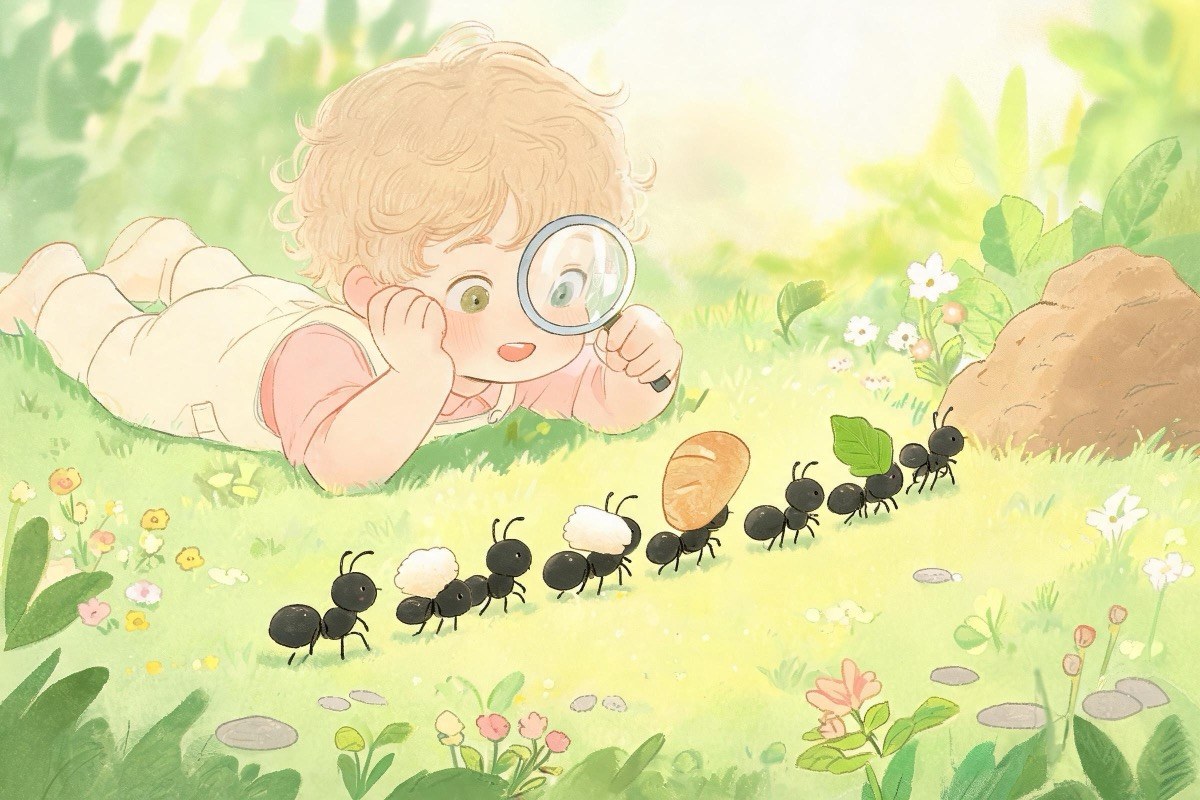
《观察蚂蚁》里有一段,我记了很久。蚂蚁队伍抬着食物过一条水沟,有只蚂蚁脚一滑掉进水里。队伍没有停,可它旁边的两只蚂蚁同时伸出腿,两只的腿勾在一起,像一根用两股线拧成的绳子。水里的蚂蚁扒住那根绳,被拉上来,抖抖身子,跑回自己原来抬的位置,接着抬那粒它先前抬着的粮食。
书里还补了一句:拉同伴的那两只,腿被水冲得站不稳,是旁边第三只蚂蚁用颚咬住它们的腰,才没被一起带进水里。也就是说,救一只蚂蚁,实际是三只一起出的力。
作者写:掉进水里的蚂蚁没有被同伴丢下,队伍照样往前走。我读到这里,想起六年级那次接力赛。
校运会四百米接力,我们班前三棒跑完排在第三。棒传到第三棒的张伟手里时,他伸手早了半拍,棒当啷一声掉在地上。等他捡起来,两个班超了过去,最后我们班垫了底。
冲过终点的时候我自己也懵,只记得看台上安静了一瞬,然后广播念名次,念到我们班,声音拖得很长。
回到看台,没人说话。我以为会有人埋怨他,结果跑最后一棒的李想递给张伟一瓶水,说,下次我喊伸手你再伸。张伟一直低着头,接水的时候手指都是红的。
运动会以后,我们班每个课间都去操场练传棒。不是老师安排的,是班长喊了一声预备,大家自己排成了四列。练了两个星期,冬天运动会八乘五十米接力,我们班拿了第三,一次棒都没掉。
书里说小蚂蚁有大力量,大在谁也不丢。我以前觉得团结是黑板报上写的口号,是老师开会时说的话。水里的蚂蚁和李想那瓶水让我明白它到底是什么:有人掉了,旁边有人伸腿;人拉上来,队伍接着跑。就这么简单,也这么难。
下学期我们班要转来一个新同学,听说他跑步不行。我已经想好了,运动会我站他旁边那一棒,他要是掉了棒,第一个去捡的人就是我。
The Ant That Fell Into the Water Was Pulled Back by Its Companions
One passage in Watching Ants has stayed in my mind for a long time. The ant column was carrying food across a ditch when one ant slipped and fell into the water. The column did not halt, but two ants beside it stretched out their legs at the same time, hooking into each other like a rope twisted from two threads. The ant in the water grabbed on and was pulled up, shook itself dry, ran back to the place where it had been carrying, and went on lifting the grain it had carried before.
The author writes: an ant that falls into the water is not abandoned by its companions, and the column keeps moving. Reading this, I thought of our relay race in sixth grade.
School sports meet, four by one hundred meter relay. Our class was third after the first three legs. When the baton reached Zhang Wei on the third leg, he reached out half a beat too early, and the baton clattered to the ground. By the time he picked it up, two classes had passed him, and our class finished last.
Back in the stands, nobody said a word. I expected someone to blame him. Instead, Li Xiang, who ran the last leg, handed Zhang Wei a bottle of water and said: next time, reach out when I shout. Zhang Wei kept his head down the whole time, and his fingers turned red where he held the bottle.
After the meet, our class went to the playground every break to practice baton passes. The teacher did not arrange it; the class monitor shouted ready, set, and everyone lined up in four rows by themselves. Two weeks later, in the winter meet eight by fifty meter relay, our class placed third, and the baton never fell once.
The book says the great strength of small ants lies in nobody being left behind. I used to think unity was a slogan written on the blackboard newspaper, something the teacher said at assemblies. The ant in the water and the bottle of water from Li Xiang taught me what it really is: when someone falls, someone beside them stretches out a leg; once they are pulled up, the column keeps running. That simple, and that hard.
Next term a new classmate will transfer into our class, and I hear he is not a fast runner. I have already decided: at the sports meet I will run the leg next to his, and if he drops the baton, I will be the first one to pick it up.
我们班把钢琴拆开搬的那天
《观察蚂蚁》里最让我服气的一段,是蚂蚁抬一只死蝗虫。蝗虫比洞口大出好几倍,蚂蚁们再怎么推,蝗虫也进不了洞。换作是我,早就守在那儿发愣了。可蚂蚁不推了,它们散开,各自从蝗虫身上拆下一块,有的拽一条腿,有的拖一片翅膀,一小块一小块往洞里搬。作者说:小蚂蚁有大力量,大在懂得把一件大事拆成许多件小事。
我合上书数了数,那一段里蚂蚁分工写得明明白白:拆腿的拆腿,拖翅膀的拖翅膀,守洞口的指挥,还有专门把碎渣搬到一边、免得堵住通道的。一只蚂蚁的力气从头到尾没变大,变的是办法。
这一段,我是在我们班搬钢琴那天才真读懂的。
五年级期末,学校给我们班分了一架旧立式钢琴。六个男生围着它又推又拉,钢琴就是进不了教室的门——门太窄,钢琴太宽。门卫叔叔过来帮忙,说你们不拆开,它一辈子也进不去。
班主任让大家先停手,分开干:两个男生拿螺丝刀卸键盘盖,两个把谱架搬下来,剩下六个在门卫叔叔指点下把琴身斜过来,一级台阶一级台阶抬进门。螺丝收进一个铅笔盒,键盘盖用旧毛巾裹着。等钢琴在教室里重新装好,太阳已经落下去了。装好以后老师试弹了一个音,琴声在教室里转了一圈,我们站在门口的人全安静了,那一刻觉得一身的汗都值了。
那天我一直站在推琴的人堆里,手心磨得发红。可我记得最清楚的,是卸螺丝的那个男生——他没出多少大力气,可没有那个铅笔盒里的螺丝,钢琴永远进不了那扇门。
蚂蚁拆蝗虫,我们班拆钢琴,其实是一回事。以前班里接到大事,大家一拥而上,卡住了就互相埋怨,都说别人挡路。那天钢琴教了我们:东西大,不要慌,把它拆小,一人领一件小事回去。
下学期我们班要承包一次班会展示,黑板报、课本剧、合唱,样样都是大事。我已经跟班长商量好了,这回不挤在一块儿干,先把大事画成一件件小事,一人领一件。
The Day Our Class Took the Piano Apart to Move It
The passage in Watching Ants I admire most is the one about the dead locust. The locust was several times larger than the nest entrance, and no matter how the ants pushed, it would not fit. Had it been me, I would have stood there staring at it. But the ants stopped pushing. They split apart and each pulled off one part of the locust — some dragged a leg, some hauled a wing — and carried the pieces into the nest one by one. The author says: the great strength of small ants lies in knowing how to turn one big thing into many small ones.
I only truly understood that passage on the day our class moved the piano.
At the end of fifth grade, the school gave our classroom an old upright piano. Six boys pushed and pulled it, but the piano would not pass through the classroom door: the door was too narrow and the piano too wide. The janitor came to help and said that unless it was taken apart, it would never get in.
The homeroom teacher told everyone to stop and divide up. Two boys unscrewed the keyboard cover with a screwdriver; two carried off the music stand; the remaining six, guided by the janitor, tilted the body of the piano and lifted it through the door one step at a time. The screws went into a pencil case, and the keyboard cover was wrapped in an old towel. By the time the piano was assembled again inside the classroom, the sun had already set.
That day I stood among the pushers the whole time, and my palms were red from friction. But what stayed with me longest was the boy holding the screws — he did not use much strength, yet without those screws in that pencil case the piano would never have crossed that door.
The ants pulling the locust apart and our class taking the piano apart are the same thing. Before, whenever our class faced a big task, everyone rushed in at once, got stuck, and then blamed each other for being in the way. The piano taught our class that day: when a thing is big, do not panic — break it into small pieces, and let each person take one small thing home.
Next term our class will take charge of a class meeting show. The blackboard newspaper, the textbook play, and the chorus are all big things. I have already talked it over with the class monitor: this time we will not crowd together over one task. First we will draw the big thing out into many small ones, and each person will take one small thing.
小提示:上面此文档内容仅展示完整文档里的部分内容, 若需要下载完整文档请 点击免费下载完整文档 。