文章内容
蹲在蚂蚁窝边的四十分钟
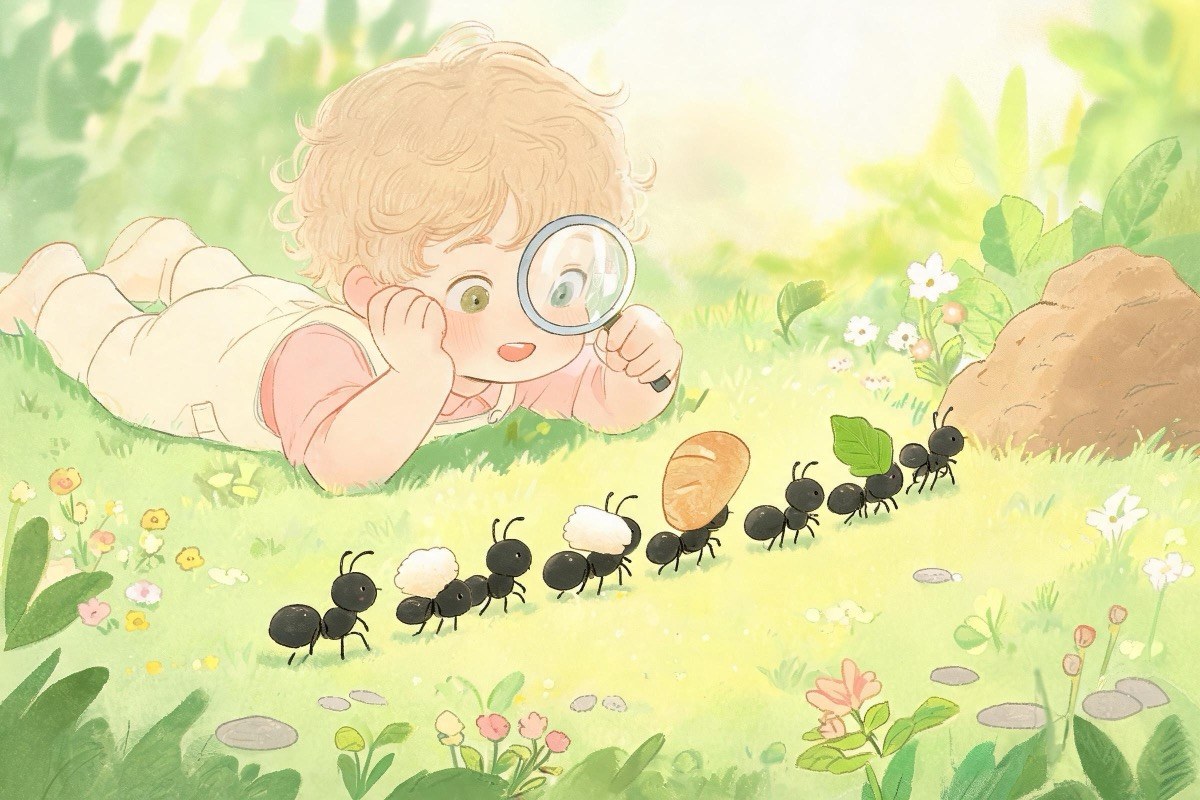
周六下午没有作业,我下楼散步,在空地的水泥缝边发现了一个蚂蚁窝。洞口不大,周围的土堆成一个小斜坡,像给洞口修了个挡水的堤。我本来只想看一眼,结果蹲下来就没走。我看它们进进出出,发现一个怪现象:从洞里出来的蚂蚁大多空着身子,走得急;进去的蚂蚁大多嘴里叼着东西,走得慢。洞口像一扇门,门里门外是两种节奏。我掏出手机想看时间,怕爸妈喊我吃饭,结果一看已经蹲了半个多小时。腿麻了,我换了个姿势接着看。
看得最久的是两只蚂蚁碰触角。它们在洞口迎面碰上,停下来,头对头,触角搭在一起,停了大概两三秒,然后各走各的。我数过,四十分钟里这样的碰面发生了很多次。我猜它们是在交换信息,就像书里说的,蚂蚁靠气味和触角说话。可我忍不住想得更远:它们碰一下就知道对方要什么,不用吵,不用解释,不用发一大段消息再补一句你误会了。我们班搬书那次,四个人抬一摞,因为谁先走谁后走吵了半节课。蚂蚁碰一下触角就分好了,我觉得这比我们有办法。
回家前,我在窝边坐到了天擦黑。我想的事情有点跑远了:这个洞里的蚂蚁,没有谁给它们排班,没有谁检查卫生,可洞口没有堆垃圾,路线没有堵死,下雨前它们还会把家往高处搬。它们靠什么管着自己?我想了半天,觉得答案可能就在那些碰触角里——每个个体都把自己知道的一点点告诉别的个体,加在一起,就成了整个窝的本事。我们总说集体要听一个人的,可蚂蚁好像不是这样组织的。这个想法我不敢说一定对,先写进日记里。我在末尾写:明天把生物课本里社会行为那一章提前看了,再看看它们和我想的一样不一样。
Forty Minutes Squatting by the Ant Nest
On Saturday afternoon I had no homework, so I went downstairs for a walk and found an ant nest beside a crack in the concrete of the open ground. The opening was small, and the soil around it was piled into a little slope, like a levee built to keep rain out. I only meant to glance, but once I squatted down I could not leave. Watching them go in and out, I noticed a strange pattern: most ants coming out were empty-bodied and hurried; most going in carried something in their mouths and moved slowly. The opening was like a door, with two different rhythms on either side of it. I took out my phone to check the time, worried my parents would call me for dinner, and found I had been squatting there for over half an hour. My legs went numb; I changed position and kept watching.
What I watched longest was two ants touching antennae. They met head-on at the mouth of the nest, stopped, heads facing, antennae resting on each other, held still for two or three seconds, then each went its own way. I counted: in forty minutes these meetings happened many times. I guess they exchange information, the way books say ants speak through scent and antennae. But I could not help thinking further: one touch and they know what the other needs, no arguing, no explaining, no sending a long message and then adding you misunderstood. That time our class moved books, four of us carried one stack and spent half a period quarreling over who walks first and who walks last. Ants split the job with one touch of antennae. I think they have a better way than we do.
Before going home I sat by the nest until dusk. My thoughts had wandered far: in this nest nobody makes the schedule, nobody inspects the cleaning, yet there is no garbage piled at the entrance, no blocked roads, and before rain they move their home uphill. What keeps them in order? I thought a long time and decided the answer may lie in those antenna touches. Every individual passes on the little it knows to other individuals, and added together it becomes the skill of the whole nest. We always say a group must listen to one person, but ants do not seem to organize that way. I dare not say this thought is certainly right, so I write it in my diary first. At the end I wrote: tomorrow I will read ahead the chapter on social behavior in the biology textbook, and see whether they match what I imagined.
两只蚂蚁碰了碰头,我想了很久
晚饭后我带狗下楼,它在水泥地缝边趴下不动,鼻子嗅个不停。我顺着它的鼻子看过去,是一个蚂蚁窝。洞口有一小圈松土,蚂蚁从里面排着出来,绕开狗的爪子。狗想伸爪子,我拽住了牵引绳,只好蹲下来替它看。蚂蚁窝边上的世界很小,可看进去就不太走得出来了。我看它们搬一粒米,八只蚂蚁围上去,没有一只指挥,可谁抬哪一头好像天生就知道。米走到洞口卡住了,外面的把米往里推,里面的蚂蚁退出来让路,让完再回去接着干别的。
真正让我蹲到天黑的,是两只蚂蚁碰触角。它们在米粒旁边碰上,触角搭在一起,一动不动,像两个头碰头说悄悄话的孩子。我盯着那两三秒,脑子里忽然冒出同桌。我和她已经三个星期不说话了,起因是借一块橡皮没还,谁也不肯先开口。我们每天坐在一张桌上,笔袋挨着笔袋,可中间像隔了一条水泥缝。蚂蚁碰一下触角,两秒钟,事情就传开了,该搬的搬,该让的让。我们要是也有触角,那三天的冷战大概当天就结束了。我又想到,人和人麻烦就麻烦在话多:一句话出口,能歪成三个意思,越解释越远。蚂蚁的两秒钟里没有解释。
狗在旁边打了个哈欠,催我回家。站起来的时候我发现牵引绳在手腕上绕了两圈。最后看了一眼那个洞口,一只蚂蚁正从里面出来,触角先探出来,像先派个信使。回家上楼,我在日记本上写:今天看了四十多分钟蚂蚁,主要看它们怎么说话。写完这句我停了一下,又加了一行:明天上学,跟同桌说一句话,不用触角的那种。我不知道这行字算不算想明白了,但它是我蹲在蚂蚁窝边四十分钟里,最实在的一个念头。上楼时狗回头看我,大概觉得我今天有点怪。
Two Ants Touched Heads, and I Thought for a Long Time
After dinner I took the dog downstairs. It lay down by a crack in the concrete and would not move, its nose sniffing nonstop. I followed its nose and found an ant nest. There was a small ring of loose soil at the opening, and ants filed out around the dog paw of the dog. The dog wanted to reach out with its paw, so I pulled the leash tight and had to squat down and watch for it. The world beside an ant nest is tiny, but once you look in, it is hard to look away. I watched them carry a grain of rice: eight ants gathered around it, none giving orders, yet each seemed to know by birth which end to lift. The rice got stuck at the opening. The ants outside pushed it in, the ants inside backed out to clear the way, then went back to their other jobs when the way was clear.
What kept me squatting until dark was two ants touching antennae. They met beside the rice grain, put their antennae together, and stayed perfectly still, like two children with heads together whispering. I stared at those two or three seconds, and my deskmate suddenly came to mind. She and I have not spoken for three weeks, over an eraser that was borrowed and never returned, and neither of us will speak first. Every day we sit at one desk, our pencil cases touching, yet between us there seems to be a concrete crack. Ants touch antennae for two seconds, and the news is passed, what needs carrying gets carried, what needs yielding gets yielded. If we had antennae, our three-week cold war would probably have ended that same day. Then I thought: people are troublesome precisely because they talk too much. One sentence out of the mouth can twist into three meanings, and the more you explain, the farther apart you get. There is no explaining in those two seconds of ants.
The dog yawned beside me, urging me home. When I stood up I found the leash wound twice around my wrist. I took one last look at the opening: an ant was coming out, its antennae reaching out first, like a messenger sent ahead. Upstairs, I wrote in my diary: watched ants for over forty minutes today, mostly watching how they talk. After writing that line I paused and added another: tomorrow at school, say one sentence to my deskmate, the kind that does not need antennae. I do not know whether that line counts as figuring something out, but it was the most solid thought out of the forty minutes I squatted by that nest. Going up the stairs, the dog looked back at me, probably thinking I was a little strange today.
小提示:上面此文档内容仅展示完整文档里的部分内容, 若需要下载完整文档请 点击免费下载完整文档 。