文章内容
把蚂蚁请进课堂
我把蚂蚁请进教室那天,先跟科学老师要了一只玻璃缸。缸里铺湿土,插一根吸管,撒几粒面包屑,盖子用蓝布松松地蒙着,放在教室窗台上。我对孩子们说,今天班里来了二十位客人,它们怕震动,所以不能拍桌子,也不能摇缸。蓝布掀开的一角,全班屏住呼吸,连最调皮的那个男孩都把声音压得很低,问蚂蚁会不会咬人。
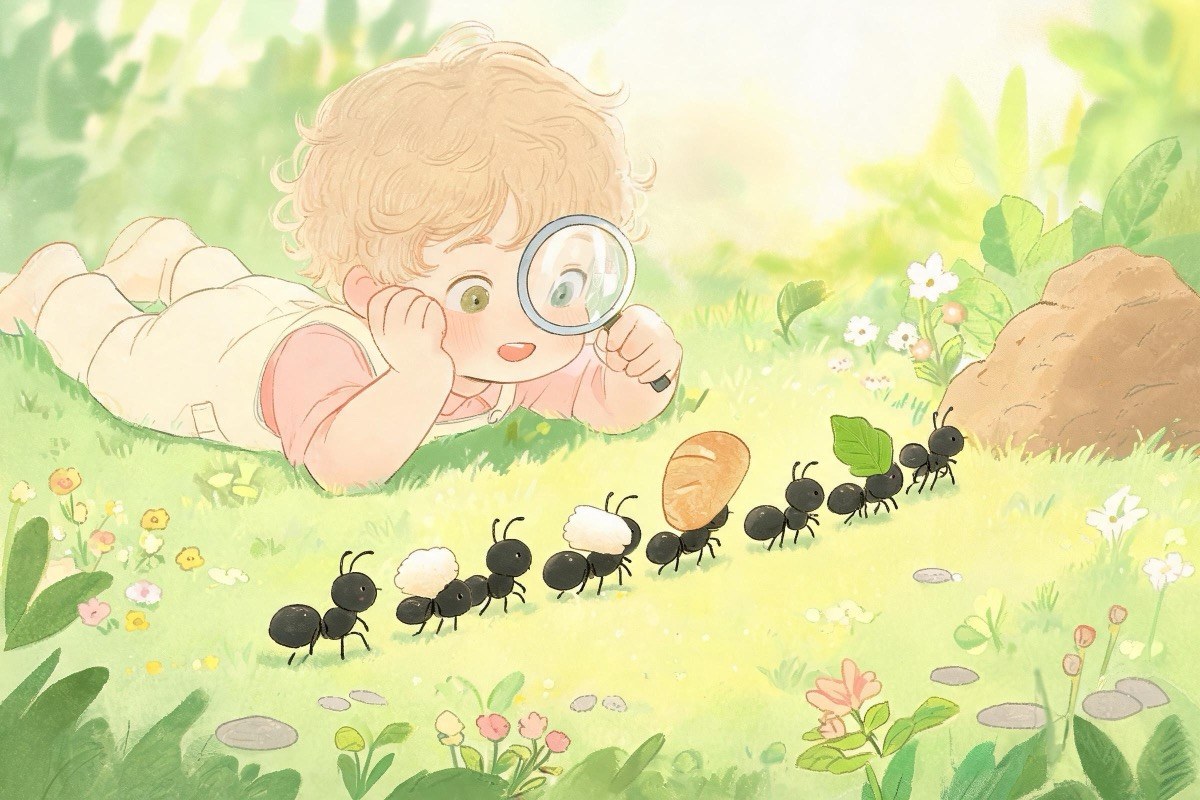
分组观察安排在第二天。每组发一个放大镜、一本记录本、一支铅笔,规则只有一条:不许碰,只许看,只许画,只许记时间。分组的时候我特意把爱说话的和安静的混在一起,把调皮的和细心的编成一组。四十分钟里,教室里只有铅笔沙沙的声音。第三组最先发现蚂蚁绕过面包屑,直奔一粒白糖。两只蚂蚁碰了碰触角,转身往回走。有个孩子仰起脸问我:它们是不是在说话?我没直接答,只让他把刚才看到的画下来。他咬着铅笔画了两根弯弯的线,旁边写:碰了一下,往左走。
观察日记是从第三天开始的。我原本担心孩子们写不长,一人一句凑满一行就算交差。结果小航在日记里写:那只蚂蚁昨天走的是直线,今天绕开了我的橡皮,它是不是认识路?我不确定,但这个问题值得再看三天。我把这句话抄在黑板上,全班安静了一会儿,像都在想自己的答案。日记交上来我每晚翻一遍,看到蚂蚁排着队搬走一条青虫,看到触角碰头的次数一天比一天多,还看到有孩子写:它们好像偏爱甜的,米饭粒放两天没人理,瓜子壳当晚就搬空了。我把这句也抄上墙,后面跟着一行小字:谁再发现新的,写名字贴上去。那面墙后来贴了十几条,没有一条重样。
期末收上来的作文里,十七篇写蚂蚁,没有一篇以今天天气晴朗开头。我备课时常常想起那只绕开橡皮的小蚂蚁,也想起小航的问题。有些东西不在课本里,在窗台的玻璃缸里,在孩子弯下去的腰里。我要做的是把它们请进来,再退后一步,让他们自己看见。
Inviting Ants into the Classroom
The day I invited ants into the classroom, I first borrowed a glass jar from the science teacher. We spread wet soil inside, stuck in a straw, scattered a few crumbs, and covered the lid loosely with blue cloth on the windowsill. I told the children that twenty guests had come to our class, that they feared vibration, so nobody should slap the desk or shake the jar. When the cloth was lifted at one corner, the whole class held its breath, and even the most mischievous boy asked in a whisper whether ants bite.
Group observation began the next day. Each group got a magnifying glass, a notebook and a pencil, with one rule: no touching, only looking, drawing, and writing down the time. I deliberately mixed talkative children with quiet ones, and put restless ones together with careful ones. For forty minutes the only sound in the room was pencils scratching. Group Three noticed first that the ants went around the crumbs and headed straight for a grain of sugar. Two ants touched antennae, then turned back. One child looked up and asked me whether they were talking. Instead of answering, I asked him to draw what he had just seen. He bit his pencil, drew two curved lines, and wrote beside them: touched once, then went left.
Observation diaries started on the third day. I had worried the children would write too little, one line each and call it done. But Xiaohang wrote: that ant walked in a straight line yesterday, and today it went around my eraser. Does it know the way? I was not sure either, but the question was worth three more days of watching. I copied his sentence onto the blackboard, and the class stayed quiet for a while, as if everyone were thinking out their own answer.
In the final essays, seventeen were about ants, and not one began with the weather was fine. While preparing lessons I often think of that little ant going around the eraser, and of the question from Xiaohang. Some things are not in the textbook. They are in the glass jar on the windowsill, in the way children bend down to look. My job is to invite them in, then step back and let the children see for themselves.
那缸蚂蚁,替小宇开了口
班里最安静的孩子是被一缸蚂蚁改变的。小宇从不举手,作文永远三行,开头结尾中间各一行,像完成任务。那阵子科学课总缺器材,我就把蚂蚁请进了课堂:一只玻璃缸,湿土、吸管、几粒面包屑,蓝布蒙着,搁在窗台上。我跟孩子们说清楚,客人怕震动,别拍桌子。蓝布掀开的时候,小宇挤在最前面,鼻尖几乎贴上玻璃。
分组观察时我把安静的和话多的混编,每组一个放大镜、一本记录本。规则是不许碰,只许看、画、记时间。四十分钟里,小宇那一组最先发现蚂蚁绕过面包屑直奔白糖。有人问蚂蚁是不是在说话,小宇没开口,但他把看到的画了下来:两根弯弯的线,旁边注着碰了一下,往左走。我把那张画举起来给大家看,他的耳朵红了,手却把本子往前推了推。
观察日记从第三天开始。我担心小宇仍旧只写三行,特意在他旁边站了一会儿。他交上来那天,写满了一整页:蚂蚁昨天走直线,今天绕开橡皮,它是不是认识路,还是不喜欢橡皮的味道?最后一行是:明天我把它挪到铅笔旁边,看它绕不绕。页角还画了一张小小的路线图,铅笔的位置画了个圈,箭头从橡皮那边绕过去。第二天我在班里把那页日记读了整整三分钟,安静得能听见窗外的风。小宇的耳朵又红了,腰却挺得笔直。
期末作文,小宇交了三篇,最长的一篇九百多字,写的还是那窝蚂蚁。我常在备课间隙想起那页日记。我们总急着让孩子有东西可写,却很少给他们值得写的东西。一缸蚂蚁没讲一个修辞,却让他自己走到了纸面前。教育有时候不是我把东西塞进去,是把值得看的东西放到他眼前,然后忍住,不替他说话。
The Jar of Ants Spoke for Xiaoyu
The quietest child in my class was changed by a jar of ants. Xiaoyu never raised his hand, and his essays were always three lines, one for the opening, one for the middle, one for the end, like a task to finish. That term the science lab kept running short of equipment, so I brought ants into our classroom: a glass jar with wet soil, a straw and a few crumbs, covered with blue cloth, placed on the windowsill. I made it clear that the guests feared vibration, so no slapping the desk. When the cloth was lifted, Xiaoyu squeezed to the front, his nose almost touching the glass.
During group observation I mixed quiet children with talkative ones, one magnifying glass and one notebook per group. The rule was no touching, only looking, drawing and noting the time. In forty minutes, the group with Xiaoyu noticed first that the ants bypassed the crumbs and went straight for the sugar. Someone asked whether ants talk. Xiaoyu said nothing, but he drew what he saw: two curved lines, annotated with touched once, then went left. I held his drawing up for the class. His ears turned red, but he pushed his notebook forward.
Observation diaries began on the third day. Afraid Xiaoyu would still write only three lines, I stood near him for a while. The day he handed his in, the page was full: the ant walked straight yesterday, today it went around the eraser. Does it know the road, or does it dislike the smell of rubber? The last line read: tomorrow I will move it next to the pencil and see if it goes around. In the corner of the page he had drawn a tiny route map, a circle marking the pencil, an arrow curving around the eraser. The next morning I read that page aloud for a full three minutes, the room quiet enough to hear the wind outside. His ears reddened again, but his back was straight.
At the end of the term Xiaoyu turned in three essays, the longest over nine hundred words, still about those ants. Between lesson preparations I often think of that page. We are always in a hurry to give children something to write, yet rarely give them things worth writing about. A jar of ants taught not a single figure of speech, but it walked him to the paper on his own. Sometimes education is not putting things into children, but placing something worth seeing before them, then holding back and not speaking for them.
小提示:上面此文档内容仅展示完整文档里的部分内容, 若需要下载完整文档请 点击免费下载完整文档 。