文章内容
接女儿放学的路上,我们蹲了二十分钟
那天下午四点半,我照例去接女儿。出校门没走两百米,她忽然停下,往花坛边的路沿上一蹲,喊我:爸爸你快来看,蚂蚁在搬家!
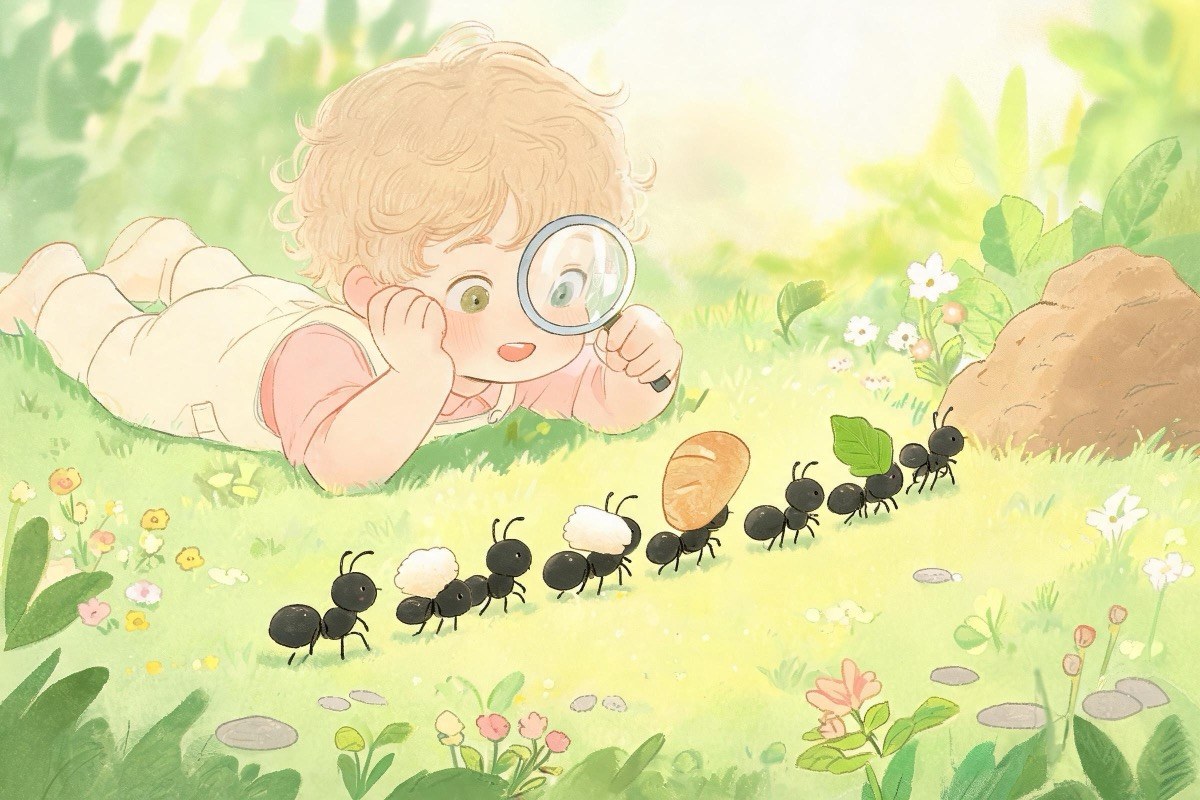
换成平时上班的日子,我大概会说快走快走,回家写作业。可那天我正好请了假,心里不赶时间,就也蹲下去,蹲在她旁边。路沿的缝里果然排着一条线,蚂蚁一只接一只,有的背着白色的卵,有的抬着什么东西,匆匆地往高处去。
女儿的问题跟着就来了,一个接一个,根本不给我喘气的空。她们为什么要搬家?是不是要下雨了?背白白的是不是它们的宝宝?最高的那只为什么老回头?我一个个答。有的我知道,比如要下雨,蚂蚁觉得洞里要进水就往上搬;有的我也不知道,比如那只为什么老回头,我只能说,我猜它是在等落后的同伴,回家咱们查一查。她听了不失望,反而点点头,说那咱们得记住回去查。
我们蹲了二十分钟。旁边有人匆匆走过,有个爷爷笑我们父女俩看蚂蚁看得出神。女儿一点不害羞,还跟那爷爷介绍:快要下雨了,蚂蚁在往高处搬。爷爷说,哦,那我也得看看。那二十分钟里,她眼睛一直亮着,比考了一百分的时候亮得持久。
回家以后,她没有先喊饿。她从抽屉里翻出一个画画的本子,说要记下来。我帮她写,她口述:十月三十一日下午,校门花坛,蚂蚁搬家,背白色的卵,有一只老回头的,我们猜它在等同伴。画的部分她自己画,一条黑线从花坛爬到长椅,黑线上点了一排小点,小点上画了小包袱。本子最后一页她还写了个问号:蚂蚁怎么知道要下雨?说明天放学还要去看。
晚上我看天气预报,第二天真有雨。我在她床边说了,她迷迷糊糊嗯了一声,翻个身又睡了,嘴角还翘着。
我常想,孩子的提问就像那些蚂蚁背上的卵,小小的,看着不起眼,其实里面都是还没出来的小生命。大人随口一句快走快走,就等于一脚踩下去。我不是懂很多知识的爸爸,那天也有答不上的问题,可我蹲下来了,我记下来了,这就够了。陪她蹲在路边的二十分钟,比我给她讲过的任何道理都管用——因为她信了:这个世界值得蹲下来看,而她问的问题,值得被记在本子上。
On the Way to Pick Up My Daughter, We Squatted for Twenty Minutes
At half past four that afternoon, I went to pick up my daughter as usual. Only two hundred meters from the school gate, she suddenly stopped, squatted down on the curb beside the flower bed, and called me: Dad, come quick, the ants are moving house!
On a normal working day I would probably have said: hurry up, go home and do your homework. But that day I happened to be on leave, and I was not chasing time, so I squatted down too, beside her. In the crack of the curb there really was a line, ant after ant, some carrying white eggs on their backs, some lifting something, all hurrying toward higher ground.
Her questions came right after, one after another, giving me no room to breathe. Why are they moving house? Is it going to rain? Are the white things they carry their babies? Why does the tallest one keep looking back? I answered one by one. Some I knew — for instance, about the rain: when ants feel water will get into the hole, they move upward. Some I did not know, like why that one kept looking back. I could only say: I guess it is waiting for the companions left behind; let us look it up when we get home. She was not disappointed. She nodded and said: then we must remember to check.
We squatted there for twenty minutes. People hurried past; an old grandpa laughed at us, father and daughter, absorbed in watching ants. She was not shy at all. She even introduced it to the grandpa: it is going to rain soon, the ants are moving to higher ground. The grandpa said: oh, then I should have a look too. For those twenty minutes her eyes stayed bright — brighter, and for longer, than when she scored a hundred on a test.
After we got home she did not complain of hunger first. She dug a drawing notebook out of the drawer and said she wanted to write it down. I wrote while she dictated: October thirty-first, afternoon, flower bed at the school gate, ants moving house, carrying white eggs, one kept looking back, we guess it is waiting for a companion. The drawing was hers: a black line climbing from the flower bed to a bench, a row of small dots on the line, and on the dots she drew little bundles. On the last page she also wrote a question mark: how do ants know it will rain? And she wrote that she would go back after school tomorrow to look again.
That evening I checked the forecast: rain was indeed coming the next day. I told her by her bed. She murmured an absent yes, turned over, and fell back asleep, the corners of her mouth still turned up.
I often think: the questions of a child are like those eggs on the backs of the ants — small, easy to overlook, yet each holds a life not yet hatched. A careless hurry up from an adult is a foot stepping down. I am not a father who knows much; that day I had questions I could not answer either. But I squatted down, and I wrote it down, and that is enough. Those twenty minutes squatting with her by the road work better than any lesson I have ever explained to her — because she came to believe: this world is worth squatting down to look at, and the questions she asks are worth writing into a notebook.
科学课上,我陪学生蹲了十分钟
上周的科学课,我带六个孩子去校园东墙外面观察植物。路线是我提前走过一遍的,二十分钟走完,回教室画图,安排得刚刚好。出发不到五分钟,计划就乱了。
队伍里的小宇落在最后,蹲在路边不动。我回去催他,他抬起头喊我:老师你来看,这条蚂蚁队伍会给自己修路!我本来要说快跟上,话到嘴边咽回去了。我也蹲下来。
他说得没错。墙根那条线上,有几只蚂蚁在往一个坑里搬土粒,坑不大,可队伍走到那儿会绕,绕一次少几只。小宇盯着看了半天,忽然问我:老师,它们是谁教谁的?没有人教它们吧?那它们怎么知道该往坑里填土?这个问题问得好。我蹲在那儿想了十几秒,老实说:我不知道确切答案,科学家也还在研究。我知道的是,它们靠触角和气味互相传信。你猜的修路,说不定就是后面的蚂蚁踩前面的脚印,越踩越顺。
小宇说:那我可以做个实验吗?下次我在这儿放一张纸,看它们还绕不绕。我说可以,这是个好主意,别伤害它们,观察完把纸拿走。
那十分钟,六个孩子全蹲在那儿,植物路线没走完。回教室以后,我没有补进度,而是把小宇的问题写在黑板上:蚂蚁会修路吗?全班讨论了一节课。后来我们真的做了一张观察记录表,日期、地点、天气、队伍方向、发现的问题,六个人一人填一行。小宇那一行写:蚂蚁在填坑,像在修路,下次放纸试试。
那张表我贴在教室后墙,贴了半个学期,陆陆续续有别的班的孩子往上添行。有个平时最坐不住的孩子写了一行:蚂蚁排队的间隔是一样的,我用尺子量了。
当老师这些年,我越来越相信一件事:好奇心不是教出来的,是护出来的。孩子蹲在路边那一刻,是他在主动靠近这个世界,大人最不该做的就是拽他起来赶路。十分钟换一节课的讨论,换一张贴了半学期的记录表,太值了。那天的植物路线我后来补上了,可蚂蚁那十分钟,是我那个学期上得最好的一节课。
In Science Class, I Squatted With My Students for Ten Minutes
Last week in science class, I took six children outside the east wall of the campus to observe plants. I had walked the route in advance: twenty minutes out, back to the classroom to draw, timed just right. Less than five minutes after we set off, the plan fell apart.
Xiao Yu at the back of the line squatted down by the road and would not move. I went back to urge him on, and he looked up and called me: Teacher, come look — this line of ants is building its own road! I was about to say hurry up, and swallowed the words at my lips. I squatted down too.
He was right. On the line at the foot of the wall, several ants were carrying grains of soil into a small pit. The pit was not big, but the column detoured when it reached there, and with each detour a few ants dropped off. Xiao Yu watched for a long while, then suddenly asked me: Teacher, who taught them? Nobody taught them, right? Then how do they know to fill the pit with soil? That is a good question. I squatted there thinking for ten seconds, then answered honestly: I do not know the exact answer; scientists are still studying it. What I do know is that they pass messages to each other with their antennae and scent. Your road-building, maybe it is just the ants behind stepping in the footprints of those ahead, and the more they step, the smoother the path.
Xiao Yu said: can I do an experiment then? Next time I will put a sheet of paper here and see whether they still detour. I said yes, that is a good idea — do not hurt them, and take the paper away when you are done observing.
For those ten minutes, all six children squatted there. The plant route went unfinished. Back in the classroom, instead of catching up on the schedule, I wrote the question of Xiao Yu on the blackboard: do ants build roads? The whole class discussed it for a period. Later we really made an observation record sheet — date, place, weather, direction of the line, questions found — and each of the six filled one row. the row of Xiao Yu read: the ants are filling the pit, like building a road; next time put down paper and test it.
I pasted that sheet on the back wall of the classroom for half a term, and children from other classes kept adding rows to it. One of the most fidgety boys in school wrote one row: the gaps between ants in line are the same — I measured them with a ruler.
In all these years of teaching, I believe one thing more and more: curiosity is not taught, it is protected. The moment a child squats by the road is the moment he is moving toward the world on his own initiative, and the last thing an adult should do is haul him up and hurry him along. Ten minutes traded for a period of discussion and a record sheet that stayed on the wall half a term — a bargain. I made up the plant route later, but those ten minutes with the ants were the best lesson I taught that term.
小提示:上面此文档内容仅展示完整文档里的部分内容, 若需要下载完整文档请 点击免费下载完整文档 。