文章内容
原来下课铃也是故事的一部分
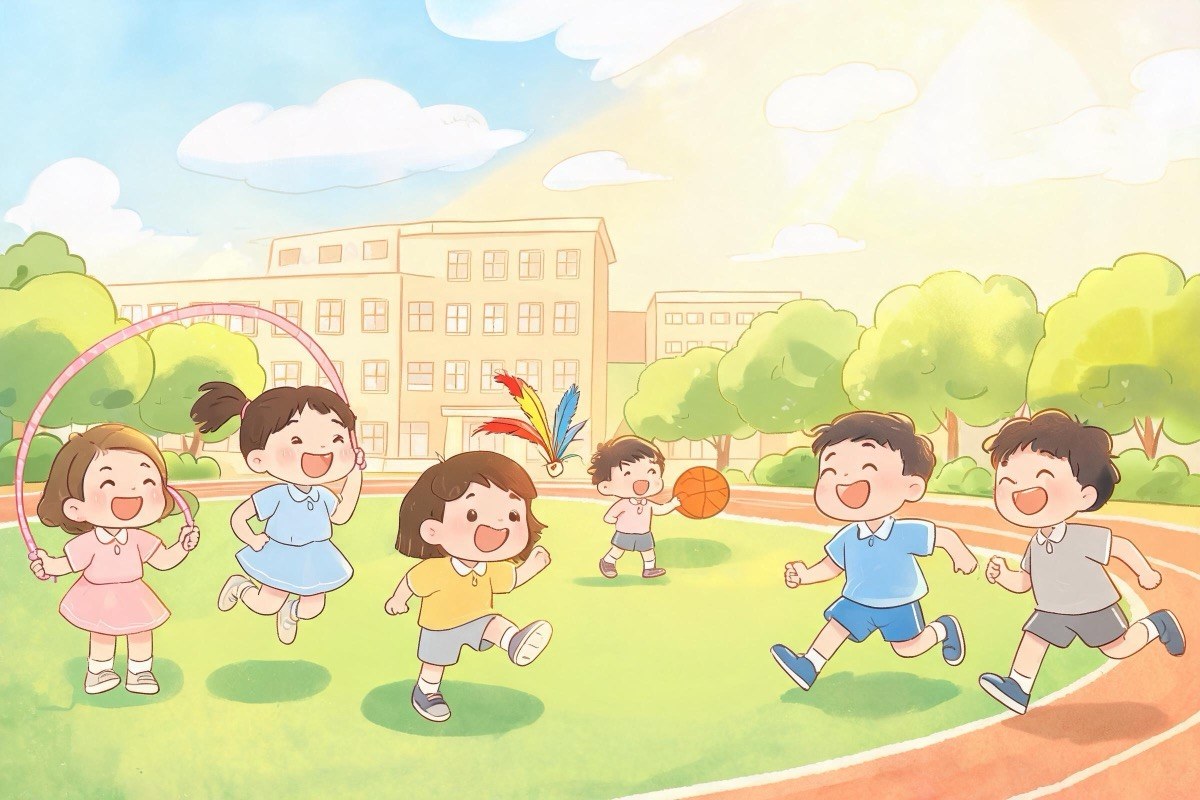
《快乐的课间》里有一幕我读了两遍:下课铃一响,班里的同学呼啦一下涌出教室,女生在走廊边跳皮筋,皮筋从脚踝升到头顶,啪啪的打地声隔着两层楼都能听见;男生把书包往花坛边一丢,追跑着绕花坛三圈,上课铃响了才捏着鼻子往回走,跑最后一个的笑得直不起腰。书里写他们回到教室,心还在操场上,课本翻开第一页,字却看不进去。我读到这里笑了,因为我几乎每天都这样,可我从没觉得这十分钟值得写下来。
我的课间和书里不太一样。铃响以后,我大部分时间趴在桌上,脸压在胳膊上,耳朵里是走廊的喧闹。有时抬头看一眼,看见几个同学追着跑过去,风把他们的笑声送进来半秒,又关在门外。剩下的时间用来补上一节课没抄完的板书,或者把下节课的书从书包里掏出来摆好。十分钟就这样从笔尖底下流走了,流得没有一点声音。书里那些孩子把十分钟过得又响又亮,我的十分钟安静得像一条没人走的巷子。
不是我不喜欢玩。三年级的时候我也在楼下跳过绳,一根绳两个人甩,我站在中间数拍子往里跳。后来换了座位,靠窗,离楼梯远,我就慢慢不下去了,总觉得下去再上来会来不及。再后来,来不及成了习惯,习惯成了理所当然。我读《快乐的课间》的时候想,书里那些孩子难道不怕来不及吗?他们也来不及。写的那个男生每次都是最后一个进教室,铃响时还站在门口,可他笑着,全班也笑着。原来来不及不是最要紧的事,最要紧的是这十分钟里有没有声音、有没有人跟你一起笑。
第二天课间,我合上书,下楼了。操场边的水泥台上,几个女生在踢毽子,毽子落在脚背上弹起来,围观的人数到十七。我站在圈外看,毽子歪了,一个女生用脚外侧把它捞回来,人群哇地一声。那一声哇撞进耳朵里,我忽然明白书里写的珍贵是什么感觉。它不是大道理,就是那一声哇,就是数到十七时所有人仰着的头。
从那以后,我的课间换了活法。十分钟够我下一趟楼,够我看一场毽子比赛,够我跟同桌把走廊的栏杆当球门比划两下。回到教室,第一行字照样看不进去,可我不慌了。书里那堂课的铃会响,我这堂课的铃也会响,下课铃和上课铃一样,都是故事的一部分。以前我以为珍贵的是四十分钟的课,读完这本书我知道了,十分钟也是。它短,但它响。
So the Break Bell Belonged to the Story All Along
There is a scene in Happy Break Time that I read twice. The moment the bell rings, the class pours out of the room. Girls jump rubber bands along the corridor, the band climbing from ankle to overhead, its slapping sound audible through two floors. Boys toss their bags by the flower bed and chase each other three laps around it, only turning back when the class bell sounds, the last one in clutching his nose and doubled over laughing. Back in class, their hearts are still on the playground; the textbook opens to page one and the words will not enter. I smiled reading that, because I do the same thing almost every day, yet I never thought those ten minutes were worth writing down.
My breaks do not look like the ones in the book. After the bell I mostly lie on my desk, face pressed into my arms, the corridor noise in my ears. Sometimes I look up and see a few classmates chase past, their laughter blowing in for half a second before the door shuts it out again. The rest of the time goes to finishing board notes from the last class, or digging the next textbook out of my bag. Ten minutes slip away under my pen, slipping without a sound. The children in the book live their ten minutes loud and bright; mine is as quiet as an alley nobody walks.
It is not that I dislike playing. In third grade I jumped rope downstairs, two kids swinging while I counted the beat and hopped in. Then I changed seats, to the window, far from the stairs, and slowly I stopped going down, always afraid there would not be time to get back. Later, not-having-time became a habit, and the habit became taken for granted. Reading the book I wondered: are those children not afraid of being late? They are. The boy in the story is last into class every time, still in the doorway when the bell rings, but he is laughing, and the whole class laughs with him. So being late is not the point. The point is whether those ten minutes held sound, and someone laughing together with you.
The next break I closed the book and went downstairs. On the concrete platform by the playground, girls were kicking a shuttlecock; it bounced off an instep and the crowd counted to seventeen. I stood outside the ring watching. The birdie tilted, a girl scooped it back with the outer edge of her foot, and the crowd went wow. That wow hit my ear, and I suddenly understood what the book means by precious. It is not a lesson. It is that wow, and all those upturned faces at seventeen.
Since then my breaks live differently. Ten minutes is enough to go downstairs, enough to watch one shuttlecock match, enough to mime a goal with my deskmate using the corridor railing. Back in class the first line of the lesson still will not enter my head, but I no longer panic. The bell in the book rings, and my bell will ring too. The break bell belongs to the story just like the class bell. I used to think only the forty-minute lesson was precious. After this book I know the ten minutes are precious too. They are short, but they sound.
摔在跑道上的那一下,也值得写
《快乐的课间》里我最记得的不是谁赢了游戏。书里写老鹰捉小鸡,队伍像多米诺一样往前倒,全堆在跑道线上,堆在最底下的那个孩子还笑,说刚才那一扑的风都吹到脸了。作者写他们爬起来拍拍土,没人喊疼,接着跑。我读这一段的时候,手心有点热,因为我想起一件我一直没跟任何人说过的事。
上学期课间,我们在楼下玩抓人。我跑得太快,鞋带开了没发现,一个趔趄摔在跑道边上,膝盖蹭破了一块,渗出血珠。周围一下子安静了半秒。那半秒里我最怕的不是疼,是笑——我怕别人笑我摔得难看,怕体育老师跑过来说要去医务室,那比摔本身更让我难受。我坐在原地没动,等着别人来扶。是同桌蹲下来,拍了拍我的肩,说没事,灰比血多。我这才站起来,一瘸一拐走回去,那节课我膝盖上贴着创可贴,走路像端着一碗水。
书里那个摔在最底下的孩子,跟当时的我完全相反。他躺在人堆里先笑,把摔变成了一局游戏里最好笑的部分。我在读后感的草稿里写:他不是不疼,他是知道摔在跑道上没什么好丢脸的,跑道就是用来跑的,跑就有摔的可能。这句话我改了三遍,最后只留下前半句,因为我觉得后半句才是真的:摔在跑道上,跟笑出声一样自然。
这本书还让我看见,课间那些摔跟头的孩子,第二天照样冲下楼。书里写第二天铃一响,昨天摔倒的那个又是第一个冲出门的,腿上的疤贴着纱布,跑起来一拐一拐,还是第一。我当时想,他不怕再摔吗?后来我自己试了一次。这周课间我重新去跑抓人,鞋带系了两道。被追的时候我又差点绊了一下,但这次我稳住了,旁边的人喊好。那一嗓子好,比创可贴管用。
合上书以后我不再觉得课间摔倒是事故。事故是十分钟里什么都没发生。现在我摔了会自己拍土站起来,膝盖疼,心里不疼。书里说课间十分钟很短,短到只够摔一跤、笑一场、再跑一圈。可就是这些摔跤和笑声,攒起来成了我们的一学期。我的膝盖早晚会好,那半秒的安静我不会再等别人来扶。
Even the Fall on the Track Deserved to Be Written
What I remember most from Happy Break Time is not who won the games. In the book, during eagle-catches-chicks the line topples like dominoes and everyone piles onto the track line, and the child at the bottom of the pile is still laughing, saying he felt the wind of that pounce on his face. The author writes that they got up, dusted off, nobody cried out in pain, and they kept running. My palm went warm reading this, because it brought back something I have never told anyone.
Last term during break we played tag downstairs. I ran too fast, my lace had come undone without my noticing, and I stumbled onto the edge of the track, scraping my knee open to beads of blood. The circle around me went silent for half a second. In that half second what I feared was not pain but laughter. I feared people laughing at how ugly my fall looked, feared the PE teacher coming to take me to the clinic, which would be worse than the fall itself. I sat where I was, waiting to be helped up. My deskmate squatted down, patted my shoulder, and said it is fine, more dust than blood. Only then did I stand, limping back, walking all class like carrying a bowl of water with a bandage on my knee.
The child at the bottom of the pile in the book is the opposite of me then. Lying in the heap, he laughed first, turning the fall into the funniest part of the round. In my reading-response draft I wrote: it is not that he did not hurt, he knew falling on a track is nothing to be ashamed of, tracks are made for running, and running means falling is possible. I revised that sentence three times and kept only the first half, because the second half is the real truth: falling on a track is as natural as laughing out loud.
The book also shows that the children who fall during breaks charge downstairs again the next day. The day after the fall, when the bell rang, the same child was first out the door again, a gauze bandage over the scar, running with a limp, still first. I wondered: is he not afraid of falling again? Then I tried it myself. This week I went back to tag at break, lacing my shoes twice. While being chased I nearly tripped again, but this time I steadied myself, and someone nearby shouted bravo. That single bravo worked better than any bandage.
After closing the book I no longer see a break-time fall as an accident. An accident is a ten minutes in which nothing happens. Now when I fall I get up and dust myself off; my knee hurts but my heart does not. The book says a break is short, too short for anything but one fall, one laugh, and one more lap. Yet it is exactly these falls and laughs that pile up into a whole school term. My knee will heal; that half second of silence, I will not wait for someone else to break it.
小提示:上面此文档内容仅展示完整文档里的部分内容, 若需要下载完整文档请 点击免费下载完整文档 。