文章内容
书里那把旧水壶
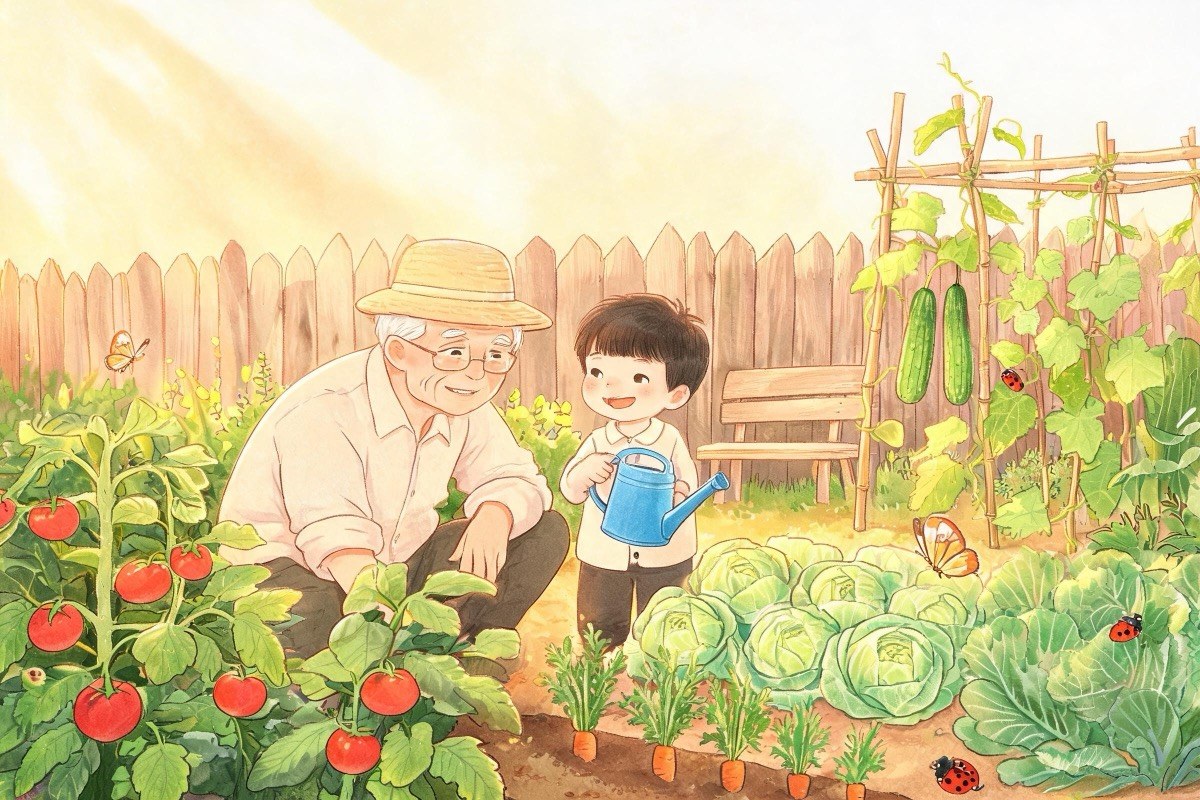
《爷爷的菜园》里有一段,我读了三遍。书里的爷爷每天傍晚提着一把掉了漆的旧水壶去浇菜,从畦这头走到那头,一瓢一瓢,水只浇在苗根边的土上。孙子问他为什么不从头淋到脚,他说叶子上的水晒了太阳会烧坏叶子,根喝的水,要慢慢喂。爷爷浇完,裤脚全是泥,水壶空了,他就坐在畦边的石头上抽一袋烟。
读到这儿,我放下书,跑到阳台上。阳台上有两个泡沫箱,是我跟爷爷去年春天种的丝瓜。我拿起喷壶浇了一圈,水从叶子上淌下来。我忽然停住,学着书里爷爷的样子,把水对准箱子边的土,慢慢浇。水渗下去,土色变深。那一刻我觉得书里的爷爷就蹲在我旁边。
三年级在乡下,爷爷也这样教过我。他指着丝瓜架说,浇水浇根,做人浇心,嘴上说一百句,不如做一件事给你看。那时我似懂非懂,只顾着玩水管,水滋了爷爷一裤腿,他也不恼,把水管接过去,蹲下,一寸一寸浇。现在我在书里看见一模一样的动作,鼻子有点酸。原来爷爷早就把道理浇在土里了,只是他不说,等我自己长大去认。
书里还写,孙子长大进城,爷爷每次塞给他一袋菜,袋口折两折。我想起每次从爷爷家回来,妈妈后备箱里总有土鸡蛋和一捆小葱,葱根上还带着湿土。我以前嫌菜上有泥,现在明白了,那点泥是爷爷的手碰过的地方。这本书让我认出一件事:爱可以不说话。书里的爷爷没讲过一句想孙子,他的想念全在傍晚那把水壶里,一瓢一瓢,浇在根上。我想,等丝瓜结了瓜,我摘一根最长的,坐班车给爷爷送去。让他也尝尝,他浇大的东西,又回到了他手上。
That Old Watering Can in the Book
There is a passage in the book The Garden of Grandpa that I have read three times. The grandfather in the book carries an old watering can with its paint chipped off to water the vegetables every evening, walking from one end of the bed to the other, ladle after ladle, the water falling only on the soil at the base of the seedlings. His grandson asks why he does not drench them from head to foot, and he says water on the leaves will scorch them in the sun, while water given to the roots feeds them slowly. When he finishes, his trouser cuffs are caked with mud, the can is empty, and he sits on the stone at the edge of the bed for a pouch of tobacco.
Reading this far, I put the book down and ran out to the balcony. On the balcony sit two foam boxes, in which Grandpa and I planted luffa last spring. I picked up the spray bottle and watered all around, the water running off the leaves. Then I suddenly stopped and, copying the grandfather in the book, aimed the water at the soil by the edge of the boxes and poured it slowly. The water seeped down and the soil darkened. In that moment I felt the grandfather from the book squatting right beside me.
In third grade, staying in the village, Grandpa taught me the same way. Pointing at the luffa trellis he said: water the roots when you water, water the heart when you treat people; a hundred words from the mouth are worth less than one thing done before your eyes. I half understood then, and only played with the hose, spraying water all over his trousers. He was not angry; he took the hose, squatted down, and watered inch by inch. Now I see the very same gesture in a book, and my nose stings a little. It turns out Grandpa had long ago watered his lesson into the soil; he simply never said it, waiting for me to grow up and recognize it.
The book also says that after the grandson grows up and moves to the city, the grandfather presses a bag of vegetables into his hands each visit, folding the mouth of the bag twice. I remember that every time we return from the home of Grandpa, the trunk of the car of my mother holds free-range eggs and a bundle of scallions, their roots still holding damp soil. I used to mind the dirt on the vegetables. Now I understand that a little dirt marks where the hands of Grandpa have been. This book taught me one thing: love can go without words. The grandfather in the book never once says he misses his grandson; all his longing is in that evening watering can, ladle after ladle, poured onto the roots. I think that when my luffa bears fruit, I will pick the longest one and take the bus to bring it to Grandpa, and let him taste too the thing he raised, come back at last into his own hands.
扶起来的东西不会记仇
《爷爷的菜园》里我最记得那场暴风雨。半夜的风把架子上的豆角掀翻了一片,雨砸得畦里的土坑坑洼洼。天亮时书里的爷爷蹲在地里,一棵一棵把倒下的苗扶起来,往根边重新培土,用玉米皮条松松地绑在竹竿上。孙子说这些苗怕是活不了了,爷爷手上没停,说苗不记仇,扶起来,根还抓着土,它就接着长。
读到这里我想起去年七月。我们楼下的花坛里,我跟爷爷种过一棵向日葵,夏天刮了一夜暴风雨,第二天早上它整个趴下了,杆子折成一个弯。我蹲在边上眼看要哭。爷爷过来看了看,说杆子没断透,还有救。他找来一截树枝当夹板,绑在折的地方,又往根下培了一把新土,压实。那棵向日葵后来真的直起来了,折过的地方鼓出一个疙瘩,像长好的伤口。它照旧开花,花盘比往年还大一点。爷爷说,植物跟人一样,摔过一跤,站直了反而更结实。
书里的爷爷后来老了,弯着腰在菜园里走,可菜园一年比一年整齐。我读到最后才明白,那一畦畦整齐,不是老天给的,是每次风雨后有人蹲下去扶。我以前考砸了数学就趴好几天,觉得自己完了。现在我想,我就是那棵趴下的向日葵,考砸是风,我需要的不是哭,是把自己扶起来,培一把土,再长。妈妈知道了我的想法,笑着说这个念头比分数金贵。
合上书我在书签上写了一句话:扶起来的东西不会记仇。我想把这句话送给书里的爷爷,也想送给楼下那棵鼓着疙瘩的向日葵。今年春天,我跟爷爷在花坛里又种了两棵向日葵。爷爷说等它们开花,拍张照,夹进我这本书里。我说好。让书里的菜园和楼下的花坛,在一张照片里碰个头。
What Is Propped Up Bears No Grudge
In the book The Garden of Grandpa, the scene I remember best is the storm. The midnight wind flipped the bean trellises over, and the rain pocked the beds with craters. At dawn the grandfather in the book squats in the field, propping up the fallen seedlings one by one, mounding fresh soil at their roots, and tying them loosely to the bamboo poles with strips of corn husk. His grandson says these seedlings probably cannot live, and the hands of the old man do not stop, saying seedlings bear no grudges; prop them up, and as long as their roots still grip the soil, they will go on growing.
Reading this far, I thought of last July. In the flower bed below our building, Grandpa and I had planted a sunflower. One night a summer storm came, and by morning the whole plant lay flat, its stalk bent double. I squatted beside it, close to tears. Grandpa came over, looked, and said the stalk was not broken through; it could still be saved. He found a branch to use as a splint, tied it at the bend, then mounded a handful of fresh soil at the roots and pressed it firm. That sunflower really did straighten up later, with a knob swelling at the bend like a healed wound. It flowered as usual, its head even a little bigger than in past years. Grandpa said plants are like people: after one bad fall, standing straight again makes them sturdier than before.
In the book the grandfather grows old afterward, walking through the garden bent at the waist, yet the garden grows tidier each year. Only at the end did I understand that all those neat rows were not a gift from the weather; they came from someone squatting down to prop things up after every wind and rain. When I used to bomb a math test, I would lie flat for days, convinced I was finished. Now I think I am that fallen sunflower; the failed test is just the wind, and what I need is not tears but to prop myself up, mound a handful of soil, and grow again. When Mother heard this thought of mine, she laughed and said the idea was worth more than the score.
When I closed the book, I wrote one line on my bookmark: what is propped up bears no grudge. I want to give that line to the grandfather in the book, and to the knotted sunflower downstairs. This spring, Grandpa and I planted two more sunflowers in the flower bed. He said when they bloom, we will take a photograph and tuck it into my copy of this book. I said all right. Let the garden in the book and the flower bed downstairs meet each other in one photograph.
小提示:上面此文档内容仅展示完整文档里的部分内容, 若需要下载完整文档请 点击免费下载完整文档 。