文章内容
爷爷菜园的一年
三月还没暖透,爷爷已经在菜园里忙了。他蹲在南头,用锄头柄在土里划出一道道浅沟,沟不深,一指节那么长。他抓一把小白菜籽,手抬得高,撒得匀,籽落在沟里,几乎听不见声音。撒完,他用脚把两边的土扒过来,盖住沟,再拎起水壶,水浇下去,土面颜色立刻深了一圈。
我问爷爷,小白菜什么时候能吃。他直起腰,捶了两下背,说再等一个多月,让你先看着它长大。我不太懂,他就拨开一点土,露出几粒湿透的籽,说籽喝了水就醒,醒了就往上拱,土压不住它。
四月,菜畦真的绿了。叶子小得像米粒,一排排站得整齐。我蹲下去数,数到一半就乱了。爷爷下地间苗,把挤在一起的拔掉,留下的间隔开。他说挤着的菜长不好,都抢那一口阳光,谁也不让谁,最后谁都长不大。
五月,番茄苗到了小指高,爷爷搬来竹竿,一棵一棵插好,用布条松松绑住。豆角籽点在篱笆根,隔一掌一粒。他告诉我,豆角自己会往上爬,不用人管,它认得方向。
夏天,爷爷每天清早提两桶水进园,井在屋后,来回一趟他歇都不歇。太阳底下,菜叶亮得反光,黄瓜今天早上还拇指长,傍晚就有胳膊长。他中午不歇晌午,蹲在垄沟里拔草,草带出根,根上还挂着湿土。他的手被豆藤磨得发红,指缝里全是泥,洗了几遍都洗不净。
九月开学以后,我再回菜园,它整个熟了。辣椒由青转红,一串一串垂着。南瓜趴在地里,皮上蒙了一层白霜似的东西,爷爷说这叫老。他掰玉米,苞叶一撕开,玉米粒碰在一起哗啦响,他举着那穗玉米给我看,粒颗颗饱满,顶上还带着一点甜腥气。
十月过了霜降,叶子枯了,卷起来,一碰就碎。爷爷把秧子割掉,翻地,把它们埋进土里。他说这些东西烂在地里,明年就是菜的好饭。地翻过以后一块一块,冻得硬邦邦,他坐在田埂上看一会儿,抽一支烟才回去。
十一月风硬了,他给剩下的菠菜盖上一层稻草,说盖了草,霜就咬不动它们。我在城里给他打电话,他第一句总是问期末考不考,第二句才是园里的菜。
十二月,我在城里阳台的花盆里种下他给我的一小包种子,天天看,天天没动静。打电话他说别急,籽在土里睡觉,到点自己起。我守着那只花盆,等一场发芽,也等过年回他的菜园。
A Year in Grandpa's Garden
The warmth had not yet fully arrived in March, but Grandpa was already busy in the garden. He crouched at the south end, drawing shallow furrows in the soil with the handle of his hoe, no deeper than a knuckle. He took a handful of bok choy seeds, held his hand high, scattered them evenly, and the seeds fell into the furrows almost silently. When he finished, he raked soil over them with his feet, then lifted the watering can. The moment the water went down, the surface of the soil turned a shade darker.
I asked him when the bok choy would be ready to eat. He straightened up, punched his back twice, and said we would wait a little over a month, and that I should watch it grow first. I did not quite understand, so he loosened a bit of soil and showed me a few soaked seeds, saying that a seed wakes up when it drinks water, and once awake it pushes upward, and soil cannot hold it down.
In April, the beds really turned green. The leaves were small as grains of rice, standing in neat rows. I crouched to count them and lost track halfway. Grandpa thinned the seedlings, pulling out the crowded ones and leaving gaps between the rest. He said cramped vegetables never grow well, because they all fight for the same mouthful of sunlight, and if none gives way, none grows big.
By May the tomato seedlings reached the height of a little finger. Grandpa carried over bamboo poles and staked them one by one, tying them loosely with cloth strips. He dotted bean seeds along the foot of the fence, one every palm-width. He told me the beans would climb on their own without any tending, since they know which way is up.
In summer, Grandpa carried two buckets into the garden every morning. The well was behind the house, and he never rested between the trips. Under the sun the leaves shone. A cucumber the size of a thumb in the morning was as long as an arm by dusk. He skipped his midday rest and squatted in the furrows pulling weeds, the roots coming up still holding wet soil. His hands were rubbed red by the bean vines, his finger gaps full of mud that would not wash away after several rinses.
When I returned after school began in September, the garden had ripened all at once. The peppers had turned from green to red, hanging in clusters. Pumpkins lay on the ground with a whitish film on their skins, which Grandpa called being old. He snapped off corn; the husks tore open and the kernels clattered together. He held an ear up for me to see, every kernel plump, the top still carrying a sweet, raw smell.
After the Frost Fall in October, the leaves withered, curled, and crumbled at a touch. Grandpa cut the vines, turned the soil, and buried them. He said that once these rotted into the ground, they would be the best food for the vegetables of next year. The turned earth froze into hard clods. He sat on the ridge and watched it for a while, smoking one cigarette before going home.
The wind turned harsh in November, and he spread straw over the remaining spinach, saying that under straw the frost cannot bite them. When I called him from the city, his first question was always about the final exam, and only his second was about the garden.
In December I planted a small packet of his seeds in a pot on my balcony, checked it every day, and saw nothing every day. On the phone he told me not to rush, that seeds sleep in the soil and wake on their own time. I keep watch over that pot, waiting for a sprout, and waiting for New Year, when I will go back to his garden.
井水浇过的夏天
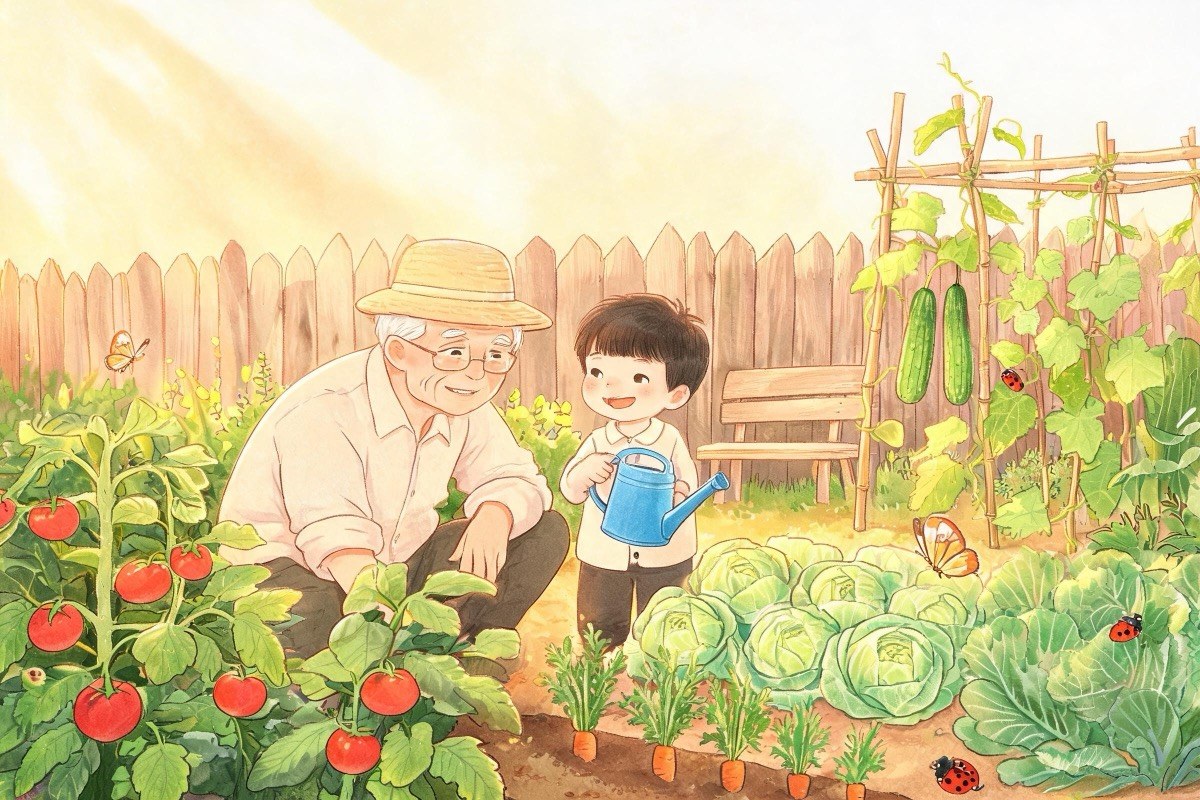
放假那天,爸爸把我放在爷爷家门口,车走了,我对着院子喊了一声也没人应。爷爷从菜园回来,裤腿卷到膝盖,鞋是湿的。他看了我一眼,说正好,明早跟我下地。
清早五点半,天刚亮,爷爷已经在水井边放下两只桶。他压了几下压杆,水哗地涌上来,先灌满浇菜的大桶,再灌我的小半桶。他挑担走在前头,我提着自己的半桶,走十步洒一半。到了地里,他把我桶里的水浇到番茄根上,说水要浇在根边上,不能泼叶子,叶子晒了水珠会烧出洞。
那几天他总给我讲春天。他指着篱笆边一道浅浅的印子,说四月他就在这儿点过豆角,芽现在都爬过他腰了。又说南头那畦是三月撒的白菜籽,一粒一粒,他弯着腰撒的,撒完腰疼得半天没直起来。我蹲在那畦边,白菜已经大得能包成一颗颗实心的球,我很难把眼前这一畦和他嘴里那把细小的籽对上。
七月的日头毒。上午十点以后叶子全耷下来,爷爷说晌午浇水会烫根,得等傍晚。傍晚他浇,我跟着拎壶,一垄一垄走过去,水渗进土里冒小泡。黄瓜架下他摘两根顶花带刺的,在井水里镇过,递给我。那根黄瓜咬下去是甜的,我后来在城市里再没吃到过那种甜。
八月中,一场大雨下了整夜。清早爷爷站在檐下看菜园,水从垄沟里流过,他不去管,只说这样的雨比十担井水都值钱。雨停以后菜疯长,豆角一早上架,他让我帮着摘,掐的时候要有响声,他说响了才是嫩的。
开学前三天,爷爷开始收。玉米掰了堆在院里,辣椒摘满三只筐,他挑最小的那筐留给我。南瓜他挑了两个扁圆的,说这个面,蒸着吃。他往车上搬东西的时候,腰弯下去要顿一下才能直起来,我在旁边看着,没敢出声,赶紧去托住另一个南瓜的底。
车装好,爷爷站在院门口,手上还有泥。他说下学期期末考完就回来,园里冬天种菠菜,我来了正好看见雪盖着绿叶子。车开出村口,我从后窗看见他还站着,身后是他那一园子收完的地,空着,正等下一场雨。
The Watered Summer
On the first day of vacation, my father left me at the house where Grandpa lives. The car left, and I shouted once into the yard with no answer. Grandpa came back from the garden, trousers rolled to his knees, shoes wet. He glanced at me and said good, I would go to the fields with him tomorrow morning.
At half past five, the sky barely light, he had already set two buckets by the well. He worked the pump handle a few times, water gushed up, and he filled the big bucket for the garden first, then my half bucket. He carried the yoke in front while I lugged my own half bucket, spilling half of it every ten steps. In the field he poured my water at the tomato roots, saying water must go to the edge of the roots, never splashed on the leaves, because droplets on leaves burn holes under the sun.
Those days he kept telling me about spring. He pointed at a faint line along the fence and said he had dotted beans there in April, and now the vines had climbed past his waist. The south bed, he said, came from bok choy seeds sown in March, seed by seed, sown bent over, and his back ached so badly he could not straighten up for half a day. I squatted by that bed. The bok choy had grown into firm round heads, and I could hardly match this bed with the handful of tiny seeds in his story.
The July sun was brutal. After ten in the morning the leaves all hung down. Grandpa said noon watering would scorch the roots, so we waited for evening. He watered at dusk and I followed with the can, row by row, the water sinking into the soil with tiny bubbles. Under the cucumber trellis he picked two still flowered and prickly, chilled them in well water, and handed one to me. Bitten, that cucumber was sweet, and I have never tasted that sweetness again in the city.
Mid-August brought a whole night of heavy rain. In the morning Grandpa stood under the eaves watching the garden, water running through the furrows, and he did not interfere, saying such rain was worth more than ten loads from the well. After it stopped the vegetables grew wildly, beans reached the trellis overnight, and he had me help pick them, snapping with a sound, because a snap means the bean is tender.
Three days before school reopened, Grandpa began the harvest. Corn piled in the yard, peppers filled three baskets, and he set aside the smallest basket for me. He chose two flat round pumpkins, saying these were mealy and good steamed. As he loaded the car, he had to pause at the bottom of each bend before straightening. I watched without a sound, then hurried to hold up the bottom of another pumpkin.
With the car loaded, Grandpa stood at the gate, mud still on his hands. He said come back after the final exam next term, spinach would be planted in the garden in winter, and I would arrive in time to see snow lying over green leaves. As the car left the village, I saw him still standing in the rear window, and behind him the harvested garden, empty, waiting for the next rain.
小提示:上面此文档内容仅展示完整文档里的部分内容, 若需要下载完整文档请 点击免费下载完整文档 。