文章内容
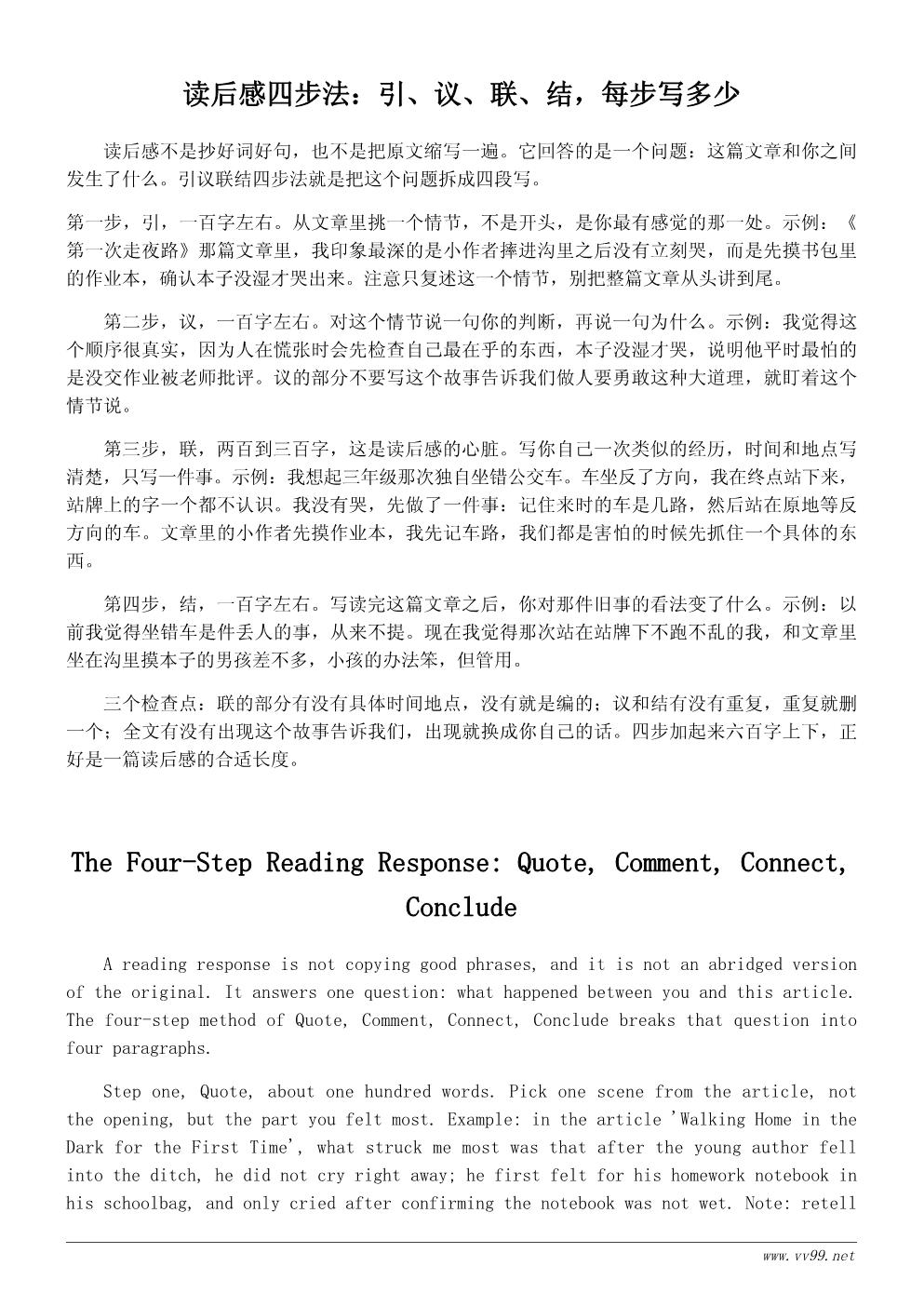
读后感四步法:引、议、联、结,每步写多少
读后感不是抄好词好句,也不是把原文缩写一遍。它回答的是一个问题:这篇文章和你之间发生了什么。引议联结四步法就是把这个问题拆成四段写。
第一步,引,一百字左右。从文章里挑一个情节,不是开头,是你最有感觉的那一处。示例:《第一次走夜路》那篇文章里,我印象最深的是小作者摔进沟里之后没有立刻哭,而是先摸书包里的作业本,确认本子没湿才哭出来。注意只复述这一个情节,别把整篇文章从头讲到尾。
第二步,议,一百字左右。对这个情节说一句你的判断,再说一句为什么。示例:我觉得这个顺序很真实,因为人在慌张时会先检查自己最在乎的东西,本子没湿才哭,说明他平时最怕的是没交作业被老师批评。议的部分不要写这个故事告诉我们做人要勇敢这种大道理,就盯着这个情节说。
第三步,联,两百到三百字,这是读后感的心脏。写你自己一次类似的经历,时间和地点写清楚,只写一件事。示例:我想起三年级那次独自坐错公交车。车坐反了方向,我在终点站下来,站牌上的字一个都不认识。我没有哭,先做了一件事:记住来时的车是几路,然后站在原地等反方向的车。文章里的小作者先摸作业本,我先记车路,我们都是害怕的时候先抓住一个具体的东西。
第四步,结,一百字左右。写读完这篇文章之后,你对那件旧事的看法变了什么。示例:以前我觉得坐错车是件丢人的事,从来不提。现在我觉得那次站在站牌下不跑不乱的我,和文章里坐在沟里摸本子的男孩差不多,小孩的办法笨,但管用。
三个检查点:联的部分有没有具体时间地点,没有就是编的;议和结有没有重复,重复就删一个;全文有没有出现这个故事告诉我们,出现就换成你自己的话。四步加起来六百字上下,正好是一篇读后感的合适长度。
The Four-Step Reading Response: Quote, Comment, Connect, Conclude
A reading response is not copying good phrases, and it is not an abridged version of the original. It answers one question: what happened between you and this article. The four-step method of Quote, Comment, Connect, Conclude breaks that question into four paragraphs.
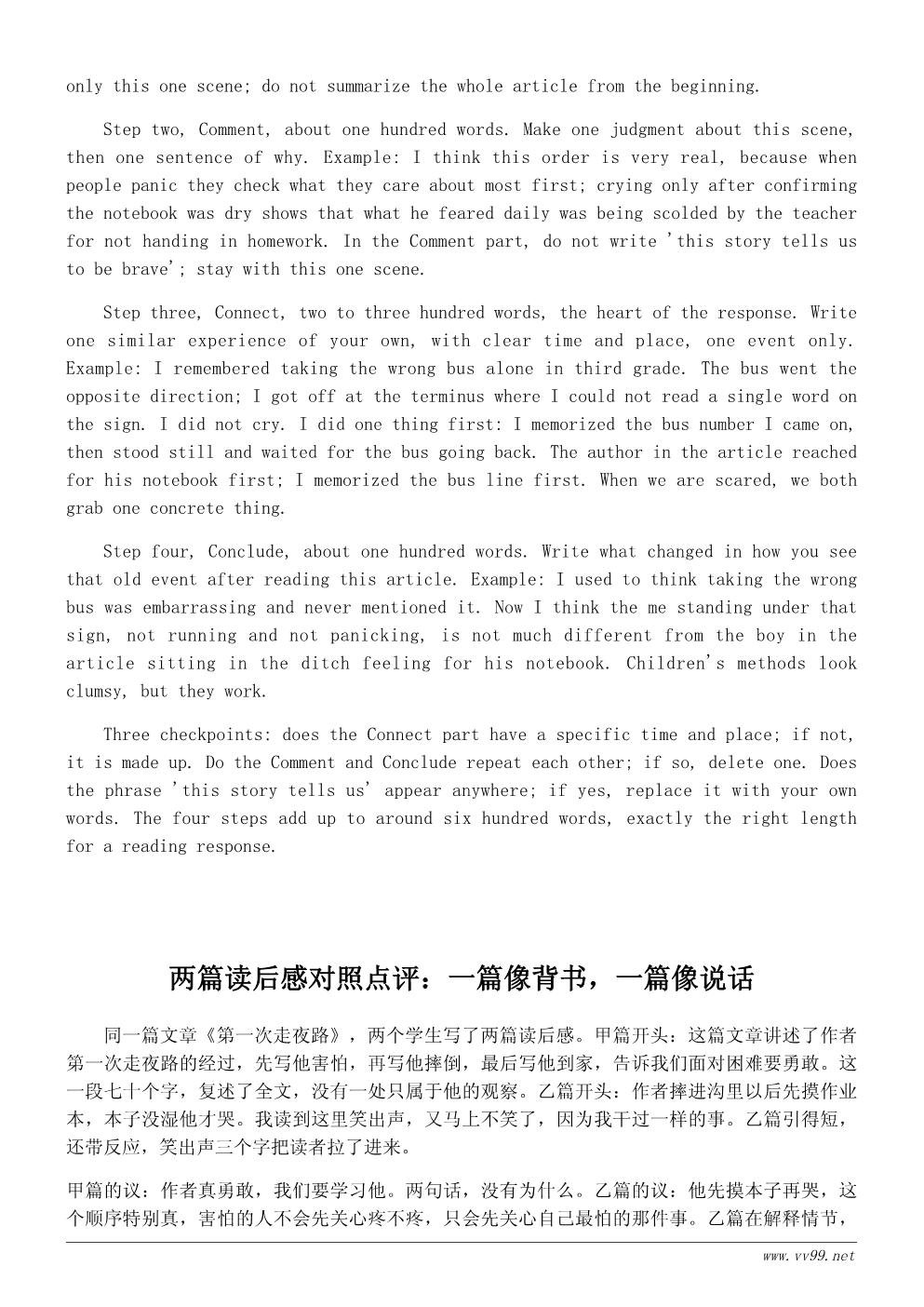
Step one, Quote, about one hundred words. Pick one scene from the article, not the opening, but the part you felt most. Example: in the article 'Walking Home in the Dark for the First Time', what struck me most was that after the young author fell into the ditch, he did not cry right away; he first felt for his homework notebook in his schoolbag, and only cried after confirming the notebook was not wet. Note: retell only this one scene; do not summarize the whole article from the beginning.
Step two, Comment, about one hundred words. Make one judgment about this scene, then one sentence of why. Example: I think this order is very real, because when people panic they check what they care about most first; crying only after confirming the notebook was dry shows that what he feared daily was being scolded by the teacher for not handing in homework. In the Comment part, do not write 'this story tells us to be brave'; stay with this one scene.
Step three, Connect, two to three hundred words, the heart of the response. Write one similar experience of your own, with clear time and place, one event only. Example: I remembered taking the wrong bus alone in third grade. The bus went the opposite direction; I got off at the terminus where I could not read a single word on the sign. I did not cry. I did one thing first: I memorized the bus number I came on, then stood still and waited for the bus going back. The author in the article reached for his notebook first; I memorized the bus line first. When we are scared, we both grab one concrete thing.
Step four, Conclude, about one hundred words. Write what changed in how you see that old event after reading this article. Example: I used to think taking the wrong bus was embarrassing and never mentioned it. Now I think the me standing under that sign, not running and not panicking, is not much different from the boy in the article sitting in the ditch feeling for his notebook. Children's methods look clumsy, but they work.
Three checkpoints: does the Connect part have a specific time and place; if not, it is made up. Do the Comment and Conclude repeat each other; if so, delete one. Does the phrase 'this story tells us' appear anywhere; if yes, replace it with your own words. The four steps add up to around six hundred words, exactly the right length for a reading response.
两篇读后感对照点评:一篇像背书,一篇像说话
同一篇文章《第一次走夜路》,两个学生写了两篇读后感。甲篇开头:这篇文章讲述了作者第一次走夜路的经过,先写他害怕,再写他摔倒,最后写他到家,告诉我们面对困难要勇敢。这一段七十个字,复述了全文,没有一处只属于他的观察。乙篇开头:作者摔进沟里以后先摸作业本,本子没湿他才哭。我读到这里笑出声,又马上不笑了,因为我干过一样的事。乙篇引得短,还带反应,笑出声三个字把读者拉了进来。
甲篇的议:作者真勇敢,我们要学习他。两句话,没有为什么。乙篇的议:他先摸本子再哭,这个顺序特别真,害怕的人不会先关心疼不疼,只会先关心自己最怕的那件事。乙篇在解释情节,甲篇在给作者发奖状。
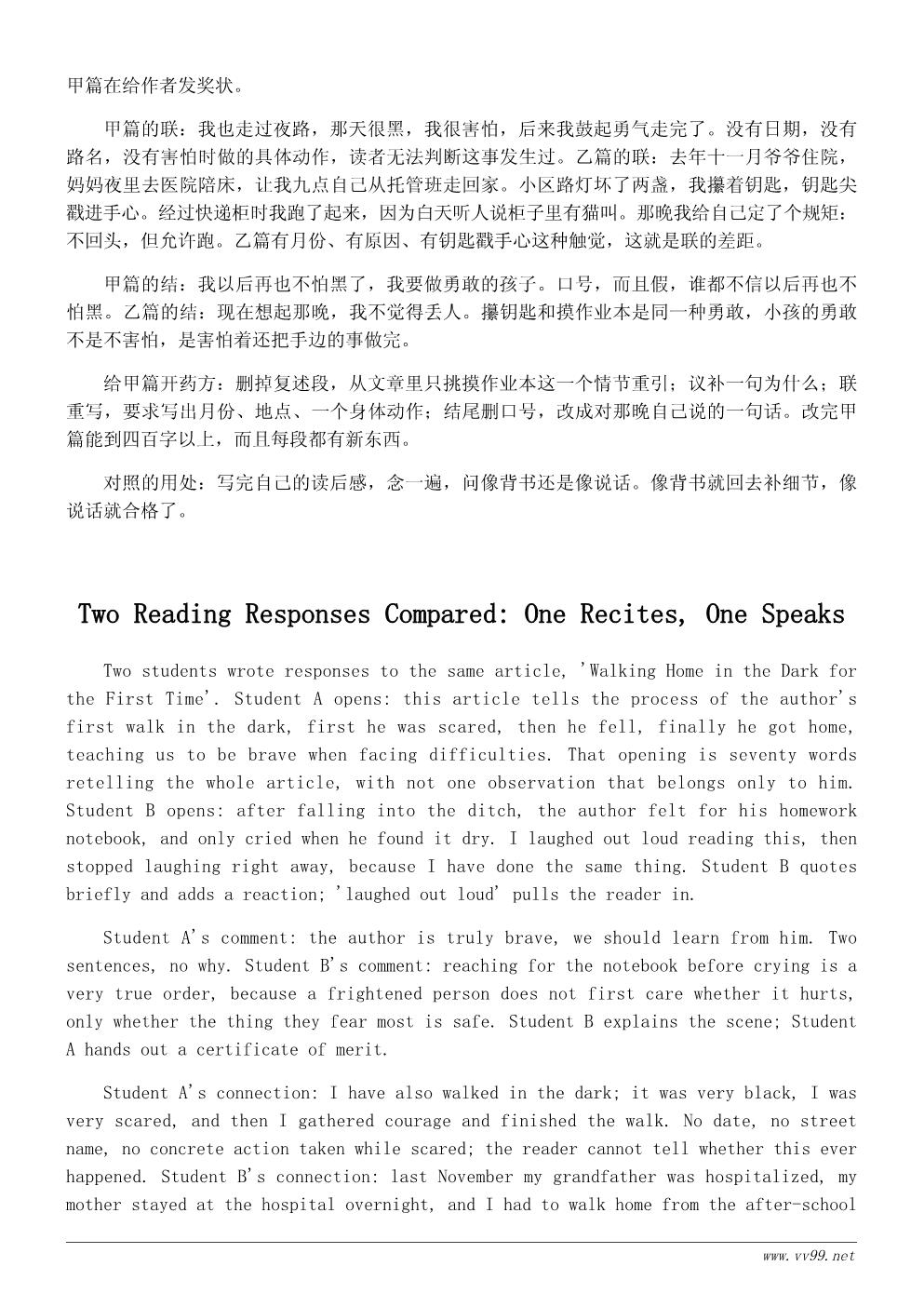
甲篇的联:我也走过夜路,那天很黑,我很害怕,后来我鼓起勇气走完了。没有日期,没有路名,没有害怕时做的具体动作,读者无法判断这事发生过。乙篇的联:去年十一月爷爷住院,妈妈夜里去医院陪床,让我九点自己从托管班走回家。小区路灯坏了两盏,我攥着钥匙,钥匙尖戳进手心。经过快递柜时我跑了起来,因为白天听人说柜子里有猫叫。那晚我给自己定了个规矩:不回头,但允许跑。乙篇有月份、有原因、有钥匙戳手心这种触觉,这就是联的差距。
甲篇的结:我以后再也不怕黑了,我要做勇敢的孩子。口号,而且假,谁都不信以后再也不怕黑。乙篇的结:现在想起那晚,我不觉得丢人。攥钥匙和摸作业本是同一种勇敢,小孩的勇敢不是不害怕,是害怕着还把手边的事做完。
给甲篇开药方:删掉复述段,从文章里只挑摸作业本这一个情节重引;议补一句为什么;联重写,要求写出月份、地点、一个身体动作;结尾删口号,改成对那晚自己说的一句话。改完甲篇能到四百字以上,而且每段都有新东西。
对照的用处:写完自己的读后感,念一遍,问像背书还是像说话。像背书就回去补细节,像说话就合格了。
Two Reading Responses Compared: One Recites, One Speaks
Two students wrote responses to the same article, 'Walking Home in the Dark for the First Time'. Student A opens: this article tells the process of the author's first walk in the dark, first he was scared, then he fell, finally he got home, teaching us to be brave when facing difficulties. That opening is seventy words retelling the whole article, with not one observation that belongs only to him. Student B opens: after falling into the ditch, the author felt for his homework notebook, and only cried when he found it dry. I laughed out loud reading this, then stopped laughing right away, because I have done the same thing. Student B quotes briefly and adds a reaction; 'laughed out loud' pulls the reader in.
Student A's comment: the author is truly brave, we should learn from him. Two sentences, no why. Student B's comment: reaching for the notebook before crying is a very true order, because a frightened person does not first care whether it hurts, only whether the thing they fear most is safe. Student B explains the scene; Student A hands out a certificate of merit.
Student A's connection: I have also walked in the dark; it was very black, I was very scared, and then I gathered courage and finished the walk. No date, no street name, no concrete action taken while scared; the reader cannot tell whether this ever happened. Student B's connection: last November my grandfather was hospitalized, my mother stayed at the hospital overnight, and I had to walk home from the after-school class by myself at nine. Two street lamps in our compound were broken; I gripped my key, its tip pressing into my palm. I started running when I passed the parcel lockers, because during the day I had heard someone say cats meowed inside them. That night I made myself a rule: no looking back, but running is allowed. Student B has a month, a reason, and the touch of a key pressing into a palm. That is the gap in the Connect step.
Student A's conclusion: from now on I will never be afraid of the dark; I will be a brave child. A slogan, and a false one; nobody believes never afraid again. Student B's conclusion: thinking of that night now, I do not find it shameful. Gripping the key and feeling for the notebook are the same kind of bravery; a child's bravery is not being unafraid, but finishing the task at hand while afraid.
The prescription for Student A: delete the retelling paragraph and quote only the notebook scene; add a why to the comment; rewrite the connection with a required month, place, and one body action; replace the slogan ending with one sentence said to himself that night. After these fixes, Student A's piece passes four hundred words, and every paragraph carries something new.
The use of comparison: after writing your own response, read it aloud and ask whether it sounds like reciting a text or like speaking. If it sounds like reciting, go back and add details; if it sounds like speaking, it passes.
小提示:上面此文档内容仅展示完整文档里的部分内容, 若需要下载完整文档请 点击免费下载完整文档 。