文章内容
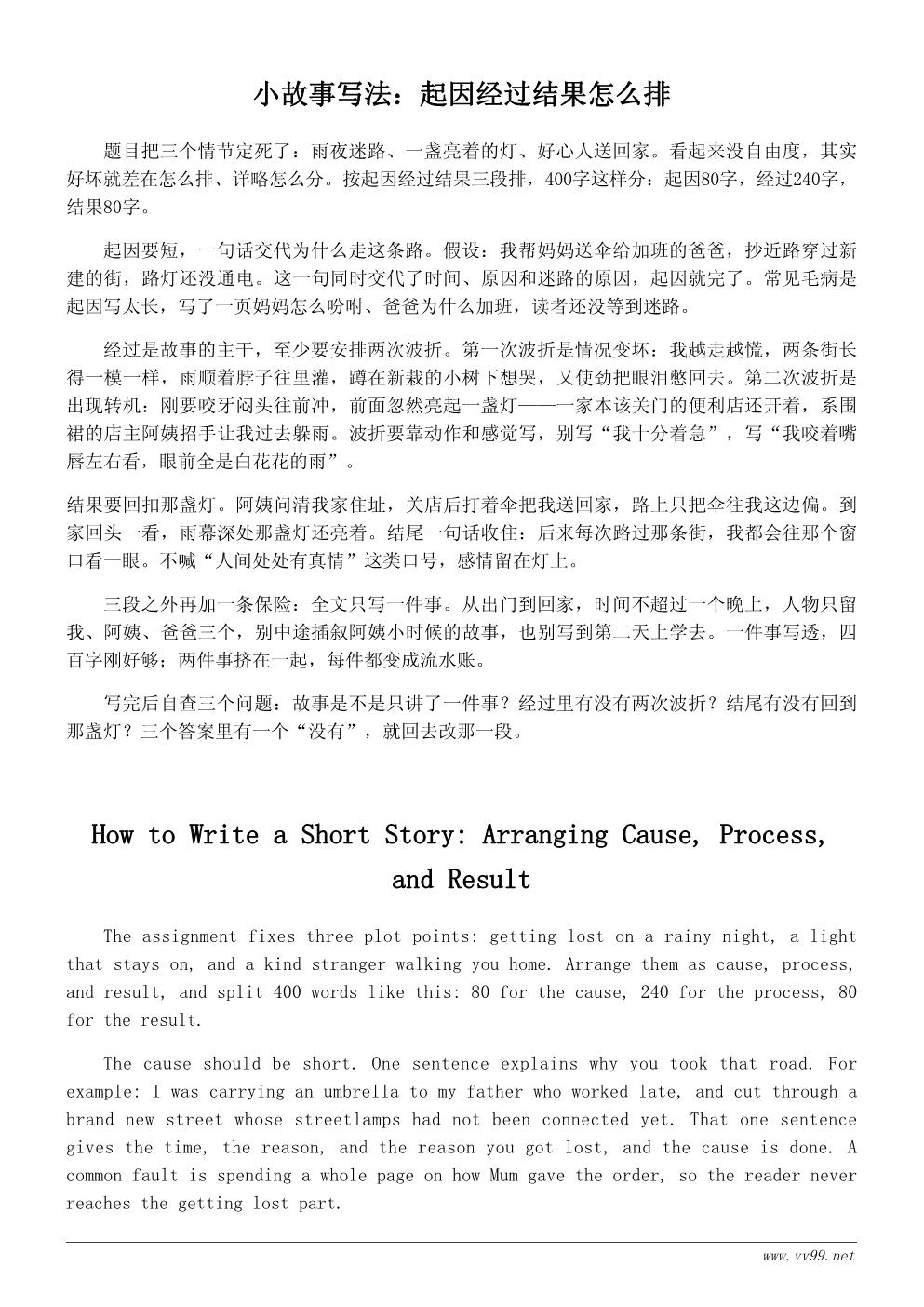
小故事写法:起因经过结果怎么排
题目把三个情节定死了:雨夜迷路、一盏亮着的灯、好心人送回家。看起来没自由度,其实好坏就差在怎么排、详略怎么分。按起因经过结果三段排,400字这样分:起因80字,经过240字,结果80字。
起因要短,一句话交代为什么走这条路。假设:我帮妈妈送伞给加班的爸爸,抄近路穿过新建的街,路灯还没通电。这一句同时交代了时间、原因和迷路的原因,起因就完了。常见毛病是起因写太长,写了一页妈妈怎么吩咐、爸爸为什么加班,读者还没等到迷路。
经过是故事的主干,至少要安排两次波折。第一次波折是情况变坏:我越走越慌,两条街长得一模一样,雨顺着脖子往里灌,蹲在新栽的小树下想哭,又使劲把眼泪憋回去。第二次波折是出现转机:刚要咬牙闷头往前冲,前面忽然亮起一盏灯——一家本该关门的便利店还开着,系围裙的店主阿姨招手让我过去躲雨。波折要靠动作和感觉写,别写“我十分着急”,写“我咬着嘴唇左右看,眼前全是白花花的雨”。
结果要回扣那盏灯。阿姨问清我家住址,关店后打着伞把我送回家,路上只把伞往我这边偏。到家回头一看,雨幕深处那盏灯还亮着。结尾一句话收住:后来每次路过那条街,我都会往那个窗口看一眼。不喊“人间处处有真情”这类口号,感情留在灯上。
三段之外再加一条保险:全文只写一件事。从出门到回家,时间不超过一个晚上,人物只留我、阿姨、爸爸三个,别中途插叙阿姨小时候的故事,也别写到第二天上学去。一件事写透,四百字刚好够;两件事挤在一起,每件都变成流水账。
写完后自查三个问题:故事是不是只讲了一件事?经过里有没有两次波折?结尾有没有回到那盏灯?三个答案里有一个“没有”,就回去改那一段。
How to Write a Short Story: Arranging Cause, Process, and Result
The assignment fixes three plot points: getting lost on a rainy night, a light that stays on, and a kind stranger walking you home. Arrange them as cause, process, and result, and split 400 words like this: 80 for the cause, 240 for the process, 80 for the result.
The cause should be short. One sentence explains why you took that road. For example: I was carrying an umbrella to my father who worked late, and cut through a brand new street whose streetlamps had not been connected yet. That one sentence gives the time, the reason, and the reason you got lost, and the cause is done. A common fault is spending a whole page on how Mum gave the order, so the reader never reaches the getting lost part.
The process is the trunk of the story and needs at least two turns. The first turn makes things worse: every street looks the same, rain runs down my neck, and I squat under a young tree wanting to cry but forcing the tears back. The second turn brings a change: just as I decide to charge ahead blindly, a light comes on ahead — a convenience store that should have closed is still open, and the shopkeeper in an apron waves me over. Write the turns with action and feeling. Do not write I was very anxious; write I bit my lip and looked around, and all I could see was white sheets of rain.
The result must return to the light. The shopkeeper asks where I live and walks me home under her umbrella after closing, tilting it toward me the whole way. When I get home and look back, the light is still glowing deep in the curtain of rain. End with one line: every time I pass that street now, I glance at that window. Do not shout slogans about kindness everywhere; keep the feeling on the lamp.
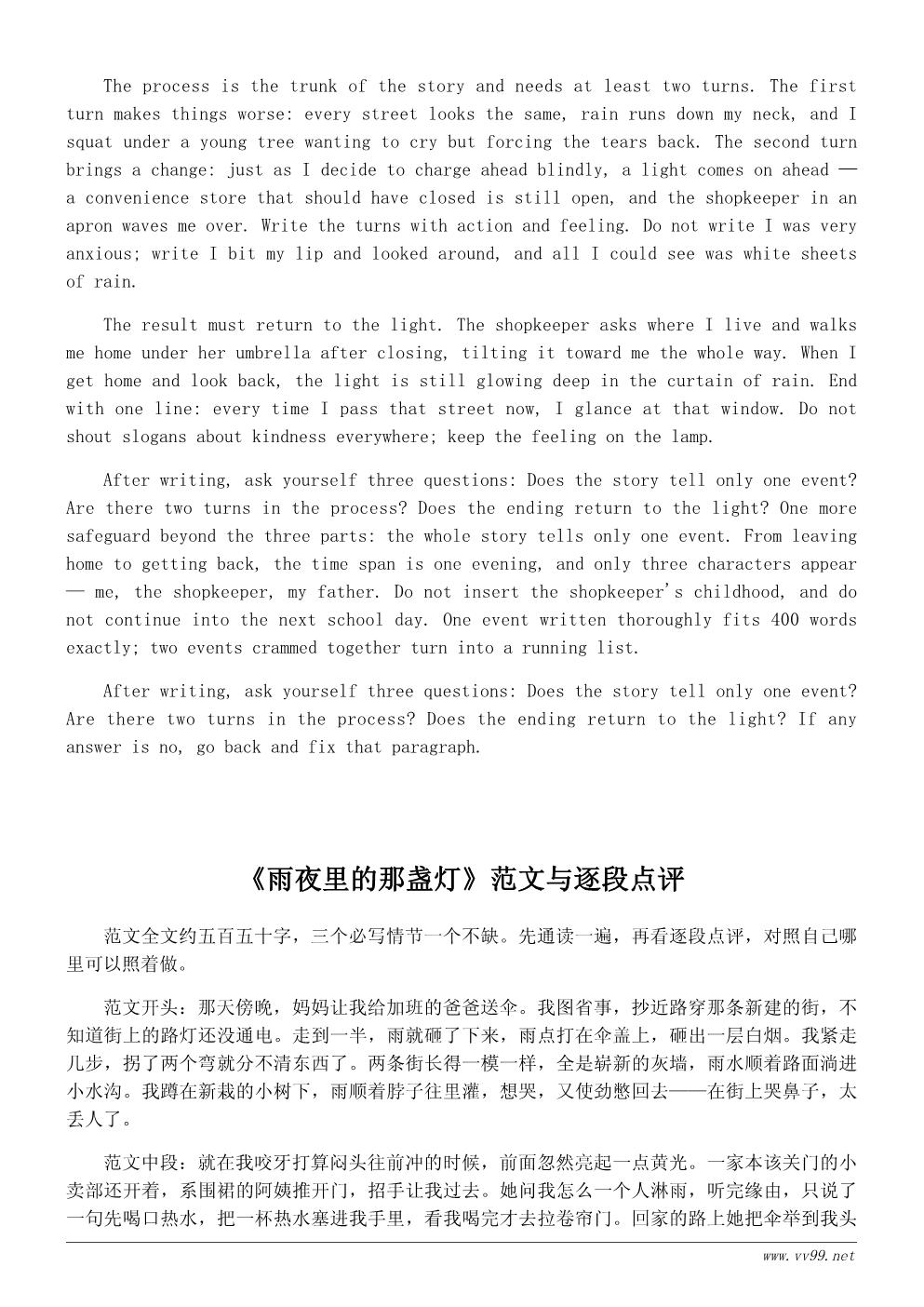
After writing, ask yourself three questions: Does the story tell only one event? Are there two turns in the process? Does the ending return to the light? One more safeguard beyond the three parts: the whole story tells only one event. From leaving home to getting back, the time span is one evening, and only three characters appear — me, the shopkeeper, my father. Do not insert the shopkeeper's childhood, and do not continue into the next school day. One event written thoroughly fits 400 words exactly; two events crammed together turn into a running list.
After writing, ask yourself three questions: Does the story tell only one event? Are there two turns in the process? Does the ending return to the light? If any answer is no, go back and fix that paragraph.
《雨夜里的那盏灯》范文与逐段点评
范文全文约五百五十字,三个必写情节一个不缺。先通读一遍,再看逐段点评,对照自己哪里可以照着做。
范文开头:那天傍晚,妈妈让我给加班的爸爸送伞。我图省事,抄近路穿那条新建的街,不知道街上的路灯还没通电。走到一半,雨就砸了下来,雨点打在伞盖上,砸出一层白烟。我紧走几步,拐了两个弯就分不清东西了。两条街长得一模一样,全是崭新的灰墙,雨水顺着路面淌进小水沟。我蹲在新栽的小树下,雨顺着脖子往里灌,想哭,又使劲憋回去——在街上哭鼻子,太丢人了。
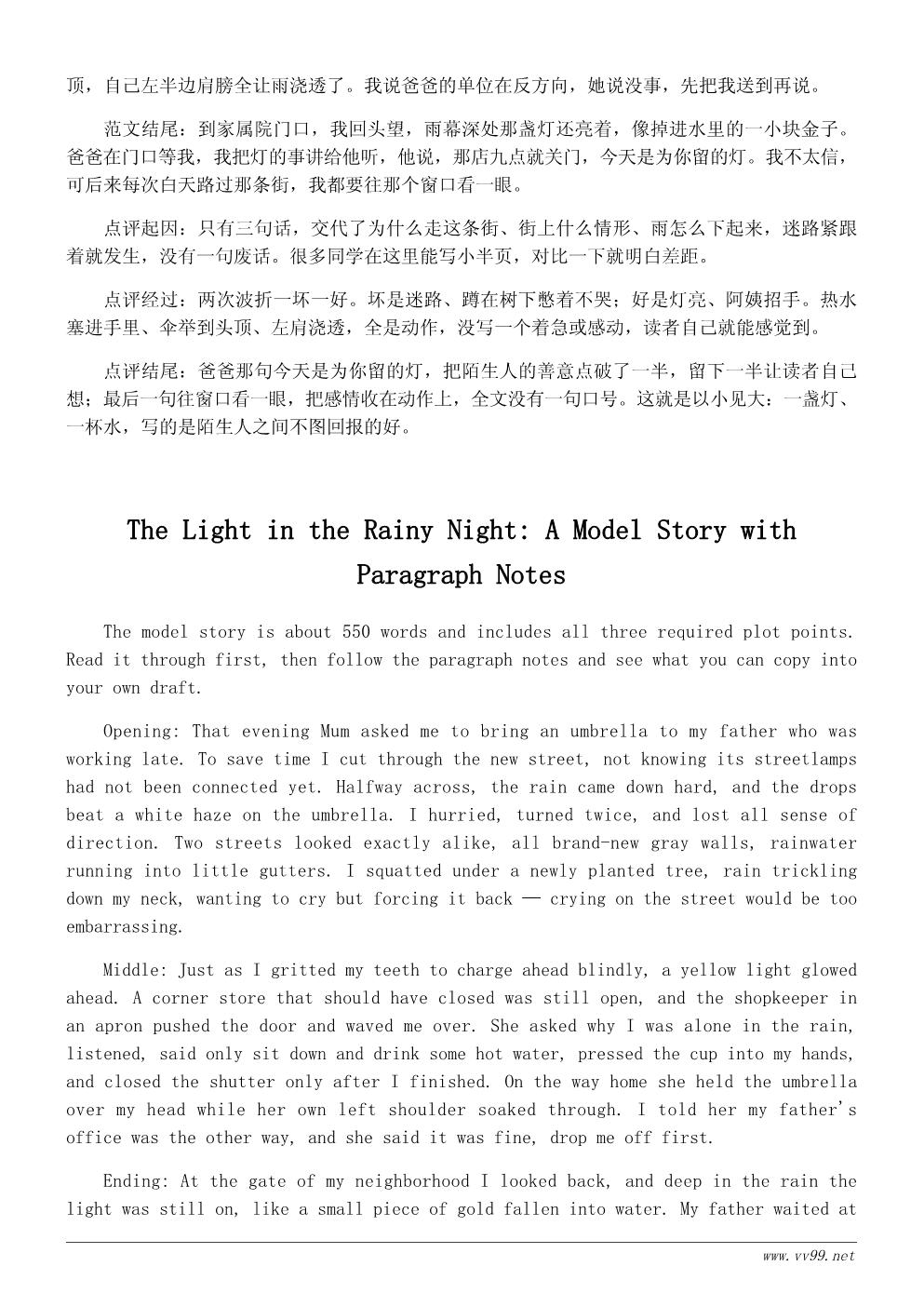
范文中段:就在我咬牙打算闷头往前冲的时候,前面忽然亮起一点黄光。一家本该关门的小卖部还开着,系围裙的阿姨推开门,招手让我过去。她问我怎么一个人淋雨,听完缘由,只说了一句先喝口热水,把一杯热水塞进我手里,看我喝完才去拉卷帘门。回家的路上她把伞举到我头顶,自己左半边肩膀全让雨浇透了。我说爸爸的单位在反方向,她说没事,先把我送到再说。
范文结尾:到家属院门口,我回头望,雨幕深处那盏灯还亮着,像掉进水里的一小块金子。爸爸在门口等我,我把灯的事讲给他听,他说,那店九点就关门,今天是为你留的灯。我不太信,可后来每次白天路过那条街,我都要往那个窗口看一眼。
点评起因:只有三句话,交代了为什么走这条街、街上什么情形、雨怎么下起来,迷路紧跟着就发生,没有一句废话。很多同学在这里能写小半页,对比一下就明白差距。
点评经过:两次波折一坏一好。坏是迷路、蹲在树下憋着不哭;好是灯亮、阿姨招手。热水塞进手里、伞举到头顶、左肩浇透,全是动作,没写一个着急或感动,读者自己就能感觉到。
点评结尾:爸爸那句今天是为你留的灯,把陌生人的善意点破了一半,留下一半让读者自己想;最后一句往窗口看一眼,把感情收在动作上,全文没有一句口号。这就是以小见大:一盏灯、一杯水,写的是陌生人之间不图回报的好。
The Light in the Rainy Night: A Model Story with Paragraph Notes
The model story is about 550 words and includes all three required plot points. Read it through first, then follow the paragraph notes and see what you can copy into your own draft.
Opening: That evening Mum asked me to bring an umbrella to my father who was working late. To save time I cut through the new street, not knowing its streetlamps had not been connected yet. Halfway across, the rain came down hard, and the drops beat a white haze on the umbrella. I hurried, turned twice, and lost all sense of direction. Two streets looked exactly alike, all brand-new gray walls, rainwater running into little gutters. I squatted under a newly planted tree, rain trickling down my neck, wanting to cry but forcing it back — crying on the street would be too embarrassing.
Middle: Just as I gritted my teeth to charge ahead blindly, a yellow light glowed ahead. A corner store that should have closed was still open, and the shopkeeper in an apron pushed the door and waved me over. She asked why I was alone in the rain, listened, said only sit down and drink some hot water, pressed the cup into my hands, and closed the shutter only after I finished. On the way home she held the umbrella over my head while her own left shoulder soaked through. I told her my father's office was the other way, and she said it was fine, drop me off first.
Ending: At the gate of my neighborhood I looked back, and deep in the rain the light was still on, like a small piece of gold fallen into water. My father waited at the gate. I told him about the lamp, and he said that store closes at nine — tonight it stayed on for you. I half believed him, but ever since, every time I pass that street in daylight, I glance at that window.
Note on the cause: only three sentences — why I took that street, what it looked like, how the rain started — and getting lost follows at once. Many students spend nearly a page here; the contrast shows the gap.
Note on the process: two turns, one worse and one better. Worse: lost, squatting, holding back tears. Better: the light, the wave. The cup pressed into my hands, the umbrella over my head, the soaked shoulder are all actions; the words anxious or moved never appear, yet the reader feels them.
Note on the ending: the father's line, tonight it stayed on for you, reveals half of the stranger's kindness and leaves the half for the reader. The last line, glancing at the window, closes the feeling on an action, with no slogan anywhere. That is seeing the large through the small: one lamp and one cup of water speak of goodwill that asks nothing back.
小提示:上面此文档内容仅展示完整文档里的部分内容, 若需要下载完整文档请 点击免费下载完整文档 。