文章内容
灯下共读草房子
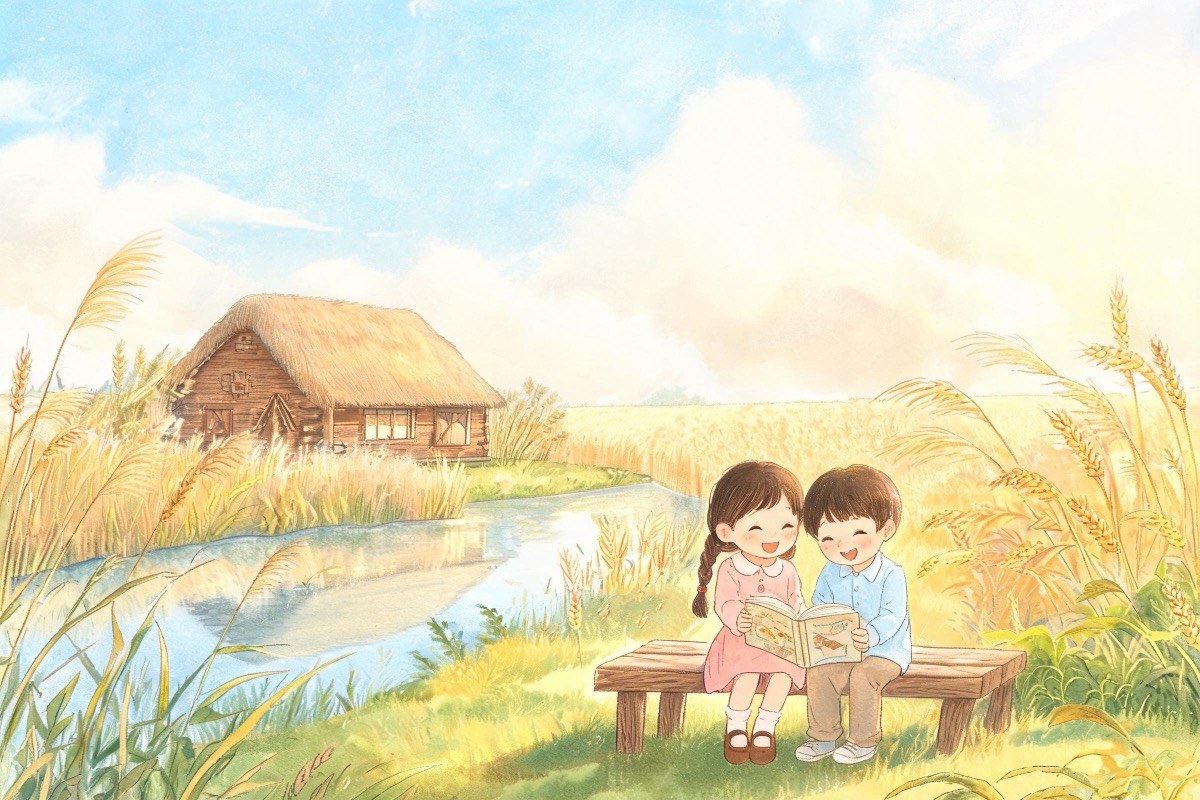
儿子四年级那年,师生共读书目里有《草房子》,我也找来一本,晚饭后各捧一本,坐在客厅两盏灯下。起初是我陪他读,读了几晚我发现,是他陪着我重新读一遍。
读到杜小康家道中落、在校门口摆小摊那几章,儿子忽然把书扣在膝盖上,问我,杜小康为什么去摆摊啊,他不上学了吗。我没急着答,反问他,你觉得他愿意去吗。儿子想了很久,说,不愿意,可是他爸破产了,总得有人挣钱。我又问,那你觉得他丢人吗。儿子说,不丢人,他摆摊还带着课本,晚上照着路灯背书。那晚我们聊到杜小康的白手套,聊到大人也会把日子过坏,过坏了接着过。儿子最后说,杜小康比他班上传纸条的同学厉害多了。我点头,顺手在书页角上折了一道。共读的好处就在这儿:问题从他那儿来,答案从我们俩中间长出来,比我一个人看书时想得到的都新鲜。
讨论秃鹤那几章,我们吵起来了。儿子坚持秃鹤在汇操里故意捣乱不对,我说不然呢,他被笑了六年。儿子说,可那是一年级全体同学的比赛。我们谁也说不服谁,最后各让一步:秃鹤委屈是真的,闯祸也是真的,两件事不用抵消。儿子合上那章时嘟囔了一句,要是我坐他旁边,我不笑。就这一句,我觉得这书共读值了。
最意外的是读完那晚。儿子洗完头,头发湿着,忽然站在卫生间门口说,妈妈,我想变勇敢。我问,你想勇敢做什么。他想了半天,说,现在还没有想好的事,就是想先变勇敢,事情来了才接得住。我一时竟答不上来。我原以为共读是我给他讲书,到头来是他替我翻开了书里我当年没看见的那几页。灯下各捧一本书的晚上,往后我还想再多一些。
Reading Grass House Together Under the Lamp
The year my son was in fourth grade, the school's shared reading list included Grass House. I got myself a copy too. After dinner we each held a book, sitting under two lamps in the living room. At first I thought I was keeping him company in reading. After a few evenings I realized he was keeping me company in rereading it.
When we reached the chapters where Du Xiaokang's family falls on hard times and he sets up a small stall by the school gate, my son suddenly clapped the book shut over his knees and asked, why does Du Xiaokang run a stall, does he stop going to school. I did not answer right away. I asked back, do you think he wants to. He thought a long time and said, no, but his father went bankrupt, someone has to earn money. I asked again, do you think it is shameful. He said, no, he keeps his textbooks at the stall and recites lessons under the streetlight at night. That night we talked about Du Xiaokang's white gloves, about how grown-ups can wreck their days too, and go on living once they are wrecked. My son ended by saying Du Xiaokang was far more impressive than the classmates who pass notes in his class. I nodded and folded a corner of the page. This is the gift of shared reading: the questions come from him, and the answers grow between the two of us, fresher than anything I would have thought up reading alone.
We argued over the chapters about Bald Crane. My son insisted that Bald Crane sabotaging the drill competition was wrong. I said why not, the boy had been laughed at for six years. My son said but that was a contest for the whole grade. Neither of us convinced the other, and in the end we each gave ground: Bald Crane's grievance is real, and his mischief is real too, and the two do not cancel each other out. Closing that chapter my son muttered one sentence: if I sat next to him, I would not laugh. For that one sentence alone, the shared reading was worth it.
The biggest surprise came the night he finished the book. With his hair still wet from washing, he suddenly stood at the bathroom door and said, Mom, I want to become brave. I asked, brave for what. He thought a long while and said, there is no particular thing yet, I just want to be brave first, so that when something comes I can hold it. For a moment I had no answer at all. I had thought the shared reading meant me explaining the book to him. In the end he turned, for me, the pages I had missed when I was his age. I would like many more evenings of one book each under the lamps.
孩子的三个问题
我是语文老师,也是妈妈。带完一轮《草房子》的共读课,家里又开了一轮,读者换成我儿子。一个学期下来,他问了我三个问题,我把它们记在一个蓝皮本上,比我的教案还珍贵。
第一个问题出在杜小康。读到油麻地小学门口那个小摊,他问,杜小康为什么摆摊。我准备了一肚子答案:责任、担当、逆境成长。他听不进去这些词,他自己给出了答案:因为他爸赔光了,杜小康家得吃饭。然后他补了一句让我记到现在的反问,老师你说过,摔了跤不趴着的就是好孩子,杜小康算不算。我说算。他说,那为什么以前他家最阔的时候,没人夸他,现在摆摊了大家才夸他。这一问,把我问住了。大人的表扬确实常常迟到,还常常挑时候。
第二个问题关于秃鹤。班里讨论过,家里又讨论。他的问题很刁:秃鹤最后帮了集体,大家才不笑他,那大家到底是喜欢秃鹤,还是喜欢有用的秃鹤。我愣了愣,承认这个问题老师也没想好。我们翻了回去,数了数秃鹤被笑的次数,又数了他帮集体的次数,一比一,谁也不欠谁。儿子说,那我不等有用才对人好。我在教案上写不进这一句,但它进了我们家。
第三个问题在读完那晚。他问,书里谁最勇敢。我说不上来,桑桑敢拆柜门,纸月敢走夜路,杜小康敢摆摊,秦大奶奶敢跳水。他说,那我呢,我什么时候能勇敢。我说,勇敢不是攒出来的,是事情来了你往前迈那一步。他哦了一声,去刷牙了。过了一会儿传来他的声音,那我先练迈小步。我站在门外笑。共读一学期,孩子问的三个问题,一个比一个深。我教他读句子,他教我读书。
Three Questions from a Child
I am a Chinese teacher and also a mother. After finishing one round of shared reading of Grass House with my class, I started another round at home, this time with my son as the reader. Over one school term he asked me three questions. I wrote them in a blue notebook, and that notebook is worth more than my lesson plans.
The first question came from Du Xiaokang. When we reached the little stall at the gate of Youma Di Primary School, he asked, why does Du Xiaokang run a stall. I had a belly full of answers ready: responsibility, bearing up, growing through adversity. He would not take in such words. He answered it himself: because his father lost everything, and the family has to eat. Then he added a counter-question I remember to this day. You told us, he said, that a good child is one who gets up after falling. Is Du Xiaokang one. I said yes. He said, then why did nobody praise him when his family was richest, and everyone praises him only now that he runs a stall. That question stopped me cold. Grown-up praise really does arrive late, and it really does pick its moments.
The second question was about Bald Crane. We discussed him at school, then again at home. His question was sharp: in the end Bald Crane helped the class, and only then did people stop laughing at him. So do people like Bald Crane, or do they like a useful Bald Crane. I froze for a moment and admitted the teacher had not figured that one out either. We flipped back and counted how many times Bald Crane was laughed at, then counted how many times he helped the group. One to one, nobody owes anybody. My son said, then I will not wait until someone is useful before being good to them. That sentence cannot go into a lesson plan, but it moved into our family.
The third question came the night he finished the book. He asked, who is the bravest person in the story. I could not say. Sangsang dares to pry off cabinet doors, Zhiyue dares to walk the dark road, Du Xiaokang dares to run the stall, Grandma Qin dares to dive into the river. He said, what about me, when do I get to be brave. I said bravery is not saved up like coins. It is the one step forward when the moment arrives. He said oh, and went off to brush his teeth. A while later his voice came out of the bathroom: then I will practice small steps first. I stood outside the door and laughed. One term of shared reading, three questions, each deeper than the last. I taught him to read sentences. He taught me to read books.
小提示:上面此文档内容仅展示完整文档里的部分内容, 若需要下载完整文档请 点击免费下载完整文档 。