文章内容
草房子里的光
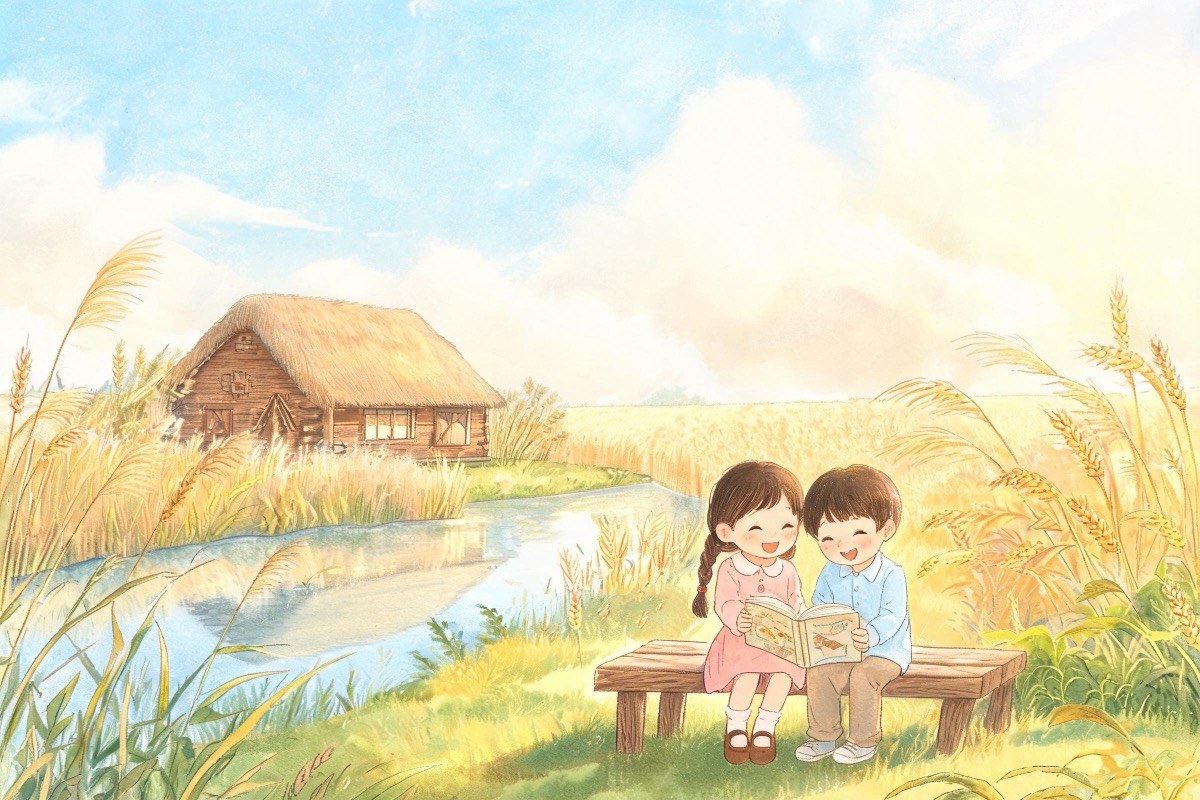
油麻地的房子是草顶的。太阳一斜,整片草房子就泛出金黄,像谁把一炉火慢慢封在了屋顶上。我读《草房子》,最先记住的不是哪个人,是这层颜色。苦是苦的日子,可书里处处有光,光从草缝里漏出来,落在每一个孩子身上。清晨那层光是淡黄的,中午是金黄,到了傍晚便烧成暗红,一天里换三色,却始终没有断过。
光最先落在奔跑的桑桑身上。书里那些秋天,他举着根竹竿满村子跑,风把他的衣角掀起来,鸽子在他头顶盘旋,他的笑声一路撒在河堤上。后来他病了,跑不动了,坐在轮椅上让人推着走,可他的眼睛还是亮的,亮得像藏着那根竹竿、那群鸽子。病好了以后他又跑起来,人瘦了,步子却比从前稳。我读到他重新跑起来那一段,忽然明白:光不是没有灭过,是灭了以后,他自己又把它点着了。
光也落在杜小康的摊子上。他家败了,红门板抵了债,他去芦苇荡放过鸭,回来时在油麻地小学门口摆起一个小摊,卖铅笔、卖橡皮、卖糖果。书里写他站在摊子后头,衣服洗得发白,腰板却是直的。孩子们围过去,他一样一样地拿给人看,不躲,也不诉苦。曾经全村最神气的孩子,把最难堪的日子过成了井然有序的营生。那摊子摆在放学的路口,夕阳照着几支铅笔、几块橡皮,照得那么安静。我觉得那是我读过的书里最体面的一张桌子。
而草房子本身,就是油麻地攒下来的光。麻哥纸糊的墙,草铺的顶,洪水来了它塌过,孩子们一块砖一块砖又把它垒回去。教室里读书声一起,芦苇就朝这边倒过来听。房子是穷的,书声是富的。
合上书,窗外是城市的夜,霓虹把天映得发红。可我闭上眼,还是那片草顶上的金黄。我想,好书的用处大概就在这里:它把别人童年里的光取一小束来,放进你这里,不亮得晃眼,就是留着,等你哪天走夜路,它在你心里亮一下。油麻地的光,我收下了。
The Light Inside the Grass Houses
The houses of Youmadi have thatched roofs. When the sun slants, the whole row of grass houses turns golden, as if someone had slowly sealed a furnace of fire into the rooftops. Reading Grass House, the first thing I remember is not any person but this color. The days are hard, yet light is everywhere in the book, leaking through the gaps in the straw, falling on every child.
The light first falls on Sangsang as he runs. In those autumns of the book he runs across the village holding a bamboo pole, the wind flipping his hem, doves wheeling above his head, his laughter scattered all along the river bank. Then he fell ill and could not run, sitting in a wheelchair pushed by others, yet his eyes stayed bright, bright as if that bamboo pole and that flock of doves were still hidden inside them. After he recovered he ran again, thinner, but with steadier steps than before. Reading the part where he runs again, I suddenly understood: the light is not something that never went out. It went out, and he lit it again himself.
The light also falls on Du Xiaokang's stall. His family ruin came, the red door panels went to pay the debt, he herded ducks in the reed marsh, and when he returned he set up a small stall at the gate of Youmadi Primary School, selling pencils, erasers, and candies. The book says he stood behind the stall in a washed-out pale shirt, but his back was straight. The children gathered around, and he took things out one by one for them to see, neither hiding nor complaining. The proudest boy in the village turned the most humiliating days into an orderly living. The stall stood at the crossroads where school let out, the setting sun shining on a few pencils and a few erasers, shining so quietly. I think it is the most dignified table in any book I have ever read.
And the grass houses themselves are the gathered light of Youmadi. Walls papered with hemp-bark paper, roofs of straw. When the flood came they collapsed, and the children piled the bricks back one by one. When reading voices rise in the classroom, the reeds bend this way to listen. The houses are poor; the sound of reading is rich.
I close the book. Outside the window is the city at night, neon reddening the sky. But when I shut my eyes, it is still that gold on the thatched roofs. A good book, I think, is useful exactly here: it takes a small bundle of light from someone else's childhood and puts it in you—not bright enough to dazzle, just kept, so that on some night when you walk in the dark, it lights up once inside your heart. The light of Youmadi, I have received it.
灯下,我把草房子读给孩子听
晚饭后,女儿抱着《草房子》钻进被窝,非要我读。她翻到油麻地那一页,指着插图上的草顶房子问:这房子会漏雨吗。我说会。她又问:那为什么还叫它家。我没答上来,只好低头往下读。书里的草房子确实漏雨,雨点落在麻纸糊的墙上,鼓起一个个小包,孩子们仰头看,谁也不恼。教室漏雨,先生就领他们大声读书,说读书声能把雨声压下去。女儿听到这里把被子往上拉了拉,像怕雨淋着书里的人。
读到桑桑举着竹竿满村跑,女儿忽然攥紧了被角。她紧张的样子像在看一场要输的比赛。后来桑桑生病跑不动了,她小声问:他还能跑吗。我说你往下听。病好了,桑桑重新跑起来,风又掀起他的衣角,女儿在被窝里轻轻跳了一下,像那一跑是跑给她看的。孩子的眼睛是一架最老实的秤,书里那点好,她全接得住。读到这一句我自己倒先停了,低头把那一行又看一遍,嗓子有点紧。
最难讲的是杜小康。他家的红门板被债主卸走那晚,女儿把书扣在胸口,半天不翻开。缓过来以后她问:他后来吃什么。我接着往下念:他在小学门口摆了个摊,卖铅笔和糖果,腰板直直的。女儿想了很久,问:他能赚很多钱吗。我说不知道,可他没伸手要过谁的。女儿点点头,第二天一早,把她攒的硬币数出一半放进存钱罐,说这是给杜小康进货的。我知道她不是给书里的人,她是把这份体面收进了自己心里。
我原以为是我在给孩子读书,读着读着才明白,是孩子替我把书里的光一处一处指出来。草房子漏雨,她说那是房子在喝水;桑桑跑,她攥拳;杜小康摆摊,她存硬币。大人读书看命运,孩子读书看人心,而人心那一层,本来就该先讲给她听。
灯熄了,她的呼吸慢慢匀了。书摊在枕边,草房子在灯影里立着。我替她掖好被角,心里想:这一夜读进去的东西,够我们俩受用很久。
Under the Lamp, I Read the Grass House to My Child
After dinner my daughter crawled into bed hugging Grass House and insisted that I read to her. She turned to the page about Youmadi, pointed at the thatched house in the picture and asked: does this house leak when it rains. I said yes. She asked again: then why is it still called home. I had no answer, so I bent my head and kept reading. The grass houses in the book do leak. Raindrops beat on the hemp-paper walls, swelling little bubbles, and the children look up at them, nobody angry. When the classroom leaks, the teacher leads them to read aloud, saying the sound of reading can press the sound of rain down. Hearing this, my daughter pulled the quilt up a little, as if afraid the rain would soak the people inside the book.
When I read the part where Sangsang runs across the village holding a bamboo pole, my daughter suddenly gripped the corner of the quilt. Her tension looked like watching a game about to be lost. Later Sangsang fell ill and could not run, and she whispered: can he still run. I said, listen on. After he recovered, Sangsang ran again, the wind flipping his hem once more, and my daughter gave a little jump under the quilt, as if that run were performed for her alone. A child's eyes are the most honest of scales; every bit of goodness in a book, she can hold.
The hardest part to read was Du Xiaokang. On the night the creditor carried off his family's red door panels, my daughter pressed the book shut against her chest and would not open it for a long while. When she calmed down she asked: what did he eat afterward. I read on: he set up a stall at the school gate, selling pencils and candies, his back straight. She thought for a long time, then asked: can he earn much money. I said I did not know, but he never once reached out his hand to anyone. She nodded, and early the next morning she counted out half of her saved coins into the piggy bank, saying this is capital for Du Xiaokang's goods. I knew she was not giving to a person in a book; she was folding that dignity into her own heart.
I thought I was reading the book to my child. Reading on, I understood: it was she pointing out to me, one by one, the lights inside the book. The grass house leaks, and she says the house is drinking water; Sangsang runs, and she clenches her fists; Du Xiaokang sets up his stall, and she saves coins. Grown-ups read for fate, children read for the human heart, and the layer of the human heart was always the one to tell her first.
The lamp went out; her breathing evened out slowly. The book lay open at her pillow, the grass houses standing in the afterglow. I tucked the quilt around her and thought: what we read into ourselves tonight will serve us both for a long time.
小提示:上面此文档内容仅展示完整文档里的部分内容, 若需要下载完整文档请 点击免费下载完整文档 。