文章内容
纸月的橡皮
读《草房子》,在我心里停留最久的人不是桑桑,是纸月。
纸月住在河那边的油麻地外婆家,上学要走很长一段路,过一座桥,再经过一片芦苇荡。天还没大亮她就出门,露水把鞋尖浸湿了她还在走。我家离校门只隔一条马路,我却天天赖床,还总嫌天冷。纸月从来不抱怨路远。她安安静静地走,书包在背上一颠一颠的,好像那条长长的路本来就是她日子的一部分。
最让我心里一紧的,是纸月帮外婆在庙会上卖鸡蛋那段。外婆的手上全是老茧,纸月蹲在鸡蛋筐旁边,小声地招呼过路人。天气冷,她的手指冻得通红,肿得像一根根小红萝卜,也不肯回家去烤火。我想起有一回妈妈生病,我陪她去药房,只在门口等了十几分钟,就嫌风大、嫌脚冷,直嚷着要走。纸月和我差不多大,她却能守着那几筐鸡蛋守一整天。
借橡皮的事其实很小。那天上课,同桌的橡皮掉在地上,滚到了课桌底下。同桌还没反应过来,纸月已经弯下腰把它捡起来,吹掉上面的铅笔屑,悄悄放回同桌的桌角。她没有说不用谢,也不要同桌说谢谢,就像只是把一颗小石子捡回了路边。读到这儿我才明白,善良原来是不需要大声告诉别人的。
我们班里也有一个像纸月的人,叫晓雪。她每天到教室最早,不声不响地把讲台擦干净,把粉笔盒添满,再从后门把歪了的桌椅摆正。她从不告诉老师,也不在班级小结里写自己的名字。以前我觉得不出声做事等于没做,读了《草房子》我改了想法:不出声做的事,反而被人记在心里记得最牢。
现在,看见同学的笔掉在地上,我会捡起来悄悄放回他的笔袋旁边;路过楼梯看见纸屑,我会捡起来扔进垃圾桶,不喊也不邀功。我知道这些都是小事。可纸月教会我:善良不看事情多大,看的是有没有人看见的时候,你也照样去做。
Zhiyue's Eraser
When I read The Straw House, the person who stayed in my heart the longest was not Sangsang, but Zhiyue.
Zhiyue lives at her grandmother's home in Youmadi, on the far side of the river. To get to school she must walk a long road, cross a bridge, and pass a stretch of reed marsh. She leaves before the sky fully brightens, and she is still walking when the dew soaks the tips of her shoes. My family lives just one street from the school gate, yet I linger in bed every day and grumble about the cold. Zhiyue never complains about the distance. She walks quietly, her schoolbag bobbing on her back, as if that long road were simply part of her day.
The scene that tightened my heart is Zhiyue helping her grandmother sell eggs at the temple fair. Her grandmother's hands are covered with old calluses. Zhiyue squats beside the egg baskets and calls softly to the passers-by. In the cold her fingers turn red and swell like little red carrots, yet she refuses to go home to warm herself. I remembered once when my mother was ill and I waited outside the pharmacy for barely ten minutes, complaining about the wind and my cold feet, begging to leave. Zhiyue is about my age, yet she can guard those egg baskets for a whole day.
The eraser story is a small one. One day in class, my deskmate's eraser fell and rolled under the desks. Before my deskmate could react, Zhiyue had bent down, picked it up, blown off the pencil shavings, and quietly placed it back on the corner of the desk. She did not say you are welcome, and she did not wait for a thank you, as if she had only lifted a small stone back to the roadside. Reading that passage I understood: kindness does not need to be announced to others.
Our class has a Zhiyue too, a girl named Xiaoxue. She is always the first to reach the classroom. Without a word she wipes the podium clean, refills the chalk box, and straightens the crooked desks by the back door. She never tells the teacher and never writes her own name in the class log. I used to think quiet work was the same as no work. After reading The Straw House I changed my mind: what people do without making a sound is remembered the deepest.
Now, when a classmate's pen falls on the floor, I pick it up and slip it back beside the pencil case without a word. When I see scraps of paper on the stairs, I pick them up and drop them in the bin, without calling anyone over. I know these are tiny things. But Zhiyue taught me that kindness is not about how big the act is. It is about whether you still do it when nobody is watching.
纸月走过的那条上学路
合上《草房子》,我脑子里反反复复只有一条路:纸月上学走的那条路。
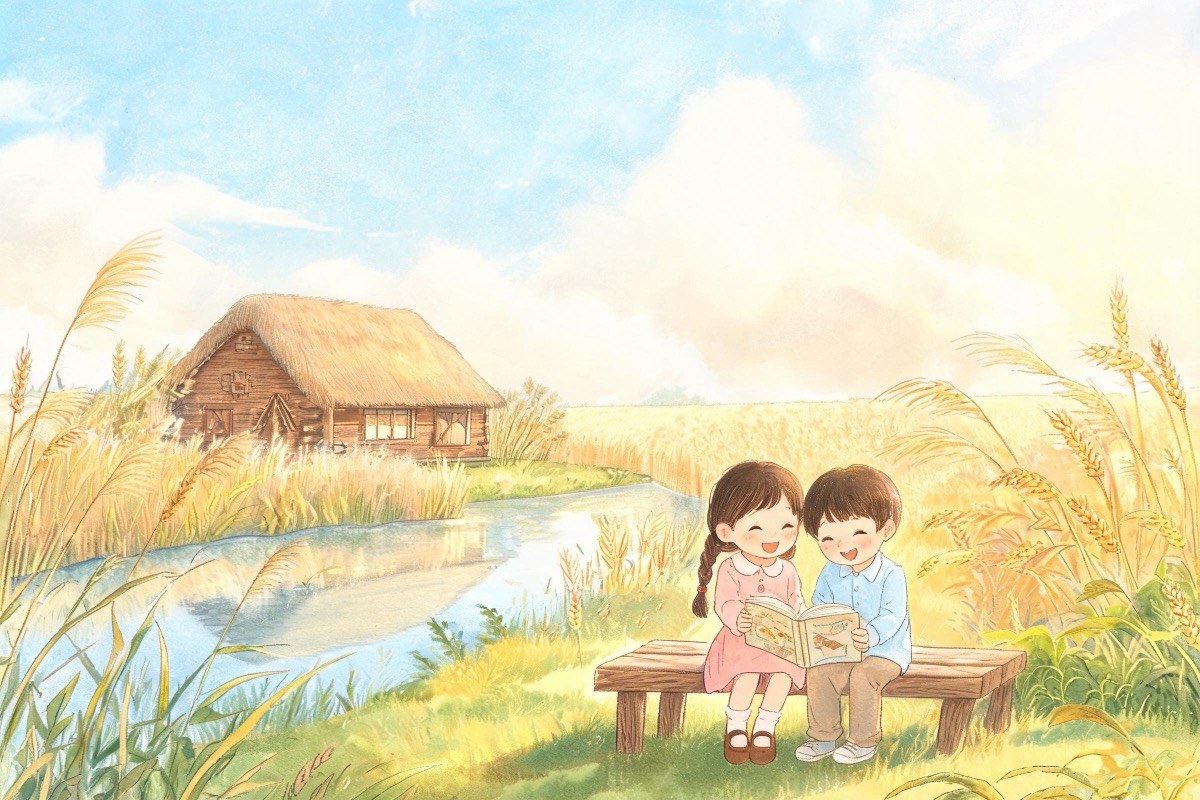
那条路在书里出现过很多次。纸月住在河那边的外婆家,每天清早出发,先走过一座窄窄的石桥,再穿过一片比人还高的芦苇荡。风一吹,芦苇沙沙地响,她的影子在雾里一闪一闪。鞋尖被露水打湿了,她不停脚;书包带子在肩上磨来磨去,她也不吭声。她就这样走了一个又一个学期,从来没有因为路远迟到过一次。
我读这段的时候,正把脚搁在椅子上跟妈妈耍赖。我家到学校只隔一条马路,绿灯亮起来走三分钟就到。可我每天早上都要妈妈催三遍,第一遍装睡,第二遍磨蹭,第三遍才拎着书包出门,嘴里还抱怨冬天太冷。纸月走的那条路,是我家的四十倍远,她却没有一句怨言。我第一次觉得,我抱怨的不是路,是我自己。
纸月的路不只是上学的路。庙会那天,她也走在去卖鸡蛋的路上:筐压在外婆的扁担上,鸡蛋一个挨一个,纸月走在旁边,两只手拢在袖子里。她的手指冻得通红,却还是凑近过路人,小声问要不要买鸡蛋。外婆的手粗糙,纸月的手红肿,那几筐鸡蛋是她们祖孙俩一整冬的指望。我忽然想起自己攒零花钱的样子:买一支新笔都要心疼半天,可我什么时候替家里守过一个这样的早晨?
就是这样一个走路不吭声、卖鸡蛋不吭声的女孩,借橡皮也不吭声。同桌的橡皮滚到桌下,她弯腰捡起,吹干净,放回桌角,整个过程没有一句话。她帮人从来不等一句谢谢,就像她走路从来不等谁夸她勤快。
第二天早上,妈妈只催了一遍,我就起来了。出门的时候天还黑着,路灯把我的影子拉得很长。我忽然想到纸月:她走那条远路的时候,心里一定是安安静静的。我走的这条短路,要是也能走得安安静静的,不抱怨、不磨蹭,那也算走在了她的路上吧。
The Road Zhiyue Walks to School
After I closed The Straw House, only one road kept running through my mind: the road Zhiyue walks to school.
That road appears again and again in the book. Zhiyue lives at her grandmother's house across the river. Every early morning she sets out, crosses a narrow stone bridge, and passes through a reed marsh taller than a person. When the wind blows, the reeds whisper, and her figure flickers in the mist. The dew wets the tips of her shoes, yet she never stops; the strap of her schoolbag rubs against her shoulder, yet she never complains. She walked that way term after term and was never once late because of the distance.
While I read this, I was lounging with my feet on a chair, throwing a tantrum at my mother. My home is one street from the school; when the green light turns on, it takes three minutes to arrive. Yet my mother has to hurry me three times every morning: the first time I pretend to sleep, the second time I dawdle, and only at the third call do I grab my bag and leave, grumbling that winter is too cold. The road Zhiyue walks is forty times as long as mine, and she never utters a word of complaint. For the first time I felt that what I complain about is not the road, but myself.
Zhiyue's road is not only the road to school. On the day of the temple fair, she is also walking on the road to sell eggs: the baskets hang on her grandmother's carrying pole, the eggs packed side by side, and Zhiyue walks alongside with both hands tucked into her sleeves. Her fingers are red from the cold, yet she still leans close to passers-by and asks in a small voice whether they want eggs. Her grandmother's hands are rough, Zhiyue's hands are red and swollen, and those baskets of eggs are the whole winter's hope for the two of them. I suddenly thought of how I hoard my pocket money: I agonize for half a day over buying a new pen. When have I ever kept watch over a morning like that for my family?
It is this same girl who walks without a sound, sells eggs without a sound, and lends an eraser without a sound. When her deskmate's eraser rolls under the desk, she bends down, picks it up, blows it clean, and puts it back on the corner of the desk, the whole process wordless. She never helps someone while waiting for a thank you, just as she never walks while waiting for anyone to praise her diligence.
The next morning, my mother hurried me only once before I got up. When I stepped outside the sky was still dark, and the street lamp stretched my shadow long. I suddenly thought of Zhiyue: when she walked that long road, her heart must have been perfectly quiet. If I can walk my short road just as quietly, without complaining and without dawdling, then I too am walking on her road, aren't I?
小提示:上面此文档内容仅展示完整文档里的部分内容, 若需要下载完整文档请 点击免费下载完整文档 。