文章内容
杜小康的故事让我睡不着
10月20日 星期二 晴
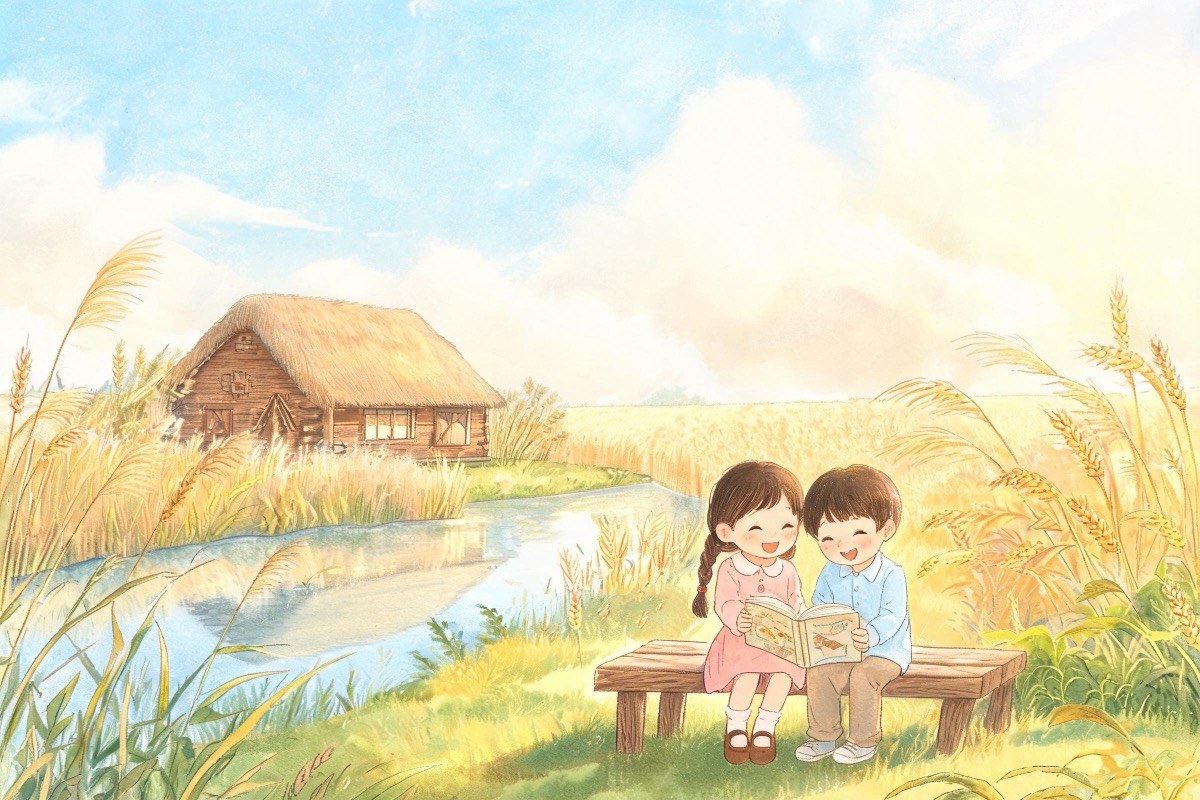
今天晚上,我睡不着。我一闭上眼睛,就看见杜小康站在芦苇荡里,身后是一群鸭子。
晚饭后我把《草房子》里杜小康破产那一章读完了。杜小康曾经是油麻地最神气的孩子:他家有堆到房顶货物的杂货铺,他有全村唯一一辆红自行车。可是一夜之间全完了——铺子抵了债,他爸爸病倒了,连铺子那两扇红漆门板都抵给了债主。杜小康只好失学,跟着父亲去很远很远的芦苇荡放鸭。书里写他回来的时候,脸晒得黢黑,嗓子变得沙哑,再也不是从前那个杜小康了。我读到这儿坐直了,半天没能往下读。
我睡不着,是因为我想起自己。这星期我扔了半个肉包,只因为嫌馅儿不对口味;我用了几页的本子,因为封面不好看就塞进抽屉最里面,缠着妈妈换新笔袋;我的橡皮咬得满是牙印,用两天就换新的。杜小康在芦苇荡里守着一群鸭子,盼着能再上一天学;我坐在亮堂堂的教室里,把半个肉包说扔就扔。被窝里的脸烫得很,我把踢开的被子又拉上来蒙住头。
后来听见客厅里妈妈叠衣服的声音,我爬起来光脚走过去,坐在她旁边,把杜小康的事从头讲给她听:红门板、病倒的爸爸、芦苇荡里的鸭群。妈妈听完没有马上说话,过了一会儿才讲:姥爷小时候上学,铅笔短得捏不住了,套在竹管里接着写,一支笔写到拿不住才肯换。妈妈说:东西不怕少,怕的是不知道惜。
我们俩聊到很晚,聊到姥爷的竹管铅笔,聊到我家抽屉里那些用了几页就嫌旧的本子。妈妈把那个丑封面本子找出来,用牛皮纸包了个新皮,我在皮上写了三个字:请用完。
睡前我把今天写进日记:杜小康的故事让我睡不着。睡不着不是坏事,睡不着,说明我开始懂了。明天早上,我要把买来的肉包一口不剩地吃完。
Du Xiaokang's Story Keeps Me Awake
October 20, Tuesday, Sunny
Tonight I cannot sleep. The moment I close my eyes, I see Du Xiaokang standing in the reed marsh, a flock of ducks behind him.
After dinner I finished the chapter of The Straw House in which Du Xiaokang's family goes bankrupt. Du Xiaokang was once the proudest boy in Youmadi: his family's grocery shop had goods stacked to the ceiling, and he owned the village's only red bicycle. But in a single night it all ended—the shop went to the creditors, his father fell ill, and even the two red-lacquered door panels of the shop were pawned for the debt. Du Xiaokang had to drop out of school and follow his father to a reed marsh far, far away to herd ducks. The book says that when he came back, his face was tanned dark and his voice had turned hoarse; he was no longer the old Du Xiaokang. I sat up straight reading this and could not go on for a long time.
I cannot sleep because I thought of myself. This week I threw away half a meat bun just because I disliked the filling; I stuffed a notebook with only a few pages used into the back of the drawer because its cover was ugly, and nagged my mother for a new pencil case; my erasers, bitten full of tooth marks, get replaced after two days. Du Xiaokang guards a flock of ducks in the reed marsh, longing for one more day at school; I sit in a bright classroom and toss away half a bun without a second thought. My face burns under the quilt, and I pull the kicked-off quilt back over my head.
Later I heard my mother folding clothes in the living room. I got up, walked over barefoot, sat beside her, and told her Du Xiaokang's story from the beginning: the red door panels, the father struck down by illness, the flock of ducks in the reed marsh. Mother was quiet for a moment after listening, then spoke. She said that when grandpa was a schoolboy, his pencil grew too short to hold, so he slipped it into a bamboo tube and kept writing; he would not replace a pencil until it could no longer be held. Mother said: it is not scarcity of things that matters, but not knowing how to treasure them.
We talked late, about grandpa's bamboo-tube pencil, about the notebooks in our own drawer used a few pages then shelved as old. Mother found the ugly-covered notebook, wrapped it in a kraft-paper sleeve, and I wrote three characters on the sleeve: please use me up.
Before bed I wrote today in my diary: Du Xiaokang's story keeps me awake. Being awake is not a bad thing. Being awake means I am beginning to understand. Tomorrow morning I will eat the whole bun I buy, not leaving a single bite.
昨晚我和妈妈聊到很晚
10月22日 星期四 多云
昨晚,我和妈妈聊到很晚。聊的是《草房子》里的杜小康。
那天晚上我读到杜小康家破产:杂货铺抵了债,两扇红漆门板也让人卸走了,杜小康半夜站在空荡荡的铺子前,一句话不说。第二天他还背着书包去了学校,走到校门口才想起来,自己已经不是学生了。读到这里我胸口像堵了块棉花,书都拿不稳。我拿着书走到厨房,从背后递给正在洗碗的妈妈:妈,你等我一下,我有话跟你说。
我坐在厨房的小凳上,把杜小康的事讲给妈妈听,讲着讲着声音低了下去。妈妈关掉水龙头,在围裙上擦干了手,坐到我对面。她没有先安慰我,倒是讲起她自己的事:她上初中那年,家里也穷过一学期,书包是姥姥用旧化肥袋缝的,白花花的印子遮不掉,她每天把袋口翻进去折好,生怕别人看见。她说:那学期她走得最早、回得最晚,因为家里远,也因为不想让人注意她的书包。我听得愣住:原来妈妈小时候也当过一回杜小康。
妈妈问我:书里的事远,咱们家的事近,你想到什么了?我想了半天,小声说:想到我昨天把半盒牛奶倒掉,就因为有点凉。妈妈没批评我,只说:倒掉的不是牛奶,是你不知道它从哪儿来。那天晚上我们聊了很久,从杜小康聊到姥姥的化肥袋书包,又聊到我家阳台上那盆没人管的绿萝——它其实是我去年说要天天浇水的。
今天早上,我盯着饭盒里剩下的几口米饭,眼前晃过的却是芦苇荡里那个晒得黢黑的背影。我把饭吃得干干净净,连米粒都没剩。饭盒盖上那一刻,我心里特别踏实。
我在日记里写:有些道理,听一百遍是耳朵里的,聊一遍就进心里了。杜小康没跟我说过一句话,可他教会我的东西,比谁教的都多。
Last Night Mother and I Talked Very Late
October 22, Thursday, Cloudy
Last night Mother and I talked very late. We talked about Du Xiaokang from The Straw House.
That evening I read the part where Du Xiaokang's family goes bankrupt: the grocery shop went to pay the debt, the two red-lacquered door panels were carried off by the creditor, and Du Xiaokang stood at midnight in the empty shop, saying nothing. The next day he still walked to school with his schoolbag, only remembering at the school gate that he was no longer a student. Reading this, my chest felt stuffed with cotton, and the book trembled in my hands. I took the book into the kitchen and held it out behind my mother as she washed dishes: Mom, wait a moment, I have something to tell you.
I sat on the little kitchen stool and told her Du Xiaokang's story, my voice dropping lower as I went. Mother turned off the tap, dried her hands on the apron, and sat down across from me. She did not comfort me first; instead she told me about herself. The year she was in middle school, her family too was poor for one term. Her schoolbag was sewn by her own mother from an old fertilizer sack, its white printed marks impossible to hide, and every morning she folded the mouth of the sack inward so no one would see. She said she left home earliest and came back latest that term, partly because the walk was long, and partly because she did not want anyone to notice her bag. I froze: so my mother, too, had once been a Du Xiaokang.
Mother asked me: the book is far away, our family is near—what did you think of? I thought a long while and said quietly: I thought of how I poured away half a carton of milk yesterday just because it was a little cold. Mother did not scold me. She only said: what you poured away was not milk; it was your not knowing where it comes from. That night we talked for a long time—from Du Xiaokang to grandma's fertilizer-sack schoolbag, and then to the pot of pothos on our balcony that nobody waters: I was the one who promised last year to water it every day.
This morning, staring at the last few bites of rice in my lunch box, what floated before my eyes was that sun-darkened figure in the reed marsh. I ate everything clean, not a grain left. The moment I snapped the lid shut, my heart felt very steady.
I wrote in my diary: some truths pass through the ears however many times you hear them, but once you truly talk them through, they enter the heart. Du Xiaokang never said a word to me, yet what he taught me is more than anyone taught me.
小提示:上面此文档内容仅展示完整文档里的部分内容, 若需要下载完整文档请 点击免费下载完整文档 。