文章内容
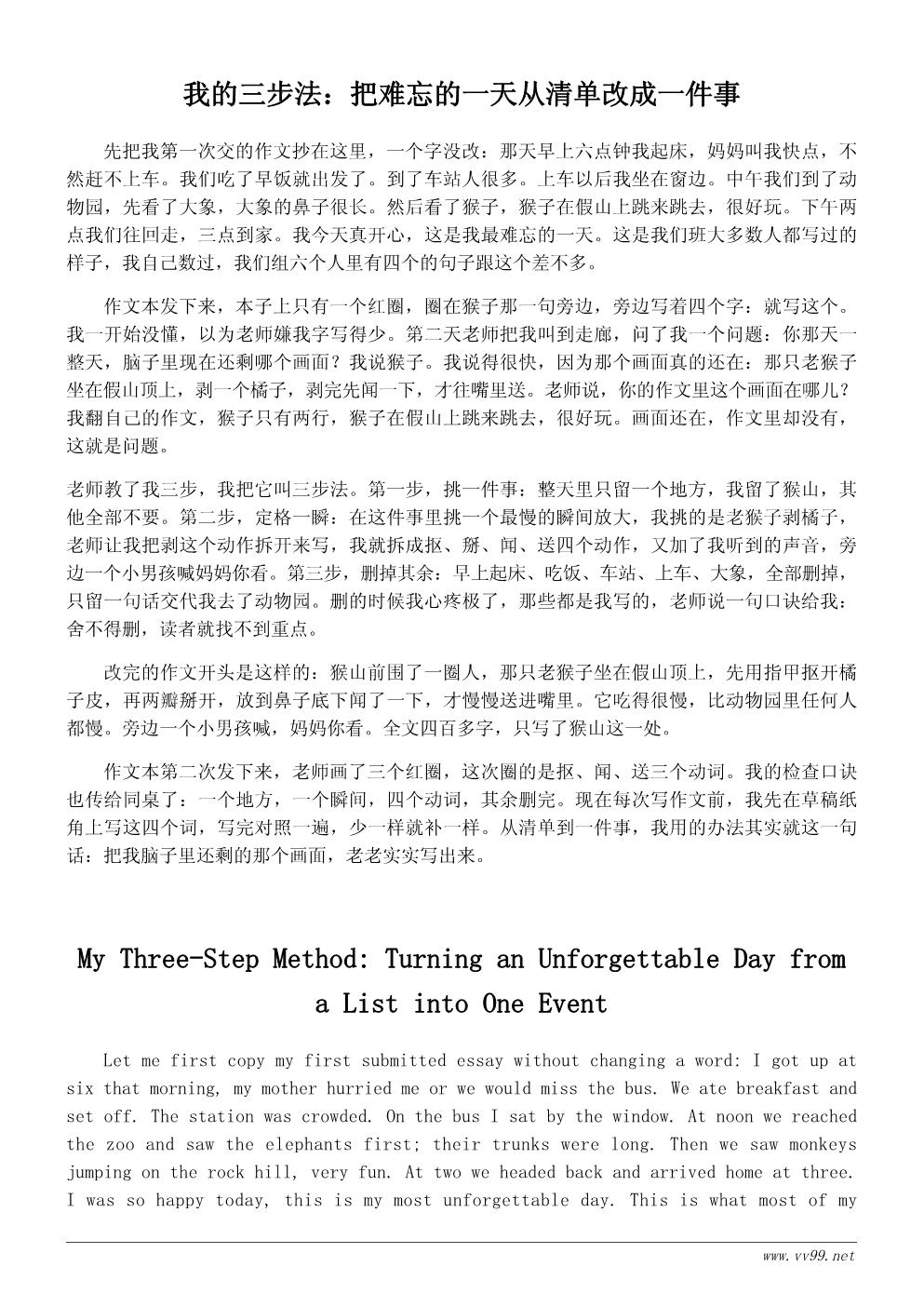
我的三步法:把难忘的一天从清单改成一件事
先把我第一次交的作文抄在这里,一个字没改:那天早上六点钟我起床,妈妈叫我快点,不然赶不上车。我们吃了早饭就出发了。到了车站人很多。上车以后我坐在窗边。中午我们到了动物园,先看了大象,大象的鼻子很长。然后看了猴子,猴子在假山上跳来跳去,很好玩。下午两点我们往回走,三点到家。我今天真开心,这是我最难忘的一天。这是我们班大多数人都写过的样子,我自己数过,我们组六个人里有四个的句子跟这个差不多。
作文本发下来,本子上只有一个红圈,圈在猴子那一句旁边,旁边写着四个字:就写这个。我一开始没懂,以为老师嫌我字写得少。第二天老师把我叫到走廊,问了我一个问题:你那天一整天,脑子里现在还剩哪个画面?我说猴子。我说得很快,因为那个画面真的还在:那只老猴子坐在假山顶上,剥一个橘子,剥完先闻一下,才往嘴里送。老师说,你的作文里这个画面在哪儿?我翻自己的作文,猴子只有两行,猴子在假山上跳来跳去,很好玩。画面还在,作文里却没有,这就是问题。
老师教了我三步,我把它叫三步法。第一步,挑一件事:整天里只留一个地方,我留了猴山,其他全部不要。第二步,定格一瞬:在这件事里挑一个最慢的瞬间放大,我挑的是老猴子剥橘子,老师让我把剥这个动作拆开来写,我就拆成抠、掰、闻、送四个动作,又加了我听到的声音,旁边一个小男孩喊妈妈你看。第三步,删掉其余:早上起床、吃饭、车站、上车、大象,全部删掉,只留一句话交代我去了动物园。删的时候我心疼极了,那些都是我写的,老师说一句口诀给我:舍不得删,读者就找不到重点。
改完的作文开头是这样的:猴山前围了一圈人,那只老猴子坐在假山顶上,先用指甲抠开橘子皮,再两瓣掰开,放到鼻子底下闻了一下,才慢慢送进嘴里。它吃得很慢,比动物园里任何人都慢。旁边一个小男孩喊,妈妈你看。全文四百多字,只写了猴山这一处。
作文本第二次发下来,老师画了三个红圈,这次圈的是抠、闻、送三个动词。我的检查口诀也传给同桌了:一个地方,一个瞬间,四个动词,其余删完。现在每次写作文前,我先在草稿纸角上写这四个词,写完对照一遍,少一样就补一样。从清单到一件事,我用的办法其实就这一句话:把我脑子里还剩的那个画面,老老实实写出来。
My Three-Step Method: Turning an Unforgettable Day from a List into One Event
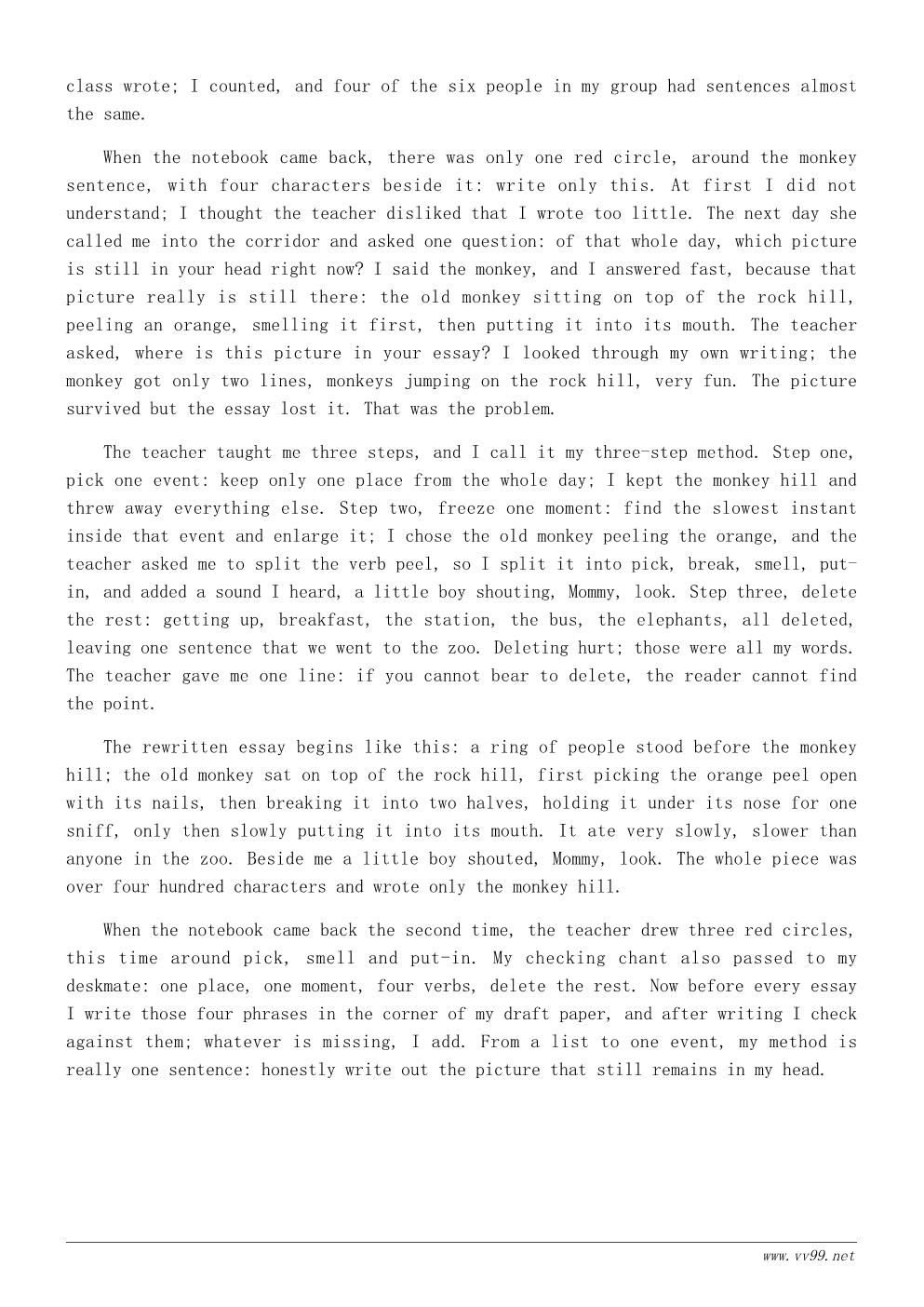
Let me first copy my first submitted essay without changing a word: I got up at six that morning, my mother hurried me or we would miss the bus. We ate breakfast and set off. The station was crowded. On the bus I sat by the window. At noon we reached the zoo and saw the elephants first; their trunks were long. Then we saw monkeys jumping on the rock hill, very fun. At two we headed back and arrived home at three. I was so happy today, this is my most unforgettable day. This is what most of my class wrote; I counted, and four of the six people in my group had sentences almost the same.
When the notebook came back, there was only one red circle, around the monkey sentence, with four characters beside it: write only this. At first I did not understand; I thought the teacher disliked that I wrote too little. The next day she called me into the corridor and asked one question: of that whole day, which picture is still in your head right now? I said the monkey, and I answered fast, because that picture really is still there: the old monkey sitting on top of the rock hill, peeling an orange, smelling it first, then putting it into its mouth. The teacher asked, where is this picture in your essay? I looked through my own writing; the monkey got only two lines, monkeys jumping on the rock hill, very fun. The picture survived but the essay lost it. That was the problem.
The teacher taught me three steps, and I call it my three-step method. Step one, pick one event: keep only one place from the whole day; I kept the monkey hill and threw away everything else. Step two, freeze one moment: find the slowest instant inside that event and enlarge it; I chose the old monkey peeling the orange, and the teacher asked me to split the verb peel, so I split it into pick, break, smell, put-in, and added a sound I heard, a little boy shouting, Mommy, look. Step three, delete the rest: getting up, breakfast, the station, the bus, the elephants, all deleted, leaving one sentence that we went to the zoo. Deleting hurt; those were all my words. The teacher gave me one line: if you cannot bear to delete, the reader cannot find the point.
The rewritten essay begins like this: a ring of people stood before the monkey hill; the old monkey sat on top of the rock hill, first picking the orange peel open with its nails, then breaking it into two halves, holding it under its nose for one sniff, only then slowly putting it into its mouth. It ate very slowly, slower than anyone in the zoo. Beside me a little boy shouted, Mommy, look. The whole piece was over four hundred characters and wrote only the monkey hill.
When the notebook came back the second time, the teacher drew three red circles, this time around pick, smell and put-in. My checking chant also passed to my deskmate: one place, one moment, four verbs, delete the rest. Now before every essay I write those four phrases in the corner of my draft paper, and after writing I check against them; whatever is missing, I add. From a list to one event, my method is really one sentence: honestly write out the picture that still remains in my head.
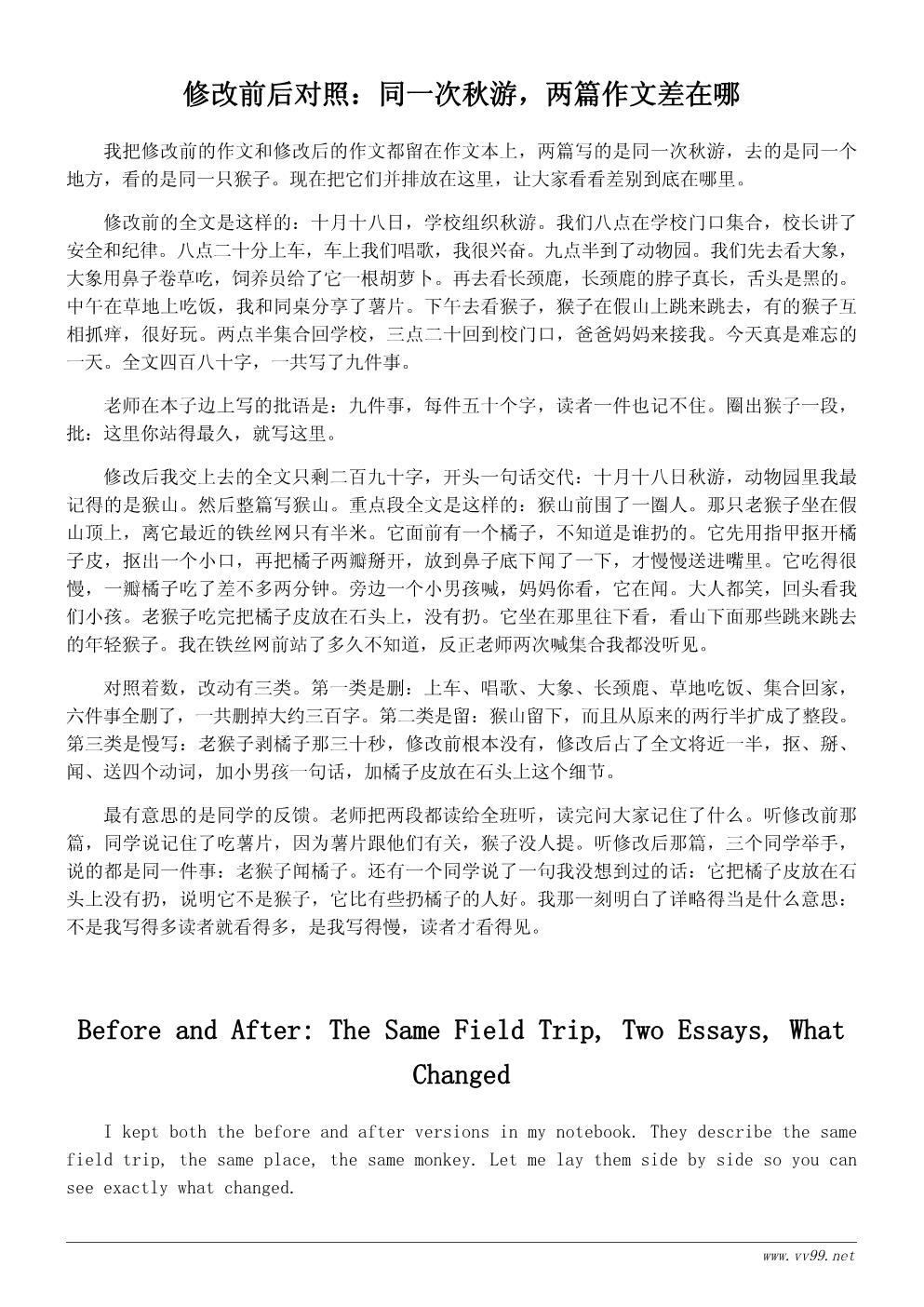
修改前后对照:同一次秋游,两篇作文差在哪
我把修改前的作文和修改后的作文都留在作文本上,两篇写的是同一次秋游,去的是同一个地方,看的是同一只猴子。现在把它们并排放在这里,让大家看看差别到底在哪里。
修改前的全文是这样的:十月十八日,学校组织秋游。我们八点在学校门口集合,校长讲了安全和纪律。八点二十分上车,车上我们唱歌,我很兴奋。九点半到了动物园。我们先去看大象,大象用鼻子卷草吃,饲养员给了它一根胡萝卜。再去看长颈鹿,长颈鹿的脖子真长,舌头是黑的。中午在草地上吃饭,我和同桌分享了薯片。下午去看猴子,猴子在假山上跳来跳去,有的猴子互相抓痒,很好玩。两点半集合回学校,三点二十回到校门口,爸爸妈妈来接我。今天真是难忘的一天。全文四百八十字,一共写了九件事。
老师在本子边上写的批语是:九件事,每件五十个字,读者一件也记不住。圈出猴子一段,批:这里你站得最久,就写这里。
修改后我交上去的全文只剩二百九十字,开头一句话交代:十月十八日秋游,动物园里我最记得的是猴山。然后整篇写猴山。重点段全文是这样的:猴山前围了一圈人。那只老猴子坐在假山顶上,离它最近的铁丝网只有半米。它面前有一个橘子,不知道是谁扔的。它先用指甲抠开橘子皮,抠出一个小口,再把橘子两瓣掰开,放到鼻子底下闻了一下,才慢慢送进嘴里。它吃得很慢,一瓣橘子吃了差不多两分钟。旁边一个小男孩喊,妈妈你看,它在闻。大人都笑,回头看我们小孩。老猴子吃完把橘子皮放在石头上,没有扔。它坐在那里往下看,看山下面那些跳来跳去的年轻猴子。我在铁丝网前站了多久不知道,反正老师两次喊集合我都没听见。
对照着数,改动有三类。第一类是删:上车、唱歌、大象、长颈鹿、草地吃饭、集合回家,六件事全删了,一共删掉大约三百字。第二类是留:猴山留下,而且从原来的两行半扩成了整段。第三类是慢写:老猴子剥橘子那三十秒,修改前根本没有,修改后占了全文将近一半,抠、掰、闻、送四个动词,加小男孩一句话,加橘子皮放在石头上这个细节。
最有意思的是同学的反馈。老师把两段都读给全班听,读完问大家记住了什么。听修改前那篇,同学说记住了吃薯片,因为薯片跟他们有关,猴子没人提。听修改后那篇,三个同学举手,说的都是同一件事:老猴子闻橘子。还有一个同学说了一句我没想到过的话:它把橘子皮放在石头上没有扔,说明它不是猴子,它比有些扔橘子的人好。我那一刻明白了详略得当是什么意思:不是我写得多读者就看得多,是我写得慢,读者才看得见。
Before and After: The Same Field Trip, Two Essays, What Changed
I kept both the before and after versions in my notebook. They describe the same field trip, the same place, the same monkey. Let me lay them side by side so you can see exactly what changed.
The before version reads in full: October 18, our school held a field trip. We gathered at the school gate at eight; the principal talked about safety and discipline. We boarded at eight twenty; we sang on the bus and I was excited. We reached the zoo at nine thirty. First the elephants; the elephant curled grass into its mouth with its trunk, and the keeper gave it a carrot. Then the giraffes; their necks are so long and their tongues are black. We ate lunch on the lawn and shared chips with my deskmate. In the afternoon we visited the monkeys; they jumped on the rock hill, some scratching each other, very fun. We assembled at two thirty and got back to the gate at three twenty, where our parents picked us up. What an unforgettable day. Four hundred and eighty characters, nine events in all.
The teacher's note in the margin read: nine events, fifty characters each, and the reader remembers none. She circled the monkey paragraph: you stood longest here, write this.
The after version is only two hundred and ninety characters. One opening sentence sets it up: on our October 18 field trip, what I remember most from the zoo is the monkey hill. Then the whole piece is the monkey hill. The key paragraph reads in full: a ring of people stood before the monkey hill. The old monkey sat on top of the rock hill, half a meter from the nearest wire fence. In front of it lay an orange, thrown there by someone unknown. First it picked the peel open with its nails, making a small hole, then broke the orange into two halves, held it under its nose for one sniff, only then slowly put it into its mouth. It ate slowly; one half took nearly two minutes. Beside me a little boy shouted, Mommy, look, it is smelling it. The grown-ups laughed and turned to look at us children. After finishing, the old monkey placed the peel on a stone instead of throwing it away. It sat there looking down at the young monkeys jumping below. I do not know how long I stood at the fence; anyway the teacher called us to assemble twice and I did not hear.
Counting the changes, there are three kinds. First, deletion: the bus, singing, elephants, giraffes, lawn lunch, assembly and pickup, six events gone, about three hundred characters cut. Second, keeping: the monkey hill stayed, expanded from two and a half lines into the whole piece. Third, slow writing: the thirty seconds of the old monkey peeling the orange simply did not exist before, and now take up nearly half the piece, with four verbs, one boy's line, and the detail of the peel placed on the stone.
The most interesting part was the classmates' feedback. The teacher read both versions aloud, then asked what people remembered. After the before version, classmates said they remembered the chips, because chips relate to them; nobody mentioned the monkey. After the after version, three hands went up and all said the same thing: the old monkey smelling the orange. One classmate said something I had never thought of: it put the peel on the stone instead of throwing it away, which shows it is not just a monkey, it is better than some people who throw orange peels. In that moment I understood what detail and brevity mean: the reader does not see more because I write more; the reader sees only when I write slowly.
小提示:上面此文档内容仅展示完整文档里的部分内容, 若需要下载完整文档请 点击免费下载完整文档 。