文章内容
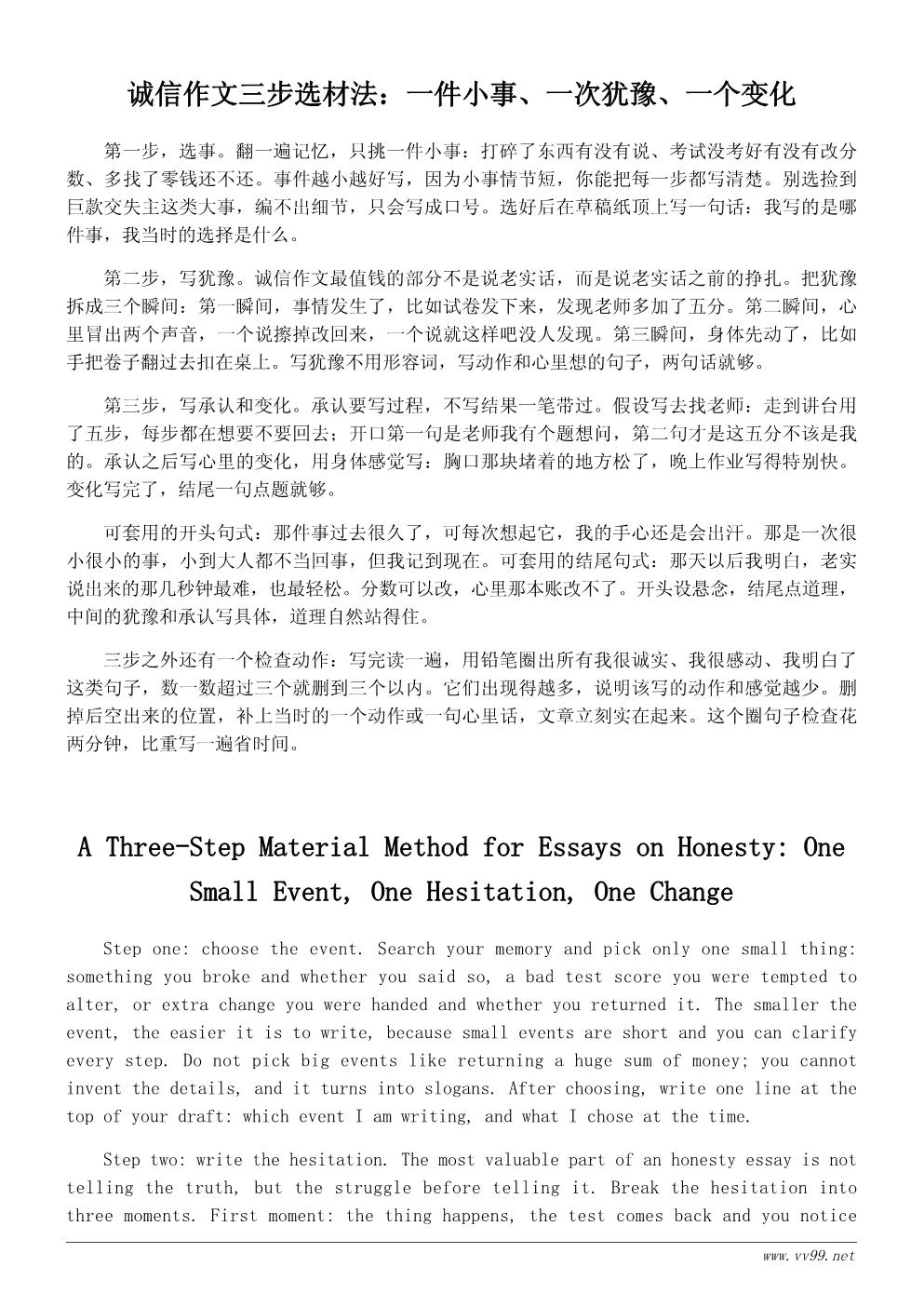
诚信作文三步选材法:一件小事、一次犹豫、一个变化
第一步,选事。翻一遍记忆,只挑一件小事:打碎了东西有没有说、考试没考好有没有改分数、多找了零钱还不还。事件越小越好写,因为小事情节短,你能把每一步都写清楚。别选捡到巨款交失主这类大事,编不出细节,只会写成口号。选好后在草稿纸顶上写一句话:我写的是哪件事,我当时的选择是什么。
第二步,写犹豫。诚信作文最值钱的部分不是说老实话,而是说老实话之前的挣扎。把犹豫拆成三个瞬间:第一瞬间,事情发生了,比如试卷发下来,发现老师多加了五分。第二瞬间,心里冒出两个声音,一个说擦掉改回来,一个说就这样吧没人发现。第三瞬间,身体先动了,比如手把卷子翻过去扣在桌上。写犹豫不用形容词,写动作和心里想的句子,两句话就够。
第三步,写承认和变化。承认要写过程,不写结果一笔带过。假设写去找老师:走到讲台用了五步,每步都在想要不要回去;开口第一句是老师我有个题想问,第二句才是这五分不该是我的。承认之后写心里的变化,用身体感觉写:胸口那块堵着的地方松了,晚上作业写得特别快。变化写完了,结尾一句点题就够。
可套用的开头句式:那件事过去很久了,可每次想起它,我的手心还是会出汗。那是一次很小很小的事,小到大人都不当回事,但我记到现在。可套用的结尾句式:那天以后我明白,老实说出来的那几秒钟最难,也最轻松。分数可以改,心里那本账改不了。开头设悬念,结尾点道理,中间的犹豫和承认写具体,道理自然站得住。
三步之外还有一个检查动作:写完读一遍,用铅笔圈出所有我很诚实、我很感动、我明白了这类句子,数一数超过三个就删到三个以内。它们出现得越多,说明该写的动作和感觉越少。删掉后空出来的位置,补上当时的一个动作或一句心里话,文章立刻实在起来。这个圈句子检查花两分钟,比重写一遍省时间。
A Three-Step Material Method for Essays on Honesty: One Small Event, One Hesitation, One Change
Step one: choose the event. Search your memory and pick only one small thing: something you broke and whether you said so, a bad test score you were tempted to alter, or extra change you were handed and whether you returned it. The smaller the event, the easier it is to write, because small events are short and you can clarify every step. Do not pick big events like returning a huge sum of money; you cannot invent the details, and it turns into slogans. After choosing, write one line at the top of your draft: which event I am writing, and what I chose at the time.
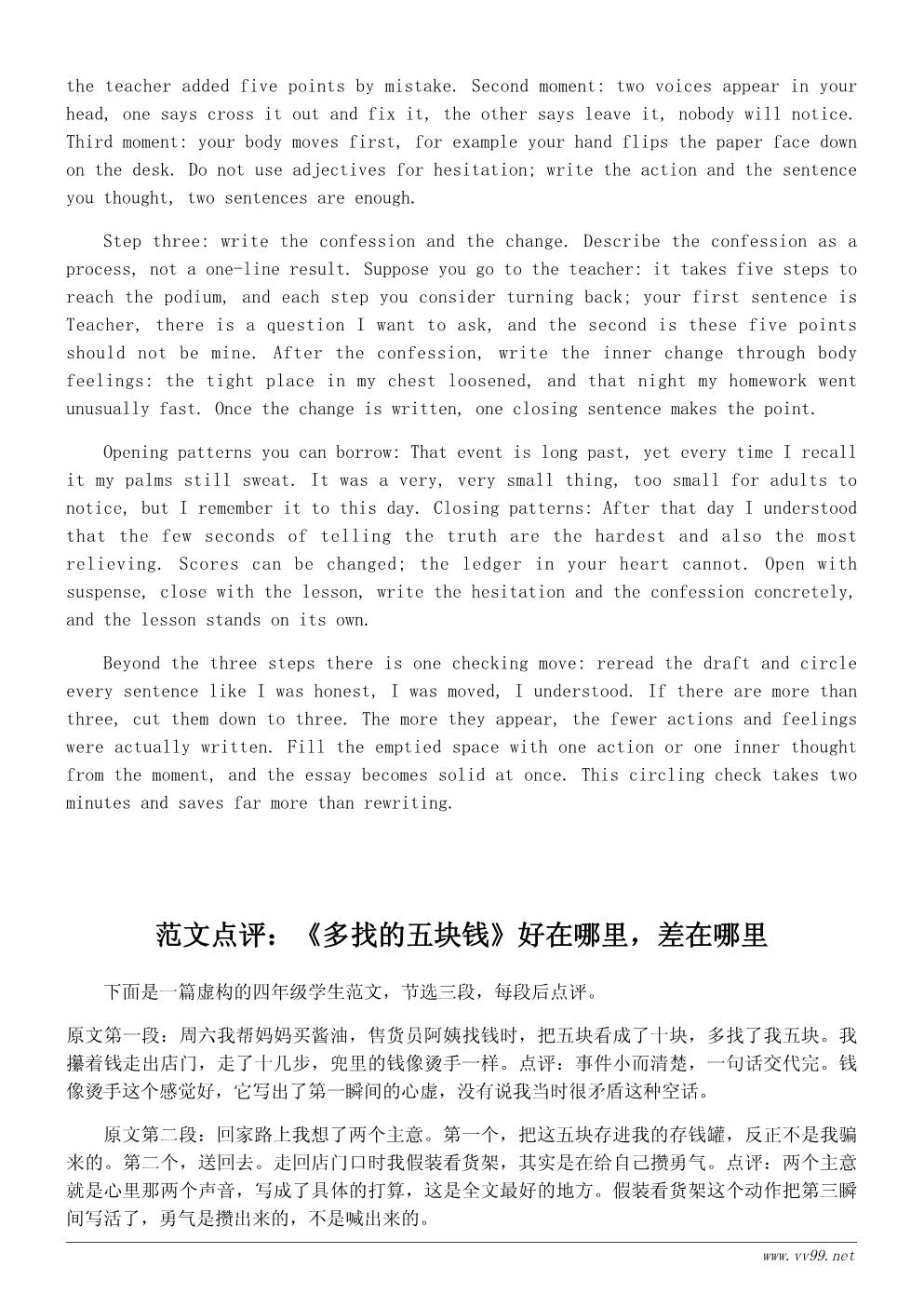
Step two: write the hesitation. The most valuable part of an honesty essay is not telling the truth, but the struggle before telling it. Break the hesitation into three moments. First moment: the thing happens, the test comes back and you notice the teacher added five points by mistake. Second moment: two voices appear in your head, one says cross it out and fix it, the other says leave it, nobody will notice. Third moment: your body moves first, for example your hand flips the paper face down on the desk. Do not use adjectives for hesitation; write the action and the sentence you thought, two sentences are enough.
Step three: write the confession and the change. Describe the confession as a process, not a one-line result. Suppose you go to the teacher: it takes five steps to reach the podium, and each step you consider turning back; your first sentence is Teacher, there is a question I want to ask, and the second is these five points should not be mine. After the confession, write the inner change through body feelings: the tight place in my chest loosened, and that night my homework went unusually fast. Once the change is written, one closing sentence makes the point.
Opening patterns you can borrow: That event is long past, yet every time I recall it my palms still sweat. It was a very, very small thing, too small for adults to notice, but I remember it to this day. Closing patterns: After that day I understood that the few seconds of telling the truth are the hardest and also the most relieving. Scores can be changed; the ledger in your heart cannot. Open with suspense, close with the lesson, write the hesitation and the confession concretely, and the lesson stands on its own.
Beyond the three steps there is one checking move: reread the draft and circle every sentence like I was honest, I was moved, I understood. If there are more than three, cut them down to three. The more they appear, the fewer actions and feelings were actually written. Fill the emptied space with one action or one inner thought from the moment, and the essay becomes solid at once. This circling check takes two minutes and saves far more than rewriting.
范文点评:《多找的五块钱》好在哪里,差在哪里
下面是一篇虚构的四年级学生范文,节选三段,每段后点评。
原文第一段:周六我帮妈妈买酱油,售货员阿姨找钱时,把五块看成了十块,多找了我五块。我攥着钱走出店门,走了十几步,兜里的钱像烫手一样。点评:事件小而清楚,一句话交代完。钱像烫手这个感觉好,它写出了第一瞬间的心虚,没有说我当时很矛盾这种空话。
原文第二段:回家路上我想了两个主意。第一个,把这五块存进我的存钱罐,反正不是我骗来的。第二个,送回去。走回店门口时我假装看货架,其实是在给自己攒勇气。点评:两个主意就是心里那两个声音,写成了具体的打算,这是全文最好的地方。假装看货架这个动作把第三瞬间写活了,勇气是攒出来的,不是喊出来的。
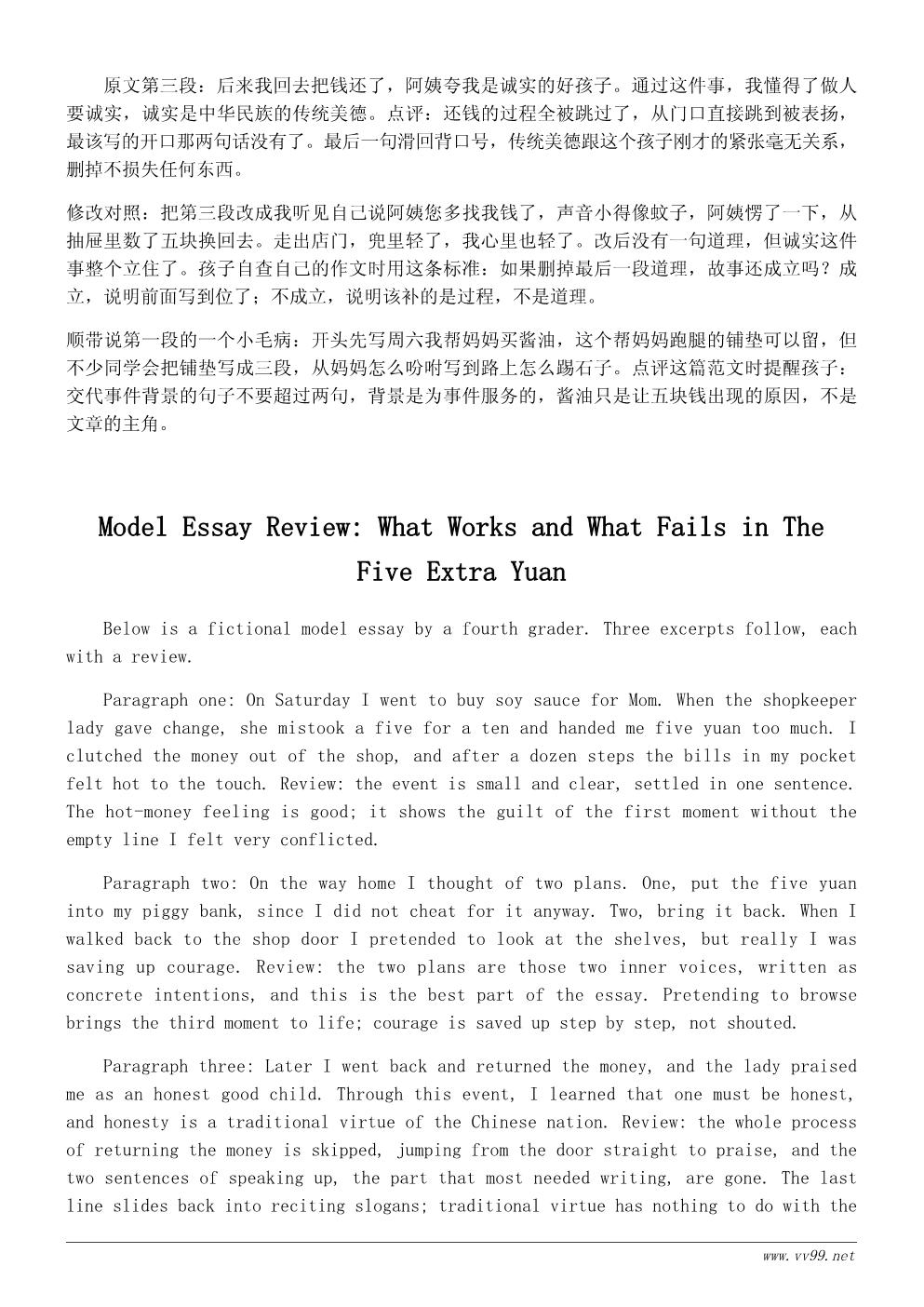
原文第三段:后来我回去把钱还了,阿姨夸我是诚实的好孩子。通过这件事,我懂得了做人要诚实,诚实是中华民族的传统美德。点评:还钱的过程全被跳过了,从门口直接跳到被表扬,最该写的开口那两句话没有了。最后一句滑回背口号,传统美德跟这个孩子刚才的紧张毫无关系,删掉不损失任何东西。
修改对照:把第三段改成我听见自己说阿姨您多找我钱了,声音小得像蚊子,阿姨愣了一下,从抽屉里数了五块换回去。走出店门,兜里轻了,我心里也轻了。改后没有一句道理,但诚实这件事整个立住了。孩子自查自己的作文时用这条标准:如果删掉最后一段道理,故事还成立吗?成立,说明前面写到位了;不成立,说明该补的是过程,不是道理。
顺带说第一段的一个小毛病:开头先写周六我帮妈妈买酱油,这个帮妈妈跑腿的铺垫可以留,但不少同学会把铺垫写成三段,从妈妈怎么吩咐写到路上怎么踢石子。点评这篇范文时提醒孩子:交代事件背景的句子不要超过两句,背景是为事件服务的,酱油只是让五块钱出现的原因,不是文章的主角。
Model Essay Review: What Works and What Fails in The Five Extra Yuan
Below is a fictional model essay by a fourth grader. Three excerpts follow, each with a review.
Paragraph one: On Saturday I went to buy soy sauce for Mom. When the shopkeeper lady gave change, she mistook a five for a ten and handed me five yuan too much. I clutched the money out of the shop, and after a dozen steps the bills in my pocket felt hot to the touch. Review: the event is small and clear, settled in one sentence. The hot-money feeling is good; it shows the guilt of the first moment without the empty line I felt very conflicted.
Paragraph two: On the way home I thought of two plans. One, put the five yuan into my piggy bank, since I did not cheat for it anyway. Two, bring it back. When I walked back to the shop door I pretended to look at the shelves, but really I was saving up courage. Review: the two plans are those two inner voices, written as concrete intentions, and this is the best part of the essay. Pretending to browse brings the third moment to life; courage is saved up step by step, not shouted.
Paragraph three: Later I went back and returned the money, and the lady praised me as an honest good child. Through this event, I learned that one must be honest, and honesty is a traditional virtue of the Chinese nation. Review: the whole process of returning the money is skipped, jumping from the door straight to praise, and the two sentences of speaking up, the part that most needed writing, are gone. The last line slides back into reciting slogans; traditional virtue has nothing to do with the nervousness this child just showed, and deleting it loses nothing.
Revision comparison: rewrite paragraph three as I heard myself say Madam you gave me too much change, my voice small as a mosquito; the lady paused, then counted five yuan from the drawer to make it right. Walking out, my pocket was lighter, and so was my heart. The revised version states no lesson, yet honesty stands completely. When children audit their own essays, use this test: if the final moral paragraph were deleted, does the story still hold? If yes, the writing before it works; if no, what is missing is process, not moral.
One small flaw in paragraph one is worth mentioning: it opens with On Saturday I went to buy soy sauce for Mom, and this errand setup can stay, but many students stretch the setup into three paragraphs, from how Mom gave the order to how they kicked pebbles on the road. When reviewing this model, remind children: background sentences should not exceed two lines; background serves the event, and the soy sauce is only the reason the five yuan appeared, not the main character of the essay.
小提示:上面此文档内容仅展示完整文档里的部分内容, 若需要下载完整文档请 点击免费下载完整文档 。