文章内容
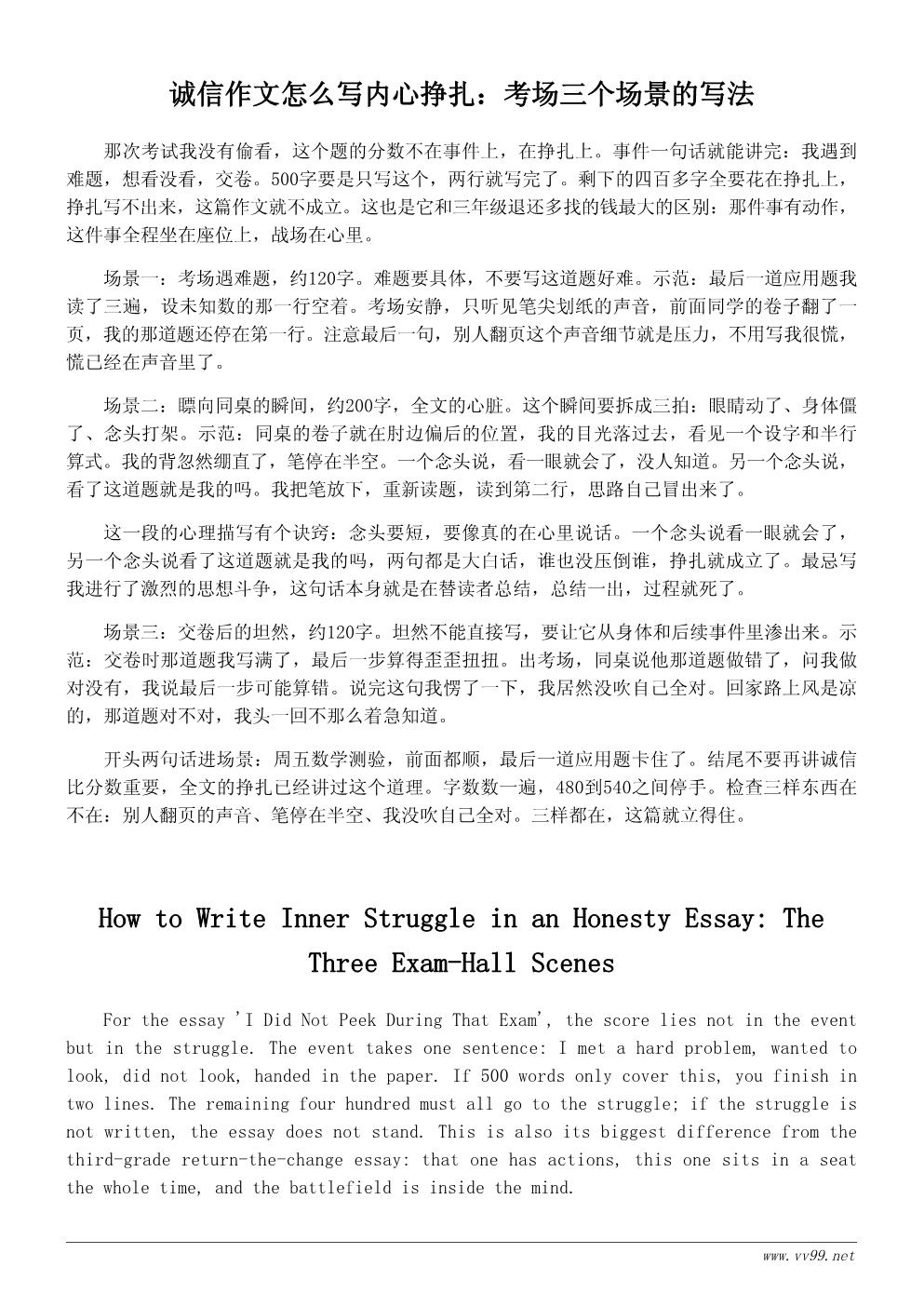
诚信作文怎么写内心挣扎:考场三个场景的写法
那次考试我没有偷看,这个题的分数不在事件上,在挣扎上。事件一句话就能讲完:我遇到难题,想看没看,交卷。500字要是只写这个,两行就写完了。剩下的四百多字全要花在挣扎上,挣扎写不出来,这篇作文就不成立。这也是它和三年级退还多找的钱最大的区别:那件事有动作,这件事全程坐在座位上,战场在心里。
场景一:考场遇难题,约120字。难题要具体,不要写这道题好难。示范:最后一道应用题我读了三遍,设未知数的那一行空着。考场安静,只听见笔尖划纸的声音,前面同学的卷子翻了一页,我的那道题还停在第一行。注意最后一句,别人翻页这个声音细节就是压力,不用写我很慌,慌已经在声音里了。
场景二:瞟向同桌的瞬间,约200字,全文的心脏。这个瞬间要拆成三拍:眼睛动了、身体僵了、念头打架。示范:同桌的卷子就在肘边偏后的位置,我的目光落过去,看见一个设字和半行算式。我的背忽然绷直了,笔停在半空。一个念头说,看一眼就会了,没人知道。另一个念头说,看了这道题就是我的吗。我把笔放下,重新读题,读到第二行,思路自己冒出来了。
这一段的心理描写有个诀窍:念头要短,要像真的在心里说话。一个念头说看一眼就会了,另一个念头说看了这道题就是我的吗,两句都是大白话,谁也没压倒谁,挣扎就成立了。最忌写我进行了激烈的思想斗争,这句话本身就是在替读者总结,总结一出,过程就死了。
场景三:交卷后的坦然,约120字。坦然不能直接写,要让它从身体和后续事件里渗出来。示范:交卷时那道题我写满了,最后一步算得歪歪扭扭。出考场,同桌说他那道题做错了,问我做对没有,我说最后一步可能算错。说完这句我愣了一下,我居然没吹自己全对。回家路上风是凉的,那道题对不对,我头一回不那么着急知道。
开头两句话进场景:周五数学测验,前面都顺,最后一道应用题卡住了。结尾不要再讲诚信比分数重要,全文的挣扎已经讲过这个道理。字数数一遍,480到540之间停手。检查三样东西在不在:别人翻页的声音、笔停在半空、我没吹自己全对。三样都在,这篇就立得住。
How to Write Inner Struggle in an Honesty Essay: The Three Exam-Hall Scenes
For the essay 'I Did Not Peek During That Exam', the score lies not in the event but in the struggle. The event takes one sentence: I met a hard problem, wanted to look, did not look, handed in the paper. If 500 words only cover this, you finish in two lines. The remaining four hundred must all go to the struggle; if the struggle is not written, the essay does not stand. This is also its biggest difference from the third-grade return-the-change essay: that one has actions, this one sits in a seat the whole time, and the battlefield is inside the mind.
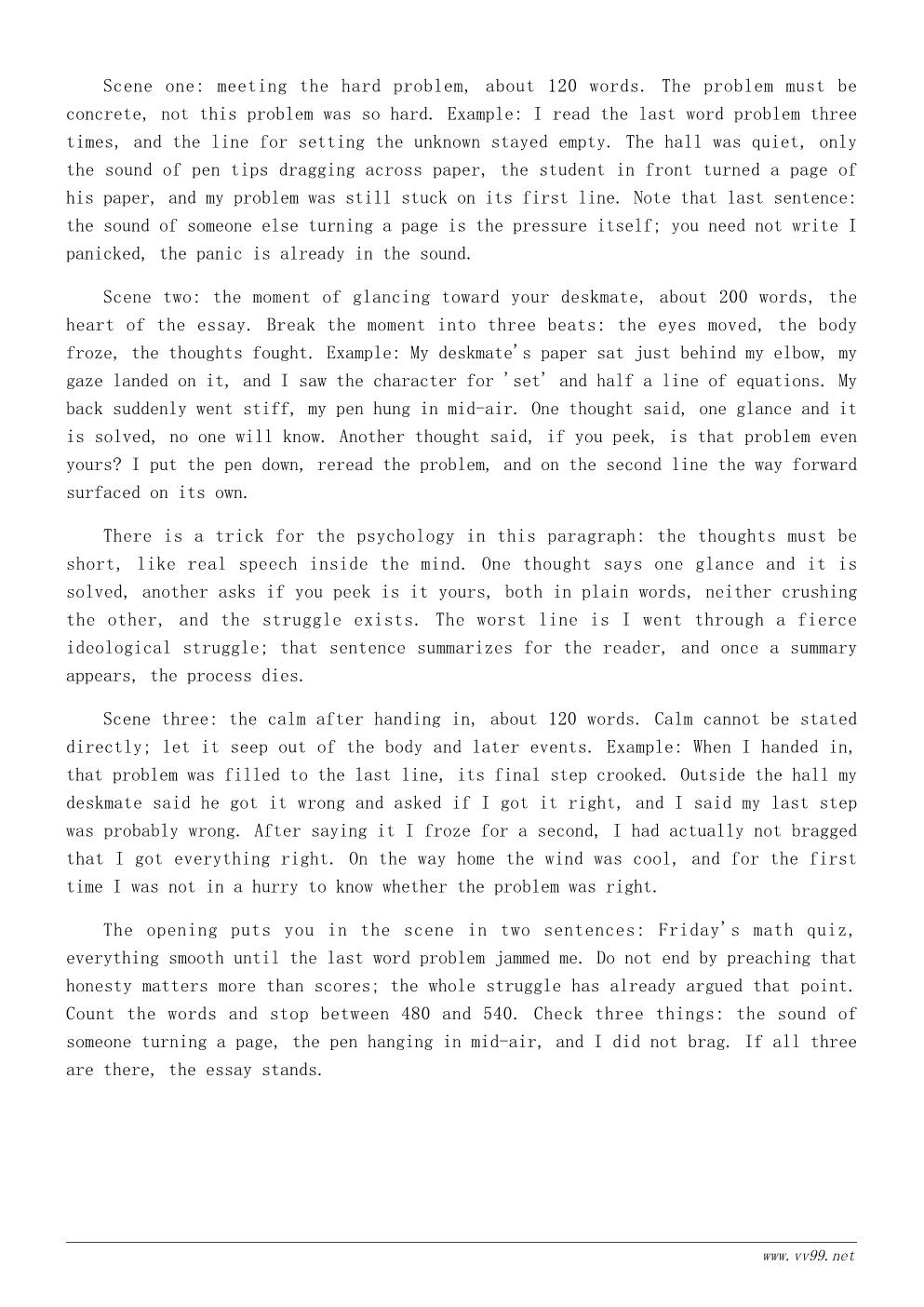
Scene one: meeting the hard problem, about 120 words. The problem must be concrete, not this problem was so hard. Example: I read the last word problem three times, and the line for setting the unknown stayed empty. The hall was quiet, only the sound of pen tips dragging across paper, the student in front turned a page of his paper, and my problem was still stuck on its first line. Note that last sentence: the sound of someone else turning a page is the pressure itself; you need not write I panicked, the panic is already in the sound.
Scene two: the moment of glancing toward your deskmate, about 200 words, the heart of the essay. Break the moment into three beats: the eyes moved, the body froze, the thoughts fought. Example: My deskmate's paper sat just behind my elbow, my gaze landed on it, and I saw the character for 'set' and half a line of equations. My back suddenly went stiff, my pen hung in mid-air. One thought said, one glance and it is solved, no one will know. Another thought said, if you peek, is that problem even yours? I put the pen down, reread the problem, and on the second line the way forward surfaced on its own.
There is a trick for the psychology in this paragraph: the thoughts must be short, like real speech inside the mind. One thought says one glance and it is solved, another asks if you peek is it yours, both in plain words, neither crushing the other, and the struggle exists. The worst line is I went through a fierce ideological struggle; that sentence summarizes for the reader, and once a summary appears, the process dies.
Scene three: the calm after handing in, about 120 words. Calm cannot be stated directly; let it seep out of the body and later events. Example: When I handed in, that problem was filled to the last line, its final step crooked. Outside the hall my deskmate said he got it wrong and asked if I got it right, and I said my last step was probably wrong. After saying it I froze for a second, I had actually not bragged that I got everything right. On the way home the wind was cool, and for the first time I was not in a hurry to know whether the problem was right.
The opening puts you in the scene in two sentences: Friday's math quiz, everything smooth until the last word problem jammed me. Do not end by preaching that honesty matters more than scores; the whole struggle has already argued that point. Count the words and stop between 480 and 540. Check three things: the sound of someone turning a page, the pen hanging in mid-air, and I did not brag. If all three are there, the essay stands.
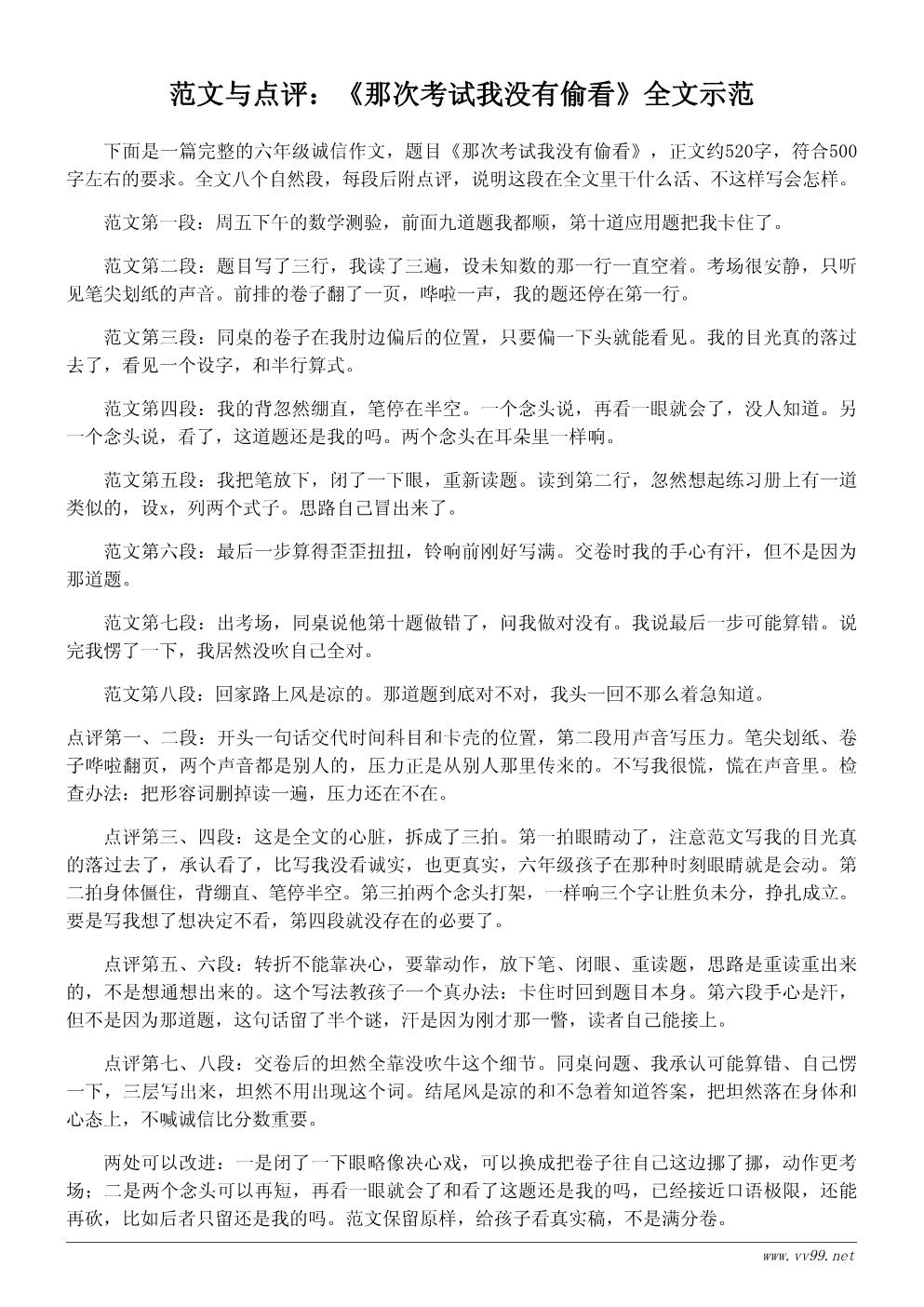
范文与点评:《那次考试我没有偷看》全文示范
下面是一篇完整的六年级诚信作文,题目《那次考试我没有偷看》,正文约520字,符合500字左右的要求。全文八个自然段,每段后附点评,说明这段在全文里干什么活、不这样写会怎样。
范文第一段:周五下午的数学测验,前面九道题我都顺,第十道应用题把我卡住了。
范文第二段:题目写了三行,我读了三遍,设未知数的那一行一直空着。考场很安静,只听见笔尖划纸的声音。前排的卷子翻了一页,哗啦一声,我的题还停在第一行。
范文第三段:同桌的卷子在我肘边偏后的位置,只要偏一下头就能看见。我的目光真的落过去了,看见一个设字,和半行算式。
范文第四段:我的背忽然绷直,笔停在半空。一个念头说,再看一眼就会了,没人知道。另一个念头说,看了,这道题还是我的吗。两个念头在耳朵里一样响。
范文第五段:我把笔放下,闭了一下眼,重新读题。读到第二行,忽然想起练习册上有一道类似的,设x,列两个式子。思路自己冒出来了。
范文第六段:最后一步算得歪歪扭扭,铃响前刚好写满。交卷时我的手心有汗,但不是因为那道题。
范文第七段:出考场,同桌说他第十题做错了,问我做对没有。我说最后一步可能算错。说完我愣了一下,我居然没吹自己全对。
范文第八段:回家路上风是凉的。那道题到底对不对,我头一回不那么着急知道。
点评第一、二段:开头一句话交代时间科目和卡壳的位置,第二段用声音写压力。笔尖划纸、卷子哗啦翻页,两个声音都是别人的,压力正是从别人那里传来的。不写我很慌,慌在声音里。检查办法:把形容词删掉读一遍,压力还在不在。
点评第三、四段:这是全文的心脏,拆成了三拍。第一拍眼睛动了,注意范文写我的目光真的落过去了,承认看了,比写我没看诚实,也更真实,六年级孩子在那种时刻眼睛就是会动。第二拍身体僵住,背绷直、笔停半空。第三拍两个念头打架,一样响三个字让胜负未分,挣扎成立。要是写我想了想决定不看,第四段就没存在的必要了。
点评第五、六段:转折不能靠决心,要靠动作,放下笔、闭眼、重读题,思路是重读重出来的,不是想通想出来的。这个写法教孩子一个真办法:卡住时回到题目本身。第六段手心是汗,但不是因为那道题,这句话留了半个谜,汗是因为刚才那一瞥,读者自己能接上。
点评第七、八段:交卷后的坦然全靠没吹牛这个细节。同桌问题、我承认可能算错、自己愣一下,三层写出来,坦然不用出现这个词。结尾风是凉的和不急着知道答案,把坦然落在身体和心态上,不喊诚信比分数重要。
两处可以改进:一是闭了一下眼略像决心戏,可以换成把卷子往自己这边挪了挪,动作更考场;二是两个念头可以再短,再看一眼就会了和看了这题还是我的吗,已经接近口语极限,还能再砍,比如后者只留还是我的吗。范文保留原样,给孩子看真实稿,不是满分卷。
仿写建议:把数学测验换成英语听力想掏词典、体育课体测想少跑一圈、作文比赛想抄开头,结构照搬八段。写完检查三样:别人的声音、身体僵住的瞬间、事后没吹牛的愣一下。三样都在,字数落在480到540之间,这篇就合格。
Model Essay and Commentary: A Full Demonstration of 'I Did Not Peek During That Exam'
Below is a complete sixth-grade essay on honesty, titled 'I Did Not Peek During That Exam', about 520 words in the body, meeting the around-500 requirement. It has eight paragraphs, each followed by a note on what that paragraph does for the essay and what goes wrong if it is not written this way.
Paragraph one: Friday afternoon's math quiz; the first nine questions went smoothly, and the tenth word problem jammed me.
Paragraph two: The problem ran three lines; I read it three times, and the line for setting the unknown stayed empty. The room was quiet, with only pen tips dragging on paper. The paper in the front row turned a page with a rustle, and my problem was still stuck on its first line.
Paragraph three: My deskmate's paper sat just behind my elbow; one turn of the head and it would be visible. My gaze really landed on it, and I saw the character for 'set' and half a line of equations.
Paragraph four: My back suddenly went stiff, my pen hung in mid-air. One thought said, one more glance and it is solved, no one will know. Another thought said, if you looked, is this problem still yours? Both thoughts rang equally loud in my ears.
Paragraph five: I put the pen down, closed my eyes for a second, and reread the problem. On the second line I suddenly remembered a similar one in the workbook, set x, write two equations. The way forward surfaced on its own.
Paragraph six: The final step came out crooked, filled in just before the bell. My palm was sweaty when I handed in, but not because of that problem.
Paragraph seven: Outside the room my deskmate said he got number ten wrong and asked if I had it right. I said my last step was probably wrong. After saying it I froze for a second, I had actually not bragged that I got everything right.
Paragraph eight: On the way home the wind was cool. Whether that problem was right or not, for the first time I was not in a hurry to know.
Notes on paragraphs one and two: the opening names time, subject and where I jammed in one sentence; the second paragraph writes pressure through sound. Pen tips dragging and a page rustling are both other people's sounds, and pressure indeed travels from other people. Do not write I panicked; the panic lives in the sound. The check: delete the adjectives and read it again, is the pressure still there.
Notes on paragraphs three and four: this is the heart of the essay, broken into three beats. First beat, the eyes moved; note the model admits my gaze really landed, which is more honest than writing I did not look, and truer, because a sixth grader's eyes do move at such a moment. Second beat, the body freezes, back stiff, pen in mid-air. Third beat, the two thoughts fight, and equally loud keeps the match undecided, so the struggle holds. Had the essay written I thought it over and decided not to look, paragraph four would have no reason to exist.
Notes on paragraphs five and six: the turn cannot rely on determination; it relies on actions, putting the pen down, closing eyes, rereading. The idea surfaces from rereading, not from thinking it through. This teaches a real method: when stuck, go back to the problem itself. In paragraph six the palm is sweaty, but not because of that problem; the sentence leaves half a riddle, the sweat is from that one glance, and the reader can complete it.
Notes on paragraphs seven and eight: the calm after handing in rests entirely on the detail of not bragging. The deskmate asks, I admit a possible mistake, I freeze at myself, three layers, and the word calm never appears. The ending's cool wind and not being in a hurry to know the answer place calm on the body and the mind, without shouting that honesty matters more than scores.
Two places to improve: first, closing my eyes for a second looks a bit like determination theater; it could become sliding my own paper a little closer to me, an action more native to exam rooms. Second, the two thoughts could be shorter still; one more glance and it is solved and is this problem still yours are near the spoken limit, and the latter could shrink to just is it still mine. The model is kept as is, a real draft for children, not a perfect-score paper.
Suggestions for imitation: swap the math quiz for wanting to sneak a dictionary during an English listening test, wanting to skip a lap in PE fitness testing, or wanting to copy an opening during an essay contest; keep the eight-paragraph structure. After writing, check three things: other people's sounds, the moment the body froze, and the freeze-after-not-bragging. If all three are there and the count lands between 480 and 540, the essay passes.
小提示:上面此文档内容仅展示完整文档里的部分内容, 若需要下载完整文档请 点击免费下载完整文档 。