文章内容
《取经路上》三小节儿童诗:金箍棒、筋斗云、八十一难怎么写进诗里
怎么写一首关于取经路上的儿童诗?要求很清楚:分三小节,包含金箍棒、筋斗云、八十一难三个意象,十五到二十行,语言浅白有节奏。先看一首范例,再拆写作步骤。
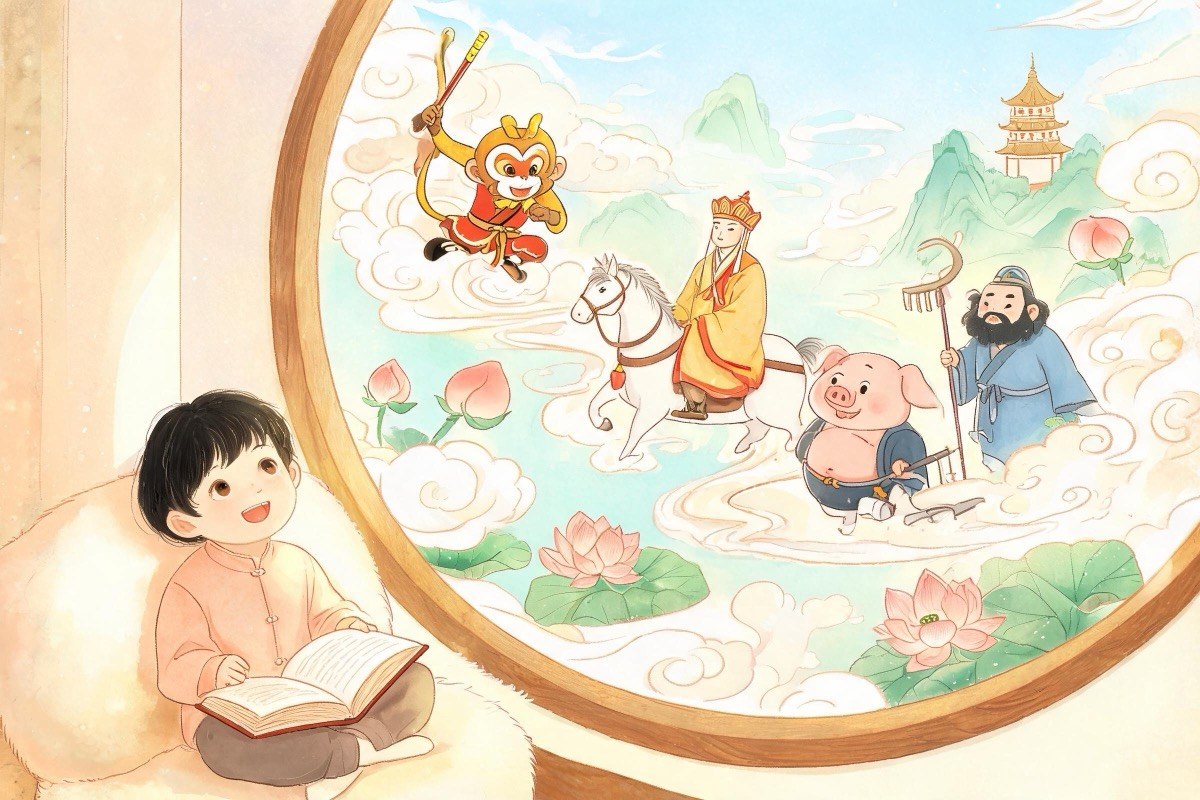
范例题目是《取经路上》。第一节:金箍棒,一根针,藏在耳朵里,没有人知道;师父遇见妖怪,害怕刚冒出头,喊一声长啊长啊长,它就顶天立地在洞口。第二节:筋斗云,一拃宽,翻一个跟头,飞出十万八千里;悟空翻到天上,低头看见师父走长路,影子越来越小,还在往前走。第三节:八十一难,像上坡,一步一步,往山上走;最后一难走完了,回头一看,每一难都变成了脚下的石头。
第一步,给每个意象一个动作。金箍棒不是厉害,是长;筋斗云不是快,是翻;八十一难不是多,是一步一步走。儿童诗不需要形容词,需要动词。动词选对了,意象就站起来了。
第二步,让三小节有顺序。第一节是帮助:棒子保护师父;第二节是距离:天上看着师父走长路;第三节是回望:难变成了石头。诗里藏着一根线:取经路上最重要的不是打妖怪,是一步一步把路走完。这根线,孩子读得懂。
第三步,留一个重复和一个转折。长啊长啊长是重复,孩子喜欢大声喊;回头一看是转折,诗的结尾往往藏在转折后面。写完要大声读几遍,哪里拗口改哪里。儿童诗先要顺口,才谈得上好。
最后一个提醒:别急着写勇敢、伟大这类大词。影子越来越小还在往前走,勇敢已经在里面了;每一难都变成石头,成长已经在里面了。把诗读给同学听,对方听一遍就能跟着念,这首诗就算过关了;跟不上,就回到第一步,重新给意象挑动词。
On the Pilgrimage: Putting the Staff, the Cloud and Eighty-One Trials into a Poem
How do you write a children's poem about the pilgrimage? The brief is clear: three stanzas, three images - the golden staff, the somersault cloud, and the eighty-one trials - fifteen to twenty lines, plain words with rhythm. First a sample poem, then the writing steps.
The sample is titled On the Pilgrimage. Stanza one: The golden staff, thin as a needle, hidden in his ear, nobody knows; when a demon appears and fear begins to rise, one shout of grow, grow, grow - and it stands sky-high at the cave mouth. Stanza two: The somersault cloud, one span wide, one flip and he flies a hundred thousand li; Wukong turns over in the sky, looks down, and sees his master walking the long road, his shadow smaller and smaller, still moving forward. Stanza three: The eighty-one trials are like an uphill path, step by step, climbing the mountain; when the last trial is walked, he looks back - and every trial has become a stone beneath his feet.
Step one: give each image one action. The staff is not fierce, it grows; the cloud is not fast, it flips; the trials are not many, they are walked step by step. A children's poem does not need adjectives, it needs verbs. Choose the verb well and the image stands up.
Step two: give the three stanzas an order. Stanza one is help: the staff protects the master. Stanza two is distance: watching the master from the sky. Stanza three is looking back: the trials have become stones. A thread runs through the poem: the pilgrimage is not about fighting demons, it is about walking the road one step at a time. Children can feel this thread.
Step three: keep one repetition and one turn. Grow, grow, grow is the repetition - children love to shout it. He looks back is the turn - the best line of a poem usually hides after the turn. Read the draft aloud several times and fix whatever stumbles. A children's poem must roll off the tongue before it can be good.
One last tip: do not rush to big words like brave or great. Shadow smaller and smaller, still moving forward already holds the courage; every trial become a stone already holds the growth. Read the poem to a classmate; if they can repeat it after hearing it once, the poem has passed.
这首诗怎么读:三小节的轻重快慢与三个意象
《取经路上》只有三小节,但要读出味道,得有讲究。第一节要读得重:长啊长啊长,三个字一个一个往上顶,像棒子一寸寸长高;顶天立地在洞口要读得稳,最后一个字落地。第二节要读得轻:翻一个跟头飞出十万八千里,语速快一点,像真的腾云;读到影子越来越小要慢下来,还在往前走之前停半拍——这一节的感情,全藏在那半拍里。第三节要读得慢:一步一步往山上走,每个逗号都留足时间;最后一难走完了,回头一看,要像真的回过头那样读。
为什么诗人偏偏选这三个意象?因为金箍棒是本事,筋斗云是想逃走的念头,八十一难是躲不掉的路。这三样东西,正好是每个孩子的一天:想学一身厉害的本事,想飞到外面痛痛快快玩,可作业和练习像山坡一样躲不掉。诗没有讲道理,只是把三个意象摆在路上,孩子自己走着走着就懂了。
这首诗最妙的是第二节的眼睛。悟空翻到天上,看见的不是风景,是师父小小的影子还在走。孩子常常嫌大人慢,就像悟空嫌师父慢;诗里没有笑话师父,只说还在往前走。这一句是诗对普通坚持的敬意:一个跟头十万八千里很了不起,可一步一步走,也是取经。
第三节结尾常被孩子提问:为什么难会变成石头?可以让孩子自己想一想:自己最近战胜过的最难的事,是学骑车,还是背一篇难课文?它过去之后,是不是也成了脚底下的一块石头?当孩子能把八十一难换成自己的石头,这首诗才算真正读完了——读诗的最后一步,永远是把诗换成自己。建议老师把三小节分给三个小组分别朗读,一组重、一组轻、一组慢,合起来读就是这首诗最好的样子。
How to Read the Poem: Weight, Speed, and Three Images
On the Pilgrimage has only three stanzas, but reading it well takes care. Read stanza one heavy: grow, grow, grow, pushing each word a little higher, like the staff rising inch by inch; stands sky-high at the cave mouth must land solid. Read stanza two light: one flip and he flies a hundred thousand li, a little faster, as if truly riding the cloud; slow down at shadow smaller and smaller, and rest half a beat before still moving forward - the feeling of this stanza lives in that half-beat. Read stanza three slowly: step by step climbing the mountain, leaving room at every comma; when the last trial is walked, he looks back - read it as if actually turning the head.
Why these three images? Because the staff is skill, the cloud is the wish to escape, and the eighty-one trials are the road you cannot dodge. These three are exactly a child's day: wanting a impressive skill, wanting to fly off and play, while homework and practice rise like a hill that cannot be avoided. The poem preaches nothing; it simply lays three images on the road, and the child understands while walking.
The finest touch is the eye in stanza two. Wukong flips into the sky and sees not scenery but his master's small shadow, still walking. Children often think adults are slow, just as Wukong thought the master slow; the poem never laughs at the master, it only says still moving forward. That line is the poem's respect for ordinary persistence: one flip of a hundred thousand li is wonderful, but one step at a time is also a pilgrimage.
Children often ask about the ending: why do trials become stones? Let them think of their own hardest recent victory - learning to ride a bike, or memorizing a difficult text. Once it passes, does it not become a stone under the foot? When a child can trade the eighty-one trials for their own stone, the poem is truly finished - the last step of reading a poem is always turning the poem into yourself.
小提示:上面此文档内容仅展示完整文档里的部分内容, 若需要下载完整文档请 点击免费下载完整文档 。