文章内容
西游记绘本启蒙课完整教案:四个环节这样串
这节课四十分钟,给一二年级上,材料选画面大、文字少的西游记绘本。四个环节按「认识—听故事—说感受—画一画」的顺序串起来,下面逐个写清怎么做。
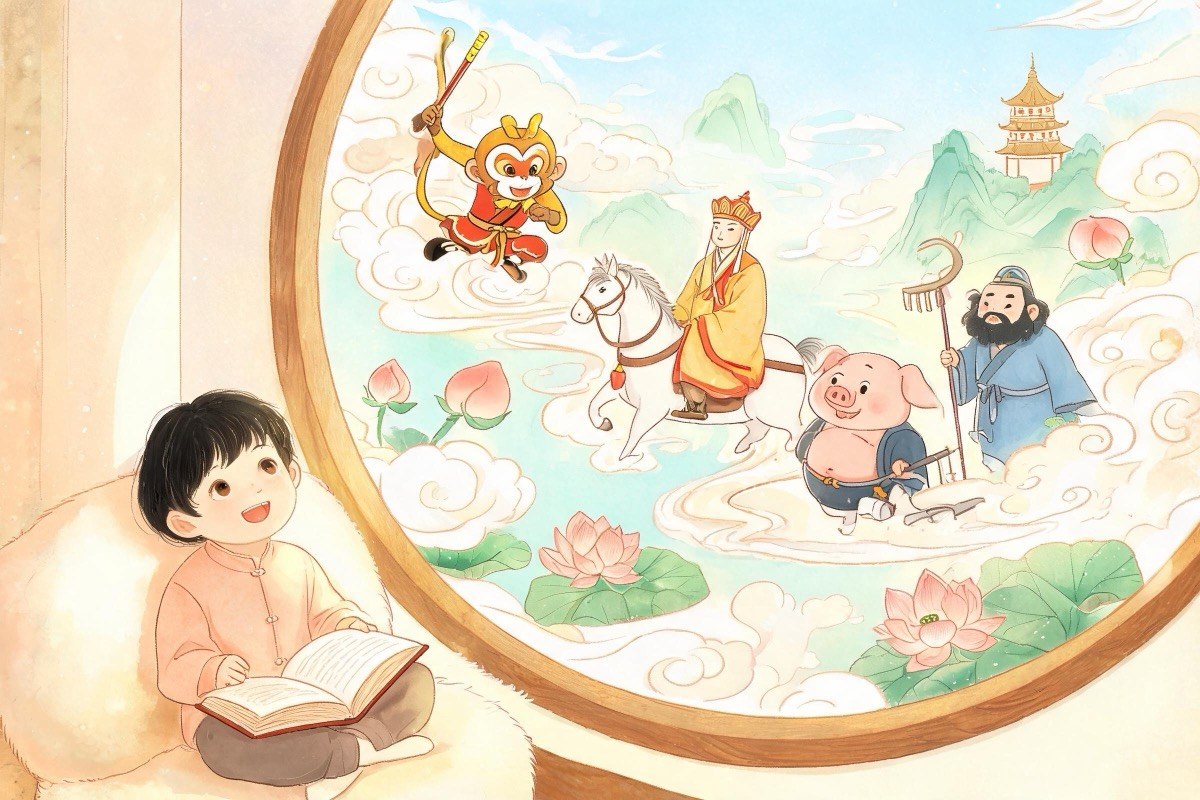
环节一,认识孙悟空,八分钟。教师出示绘本里孙悟空的大图,先不报名字,问「猜猜他是谁」。学生喊出答案后,带全班做三个动作:手搭凉棚望远、挠手背、假装从耳朵里掏出东西放在手心。每个动作配一句「孙悟空会……」,学生跟着说。一二年级靠身体记人物,三个动作比讲身世管用。安全提示:挠手背时指甲剪短,掏耳朵的动作只比划,不碰自己耳朵。
环节二,教师讲三打白骨精片段,十二分钟。讲之前立一条规矩:白骨精变人的画面,老师翻页前会先说「要变啦」,害怕的同学可以闭眼。讲的时候用三声「打」做节奏:第一打,教师拍一下手,问「孙悟空为什么打」;第二打,拍两下手,让一个学生答;第三打,全班一起拍手回答。故事停在「师父念紧箍咒」这一页,不往下讲,留悬念。低年级听故事要留出口:讲到悟空被赶走,问一句「你想对悟空说什么」,让情绪有地方放。
环节三,学生说感受,八分钟。传一支「金箍棒话筒」(一根黄色塑料棒),拿到的人才说话。给两个句式任选:「我喜欢____,因为____」「我看到____的时候,心里____」。学生说「白骨精是坏人」也接住,追问「她变老婆婆骗人,你上当了吗」,把感受往细节带。不纠正观点,不要求完整句,愿意开口就算达标。
环节四,画一画,十分钟。发白纸和彩笔,题目「你想画故事里的谁」。可以画孙悟空,也可以画老虎、白骨精变的老婆婆,画什么都行。教师巡视时只问「你画的他在做什么」,不评「像不像」。画完贴到黑板上的「我们的西游记」展区,家长接孩子时能看到。剩两分钟,全班指着展区喊出自己喜欢的角色名字,课在喊声中结束。
时间分配:八加十二加八加十加两分钟机动。整节课的安全点集中在两处:动作环节不碰脸,讲故事环节预告恐怖画面。趣味点也明确:动作、拍手节奏、话筒、展区,每十分钟换一次形式,低年级坐不住的问题就解决了。
A Complete Picture-Book Lesson Plan for Journey to the West: Linking the Four Stages
This forty-minute lesson is for first and second graders, using a Journey to the West picture book with big pictures and little text. The four stages run in the order "meet—listen—share—draw," linked as follows, with each stage spelled out.
Stage one: meeting Sun Wukong, eight minutes. Show the large picture of Wukong from the book without naming him, and ask "Who is he? Guess." After students shout the answer, lead three actions: hand over eyes like looking far away, scratch the back of the hand, pretend to pull something from the ear and place it in the palm. Pair each action with "Sun Wukong can..." and have students say it. Lower grades remember characters through their bodies; three actions work better than a biography. Safety notes: keep nails trimmed for the scratching motion, and the ear gesture is only pretended, never touching one's own ear.
Stage two: the teacher tells the Three Strikes against the White Bone Demon episode, twelve minutes. Before starting, set one rule: before turning a page with the demon transforming, the teacher will say "It's changing!" and scared students may close their eyes. Use three "strikes" as rhythm: for the first strike, clap once and ask "Why did Wukong strike?"; for the second, clap twice and let one student answer; for the third, the whole class claps and answers together. Stop the story at the page where the master chants the tightening spell, leaving suspense. Young listeners need an outlet: when Wukong is driven away, ask "What would you say to Wukong?" so the feeling has somewhere to go.
Stage three: students share feelings, eight minutes. Pass around a "golden staff microphone" (a yellow plastic stick); only the holder speaks. Offer two sentence frames to choose from: "I like ____ because ____" and "When I saw ____, I felt ____ inside." Accept "the demon is bad" and follow up with "She tricked people as an old lady—did you fall for it?" to guide feelings toward details. Do not correct opinions or demand complete sentences; simply speaking up counts as meeting the goal.
Stage four: draw, ten minutes. Hand out paper and colored pens with the prompt "Who from the story do you want to draw?" Wukong is fine, and so are the tiger or the old lady the demon becomes—anything goes. While circulating, the teacher only asks "What is he doing in your picture?" and never judges "Does it look real?" Finished drawings go up on the blackboard gallery called "Our Journey to the West," visible to parents at pickup. With two minutes left, the class points at the gallery and shouts their favorite character's name, and the lesson ends in that shout.
Time allocation: eight plus twelve plus eight plus ten, plus two buffer minutes. Safety concentrates in two places: no touching faces during actions, and warning before scary pages. The fun elements are equally clear: actions, clap rhythm, the microphone, the gallery—switching format every ten minutes solves the fidgeting problem of lower grades.
低年级讲《三打白骨精》:怎么既好听又不吓到孩子
三打白骨精是西游记里最适合低年级的片段:有重复、有悬念、有对错之争。但它有吓人的成分——妖精吃人、悟空被赶走时委屈。讲得好是启蒙课,讲砸了有孩子回家做噩梦。按下面六步处理。
第一步,讲前铺垫。开讲前用一句话打预防针:「这个故事里有个会变身的妖精,她变谁,老师都会先告诉你。」预告本身就能消掉大半恐惧,未知才吓人,已知可控。同时告诉学生:害怕时可以闭眼、可以捂耳朵,不丢人。
第二步,软化画面。绘本里白骨精现出原形的页面,讲述时把「骷髅」说成「她原来是一堆白骨,像冬天光光的树枝」。比喻选孩子见过的、不流血的东西。妖精「吃人」在原著里写得很直接,讲述时改成「她把村子附近的人吓跑了,谁也不敢出门」,保留作恶的事实,去掉血腥的细节。
第三步,用重复做节奏。三打的结构自带重复,低年级最爱重复。第一打,教师边讲边拍手一下;第二打,拍手两下,问「这次她变成了谁」;第三打,全班先齐声喊「别骗人!」再拍手。重复让孩子从听众变成参与者,恐惧在参与中变成兴奋。
第四步,设争论点。三打最好用的地方是「师父错了」:悟空打的是妖精,师父看到的是好人被欺负。讲完第三打停住,问「师父该不该怪悟空」。一二年级答不出道理没关系,他们会急,会替悟空抱不平——这个「急」就是感受,直接接到下一个说感受环节。
第五步,选停页位置。停在「师父念紧箍咒,悟空疼得打滚」这一页,不接着讲被赶走。疼的画面比赶走的画面好接受,而且留了悬念:下节课再讲悟空回没回来。如果班上有敏感的孩子,停在「悟空举起棒」处也可以,把紧箍咒留给下次。
第六步,讲后出口。讲完立刻做一件热闹的事转移情绪:全班起立,学孙悟空手搭凉棚「看火眼金睛」,边看边说「妖怪哪里跑」。身体动起来,刚才那点紧张就散了。之后再说感受、再画画,情绪已经平稳。
六步里最容易被忽略的是第一步和第六步:铺垫和出口。故事本身不用改,改的是讲法——预告、比喻、重复、停页,全是技术活,练一遍就能用。
Telling the White Bone Demon Story to Young Children: Exciting Without Frightening
The Three Strikes against the White Bone Demon is the episode best suited to lower grades: it has repetition, suspense, and a right-and-wrong dispute. But it contains frightening elements—the demon eats people, and Wukong is wrongly banished. Told well, it is a fine starter lesson; told badly, children have nightmares. Handle it in six steps.
Step one: pre-warning. Before starting, say one sentence: "This story has a demon who can transform, and before she changes into anyone, I will tell you first." The warning alone removes most fear—the unknown frightens, the known is manageable. Also tell students: if you get scared, you may close your eyes or cover your ears, and it is no shame.
Step two: soften the images. On the page where the demon reveals her true form, do not say "skeleton"; say "she was really white bones, like bare branches in winter." Choose metaphors children have seen, nothing bloody. The novel states plainly that the demon eats people; when telling, change it to "she scared everyone near the village away, and nobody dared go outside"—keep the wrongdoing, drop the gore.
Step three: use repetition as rhythm. The three-strike structure comes with built-in repetition, which young children love. First strike: the teacher claps once while narrating. Second strike: clap twice and ask "Who did she become this time?" Third strike: the whole class shouts "Stop tricking us!" first, then claps. Repetition turns listeners into participants, and fear becomes excitement through participation.
Step four: set a dispute point. The best thing about the three strikes is "the master was wrong": Wukong struck a demon, while the master saw a good person seemingly bullied. After the third strike, stop and ask "Should the master blame Wukong?" First and second graders cannot answer with logic, and that is fine—they get anxious, they side with Wukong. That anxiety is a feeling, and it feeds directly into the sharing stage.
Step five: choose where to stop. Stop at the page where the master chants the tightening spell and Wukong rolls in pain; do not continue to the banishment. Pain is easier to take than rejection, and it leaves suspense: next lesson will tell whether Wukong returns. For sensitive classes, stop at "Wukong raises the staff" and save the spell for next time.
Step six: an emotional outlet afterward. Immediately do something lively to shift the mood: everyone stands, shades their eyes like Wukong using the fiery golden gaze, looking around while saying "Demon, where do you run?" Once bodies move, the tension dissolves. Then move to sharing and drawing with emotions settled.
The two steps most often skipped are the first and the last: the warning and the outlet. The story itself needs no changes—only the telling: warning, metaphor, repetition, stopping page. These are techniques; practice once and use them.
小提示:上面此文档内容仅展示完整文档里的部分内容, 若需要下载完整文档请 点击免费下载完整文档 。