文章内容
笔袋是面镜子
期中考试的成绩单发下来那天,我把笔袋从书包里拽出来,扔在桌上。数学六十八,英语七十四,物理刚过及格线。我妈在客厅问我考得怎么样,我说还行。这个谎说得我胸口发闷,可是比起分数,我更说不清的是另一种东西:我明明每天都坐在书桌前,为什么什么都抓不住。
那天晚上我找错题本,把笔袋整个翻过来。笔袋是初一开学买的,帆布的,本来有三个隔层。到初二下学期,三个隔层早就混成了一个洞:黑笔红笔铅笔挤在一起,两支笔帽不见了,红笔干得写不出水;数学的三角板和语文的书签缠在一块;里面还有上学期用剩的半管胶水、三张揉成团的纸条、一颗不知道什么时候滚进去的纽扣。我一样一样往外掏,掏了十分钟,桌上多出一座小山。错题本没找到,倒是找到一张初一第一学期的课程表,边角已经磨圆了。
我坐在那座小山前面,忽然想起这半年。笔袋不是突然变乱的。初一的时候,笔袋里每个隔层装什么我记得清清楚楚,红笔只在改作业时用,用完就放回中间那层。初二开始,我上课走神的次数多了,笔记记得断断续续,笔袋里的笔也开始乱住:红笔跟黑笔混在一起,因为我已经有两个星期没改过自己的笔记;三角板跟杂物混在一起,因为几何课我听不懂,书翻到那一页就合上了。笔袋里的每一次混乱,都对应着我学习里的一次放弃。我以为笔袋乱只是习惯问题,原来它是面镜子,我学习上的失序,它早就一件一件替我记着。
那个周末我做了两件事。第一件,把那座小山重新清点:写不出的笔扔掉,纽扣胶水归到杂物抽屉,课程表压在笔袋的透明网袋里。三个隔层重新分工,写字的一层,改错和工具一层,备用一层。第二件,我翻开那本找到的错题本,从数学第六章的第一道错题开始补。错题本里的空白页像笔袋里的空隔层,我一道一道往里填,一周填三页,不多,但是每页都自己重做一遍。
改变不是一夜之间发生的。十二月的月考,数学八十一。分数不算高,可是那天放学我收拾书包,笔袋里的东西各在各的隔层,拉链一拉就合上了。这个动作半年以前我要按两下才能完成。我发现顺序是会互相传染的:笔袋归位,笔记跟着归位,错题跟着归位,上课的时候手知道找什么,脑子就知道听什么。
现在我的笔袋还是那个旧帆布笔袋。每次月考完我都把它倒在桌上清一遍,像擦那面镜子。它干净,我就知道自己最近没偷懒;它开始乱,我就知道有一门课我又在躲。这个办法不高级,但是对我有用:管不住思路的时候,先管住手边这一小片地方。
My Pencil Pouch Is a Mirror
The day the midterm report came out, I yanked my pencil pouch out of my bag and threw it on the desk. Math sixty-eight, English seventy-four, physics barely passing. My mother asked from the living room how I did. I said fine. The lie sat heavy in my chest, but harder to explain than the scores was something else: I sat at my desk every single day, so why could I not hold onto anything?
That night, hunting for my mistake notebook, I turned the whole pouch upside down. I had bought it canvas-made at the start of seventh grade, with three compartments. By the second half of eighth grade those three compartments had merged into one cave: black pens, red pens, and pencils jammed together, two caps missing, the red pen too dry to write; my math set squares tangled with a Chinese bookmark; plus half a tube of old glue, three crumpled notes, and a button that had rolled in at some unknown date. I dug things out one by one for ten minutes, and a small mountain grew on the desk. The mistake notebook never surfaced; instead I found my class schedule from the first term of seventh grade, its corners worn round.
Sitting before that mountain, the past half year came back to me. The pouch did not get messy overnight. In seventh grade I knew exactly what lived in each compartment; the red pen came out only for correcting my own notes and went back to the middle layer. In eighth grade, I drifted in class more often, my notes grew patchy, and the pens began cohabiting carelessly: red mixed with black, because I had not corrected my notes in two weeks; set squares mixed with junk, because I could not follow geometry and closed the book whenever that chapter came. Every mess inside the pouch matched one surrender in my studies. I had thought a messy pouch was just a habit problem. It was a mirror. My academic disorder had been recorded inside it, item by item, all along.
That weekend I did two things. First, I inventoried the mountain: dead pens into the trash, button and glue into the junk drawer, the old schedule tucked into the pouch's clear mesh pocket. The three compartments got new jobs: writing tools in one, correction and instruments in one, spares in one. Second, I opened the mistake notebook I finally found and started repairing errors from the first problem of chapter six in math. Its blank pages were like the empty compartments of my pouch. I filled three pages a week, not many, but redoing every problem myself.
The change did not happen overnight. At the December monthly test I scored eighty-one in math. Not a high score, but that afternoon as I packed up, everything sat in its own compartment and the zipper closed in one pull. Half a year ago that same motion needed two presses. I found that order is contagious: when the pouch returns to order, the notes follow, the mistakes follow, and when the hand knows what to reach for, the mind knows what to listen for.
My pouch is still that old canvas one. After every monthly test I dump it on the desk and clean it, like wiping that mirror. If it is clean, I know I have not been slacking lately; if it starts to mess up, I know there is a subject I am hiding from again. The method is not sophisticated, but it works for me: when I cannot control my thinking, I start by controlling the small patch of order within reach of my hand.
倒出来的半年
物理卷子发下来,我趴在桌上看那个分数,五十三。放学铃响完,物理老师把我叫到办公室,说不是要批评我,就想看看我平时的笔记。我翻开书包,把文具盒拿出来放到她桌上,打开。她看了三秒钟,没看我的笔记,先看了我的文具盒。
她说,倒出来吧。我把文具盒翻过来,哗啦一声,办公桌上摊了一片:五支笔,两支写不出字;橡皮断成两半;一把学生尺断了角;圆规只剩一条腿;七张纸条,其中四张是上课传话传了一半停下的;两张不及格的卷子折成小方块塞在盒底;还有一支笔帽咬得全是牙印的笔。物理老师拿笔把这些东西一样一样拨开,像拨开一段时间。
她指着那四张传了一半的纸条问,什么时候的事。我说是上学期十一月开始的。她指着盒底两张折起来的卷子问,为什么折起来。我说,不想看见。她指着那条断腿的圆规问,怎么断的。我想了半天,想起来了:上学期几何单元测验,我画不出辅助线,把圆规掰了。她一样一样问完,说,你自己说说,这半年你的学习是什么样。我说不出来。她说,不用说了,都在这儿摊着呢。
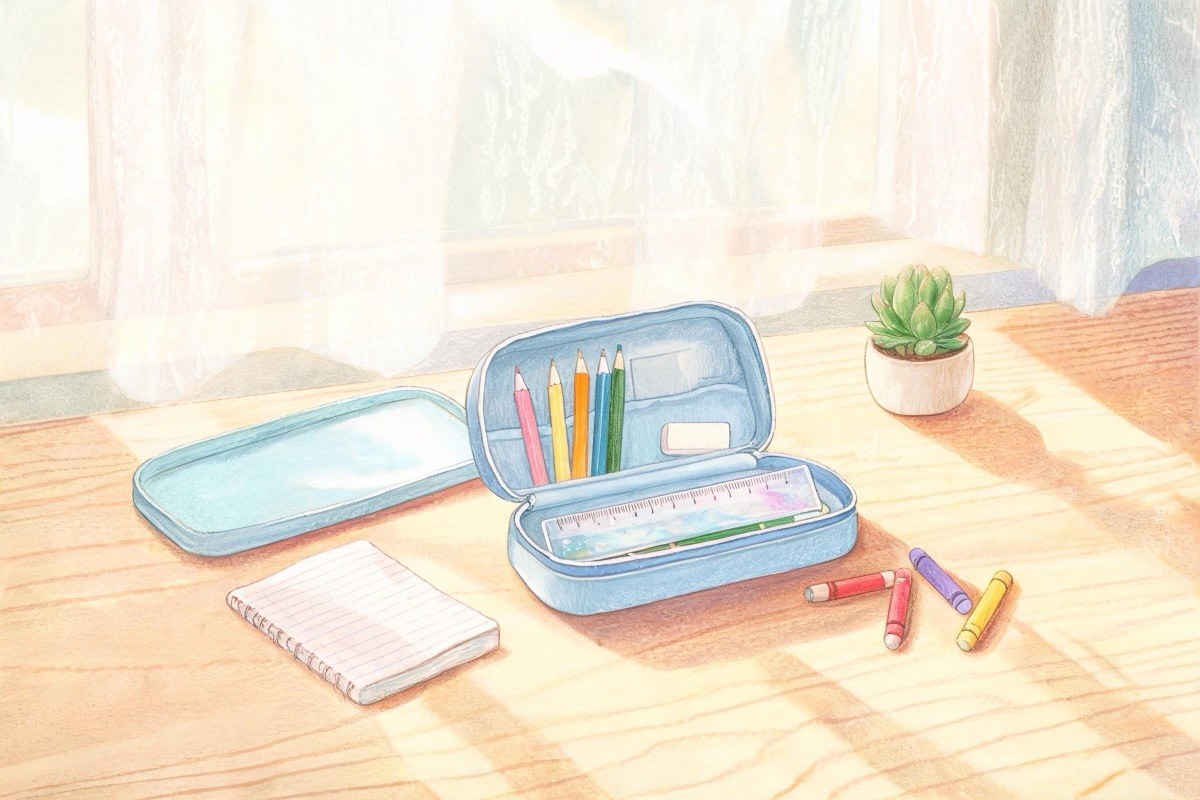
那天晚上我在办公室把东西重新装好。物理老师给我一个她抽屉里的旧盒子,铁皮的,分两层。她说不用买新的,先把东西分对地方:能写字的放上层,断的坏的扔了,纸条和卷子不许进盒子,卷子进文件夹。我照做了。装到最后,文具盒里只剩四样能用的东西,盒子合上,声音很脆。
真正的变化是物理老师提的一个要求:每周把她课上没听懂的题写在小本上,周五放她办公桌上,她周五中午给我讲,一次不超过三道。第一个周五我写了三道,全是上学期几何的欠账。讲到第二道的时候我才明白,我听不懂八年级的内容,根子在上学期没懂的辅助线。那个学期我上课听不懂就传纸条,纸条传了一半又停下,因为连传纸条的劲都用不上了。我的成绩不是从这个学期下滑的,是上学期就开始往下走,文具盒替我藏了半年。
一月期末,物理七十六。不算好看,但是我把那张卷子放进了文件夹,没有折成方块。文具盒还是那只铁皮盒,两层,上层四支笔一块橡皮一把尺一个圆规,下层备用。它干净得让我有点不好意思,好像它知道我欠的账正在一笔一笔还。
后来我常想起办公室那一声哗啦。半年乱掉的东西,倒在桌上就看得见;学习乱掉的东西,平时藏在分数底下,只有倒出来才看得见。我现在的办法是每周五晚上把文具盒倒在书桌上清一遍,顺手把这一周没弄懂的题抄进小本。盒子倒干净只要五分钟,可是它逼我每周直面一次自己的乱。乱不可怕,看不见才可怕。
Half a Year Poured Out on the Desk
When the physics test came back, I lay on the desk staring at the number: fifty-three. After the final bell, my physics teacher called me to the office, saying she was not going to scold me, she just wanted to see my usual notes. I opened my bag, took out my pencil case, and set it open on her desk. She looked for three seconds, and looked at the case before she looked at the notes.
She said, pour it out. I turned the case upside down, and with a clatter my desk became a scatter: five pens, two of them dead; an eraser broken in half; a school ruler with a chipped corner; a compass with one leg left; seven notes, four of them half-finished messages passed in class; two failing test papers folded into squares stuffed at the bottom; and a pen cap chewed full of tooth marks. She moved each item aside with her pen, as if parting a stretch of time.
She pointed at the four unfinished notes and asked when. I said it started in November of last term. She pointed at the folded papers at the bottom and asked why they were folded. I said, I did not want to see them. She pointed at the broken compass and asked how it broke. I thought for a long time, then remembered: during last term's geometry quiz, unable to draw the auxiliary line, I had snapped the compass. Having asked through everything, she said, tell me yourself, what has your studying been like this half year. I could not. She said, no need, it is all spread out right here.
That evening I repacked my things in the office. She gave me an old tin box from her drawer, two layers. She said do not buy a new one, first put things in the right places: working pens in the upper layer, broken ones in the trash, notes and test papers never in the case, papers in a folder. I did exactly that. In the end only four usable things went in, and the lid closed with a clean click.
The real change came from one requirement she set: every week I write down the problems I did not understand in her class in a small notebook, leave it on her desk on Friday, and she explains them to me at noon, no more than three at a time. The first Friday I wrote three, all debts from last term's geometry. Halfway through the second one I understood: the reason I could not follow eighth-grade content was the auxiliary lines I never grasped last term. Last term, when I got lost in class I passed notes, and even those notes stopped halfway, because I could not muster the energy for note-passing either. My grades did not slide this term; they had been falling since last term, and my pencil case had hidden it for half a year.
At the January final I got seventy-six in physics. Not pretty, but I put that paper into my folder instead of folding it into a square. The case is still that tin box, two layers: upper layer four pens, one eraser, one ruler, one compass; lower layer spares. It is so clean it makes me a little embarrassed, as if it knows the debts I owe are being repaid one by one.
I often think of that clatter in the office. Things messy for half a year become visible once poured onto a table; a messy study life hides under the scores until you pour it out. My method now: every Friday night dump the case onto the desk and clean it, and while at it copy that week's unresolved problems into the small notebook. Dumping the case clean takes five minutes, but it forces me to face my own mess once a week. Mess is not frightening. Not seeing it is.
小提示:上面此文档内容仅展示完整文档里的部分内容, 若需要下载完整文档请 点击免费下载完整文档 。