文章内容
把文具盒管好,把校园管好
尊敬的老师们、亲爱的同学们,早上好!当五星红旗在晨光中升起,我很荣幸代表六年级全体同学,在国旗下讲话,主题是《我的文具盒》。
讲话开始前,先讲一件上周四早上发生的事。大课间铃一响,同学们涌出教室,楼梯口一只文具盒被人碰翻,铅笔、尺子、橡皮滚了一台阶,路过的人一个接一个跨过去,没有人弯腰。直到一年级的一个小女孩下楼,蹲下来把文具一件件捡回盒子里,现场才收拾干净。我问她叫什么名字,她挠挠头说:妈妈教我看见掉在地上的东西要捡起来。那只印着卡通图案的红色文具盒,它的主人平时就随手放在课桌最外沿,肩膀一蹭,它就飞了出去。
也许你觉得这是小事。那我们去走廊的失物招领箱看一看。上学期末,值周班级统计过:一学期捡到的文具超过两百件,最多的是橡皮,其次是卷笔刀和尺子。其中只有一二十件写着名字,其余的安静地躺在箱子里,等一个永远不会来的主人。一块九月买的橡皮,才用了两个月,还剩大半,却在失物箱和讲台之间换了三任主人——被捡起,被拿走,又丢失。这样的文具,我们学校每年要重新买多少?
我是班里的公物管理员,手里有一本登记册。起初我只记谁丢了什么,后来发现一个规律:经常丢文具的同学,文具盒几乎都乱得合不拢盖,松掉的卷笔刀、削得太短的铅笔自己就会从盒缝里滚出来。从不丢东西的同学,文具盒里铅笔排成一排,尺子卡在隔层里,橡皮装在小布袋里。他们的文具好像都认得回家的路。这学期我们班开始做课前十秒钟:每节课下课,先把文具放回原位再离开座位。刚开始有同学嫌麻烦,坚持两个月后,我们班再没丢过一件文具,登记册上每周十几条记录变成了空白。
整理文具盒带来的,远不止不丢东西。打开盒子,什么都在老地方,上课就不用翻遍整个课桌打断思路;借给同学的铅笔回到原位,你心里有一种小小的踏实;家长补买文具时,也不用再猜你到底丢了什么。一只整洁的文具盒,就像心里的一格小抽屉,放得整齐,取得出来。
在此,我代表六年级全体同学向全校发出倡议:从今天起,给自己的橡皮、卷笔刀、尺子写上名字,让每一件文具都有姓名牌;每天放学前用十秒钟把文具归位,坚持一个月;下个月的国旗下讲话,我们将邀请几位同学上台,分享自己文具盒里的变化。让我们从每天的十秒钟开始,从课桌上的文具盒开始。
同学们,习惯从来不是靠一句响亮的口号养成的,它藏在弯腰捡起一块橡皮的动作里,藏在合上文具盒盖的声音里。管好眼前这只巴掌大的文具盒,我们就能管好小学阶段的生活,也能管好将来自己的人生。我的讲话完毕,谢谢大家!
Keep Your Pencil Case in Order, Keep Our Campus in Order
Dear teachers and dear fellow students, good morning! As the five-star red flag rises in the morning light, I am honored to speak for all sixth-graders under the flag, on the theme of My Pencil Case.
Before I begin, let me tell you something that happened last Thursday morning. When the long-break bell rang, students poured out of the classrooms. At the stairway, someone knocked a pencil case off a desk, and pencils, rulers and erasers rolled across the steps. One passer-by after one stepped over them, and nobody bent down. Not until a first-grade girl came downstairs, squatted, and put the stationery back into the case one by one was the mess cleared. I asked her name. She scratched her head and said: My mom taught me to pick up anything that falls on the ground. The red pencil case with a cartoon picture on it had been placed carelessly on the outer edge of its owner's desk. One brush of a shoulder, and it flew off.
You may think this is a small thing. Then let us look into the lost-and-found box in the corridor. At the end of last term, the duty class kept a count: more than two hundred pieces of stationery had been picked up during the term, erasers being the most, then pencil sharpeners and rulers. Only a dozen or so of them carried a name. The rest lay quietly in the box, waiting for owners who would never come. One eraser bought in September was still more than half its size after two months of use, yet it had already changed masters three times between the lost-and-found box and the teachers' desk. It was found, taken away, and lost again. How many such pieces of stationery does our school have to buy again every year?
I am the class keeper of public supplies, and I keep a record book. At first I only wrote down who lost what. Later I found a pattern: classmates who often lost stationery had pencil cases so messy that the lids could hardly close, with loose sharpeners and pencils sharpened too short rolling out through the seams by themselves. The students who never lost anything kept their pencils in a row, their rulers in the divider, and their erasers in small cloth bags. Their stationery seemed to know the way home. This term our class started the ten-seconds rule: before leaving our seats after each class, we put every piece of stationery back in its place. Some classmates complained at the beginning. After two months of persistence, our class has not lost a single piece of stationery, and the dozen or so entries in my record book each week have turned into blank pages.
Keeping a pencil case tidy brings far more than not losing things. When you open the case and everything sits where it belongs, you no longer have to rummage through your desk in the middle of a lesson and break your train of thought. When a borrowed pencil returns to its place, you feel a small, quiet sense of trust. When parents buy replacements, they no longer have to guess what you lost. A tidy pencil case is like a small drawer inside your mind: what is put in neatly comes out neatly.
On behalf of all sixth-graders, I call on the whole school: starting today, write your name on your eraser, sharpener and ruler, so that every piece of stationery wears a name tag; spend ten seconds putting your stationery back in place before school ends each day, and keep it up for one month; at next month's flag ceremony, we will invite several classmates onto the stage to share the changes inside their own pencil cases. Let us begin with the ten seconds of every day, beginning with the pencil case on our desk.
Fellow students, habits are never built by one loud slogan. They hide in the motion of bending down to pick up an eraser, in the sound of a pencil case lid clicking shut. If we can manage the palm-sized pencil case in front of us, we can manage our life in elementary school, and one day manage our own future. This is my speech. Thank you all!
一只文具盒里的学期
老师们、同学们,早上好。今天我在国旗下讲话的主题是《我的文具盒》。请允许我先以一位班主任的身份,讲几个我在教室里看到的画面。
每天早晨巡视教室,我的目光总会先落在课桌上。有的课桌一眼望去清清爽爽:文具盒摆在右上角,盒盖合得严严实实。也有的课桌让我忍不住停下脚步:文具盒敞着口,铅笔斜插在里面,盒盖怎么按都合不拢,因为里面卡着一块断成两截的尺子;卷笔刀的小盒里积满了笔屑,倒出来的时候像下了一场铅笔灰的雪;橡皮被抠成了不规则的小碎块,上面还扎着圆规的针眼。我轻轻问过几位同学:你的文具盒上一次彻底清理是什么时候?孩子们想了很久,摇摇头。有的孩子说,开学那天装进去的,就再没打开整理过。
这些乱糟糟的文具盒,会在一些时刻现出原形。上学期期中考试,我们班有个男孩在数学考试的最后十分钟举手,声音发颤:老师,我的橡皮不见了。他翻遍了文具盒,抖出了三截铅笔头、一把碎纸屑,橡皮却怎么也找不到。那道画图题最后没有擦干净,卷面上留着一团灰。走出考场,他眼圈红红的。他难过不是因为分数,而是他明明记得自己准备过,却在最需要的时候拿不出来。
这学期,这位男孩的妈妈给他换了一只带隔层的文具盒,教他每晚睡前把铅笔削好排进凹槽,尺子放进长格,橡皮装进小袋。变化是从一件小事开始的:有一次同桌忘带直尺,他从盒里稳稳抽出一把递过去。那个动作干脆、自然,像一位士兵从枪架上取下枪。后来的课堂小测,他再没有为文具分过一次心。我问他感受,他说:以前上课老担心东西不见,现在不用想,它们都在。
同学们,这就是整理的好处,它不写在成绩单上,却藏在每一节课的专注里、每一次考试的从容里。一只干净的文具盒,让你不必在四十分钟的课堂上翻找;一套点齐的文具,让你在考场上相信自己的准备;而每天睡前十分钟的整理,会让你明白,自己的东西自己负责,这是长大最重要的第一步。
所以,我代表全体老师向同学们发出号召:这个月,请每位同学给自己的文具盒做一次大扫除,倒空笔屑,断尺换新的,给橡皮包上纸壳;每天放学前,把文具归位,把盒盖扣到听见咔哒一声;坚持四周以后,请爸爸妈妈在签字栏里写下一句评语。四周之后,我们将请各班代表带着自己最整洁的文具盒,到主席台前展示。
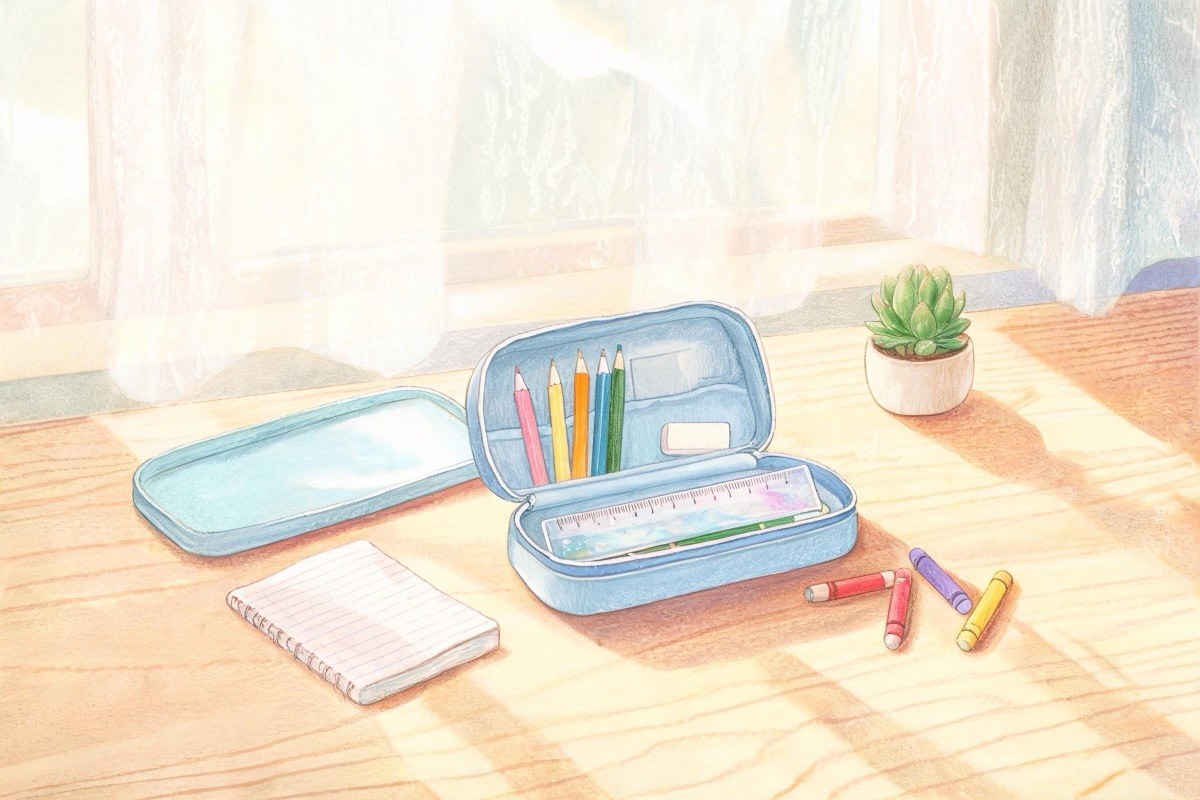
同学们,一只文具盒很小,小得只装得下几支笔;一只文具盒也不小,它装得下一个学期的秩序,也装得下一个孩子对自己的要求。愿你们每天打开它的时候,里面的每一件文具都干干净净、各就各位,等着陪你们上好下一节课。我的讲话完毕,谢谢大家!
A Whole Term Inside a Pencil Case
Dear teachers and students, good morning. My topic under the flag today is My Pencil Case. Please allow me, as a homeroom teacher, to begin with a few scenes I have seen in my classroom.
Every morning when I patrol the classroom, my eyes go first to the desks. Some desks look clear at a glance: the pencil case sits at the upper right corner, its lid closed tight. Other desks make me stop and look: the case stands open with pencils sticking out at an angle, the lid refusing to snap shut because a ruler broken in two is jammed inside; the little box of a pencil sharpener is packed with shavings, and when you tip it out it snows pencil dust; the eraser has been dug into irregular little chunks, still bearing the needle holes of a compass. I have asked several students gently: when did you last clean out your pencil case thoroughly? The children thought for a long time and shook their heads. One said it was packed on the first day of school and had never been opened and tidied since.
These messy pencil cases show their true colors at certain moments. During the midterm exam last term, a boy in my class raised his hand in the last ten minutes of the math test, his voice trembling: Teacher, my eraser is gone. He turned his pencil case inside out, shaking out three pencil stubs and a handful of paper scraps, but the eraser could not be found anywhere. The drawing question at the end was never erased cleanly, and a gray smudge stayed on the paper. Walking out of the exam hall, his eyes were red. His pain was not about the score. It was that he remembered preparing everything, yet could not produce it at the moment he needed it most.
This term, the boy's mother bought him a pencil case with compartments and taught him every night before bed to sharpen the pencils and lay them in the grooves, put the ruler in the long slot, and wrap the eraser in its little bag. The change began with a small thing: one day his deskmate forgot a ruler, and he drew one steadily out of his case and handed it over. The motion was crisp and natural, like a soldier taking a rifle from its rack. In the quizzes that followed, he never once lost focus over stationery. When I asked him how it felt, he said: Before, I kept worrying about losing things in class. Now I do not have to think about it. They are all there.
Students, this is the benefit of tidiness. It does not appear on the report card, but it hides in the focus of every lesson and the calm of every exam. A clean pencil case saves you from rummaging through a forty-minute class; a complete set of stationery makes you trust your own preparation in the exam hall; and ten minutes of tidying before bed each night teaches you to take responsibility for your own things, which is the most important first step of growing up.
So, on behalf of all the teachers, I call on every student: this month, please give your pencil case a thorough cleaning, empty out the shavings, replace broken rulers, and wrap your eraser in a paper sleeve; before school ends each day, put every piece of stationery back and snap the lid until you hear the click; after four weeks of persistence, ask your parents to write one line of comment in the signature column. Four weeks later, we will invite class representatives to bring their tidiest pencil cases and display them on the stage.
Students, a pencil case is small, small enough to hold only a few pens. A pencil case is also not small: it can hold the order of a whole term, and a child's standards for himself. May you open it each day to find every piece of stationery clean and in its place, waiting to carry you through the next lesson. This is my speech. Thank you all!
小提示:上面此文档内容仅展示完整文档里的部分内容, 若需要下载完整文档请 点击免费下载完整文档 。