文章内容
换掉旧盒子那天,我翻出一张三年前的纸条
新文具盒到货那天,妈妈把快递放在餐桌上,让我自己拆。我拆开一看,是个深蓝色的布面盒子,三层隔层,拉链亮闪闪的。说实话,我没什么惊喜,只是把旧盒子里的东西一样一样挪过去。挪到一半,我停了一下——我已经有过三个文具盒了,这是第四个。换盒子这件事,好像不知不觉就变成了一个记录我长大的刻度。
一年级时我用的是铁皮盒,双面开合,啪嗒一声特别响。那个盒子陪我到三年级下学期,卡扣坏了,按不紧,上课总在我胳膊底下慢慢张开。妈妈换了个塑料的,单层,轻。五年级上学期,那个塑料盒被我的椅子腿挤扁了,笔从缝里挤出来,滚了一地。班主任递给我一个透明的拉链盒,说将就用。这个透明盒陪了我两年多,笔槽磨得发白,盒盖上贴的小火箭贴纸翘起了边。我一直以为,下一个盒子该是它用旧了、坏了才换。这次才发现,它其实没坏,是我变了:小学一个盒子装十几样东西,彩笔、贴纸、备用橡皮,大半用不上;现在这个新盒子,我只放得下笔、几支常用的和错题标签。东西少了,我反而更顺手。
整理旧盒子时,一张对折的纸条从夹层里抖出来。我捡起来,是三年级的字,歪歪扭扭,上面写着:别丢三落四。那个落字不会写,还用了拼音。我盯着看了很久。三年级的我给自己提了个要求,纸条塞进盒子里,我就再没看过它。可是这两年,我好像慢慢做到了:放学前扫一遍桌面,周末把笔袋倒空清一遍。那个小孩塞进盒子的提醒,一直没离开,只是我过了两年才发现它还在。
我把纸条贴在新盒盖内侧。每天打开盒子都能看见那行歪字和那个拼音。旧盒子我没扔,放在书桌抽屉最里面。有时候拉开抽屉看见它,会想:盒子换了一茬又一茬,铁皮换成塑料,塑料换成透明拉链,再换成现在这个布面的。真正留下来的东西,从一只盒子挪进了另一只盒子。
新盒子用了一个星期,我已经能闭着眼摸到每样东西的位置。旧盒子安静地躺在抽屉里,它装过的那个丢三落四的小孩,好像也一起收进去了。成长大概就是这样:不是哪天突然变了,而是旧东西退场的时候,你才看清自己走了多远。
The Day I Retired My Old Pencil Case, I Found a Note from Three Years Ago
The day my new pencil case arrived, Mom set the parcel on the dining table and told me to open it myself. Inside was a dark blue cloth case with three compartments and a shiny zipper. To be honest, I felt no surprise. I just moved things over from the old case, one by one. Halfway through, I paused. This was my fourth pencil case. Changing cases had quietly become a ruler marking how much I had grown.
In first grade I used a tin case that snapped open on both sides, loud enough to turn heads in class. It stayed with me until the second term of third grade, when its clasp broke and it kept slowly opening under my arm during lessons. Mom replaced it with a light single-layer plastic one. In the first term of fifth grade, my chair leg crushed that plastic case flat, and pens squeezed out of the crack and rolled all over the floor. Our homeroom teacher handed me a clear zippered case and said it would do. That clear case stayed with me for over two years. Its pen grooves wore white, and the little rocket sticker on the lid curled up at the corners. I had always assumed the next case would come only when this one wore out or broke. This time I realized it was not broken. I had changed. In elementary school one case held a dozen things, markers, stickers, spare erasers, most of them unused. Now the new case fits only pens, a few daily tools, and my mistake tags. With fewer things, I actually work faster.
While emptying the old case, a folded slip of paper fluttered out of the inner pocket. I picked it up. The handwriting was third grade, crooked and unsure: Do not keep losing things. The character for lose was not written correctly; I had used pinyin instead. I stared at it for a long time. The third-grade me had set a rule, tucked it into the case, and I never looked at it again. Yet over these two years I seem to have slowly lived up to it: a quick sweep of the desk before class ends, emptying the pouch on weekends. The reminder that kid tucked away never left. It just took me two years to notice it was still there.
I stuck the note inside the lid of the new case, where I can see those crooked characters and that pinyin every time I open it. I did not throw the old case away. It sits at the back of my desk drawer. Sometimes I catch sight of it and think: cases come and go, tin to plastic, plastic to clear zipper, now to cloth. The things that truly stay have been moved from one case into another.
After a week with the new case, I can find everything inside it with my eyes closed. The old case rests quietly in the drawer, and the careless little kid it once held seems to have been packed inside it too. Growing up is like that. Nothing changes on one sudden day. You only see how far you have walked when the old things take their bow.
盒盖内侧的那张便签,替我记着从前的我
我的新文具盒盖内侧贴着一张便签,黄色,边角已经卷了。上面只有一行字:先把今天最不想做的事做完。写这句话的人是我,写它的时间是初二开学第一周。可这句话真正开始起作用,是从那只旧盒子退场之后。
旧盒子是个军绿色的帆布卷笔袋,拉链头上拴着一截我系的红绳。它从我六年级一直用到初一,装过整个小学高年级的家当:两套课本大小的笔记本、一沓卷起来的草稿纸、订正用的红笔、还有妈妈塞进去的一包纸巾。那时候我的文具盒像个仓库,什么东西都往里塞,找一支黑笔要在里面翻半天。初一上学期有次数学测验,我要找圆规,把笔袋整个倒在桌上,文具哗啦散开,考试时间过去了两分钟。监考老师没说什么,只是看了我一眼。那一眼我记到今天。
期末那天晚上,我把笔袋里的东西全部分拣出来:还在用的、三个月没碰过的、早就坏掉的,分成三堆。坏掉的扔掉,没碰过的收进抽屉,还在用的重新装回去。笔袋一下子瘪了,掂在手里轻了一半。第二天我把瘪掉的笔袋放进书桌最下层的格子里,没有扔。它不是坏了才退场的,是被我整理空的。这件事让我第一次意识到:不是东西太多,是我抓不住重点。
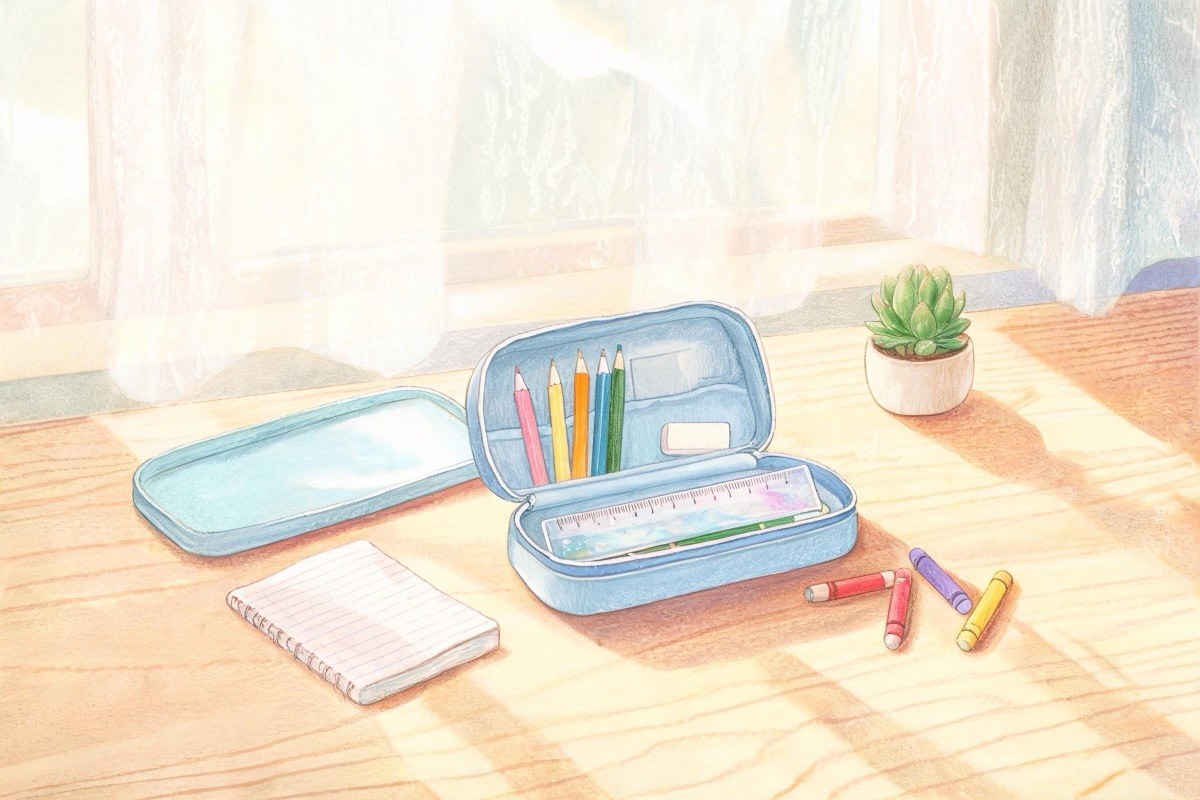
开学前,我自己挑了新盒子,一个能站立的笔筒式笔盒。装东西时我做了一个决定:每样文具只留一支,多余的不再带。装到最后一格,我贴上了那张便签。那句话是我想了很久才写下的。每天早上打开盒盖,先看见它,再看见笔。头几天我嫌它碍眼,第一单元测验前,我对着那道最难的应用题发了十分钟呆,才想起便签上的话,硬着头皮从它开始做,结果那道题拿了满分。从那以后我不嫌它碍眼了。
有时候我会想起旧笔袋里那个翻找圆规的下午,脸还是有点热。现在的盒子打开就是全部,三秒钟看完,不用翻。省下来的不只是那两分钟,还有一种慌慌张张的心情。我慢慢体会到,管理文具其实是管理注意力:盒子里每多一样没用的东西,脑子里就多一分杂音。
旧盒子还在那个格子里,红绳也还在。上周末我把它拿出来擦灰,发现里面还留着一小截铅笔头,是我六年级咬过笔杆的那支。我把它放回盒子,合上格门。新盒子里的便签又用掉一张,我撕下写满的那张,换上一张新的,字比半年前工整了些。盒子换新的,便签换新的,写字的人也在悄悄换。唯一没换的是那个提醒:先把最不想做的事做完。它替我记着从前的我,也盯着现在的我。
The Note Inside the Lid Keeps the Old Me in Mind
Taped inside the lid of my new pencil case is a yellow sticky note with curled corners. It carries one line: finish the thing you least want to do today. I wrote it in the first week of eighth grade. But it truly started working only after my old case retired.
The old one was an army-green canvas roll pouch with a red string I had tied to its zipper pull. It served me from sixth grade through seventh, carrying the whole household of upper elementary: two stacks of notebooks, a roll of draft paper, the red pen for corrections, and a pack of tissues Mom had stuffed in. Back then my case was a warehouse. I threw everything in and spent ages digging out a single black pen. One math quiz in seventh grade, I hunted for my compass, upended the whole pouch on the desk, and stationery clattered everywhere while two minutes of exam time drained away. The proctor said nothing, just glanced at me. I remember that glance to this day.
On the night of finals, I sorted everything in the pouch into three piles: still in use, untouched for three months, long broken. Broken went out, untouched went into a drawer, and what I still used went back in. The pouch went flat and felt half as heavy in my hand. The next day I placed the flattened pouch on the lowest shelf of my desk, without throwing it away. It did not leave because it broke. I emptied it. That was the first time it struck me: there were not too many things; I simply could not hold on to what mattered.
Before the new term, I picked out my new case myself, a standing pen-box style. While packing it I made one rule: one of each tool, no spares. For the last slot, I stuck on that note, after thinking a long time about the words. Every morning I open the lid and see it before I see the pens. For the first days it annoyed me. Before the unit test on the first chapter, I stared at the hardest word problem for ten minutes, then remembered the note and forced myself to start there. That problem earned full marks. After that, the note stopped bothering me.
Sometimes I recall that afternoon of digging for a compass, and my face still warms a little. Now the new case opens to everything at once, a three-second scan, no digging. What I saved was not just two minutes but a kind of panicked feeling. I came to understand that managing stationery is really managing attention: every useless item in the case adds another note of static in the head.
The old pouch still sits on that shelf, red string attached. Last weekend I took it out to wipe off dust and found a stub of pencil inside, the one I had chewed on in sixth grade. I put it back and closed the shelf door. In the new case, one sticky note was used up. I peeled off the full one and replaced it with a fresh one, my handwriting neater than half a year ago. The case is new, the note is new, and the person writing is quietly changing too. The one thing unchanged is the reminder: finish the thing you least want to do first. It remembers the old me for me, and keeps an eye on the present one.
小提示:上面此文档内容仅展示完整文档里的部分内容, 若需要下载完整文档请 点击免费下载完整文档 。