文章内容
文具盒里的三层小楼
三年级以前,我的文具盒是一个大口袋。所有东西都躺在同一个格子里,铅笔和橡皮滚在一起,尺子斜着插进来,拉链常常拉不上。上课要用的时候,我就把手伸进去搅一搅,摸到什么用什么。有一回老师让我上台用直尺画线段,我在盒子里摸了半分钟,底下的同学开始笑,我的耳朵热了,尺子还是倒着被我拿上去的。
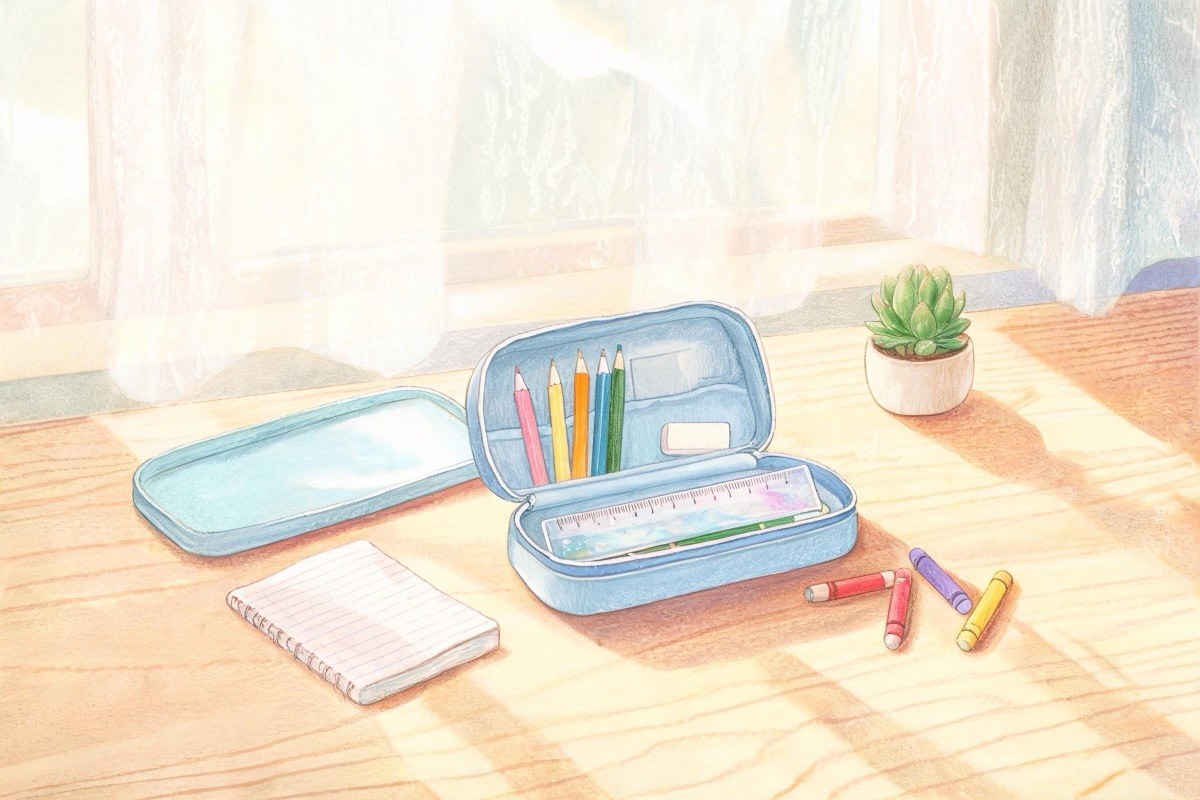
四年级换了新文具盒,它里面自带两层:一个主格,一个用拉链隔开的薄层,主格里还有一条松紧带。开学第一晚,我趴在桌上研究它,忽然觉得它像我们楼下那座三层小楼。我就给文具们分了楼层:靠门的一楼住我每天用得最多的东西,两支削好的铅笔、橡皮,手一伸就够得着;二楼住改错要用的东西,一把短尺、一支备用铅笔,插在松紧带上;顶楼的薄层住不常用的,圆规、备用橡皮、还有妈妈多放的铅笔芯。从那天起,圆规再也没扎到过我的手,因为它住在最里面。
分完楼层的第二天,发生了一件小事。数学课要画图形,老师话音刚落,我的尺子已经从二楼抽出来了,前后不到三秒。以前同样的动作,我要在主格里翻十几秒。那节课我画得比平时快,下课还帮同桌找到了他的三角板。
不过新的麻烦也来了。文具盒里东西住得整齐,可是会添新住户。美术课发下来的水彩笔头、科学课捡的小石头、同学给的贴纸,都会被我顺手塞进盒子。不到一个月,一楼又被饼干渣和纸屑占领了。我妈提醒我,小楼也要有人打扫。我们班的黄老师正好把每周五放学前三分钟定成全班整理时间。我就用这三分钟做三件事:把不属于文具盒的东西全部掏出来,纸屑扔进垃圾桶;把一楼二楼的东西按位置摆回去;最后试一遍每样东西闭着眼能不能摸到。摸不到的,就给它重新找个楼层。
坚持每周清理以后,我的文具盒再也没鼓起来过。最明显的好处出现在期末考试。考数学那天,我提前把笔和尺子按楼层摆好,开考铃响的时候,别的人在倒文具盒,我直接开始写名字。那一场我做完以后还剩下八分钟,检查出两道计算错。
现在谁问我文具盒怎么收拾,我就带他看我的小楼。一楼靠门住常用的,二楼住改错要用的,顶楼住偶尔才用的,每周五打扫一次。文具住得踏实,我上课就不用为它们分心。这是我四年级学会的一件事,很小,但是管用。
The Three-Story Building in My Pencil Case
Before fourth grade, my pencil case was one big bag. Everything lay in the same compartment, pencils rolling against erasers, a ruler jammed in sideways, the zipper rarely closing. In class I would plunge my hand in and stir, using whatever I touched. Once the teacher asked me to draw a line segment on the board with a straight ruler. I fumbled inside the case for half a minute while the class below started to laugh. My ears burned, and I carried the ruler up upside down.
In fourth grade I got a new case with two built-in levels: a main compartment, a thin zippered layer, and an elastic strap inside. On the first night I lay on the desk studying it, and it suddenly looked like the three-story building downstairs from my home. So I assigned floors to my stationery. The ground floor by the door housed what I used most every day, two sharpened pencils and my eraser, within instant reach. The second floor housed correction tools, a short ruler and a spare pencil, clipped onto the elastic strap. The top thin layer housed the occasional ones, the compass, a spare eraser, and the pencil leads my mother added. From that day the compass never pricked my hand again, because it lived at the very back.
Something small happened the day after the move-in. In math class, before the teacher finished her sentence about drawing shapes, my ruler was already out of the second floor, under three seconds. The same action used to take me a dozen seconds of digging. I finished the drawing faster than usual that day, and even helped my deskmate find his set square.
But a new trouble came along. A tidy case keeps attracting new tenants: watercolor pen caps from art class, a pebble from science class, stickers from classmates, all shoved in on the spot. In less than a month the ground floor was overrun with cookie crumbs and paper scraps. My mother reminded me that even a building needs cleaning. Our teacher, Ms. Huang, had just set the last three minutes of every Friday as class tidying time. I used those three minutes for three things: pull out everything that did not belong and throw the scraps away; put the ground and second floor items back in place; then test, eyes closed, whether I could find each thing. Anything I could not find got a new floor.
After I kept up the weekly cleaning, my case never bulged again. The clearest payoff came at final exams. On math exam day I set my pens and ruler on their floors before the bell. While others were dumping their cases out, I wrote my name right away. I finished with eight minutes to spare and caught two calculation mistakes.
Now when anyone asks how I keep my pencil case tidy, I show them my little building. The ground floor by the door for daily tools, the second floor for correction tools, the top floor for the occasional ones, and one cleaning every Friday. The stationery lives steadily, so my mind stays on the lesson. It is a small thing I learned in fourth grade, and it works.
同桌的文具盒搬家记
我同桌的文具盒里在开运动会。他的铅笔、橡皮、尺子全挤在一个大格子里,每天上课前都要举行一场比赛:看谁被压在最底下。他的红笔一个月丢两次,每次都找到钢笔代替,因为钢笔和红笔长得像。有一回老师让他上台用钢笔写生字,他在文具盒里翻了整整半分钟,翻出来一支没有水的钢笔,全班安静地看着他,他把那支干笔在黑板上划了一下,没有颜色。
那天以后我决定帮同桌搬家。我的文具盒他见过,他说我的盒子打开像货架,他的盒子打开像垃圾堆。我把我那套办法教给他,一共就三条。
第一条叫分层摆放。我让他回家找一个旧笔袋,笔袋里有两层网袋的那种。最外面那层放每天进门就要用的东西,第二条叫常用文具靠外:两支铅笔、橡皮,闭着眼都能摸到的位置。里面那层放不常用的,圆规、彩笔、备用文具。他一开始舍不得,说他什么都常用。我让他数一节课里每样东西用了几次,他数完发现一节课真正用得上的是铅笔和橡皮,其他东西一节课碰不到一次。常用靠外这条,他当天就服了。
第三条是每周清理。我跟他约好,每周五放学一起收拾文具盒,一人一个,面对面收。规则是先把所有东西倒在课桌上,然后一样一样问自己:这星期用过吗?没用过的进书包侧袋,回家交给妈妈处理;坏了的进垃圾桶;剩下的才许进盒子。第一次清理,他从盒子里倒出三截铅笔头、一块硬掉的橡皮、七张贴纸和半块饼干。他自己都笑了。第二次清理,倒出来的东西少了一半。第三次,他只用了一分钟。
变化是一点一点来的。先是老师提问他找东西的时间变短了,从半分钟到十秒,再到不用找。然后他的红笔不丢了,因为红笔住在最外面那层,用完就放回门口。再后来,他上课走神少了。这一点是我发现的,不是我猜的:以前他每节课都要低头翻文具盒三四次,手在盒子里扒拉,眼睛跟着手走。盒子清爽以后,他的手没事干,眼睛就回到黑板上。
教同桌的这半个学期,我自己也重新把三条走了一遍。给别人讲一遍,自己才知道每条为什么重要。分层摆放是为了让手不迷路,常用靠外是因为手比脑子快,每周清理是因为盒子会偷偷变乱,乱到一定程度人就懒得找了,开始凑合用错的东西。
期末那天,同桌的文具盒打开还是两层网袋,门口站着铅笔和橡皮。老师让他上台写生字,他两秒钟抽出钢笔。我在底下数着,两秒。我的办法在他手里活了下来,这比我自己用得好还让我高兴。
Moving My Deskmate Out of Stationery Chaos
Sports day is always happening inside my deskmate's pencil case. His pencils, erasers, and rulers all cram into one big compartment, and every morning before class they hold a contest for who gets crushed at the bottom. He loses his red pen twice a month, and each time he finds a fountain pen to replace it, because the two look alike. Once the teacher sent him to the board to write characters with a fountain pen. He dug through his case for a full thirty seconds and produced a dry one. The whole class watched him drag it across the blackboard, leaving no color.
That day I decided to help him move. He had seen my case and said mine opened like a shop shelf while his opened like a junk pile. I taught him my system, three rules in all.
Rule one: sort by layers. I told him to find an old pencil pouch with two mesh pockets at home. The outer pocket holds what you need the moment you sit down. Rule two: daily tools stay outside, two pencils and an eraser, where a blind hand can find them. The inner pocket takes the occasional ones, compass, colored pens, spares. He resisted at first, claiming he uses everything daily. I asked him to count how often each item gets used in one class period. He found that only the pencil and eraser truly matter in a lesson; the rest go untouched. Rule two convinced him that same day.
Rule three: weekly cleaning. We agreed to tidy our cases together every Friday after school, facing each other. The rule: dump everything onto the desk, then ask each item, did you get used this week? Unused items go to the side pocket of the bag and home to our mothers; broken ones go to the trash; only survivors re-enter the case. The first clean-out yielded three pencil stubs, one hardened eraser, seven stickers, and half a cookie. He laughed at himself. The second clean-out produced half as much junk. The third took him one minute.
The changes came little by little. First, his searching time during class questions shrank, from thirty seconds to ten, then to none. Then his red pen stopped getting lost, because it lived in the outer pocket and returned to the door after use. Later still, he daydreamed less. I noticed this myself: he used to dig through his case three or four times a period, his eyes following his hand. Once the case was clean, his hand had nothing to do, and his eyes went back to the blackboard.
Teaching my deskmate for half a term made me walk through the three rules again myself. Explaining them to someone else showed me why each one matters. Layers keep the hand from getting lost. Daily tools stay outside because the hand is faster than the head. Weekly cleaning matters because a case gets messy in secret, and once it is messy enough, a person stops searching and starts making do with the wrong things.
On the last day of term, my deskmate's case still opened into two mesh pockets, with pencils and eraser standing at the door. When the teacher sent him to write characters on the board, he drew his fountain pen in two seconds. I counted from my seat. Two seconds. My method was alive in his hands, and that made me happier than using it well myself.
小提示:上面此文档内容仅展示完整文档里的部分内容, 若需要下载完整文档请 点击免费下载完整文档 。