文章内容
文具盒里的小战场
期中考试数学卷发下来之前,我的文具盒像个真正的小战场。铅笔躺在桌子上,橡皮不知道滚到哪儿去了,尺子在书包最底层,彩笔早就不知道丢了帽。那天我要画一条长直线,别的同学刷刷刷用尺子画好了,我只能用手掌按着桌子比划出一条歪歪扭扭的线,像一条喝醉了的毛毛虫。
更糟的是应用题算错,我想找橡皮,把文具盒整个倒过来抖,只抖出几粒铅笔屑和一个卷笔刀的小零件。最后我用手指头把错答案抹了一片,卷面像被炸弹炸过,老师圈出来一个大大的问号。那次考试,我因为找文具白白浪费了好几分钟,最后一道大题差点没写完。
晚上妈妈帮我收拾书桌,从书包里掏出一大堆东西:没帽的铅笔、磨成黑炭的橡皮、皱成一团的练习纸、半盒缺帽的彩笔。我居然不知道自己丢了这么多东西。妈妈说,东西不是你弄丢的,是你不送它们回家。这句话像一根小刺,扎了我一下。
第二天放学,我决定来一次大整理。我把文具盒全部倒出来,擦干净里面的铅笔灰,把铅笔一支一支削尖,给彩笔一顶一顶找回帽子,尺子放进盒盖里的小夹袋,橡皮固定在右下角的位置。我把所有文具分成四类:写字的、画画的、测量的、修改的,像给每个同学分好各自的小组,谁也不串门。
整理一次容易,坚持才难。我和自己约定:坚持一周,每次用完都送它们回原位。前两天新鲜,我每次都归位;第三天急着去找同学玩,铅笔忘在桌子最边上,我跑到半路又折回来,把它送回了文具盒;第四天我差点放弃,可打开盒子看见大家整整齐齐地待着,我怎么好意思再弄乱呢。
一周期满,奇怪的事情发生了:我闭着眼睛都能摸到东西。要尺子,手自动伸向盒盖夹袋;要橡皮,手指自己找到右下角。后来的周测,我再也没有为一支笔、一块橡皮耽误过一分钟,卷子上的字也写得比从前干净。
现在我慢慢明白,整理文具盒不只是讲卫生。能把每一样东西放回原位的人,也能把每一件事放回原位。我还只是个小学生,可是连一个小小的文具盒都能管好,也许就能慢慢管好自己的作业、自己的时间、自己。文具盒里的那个小战场,我不想再打第二次了。
The Little Battlefield in My Pencil Case
Before the midterm math paper came out, my pencil case was a real little battlefield. Pencils lay on the desk, the eraser had rolled somewhere unknown, the ruler sat at the bottom of my schoolbag, and the cap of one marker had long since vanished. That day I needed a long straight line. Other students drew theirs with rulers, swish-swish, while I pressed my palm on the desk and produced a crooked line like a drunk caterpillar.
Worse came later. I got a word problem wrong and hunted for the eraser, turning the whole case upside down and shaking out only pencil dust and a tiny part of the sharpener. In the end I rubbed the wrong answer with my finger, and the page looked bombed, with a big question mark circled by the teacher. That exam, I wasted minutes just hunting for stationery and almost failed to finish the last big problem.
That evening Mom helped me clear my desk and pulled a mountain out of my bag: capless pencils, an eraser worn black, crumpled practice paper, half a box of markers missing caps. I had no idea I lost so many things. Mom said, you did not lose your things, you simply never walk them home. That sentence pricked me like a small thorn.
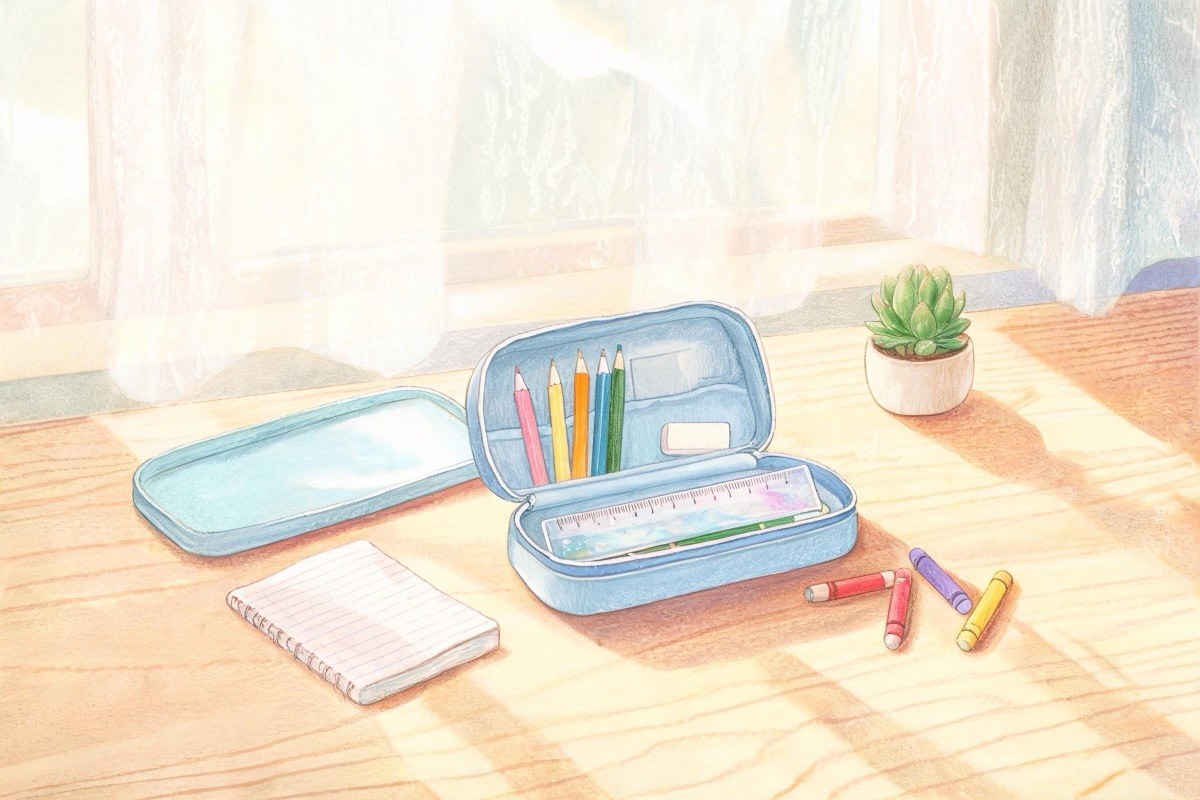
After school the next day I decided on a big cleanup. I emptied the whole pencil case and wiped away the pencil gray, sharpened every pencil one by one, found caps for every marker, put the ruler into the slim pocket inside the lid, and fixed the eraser in its corner at the lower right. I sorted all stationery into four groups: writing, drawing, measuring, correcting, like assigning every classmate to a team of their own, with nobody wandering between teams.
Cleaning once is easy; keeping it up is hard. I made a pact with myself: hold it for one week, and walk everything back to its place after every use. The first two days felt fresh and I did it every time. On day three I rushed off to see a classmate and left a pencil at the far edge of the desk, so I ran halfway back to walk it home. On day four I nearly gave up, but opening the case and finding everyone standing neat, how could I have the heart to mess them up again.
When the week was up, something strange happened: I could find things with my eyes closed. Needing the ruler, my hand went to the lid pocket by itself; needing the eraser, my fingers found the lower right corner by themselves. In the weekly quiz after that, I never lost a single minute to a pen or an eraser, and my handwriting came out cleaner than before.
Now I am slowly understanding that tidying a pencil case is not only about cleanliness. A person who can put every thing back in place can also put every task back in place. I am still only a primary school student, but if I can manage even a small pencil case, maybe I can slowly manage my homework, my time, and myself. That little battlefield inside the pencil case, I do not want to fight on it a second time.
我给文具算了一笔时间账
科学课上老师教我们做实验要记录数据。那天我的文具盒乱得不成样子:铅笔这儿躺一支、那儿躺一支,橡皮被磨成了小灰球,尺子压在水彩画底下,找一样东西要翻半天。我忽然想到一个实验:我一天到底在找文具上浪费多少时间?
实验第一周,我什么也不整理,只记录。结果吓了我一跳:星期一把找橡皮的时间加起来是四分钟,星期三找尺子用了六分钟,星期五找彩笔帽找掉了心情,整整十一分钟。一周下来,我花在找文具上的时间一共四十二分钟。四十二分钟,够我读完一本薄薄的故事书,够我跳绳六百个,可是它们全部喂给了一个乱糟糟的文具盒。
第二周是整理周。我先给文具盒做一次大分类:写字的一格,画画的一格,测量修改的一格。铅笔削尖排队,彩笔按颜色从高到矮站好,尺子睡进盒盖的小夹袋,橡皮搬进右下角的小窝,卷笔刀挂在拉链上。每一样文具都有了自己的名字和门牌号,比如橡皮住在右下角,尺子住在楼上夹袋。
分类容易,难的是让分类活下去。我给自己定了个规矩:坚持一周,用完必须送回门牌号。星期二我画完画,彩笔刚想赖在纸上休息,我想起它们的门牌号,还是把它们一顶一顶戴好帽子送回了家。星期四晚上我困得眼皮打架,铅笔还摊在作业本上,我闭着一只眼也把它送了回去。星期五差点破功,同学喊我下去玩,我把最后一支笔扔在桌上就往外跑,跑到楼下又回来——实验不能断,一周就得完整。
整理后的这一周,我又记录了一遍。找文具的时间从四十二分钟变成了三分钟,其中两分钟还是我故意慢吞吞地找,想确认文具们真的在老地方。它们真的都在。考试的时候,老师一说画图,我的尺子三秒钟就到位,那种感觉特别神气,像将军拔剑。
这笔时间账让我明白了一个道理:乱,不是东西的错,是我的错;整理,也不是妈妈的任务,是我自己的事。文具不会自己长腿回家,可是我可以每天送它们回去。坚持一周,我不仅省下了将近四十分钟,还发现一个秘密——能坚持做一件小事的人,做起别的事来也敢坚持。
现在我的实验还在继续,只是期限从一周改成了一辈子。我管好了一个文具盒的时间,下一步,我想管一管写作业的时间和睡觉前的时间。一个会算时间账的小学生,长大以后应该不至于太慌张吧。
I Kept a Time Account for My Stationery
In science class our teacher taught us that experiments need recorded data. That week my pencil case was a hopeless mess: pencils lying here and there, the eraser ground into a little gray ball, the ruler buried under a watercolor painting, and finding one thing meant digging for ages. It suddenly hit me that I had an experiment idea: how much time do I actually waste hunting for stationery in a day?
For the first week of the experiment I organized nothing and only recorded. The result startled me. On Monday, hunting for the eraser added up to four minutes; on Wednesday the ruler took six; on Friday I spent a full eleven minutes looking for a marker cap and lost my mood along the way. The whole week, I fed forty-two minutes to a messy pencil case. Forty-two minutes is enough to finish a thin storybook, enough for six hundred rope jumps, yet all of it vanished into a cluttered box.
The second week was cleanup week. First I gave the case a big sorting: one shelf for writing, one for drawing, one for measuring and correcting. Pencils went sharpened and lined up; markers stood from tallest to shortest by color; the ruler moved into the slim pocket inside the lid; the eraser moved into its little nest at the lower right; the sharpener hung on the zipper. Every item got a name and an address, like Eraser living at the lower right corner and Ruler living upstairs in the pocket.
Sorting is easy; keeping the sorting alive is hard. I set a rule for myself: hold it for one week, and after every use walk each item back to its address. On Tuesday, after painting, the markers tried to lounge on the paper, but I remembered their addresses and walked them home one cap at a time. Thursday night my eyes were heavy, yet a pencil still lay on my homework, and I carried it back with one eye shut. Friday nearly broke me: a classmate shouted for me to come play, and I tossed the last pen onto the desk and bolted, only to run back downstairs — an experiment cannot have holes; a week must be whole.
During the organized week I recorded again. Hunting time dropped from forty-two minutes to three, and two of those minutes I spent deliberately dawdling, just to confirm the items really were where they always are. They really were. In a test, the moment the teacher said draw a diagram, my ruler was in position in three seconds. It felt magnificent, like a general drawing his sword.
This time account taught me a lesson: the mess is not the things' fault, it is mine; and tidying is not Mom's job, it is mine. Stationery cannot grow legs and walk home, but I can walk them home every day. Holding on for one week saved me nearly forty minutes and revealed a secret — a person who can stick with one small thing dares to stick with other things too.
My experiment is still running; I simply changed the deadline from one week to a lifetime. I have managed the time of one pencil case. Next I want to manage the time of my homework and the time before bed. A primary school student who keeps a time account probably will not panic too much when he grows up.
小提示:上面此文档内容仅展示完整文档里的部分内容, 若需要下载完整文档请 点击免费下载完整文档 。