文章内容
灯下,笔尖替我走路
十一点,台灯把一小圈光,扣在我的桌上。
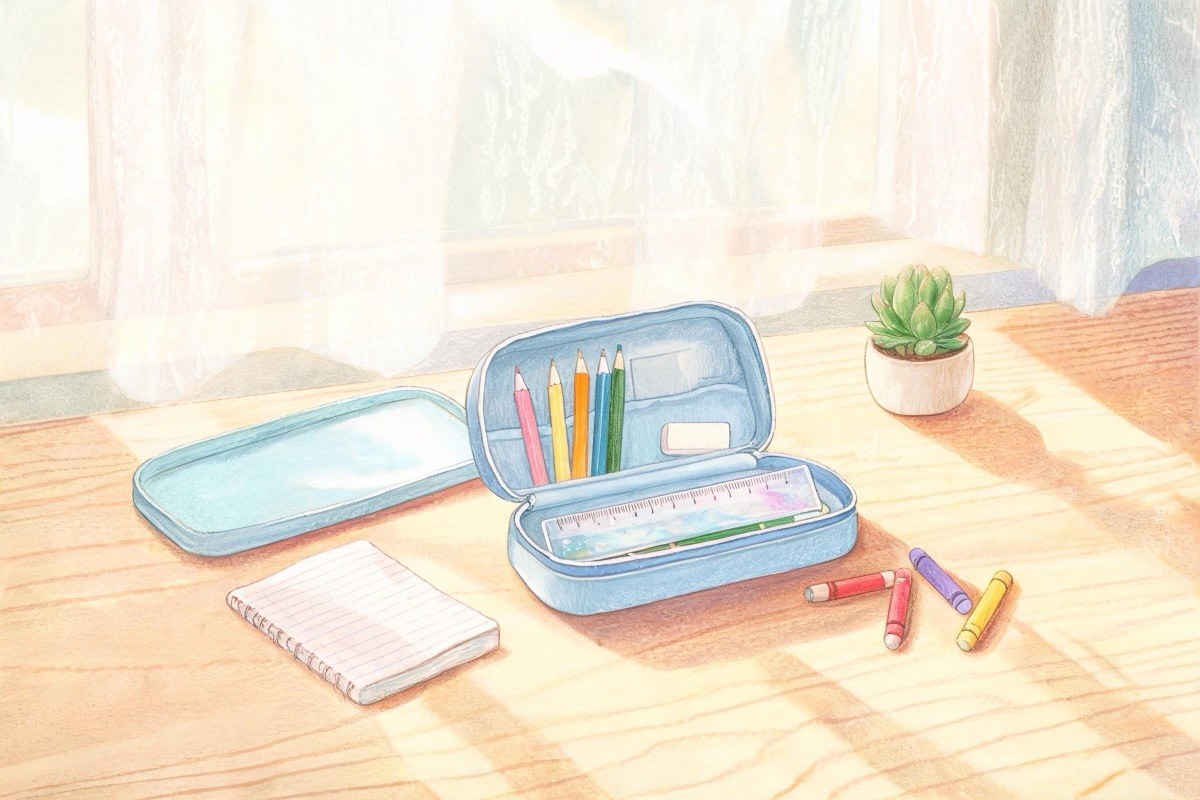
光圈里,文具盒打开着,像一个醒着的小世界。
笔尖先动起来。它比我勇敢。
它替我走进函数图像的开口,替我趟过英语长句的深水区。
它走得很轻,笔迹却一步一个脚印。
有时它停在半空,墨水凝成一个小黑点,像一句咽回去的话。
然后它落下,继续走。它从不问我怕不怕。
笔尖走过的地方,埋下一些我说不出口的东西。
一道解开的压轴题里,藏着我想去的那座城市。
一行抄了又抄的单词里,藏着我不敢大声念的名字。
便签贴在文具盒盖内侧,黄黄的,一小片一小片。
上面写着:背完这五十个词,就奖励自己看一次海。
还写着:如果撑不住,就想想六个月后的考场。
最里面那张只写了一个词,写完又画掉,画掉又重写。
便签的胶痕一层压一层,像年轮。
撕下来的旧便签揉成小团,扔进笔筒,笔筒就长高了一截。
笔筒里那些小纸团,全是一天一天攒下来的决心。
灯光不问我写了多少,它只是陪着。
它把我的影子按在练习册上,按得很轻,像一只手。
它照见笔尖周围细小的木屑,照见橡皮屑堆成的小雪。
它把窗外真正的黑夜,隔成与我无关的事。
窗外有风,有偶尔驶过的车,有别人的假期。
灯圈里只有笔尖、便签,和一张越写越密的草稿。
灯罩内侧趴着一只小飞虫,它也被这圈光收留了一晚上。
夜深了,笔尖终于停下,像走完了今天这一程。
我把便签抚平,把笔放回盒中,咔哒。
小世界熄灯之前,轻轻亮了一下。
我知道那不是灯光,是盒子里什么东西,在梦里翻了个身。
也许明天,笔尖还要替我走更远的路。
也许有一天,它走过的路连起来,能通向那张我想要的录取通知书。
而现在,台灯、笔尖、便签,都安安静静。
它们不说梦想这个词,却夜夜都在场。
Under the Lamp, My Pen Tip Walks for Me
Eleven o'clock. The desk lamp turns a small circle of light upside down over my desk.
Inside the circle of light, my pencil case lies open, like a little world that stays awake.
The pen tip moves first. It is braver than I am.
It walks into the opening of a parabola for me; it fords the deep water of long English sentences for me.
It steps very lightly, yet every stroke leaves a footprint.
Sometimes it halts in midair, ink gathering into a small black dot, like a sentence swallowed back.
Then it falls and keeps walking. It never asks me whether I am afraid.
Wherever the pen tip has walked, it buries things I cannot say out loud.
Inside a solved final problem hides the city I want to go to.
Inside a line of words copied again and again hides a name I dare not read aloud.
Sticky notes cling to the inside of the pencil case lid, yellow, one small square after another.
One says: finish these fifty words, then treat yourself to seeing the sea once.
Another says: if you cannot hold on, think of the exam hall six months from now.
The innermost note holds a single word, written, crossed out, then written again.
The glue marks on the notes layer over one another like tree rings.
Peeled-off old notes are crumpled into small balls and dropped into the pen holder, and the holder grows a little taller.
Those paper balls in the holder are all the resolve saved up day by day.
The lamp never asks how much I have written. It simply keeps me company.
It presses my shadow onto the workbook, gently, like a hand.
It lights the fine shavings around the pen tip, and the little drifts of snow piled from eraser crumbs.
It separates the real darkness outside the window into something that does not concern me.
Outside there is wind, an occasional passing car, other people's holidays.
Inside the ring of light there are only the pen tip, the notes, and a draft page growing denser with writing.
A small moth rests on the inside of the lampshade, taken in by this circle of light for the night too.
Late into the night, the pen tip finally stops, as if it has finished today's stretch of road.
I smooth the sticky notes flat, put the pen back in the case, click.
Before the little world turns off its light, it glimmers once.
I know it is not the lamp. Something inside the case turned over in its dream.
Tomorrow, perhaps, the pen tip will walk a farther road for me.
Perhaps one day the roads it has walked will join up and lead to the acceptance letter I want.
And right now, the lamp, the pen tip, and the notes are all perfectly still.
None of them ever says the word dream, yet every night they are all present.
盒子里的深夜航船
我们的船停在书桌港,白色铁皮是船身。
每天夜里十点半,灯光从远处打过来,像一座不移动的灯塔。
航行员上船。他带着一天的疲惫,和半瓶没喝完的水。
笔尖是这艘船最高的桅杆。
它不指方向,它记录方向:一条,又一条,全是航线。
数学卷子是这片海域最深的地方,桅杆在那儿探了三次深度。
第一次触底,第二次打滑,第三次,稳稳立住了。
桅杆立住的那一刻,船上所有东西都轻轻震了一下。
便签是我们的海图,贴在船舱内壁上。
每张便签画着一个港口:月考港,期中港,六月的那个大海港。
有的港口旁边写着小字:此处风浪大,备好橡皮,备好心情。
最旧那张海图边角已经卷起,上面只有四个字:想去远方。
灯光每晚都来,从不问我们去哪儿。
它只把光铺在海面上,让航行员看得见笔尖周围一掌大的地方。
有一晚灯光偏了偏,我看见航行员趴在桌上,桅杆的影子盖住他的呼吸。
没有人下令,全船静默,等他自己直起身。
他直起身,拧开笔帽,海图上的航线又往前画了一格。
橡皮屑落在甲板上,像航行途中化掉的雪。
我们知道那不是雪,那是被他擦掉的、昨天的自己。
船舱深处还藏着几样旧东西:断了一截的铅笔,写满又撕剩的便签角。
那是上一次远航留下的锚痕。
船底还积着一层细细的铅笔灰,像航海日志里没写的日子。
铁皮上有一道凹痕,是有一次船从桌沿跌下去留下的。
它爬起来,检查桅杆完好,当晚照常出海。
凌晨十二点半,灯塔熄了,航行员下船。
我们收好桅杆,抚平海图,船身咔哒上锁。
铁皮船在黑暗里轻轻晃了一下,其实没有海,是桌子在呼吸。
明天夜里,灯塔还会亮,海图还会往前。
我们相信那片叫六月的海,船到得了。
就算到不了最远的港口,桅杆立过的地方,海水都认得。
而航行员终有一天会知道,他夜夜划出去的航线,一条都没有白费。
The Night Ship Inside the Case
Our ship lies at anchor in Desk Harbor; white tin is its hull.
Every night at ten thirty, light comes from far away, a lighthouse that never moves.
The navigator boards. He brings a day's tiredness and a half-finished bottle of water.
The pen tip is the tallest mast aboard.
It does not point the way; it records it: one course line, then another.
The math exam paper is the deepest water in these seas; the mast sounded its depth three times there.
The first time it touched bottom, the second it slipped, the third it planted firm.
The moment the mast stood firm, everything on board trembled once, softly.
The sticky notes are our sea charts, pasted along the cabin walls.
Each note marks one port: Monthly Exam Port, Midterm Port, and the great harbor called June.
Beside some ports, small writing warns: heavy swells here, bring spare erasers, bring a steady heart.
Oldest of the charts, its corners already curling, holds just four words: I want faraway places.
The lamp comes every night and never asks where we are bound.
It only spreads light on the sea so the navigator can see a hand's-breadth around the pen tip.
One night the lamp shifted, and I saw the navigator asleep at his desk, the mast's shadow lying across his breathing.
No one gave an order; the whole ship went silent, waiting for him to sit up by himself.
He sat up, uncapped the pen, and the chart's course grew one square longer.
Eraser crumbs fell on the deck like snow melting mid-voyage.
We knew it was not snow. It was yesterday's self, erased by his hand.
Deep in the cabin we keep old things: a pencil broken in half, the corner of a note written full and torn.
They are anchor scars from the last voyage.
Under the hull lies a fine silt of pencil dust, like days the logbook never recorded.
There is one dent in the tin, left by the night the ship fell off the edge of the desk.
It climbed back up, found the mast intact, and sailed again that same evening.
At twelve thirty, the lighthouse goes out, and the navigator leaves the ship.
We stow the mast, smooth the charts, and the hull locks with a click.
The tin ship rocks once in the dark — but there is no sea; it is only the desk breathing.
Tonight the lighthouse will shine again, and the chart will stretch farther.
We believe the water they call June is within our reach.
And even if the farthest port cannot be reached, the sea remembers every place our mast has stood.
And the navigator will learn, one day, that not one course line he rowed out night after night was wasted.
小提示:上面此文档内容仅展示完整文档里的部分内容, 若需要下载完整文档请 点击免费下载完整文档 。