文章内容
第一次洗碗到主动分担:写一篇成长演讲稿的完整步骤
“我也能帮妈妈分担”这类演讲稿,写的是转变:从被照顾,到主动做事。转变要写清楚,得按步骤来。
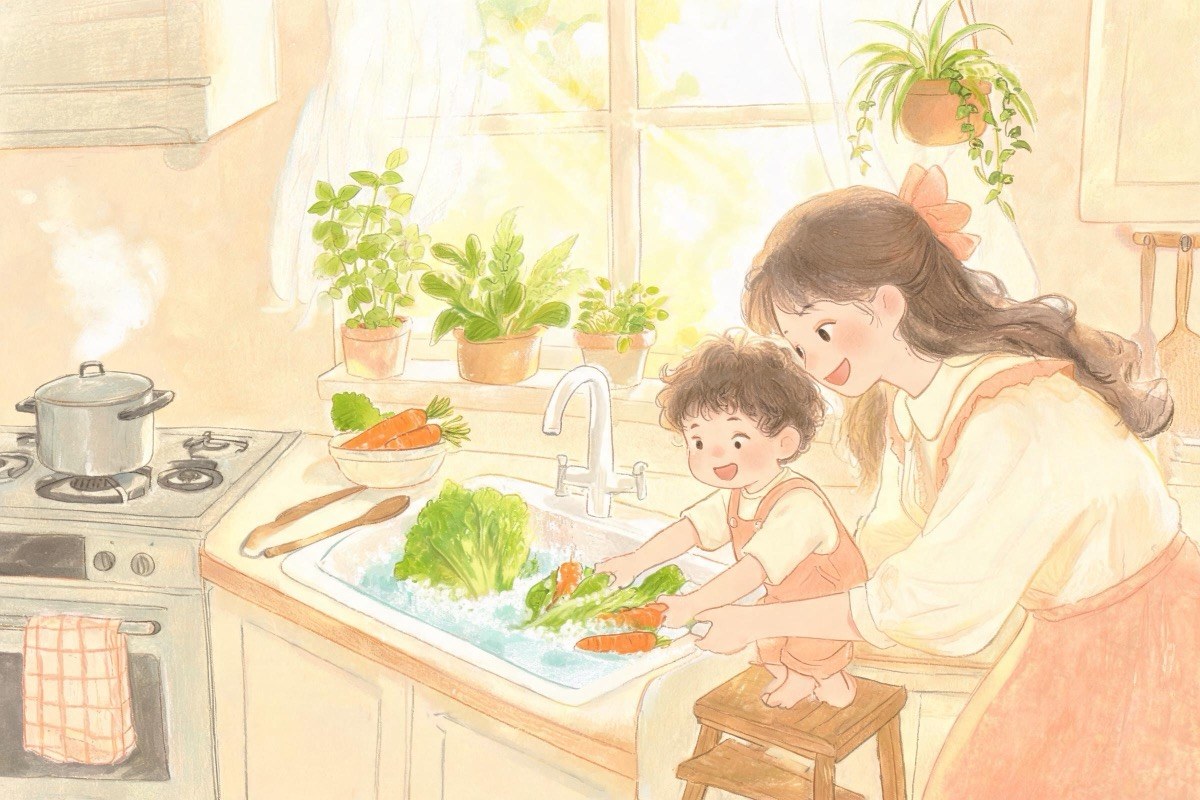
第一步,回忆第一次洗碗。别急着写结果,先写过程里的笨拙:假设第一次洗碗,袖子没卷好,水花溅到围裙上;洗洁精挤多了,碗滑得差点摔出去;妈妈站在厨房门口没插手,只说了句“慢慢来”。这些笨拙的细节是演讲稿最值钱的部分,因为同学都有过同样的笨拙。
第二步,写妈妈的笑。笑要写得不一样:假设碗洗完,妈妈拿起一个碗对着光看了看,说“比我的还亮”,然后笑了,眼角有细纹。别写“妈妈欣慰地笑了”,欣慰是概括,对着光看碗是画面。
第三步,写自己的自豪。自豪也要具体:假设那晚你破例多站了两分钟,把灶台也擦了;睡前你路过厨房,跟妈妈说“以后饭后我来收碗”。自豪不是“我感到无比骄傲”,是你愿意把这句话真的说出口。
第四步,搭四段结构。第一段场景切入:“上周六晚饭后,我把全家人的碗端进了厨房。”第二段写洗碗过程。第三段写妈妈的笑和自己的自豪。第四段收束加呼告:“同学们,让我们从饭后一只碗开始,帮妈妈分担。”400 字左右,每段一百字上下,正好。
语气建议:这篇讲给中年级同学听,句子要短,一句一个意思。上台时洗碗过程那段放慢,讲到“碗滑得差点摔出去”可以停一下,同学会笑,笑声就是感染力。结尾呼告喊一次,鞠一躬,下台。
自查两件事:全文有没有“第一次”之外的假大空;“妈妈笑了”出现的那一段,能不能让没参与的同学在脑子里看见画面。两问都过关,这篇 400 字的演讲稿就立住了。
From the First Time Washing Dishes to Volunteering: The Full Steps of Writing a Growth Speech
A speech titled 'I Can Share Mom's Work Too' is about a change: from being taken care of to stepping up. To write a change clearly, follow the steps.
Step one: recall the first time you washed dishes. Do not jump to the result. Write the clumsiness of the process first: suppose the first time, you did not roll up your sleeves, and splashes soaked your apron; you squeezed too much dish soap, and a bowl nearly slipped out of your hands; Mom stood at the kitchen door without stepping in, and only said 'take it slow'. These clumsy details are the most valuable part of the speech, because every classmate has been equally clumsy.
Step two: write Mom's smile. Make the smile distinctive: suppose after the dishes were done, Mom held one bowl up to the light, looked at it, said 'cleaner than mine', and smiled, with fine lines at the corners of her eyes. Do not write 'Mom smiled, gratified'. Gratified is a summary; holding a bowl to the light is a picture.
Step three: write your own pride. Pride must also be concrete: suppose that night you stayed two extra minutes and wiped the stove; before bed you passed the kitchen and told Mom 'I will clear the bowls after dinner from now on'. Pride is not 'I felt incredibly proud'. Pride is being willing to actually say that sentence out loud.
Step four: build a four-paragraph structure. Paragraph one opens with a scene: 'After dinner last Saturday, I carried everyone's bowls into the kitchen.' Paragraph two covers the washing process. Paragraph three covers Mom's smile and your pride. Paragraph four closes with a direct address: 'Classmates, let's start with one bowl after dinner, and share Mom's work.' Around 400 words, about a hundred per paragraph, fits exactly.
Tone advice: this one is for middle-grade students, so keep sentences short, one idea each. On stage, slow down during the washing paragraph, and pause at 'the bowl nearly slipped' — classmates will laugh, and that laugh is the charm of the speech. Shout the closing address once, bow, and step down.
Two self-checks: is there anything in the text besides the 'first time' story that is empty and grand? In the paragraph where Mom smiles, can a classmate who was not there see the picture in their head? Pass both questions, and this 400-word speech stands.
一个班级演讲比赛的实例:《我也能帮妈妈分担》为什么拿了好评
假设三年级二班举行“我也能帮妈妈分担”演讲比赛,共八人参加。获得好评的一篇来自陈小雨,题目叫《一只碗的开始》。我们拿它和同场另一篇对比,看差别在哪。
同场的李想开头是:“同学们,我们要体谅妈妈,妈妈为我们付出了很多。”陈小雨开头是:“星期六晚上,我端着六只碗走向厨房,最上面那只晃了一下,我屏住呼吸才没让它掉下来。”两篇的差距在第一句就拉开了:前者是道理,后者是画面。评委在记录表上给陈小雨的“开头”一栏画了星。
洗碗过程段,陈小雨写:“我挤洗洁精,一挤挤了小半瓶,碗里全是泡泡,冲了三遍还有滑感。最后一只碗我冲了五遍,因为它沾了红烧肉的汁。”这段被同学投票选为“最想听的一段”。原因:冲五遍这个数字太真实了,每个洗过碗的同学都懂红烧肉汁有多难洗。细节的共鸣不需要大事,需要共同经验。
写妈妈的笑,陈小雨写:“妈妈过来摸了摸碗底,说‘碗底都冲干净了,我都没注意过碗底’。她笑起来的时候正在擦手,手上的毛巾都没放下。”评委点评时专门提了这句:妈妈边擦手边笑,说明她日常就是这样一边干活一边回应孩子,这个笑不摆拍。对比李想那篇的“妈妈感动地流下了眼泪”,真实感的高下立判。
可改进的一处是结尾。陈小雨结尾写:“以后每天饭后,碗都归我。同学们,你家谁洗碗?也试试从一只碗开始。”问题在连用了两个问句,现场有同学接不上话,节奏乱了一拍。改进办法:删掉第一个问句,只留“也试试从一只碗开始”,陈述句收尾更稳。
这个实例说明:小学中年级的演讲稿,比的是谁敢写自己的笨拙。评委和同学都不缺感动,缺的是可信的细节。把洗碗这件小事写到能闻到洗洁精的味道,稿子就赢了大半。
A Class Speech Contest Case: Why 'I Can Share Mom's Work Too' Won Praise
Suppose class 2 of grade 3 holds a speech contest titled 'I Can Share Mom's Work Too', with eight speakers. The well-received one is Chen Xiaoyu's 'The Start of One Bowl'. Compare it with another entry from the same session and see where the difference lies.
Li Xiang opened with: 'Classmates, we should understand Mom. Mom has given us so much.' Chen Xiaoyu opened with: 'On Saturday night, I carried six bowls toward the kitchen. The top one wobbled, and I held my breath to keep it from falling.' The gap between the two opens on the first sentence: one is a moral, the other is a scene. The judge put a star in the 'opening' column of Chen's score sheet.
In the washing paragraph, Chen wrote: 'I squeezed the dish soap and used almost half the bottle. The bowls were full of foam, and after three rinses they still felt slippery. I rinsed the last bowl five times because it had braised-pork sauce on it.' This paragraph was voted by classmates as 'the part I most wanted to hear'. The reason: the number five rinses is too true — everyone who has washed dishes knows how stubborn braised-pork sauce is. Resonance in details does not need big events. It needs shared experience.
For Mom's smile, Chen wrote: 'Mom came over and felt the bottom of a bowl, then said, 'Even the bottom is rinsed clean. I never even noticed bowl bottoms.' She smiled while drying her hands, and she had not even put the towel down.' The judge singled out this line in the commentary: Mom smiling while drying her hands shows this is how she responds to her child in daily life, mid-chore. That smile is not staged. Compared with Li Xiang's 'Mom moved to tears', the difference in believability is instant.
The one spot to improve is the ending. Chen wrote: 'From now on, after every dinner, the bowls are mine. Which person washes dishes in your family? Try starting with one bowl too.' The problem is two questions in a row: some classmates could not answer, and the rhythm lost a beat. The fix: delete the first question and keep only 'try starting with one bowl too'. A statement closes steadier than a question.
This case shows: in a middle-grade speech contest, what competes is who dares to write their own clumsiness. Judges and classmates are not short of being moved. They are short of believable details. Write the small act of washing dishes until you can smell the dish soap, and the speech has already won most of the game.
小提示:上面此文档内容仅展示完整文档里的部分内容, 若需要下载完整文档请 点击免费下载完整文档 。